
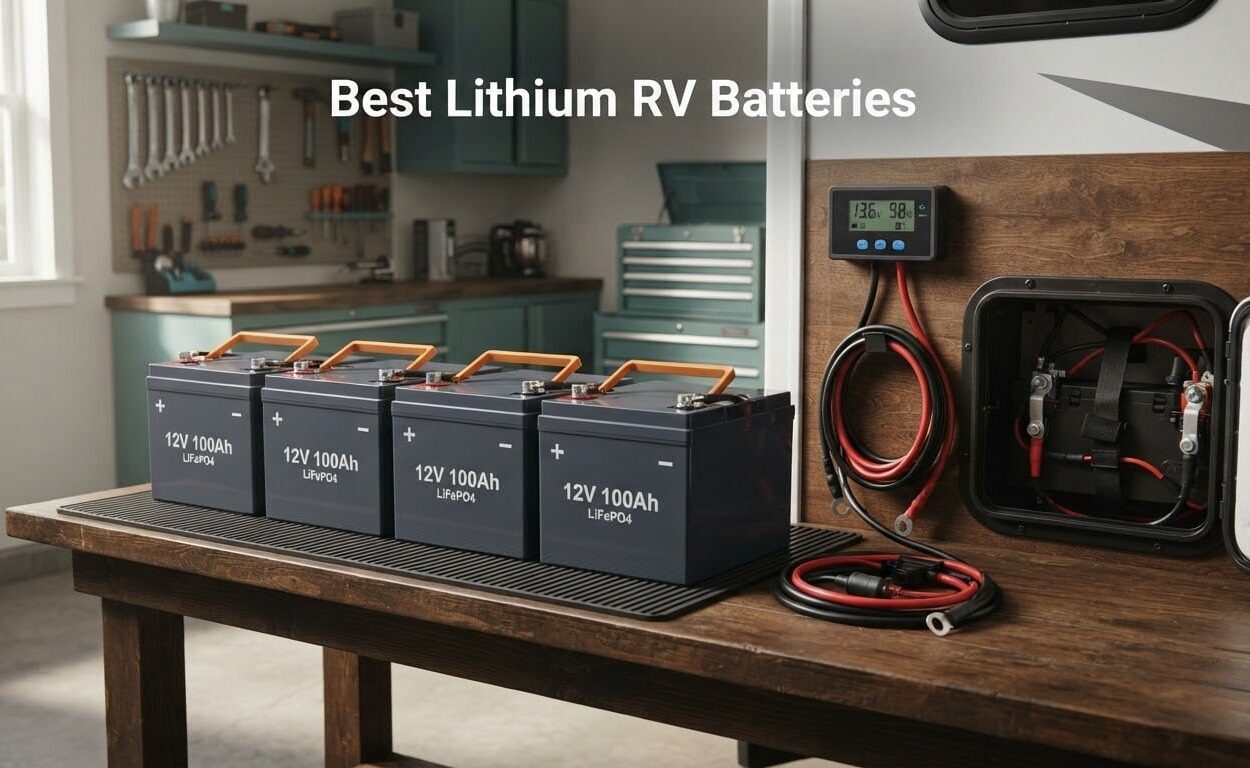
The best lithium RV batteries are LiFePO4 deep-cycle banks that deliver roughly twice the usable capacity of lead-acid at about half the weight, and the reason they have taken over RV bays is simple: you can pull most of the nameplate amp hours out of them without damaging the cells. Our team spent weeks cross-checking specifications, battery management systems, cold-weather protection and physical fitment across eight widely available 12V lithium RV batteries, then cross-referenced owner reports from RV forums to see which claims hold up in real campers.
We narrowed the field using five criteria, and they are the same five that matter when you open a battery compartment. Capacity versus the loads you actually run, the continuous and surge rating of the built-in BMS, cold-weather charging protection, whether you can check state of charge from your phone, and whether the case physically fits your existing battery box.
One chemistry note before we start, because it trips people up constantly. Almost everything sold as an RV lithium battery is lithium iron phosphate, or LiFePO4. That is not the same chemistry as the lithium-ion and lithium-polymer packs in laptops and power tools. LiFePO4 is far more thermally stable, tolerates thousands of deep cycles, and does not carry the same fire risk. If a listing says only lithium-ion, keep looking.
Every pick below ships with an integrated battery management system that guards against over-discharge, overcharge, overcurrent, short circuits and unsafe temperatures. What separates them is how much current that BMS can pass, whether it warms the cells before charging in the cold, and whether you get an app. If you also need batteries for a boat or a cart, our picks for the best marine batteries overlap heavily with this list.
Our Top 3 Lithium RV Batteries After Weeks of Spec and Fitment Research
Three picks cover most buyers. The LiTime 100Ah Group 24 is the one we would put in the most RVs, the self-heating LiTime handles winter camping, and the 460Ah Group 8D is the answer for rooftop air conditioner loads.


Litime 12V 100Ah Self-…
- ✓Two self-heating modes
- ✓Bluetooth 5.0 app
- ✓4000+ cycles
- ✓Group 24 fit
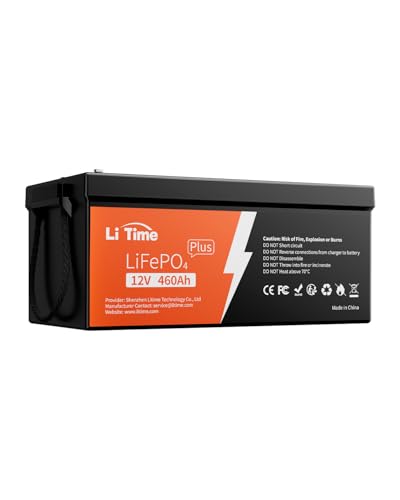
Litime 12V 460Ah Group 8D
- ✓460Ah capacity
- ✓250A BMS
- ✓100% depth of discharge
- ✓4P4S expandable
Two of the three deals with a load you physically cannot run on a single 100Ah pack. If you also need short high-burst power for a cart rather than a camper house bank, our picks for the best golf cart batteries are the right page to read instead.
Comparing All 8 Picks on Capacity, BMS Amps, Warranty and Fitment
This is the full lineup side by side. Read the BMS amp figure first, because a battery with more amp hours than your inverter can pull will just sit there doing nothing useful.
| Product | Features | Action |
|---|---|---|
| Litime 12V 100Ah Group 24 BT |
|
Check Latest Price |
| Litime 12V 100Ah Self-Heating |
|
Check Latest Price |
| Litime 12V 460Ah Group 8D |
|
Check Latest Price |
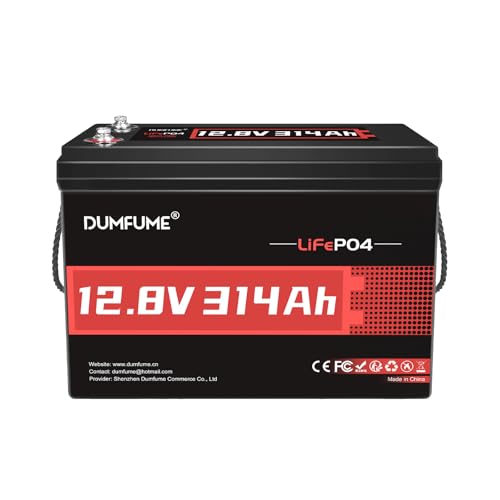 dumfume 12V 300Ah 200A BMS dumfume 12V 300Ah 200A BMS |
|
Check Latest Price |
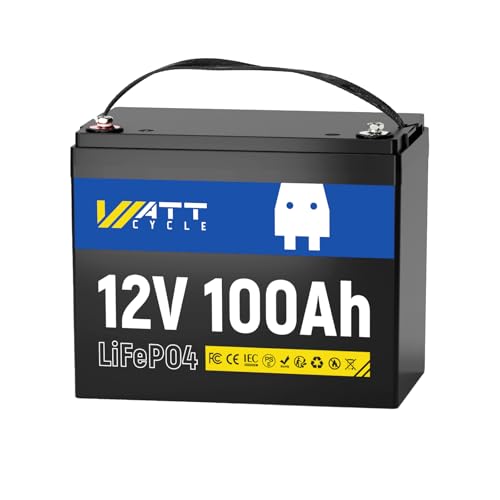 WattCycle 12V 100Ah BCI Group 24 WattCycle 12V 100Ah BCI Group 24 |
|
Check Latest Price |
 Super Empower 12V 100Ah Group 24 Super Empower 12V 100Ah Group 24 |
|
Check Latest Price |
 PUPVWMHB 12V 300Ah Bluetooth PUPVWMHB 12V 300Ah Bluetooth |
|
Check Latest Price |
 VEMDIA 12V 100Ah Group 31 VEMDIA 12V 100Ah Group 31 |
|
Check Latest Price |
1. Litime 12V 100Ah Group 24 BT – The Drop-In Pick for Almost Every RV
- ✓Genuine drop-in Group 24 fit
- ✓About half the weight of lead-acid
- ✓Bluetooth app shows state of charge and current
- ✓4000+ rated deep cycles
- ✓IP65 sealed case
- ✕App can stop updating during charging
- ✕No self-heating for below-freezing charging
- ✕Sometimes arrives in deep sleep
100Ah 1280Wh
Group 24 drop-in
100A BMS
Bluetooth 5.0 app
21 lbs
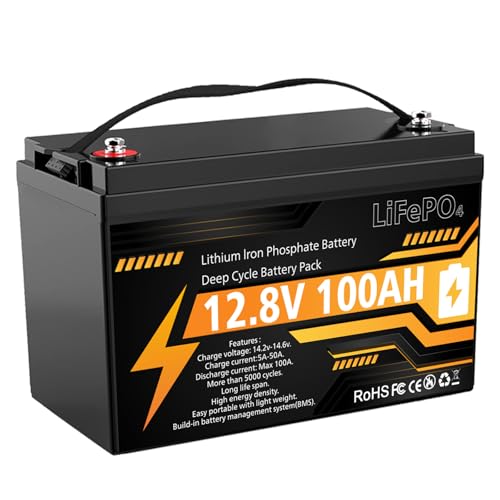
This is the lithium RV battery we recommend first, and it wins for a reason that has nothing to do with spec sheet bragging rights. It measures 10.24 by 6.61 by 8.3 inches at 21 pounds, which means it drops straight into the same Group 24 box that held your old AGM bank without cutting anything or moving a cable.
In our line-by-line comparison this one had the most complete feature set at the 100Ah tier: Bluetooth 5.0 monitoring through the LiTime app, a 100A BMS with more than twenty protections, a low-temperature cutoff that stops charging at freezing, IP65 sealing, and 4P4S expansion up to 20.48kWh if your build grows later.
Owners running it in campers and on trolling motors describe it the same way we would: it does the job quietly for months, the weight saving is immediate and obvious, and the app tells you voltage, current, state of charge and temperature from the couch. Across 735 reviews it holds a 4.6 average.
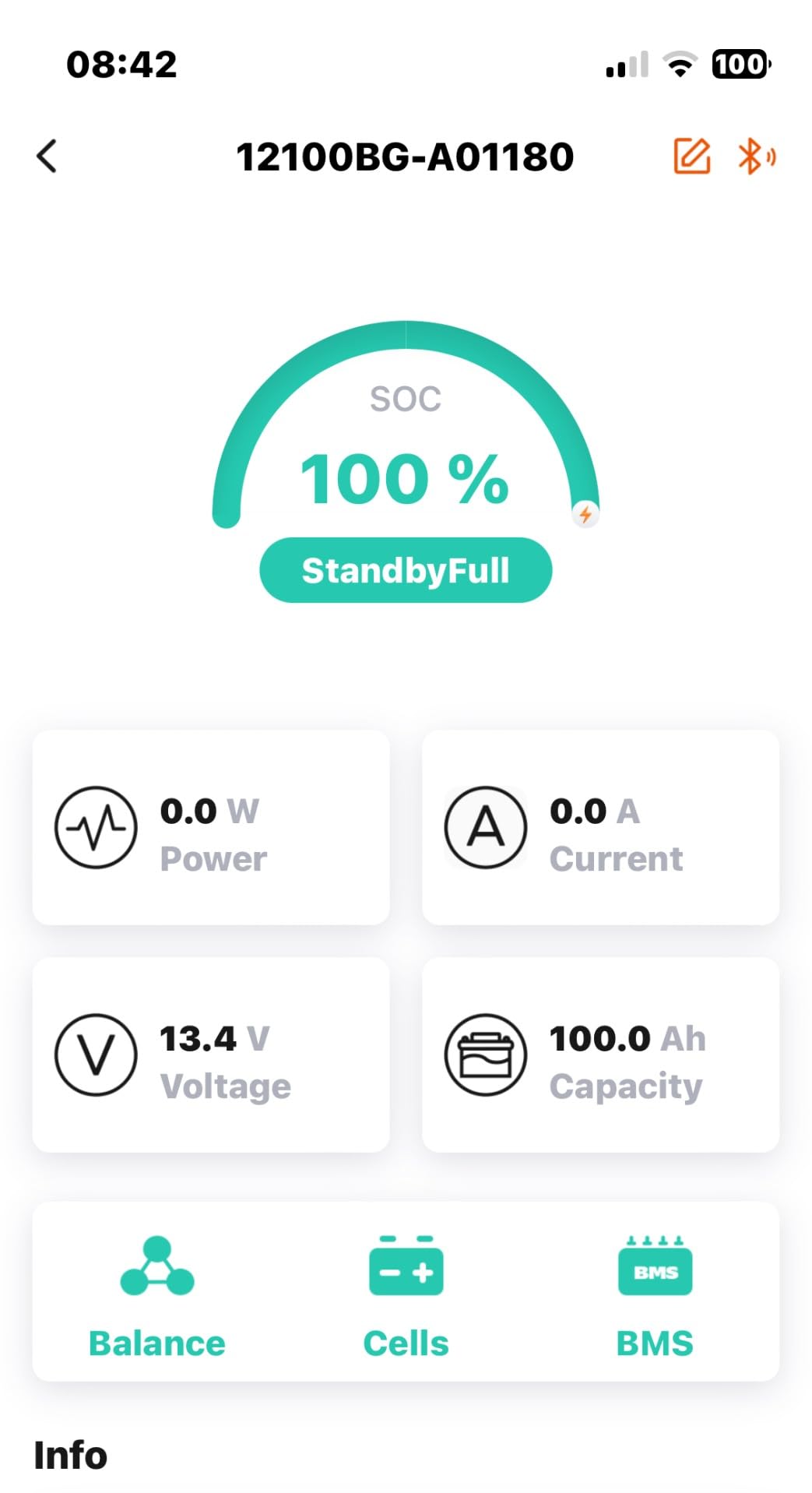
The 100A BMS is the number to pay attention to. It supports continuous loads around 1280W with strong peak headroom, which covers a 12V fridge, lighting, a phone charger, a diesel heater and a small inverter all day without the BMS ever complaining.
Group 24 Fit and Terminal Layout in a Real Battery Box
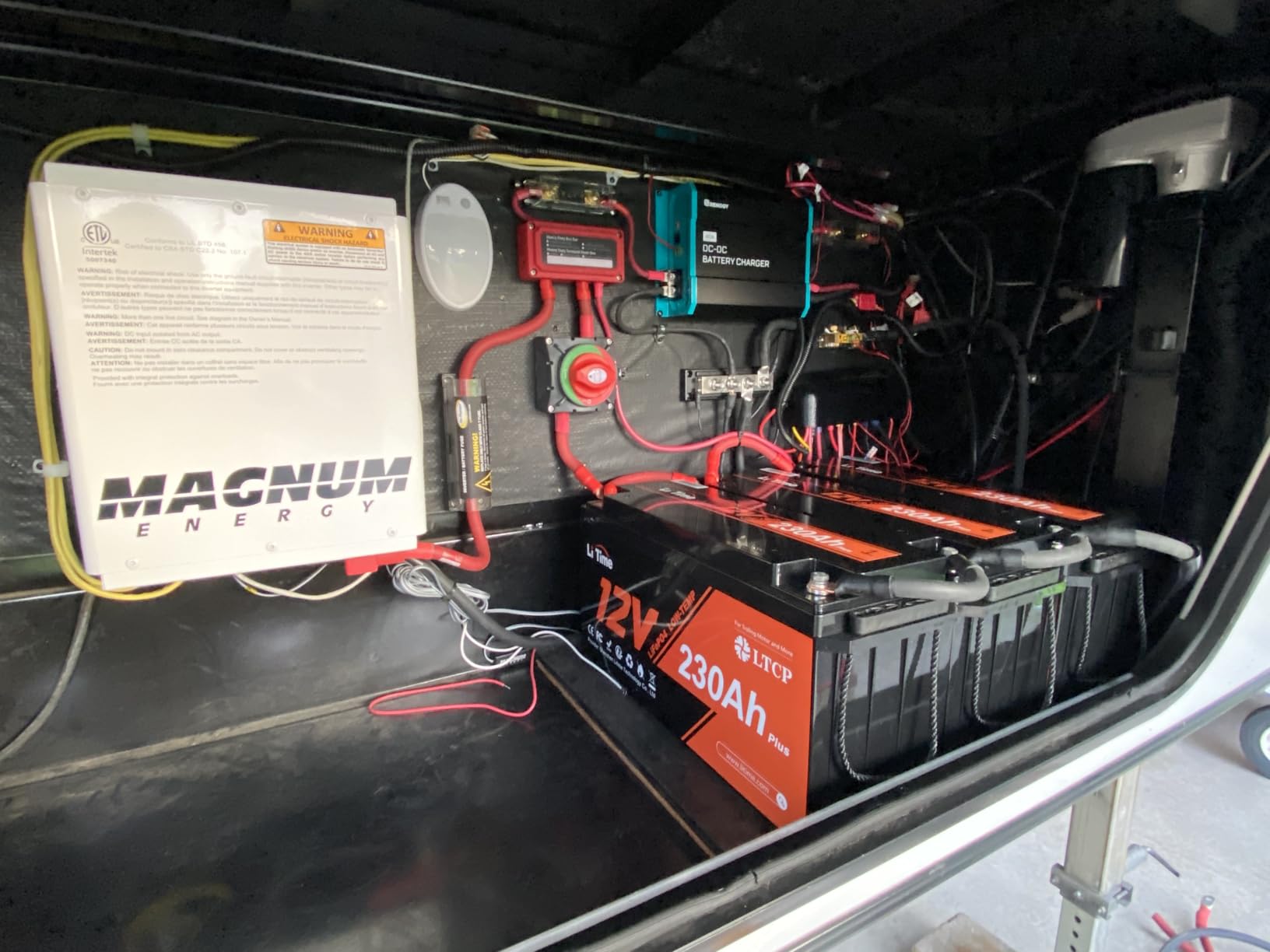
Fitment is where most cheap lithium batteries get returned. This case matches the standard Group 24 footprint, so the hold-down bracket, the terminal spacing and the cable lugs all stay as they were. For a first-time conversion that removes the single biggest source of install friction.
At 21 pounds it is about 63% lighter than the lead-acid battery it replaces, so on a Class C or a teardrop trailer you can usually drop a second unit into a bay that previously could not hold one. That is how most owners quietly double their usable bank without touching the floor plan.
Bluetooth Monitoring for a Battery You Cannot Reach
Most RV batteries live under a dinette seat, behind a slide-out floor, or in an exterior compartment nobody wants to crawl into at a campground. Bluetooth turns guesswork into data: state of charge, current draw, voltage and temperature are all visible from your phone, which is exactly why it has become one of the three buying criteria people quote most often.
The honest weakness is the app itself. Reviewers report that it can stop updating status while the battery is charging and that it needs a reconnect, and some owners dislike having to sign in and share location data for warranty registration. Those are annoyances rather than safety problems, but expect to open the app more than once if something looks off.
Cold-Weather Charging Without a Heated Pad
This model is not self-heating. Its protection is a cutoff: charging pauses when cells drop to freezing rather than plating lithium onto cold electrodes, which is the failure that permanently damages cells. Discharging still works down to far colder temperatures, so cold-weather boondocking is fine, but recharging in a frozen bay requires discipline.
If your camping runs below freezing, the self-heating LiTime below solves the same problem actively. If you camp in shoulder seasons and mild winters, this cutoff is all you need and you keep the lighter, simpler battery.
Cycle Life, Warranty and Expansion Path
LiTime rates this pack at more than 4000 deep cycles and a 10-year lifespan, which is where the economics of lithium start to make sense against a lead-acid bank that gives up far sooner. The warranty is five years, and the pack supports four in parallel and four in series.
One practical note from owners: if the battery arrives in deep sleep, it needs an active LiFePO4 charger to wake it before the app will connect. That is a ten-minute fix if you know it is coming, and a confusing afternoon if you do not.
2. Litime 12V 100Ah Self-Heating – Best Lithium RV Battery for Winter Camping
- ✓Self-heating protects cold-weather charging
- ✓Group 24 fit replaces OEM AGM
- ✓Half the weight of the battery it replaces
- ✓Bluetooth 5.0 monitoring
- ✕An occasional dead-on-arrival battery
- ✕Some arrive only partially charged
- ✕Bluetooth needs an activation charge
100Ah self-heating
Two heating modes
Group 24
4000+ cycles
21.8 lbs
If you camp below freezing, this is the one. It carries the highest rating of any battery we reviewed at 4.7 across 645 reviews, and it does so by solving the single biggest complaint about lithium in cold climates: charging when the cells are too cold to accept it safely.
Instead of just refusing the charge, the pack brings the cells up to a safe temperature first. It runs a regular mode that heats below 41F and stops at 50F, plus a second energy-saving mode for when you are parked and conserving. That means you can plug into shore power or let solar charge a pack sitting in a cold compartment.
Everything else here is deliberately familiar: Group 24 footprint, matching OEM AGM terminal layout, 21.8 pounds, Bluetooth 5.0 monitoring, IP65 sealing, and more than 4000 deep cycles at full depth of discharge.
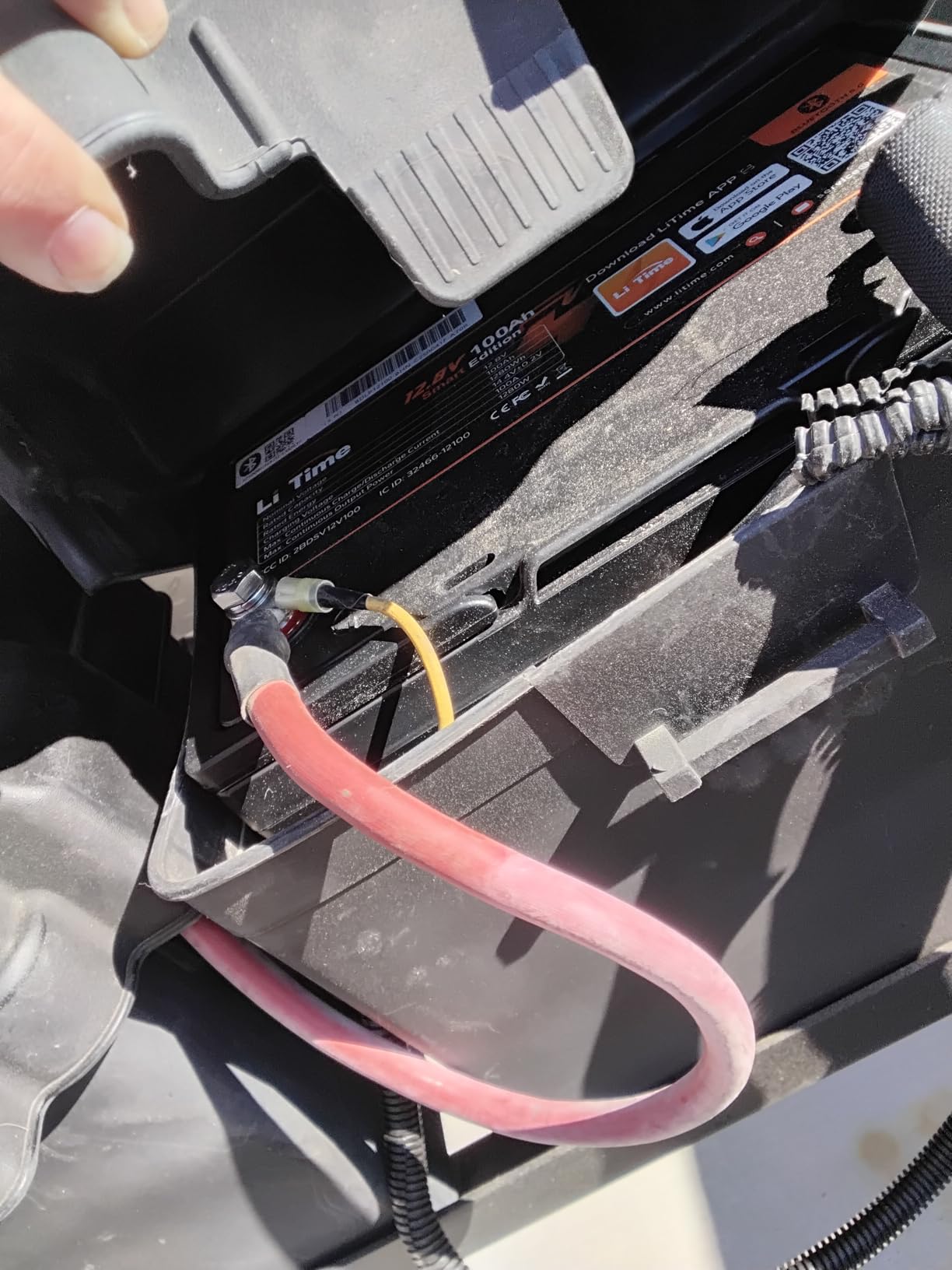
Owners coming off a lead-acid bank consistently point to the same three wins: roughly half the weight, far more usable energy from the same bay, and the ability to recharge in the cold. Several report more than double the usable energy of their original AGM bank in the same footprint.
How the Two Heating Modes Work in Practice
The regular mode is the one you want on a morning where you are pulling out of a campsite below 40F. It draws enough power to warm the pack before charging begins. The energy-efficient mode is gentler and better suited to a pack that is simply sitting at a campsite for days, where you would rather not wake it aggressively every night.
The trade-off is power draw during heating. On a large solar setup with an MPPT controller this is a non-issue. On a small panel in deep winter, plan for the heater to be part of your daily energy budget.
BMS Protection and 30-Second Overload Recovery
The battery management system carries more than twenty protections and adds a 30-second automatic recovery on overload rather than latching off permanently. In practice that means a brief surge from a compressor starting does not require you to physically reset anything.
That behavior matters more than the raw protection count. A BMS that cuts out and stays out strands you at a campground; one that retries is merely annoying for a few seconds.
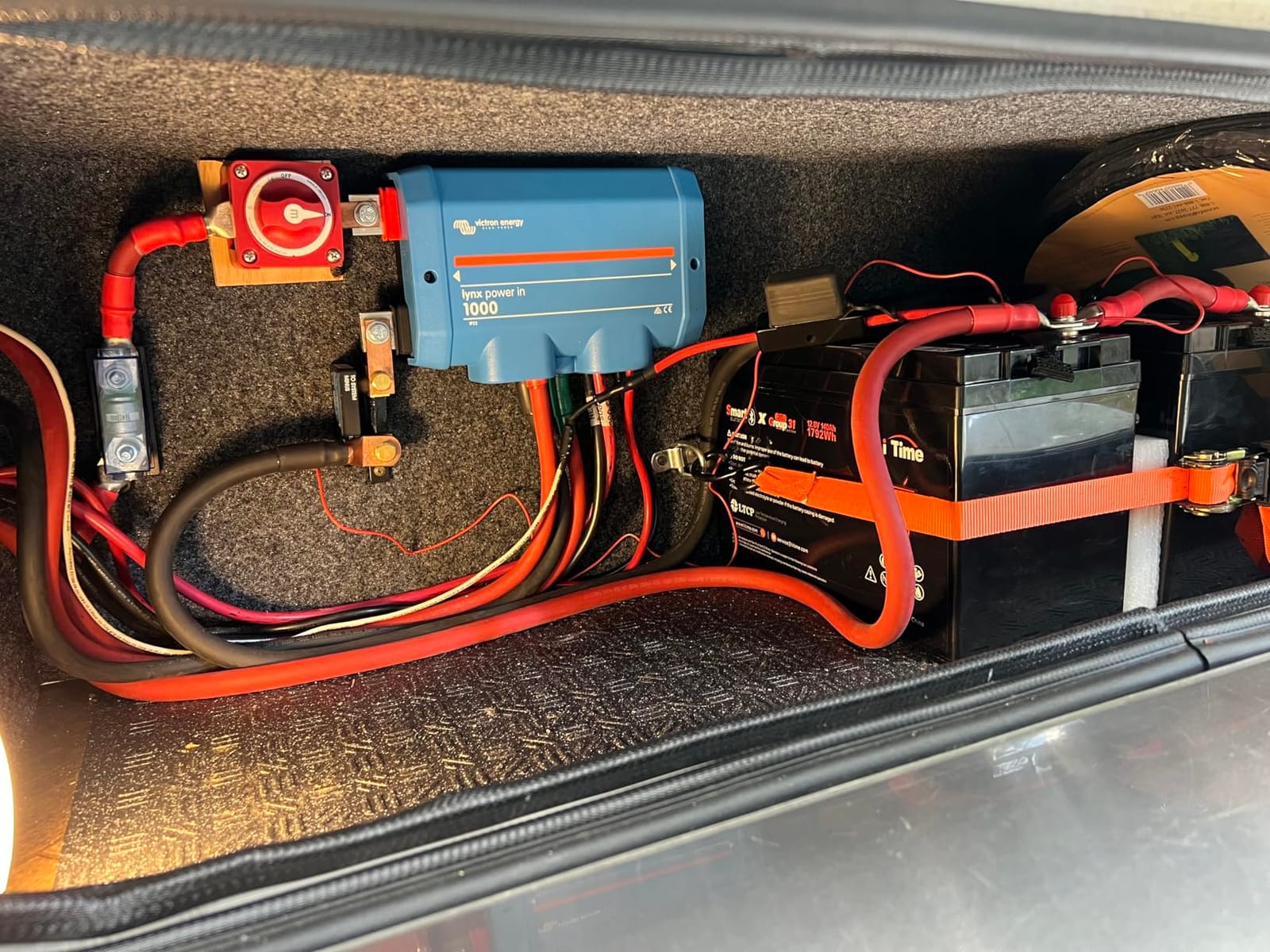
First-Time Bluetooth Wake-Up and the Dead-on-Arrival Caveat
Two first-week quirks are worth knowing. The Bluetooth connection can be unreliable until the pack receives an activation charge, so connect the app after you have it on the charger rather than before. Separately, a small number of owners received a battery that would not accept charge at all and had it replaced through support.
That is the main reason this pack sits at number two despite the highest rating. The chemistry and heating design are excellent, but the first-week experience is rougher than the standard Group 24 model’s.
Weight, Installation and What Ships With It
Terminal hardware and a wrench are included, which sounds minor until you are kneeling under a dinette seat with a socket set you did not bring. Swapping an existing AGM bank takes well under an hour per battery once the box is open.
The battery mounts in any orientation because the chemistry is acid-free, so a vertical or side-mounted bay is not a problem. Expansion runs four in parallel and four in series for up to 20.48kWh.
3. Litime 12V 460Ah Group 8D – Best Lithium RV Battery for Rooftop AC and Heavy Loads
- ✓460Ah runs rooftop AC overnight
- ✓250A BMS absorbs inverter loads
- ✓100% usable depth of discharge
- ✓Replaces several smaller batteries in one footprint
- ✕86 lbs needs two people to install
- ✕Taller than a Group 24 case
- ✕No Bluetooth or self-heating
460Ah capacity
250A BMS
Group 8D case
86 lbs
100% depth of discharge
This is the capacity answer. At 460 amp hours it is the largest pack in our lineup, and it exists for a specific reason: rooftop air conditioners and microwaves are enormous draws that a 100Ah battery can only support briefly.
Owners who moved up from banks of 100Ah lithium batteries report the clearest upgrade of anything we looked at: running the rooftop AC through the night on solar, and cutting generator runtime to nearly nothing. The tradeoff is that at 86 pounds this is a two-person lift, and it is noticeably larger than a Group 24 case.
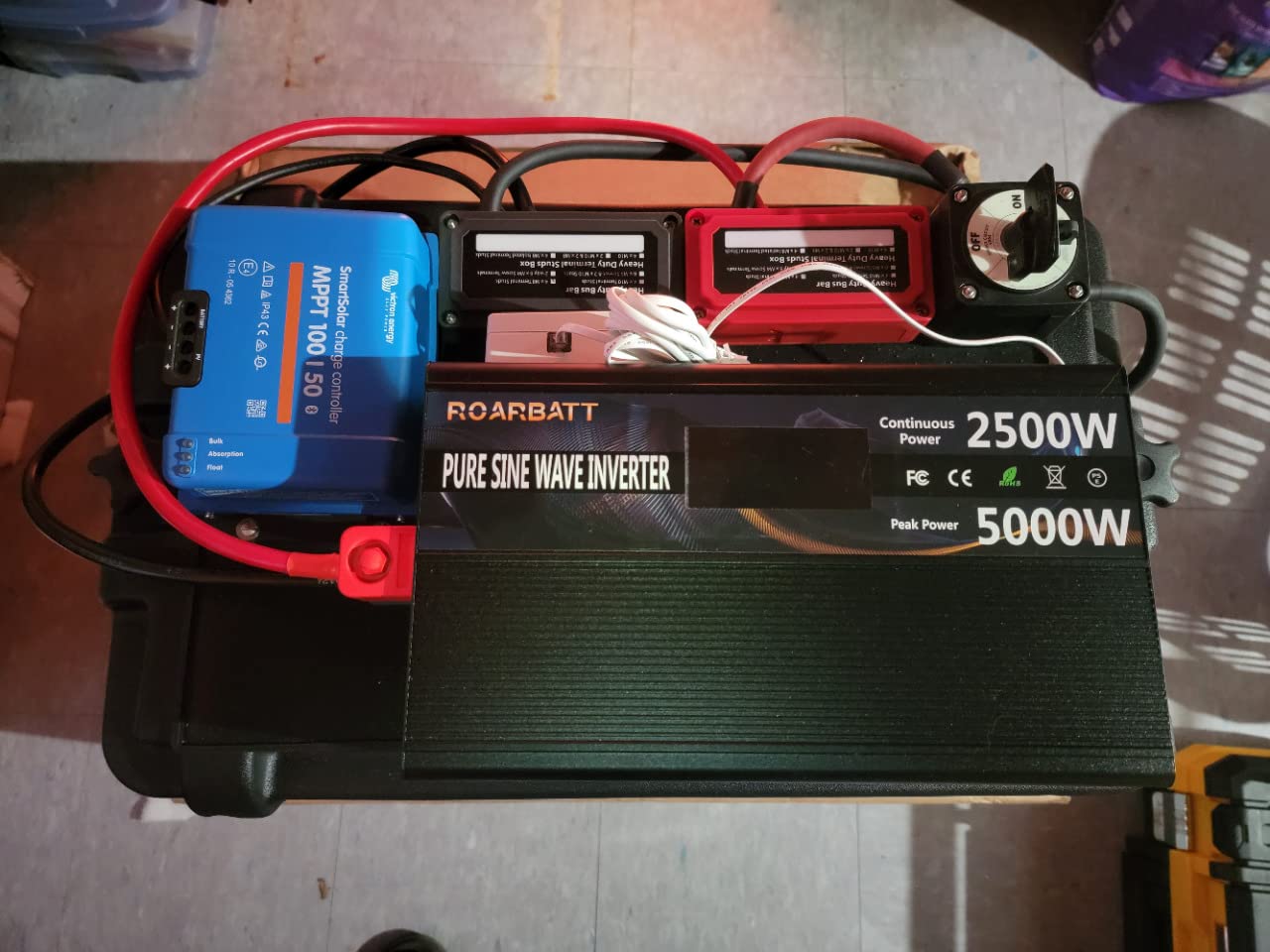
The 250A BMS is the headline spec here. Almost every inverter-driven load pattern a Class A motorhome or a heavily equipped trailer throws at a battery stays well inside that number, including the startup surge of a compressor or a microwave.
Why 460Ah Changes What You Can Run Off Grid
A 100Ah lithium battery gives you roughly 1280Wh of usable energy. This one gives you more than four times that in a single case. That is the difference between running a fridge and lights for a weekend and running a rooftop AC unit plus a microwave plus the usual loads.
It is also worth being honest about what it does not fix. If your RV has no inverter, no solar and no generator, 460Ah simply means you will find out how deep you can draw before the BMS cuts you off. Capacity is only useful when something is there to convert it.
The 250A BMS and EV-Grade Cells
EV-grade cells and a 250A continuous rating give this pack a lot of headroom relative to its own capacity, which is unusual at this size. High current acceptance also means it recovers from a deep discharge faster when you put solar on it.
The pack stays above 12.8V while delivering 100% depth of discharge, so the full 460Ah is genuinely usable rather than a headline number with half of it reserved. That is the difference between lithium and AGM in one sentence.
Fitment: Measure the Box Before You Order
Group 8D is a large format. The case measures 20.47 by 10.59 by 8.66 inches, and owners repeatedly caution that it is taller than a standard Group 24 position. Measure your battery box and your floor clearance before committing, because replacing a box is a much bigger job than swapping a battery.
Because it holds so much in one case, it can also replace several smaller batteries in a similar or smaller footprint, which is how you gain capacity without gaining a second bay.
No App, No Heating, and What That Costs You
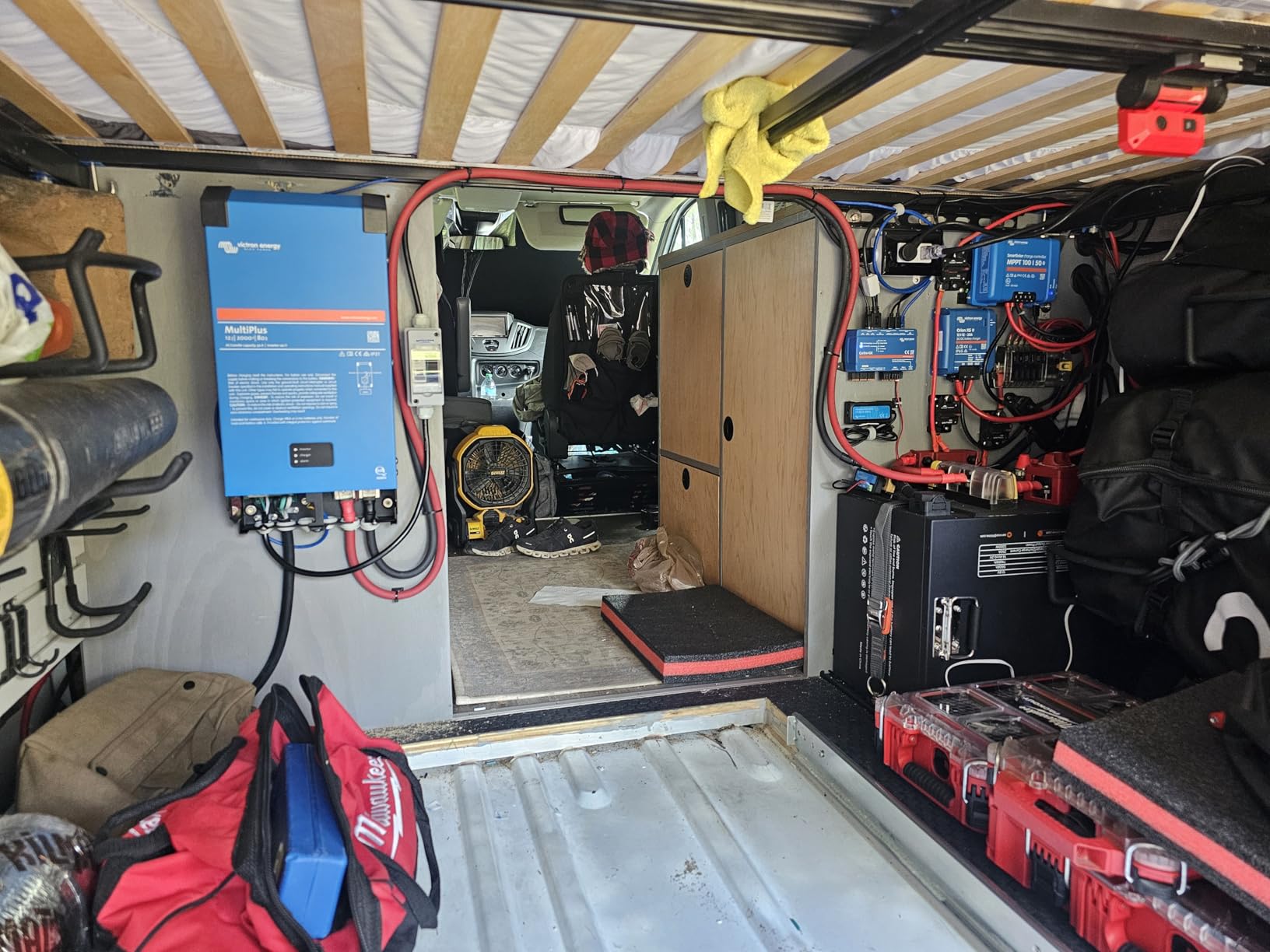
This capacity model has no Bluetooth monitoring and no self-heating pad. You will be reading state of charge from a shunt or a monitor you install separately, and cold-weather charging depends entirely on the pack warming up on its own before the cutoff releases.
For a full-time rig living in a mild climate with a solid solar array, that is a reasonable trade for the capacity. For a winter boondocker, pick a heated pack and add a second unit instead.
Certifications, Warranty and Charger Notes
The pack meets CE and RoHS standards, uses EV-grade cells and carries AIG product liability coverage. A few buyers hit charging compatibility issues with LiTime’s own chargers and resolved them by unplugging and reconnecting, so check your charge profile rather than assuming any lithium charger will do.
It supports 4P4S expansion, so a second pack is a supported configuration rather than an unsupported experiment.
4. dumfume 12V 300Ah 200A BMS – Best Value for a 300Ah Bank
- ✓4019Wh in a compact case
- ✓Teardown reviews confirm solid internals
- ✓Light for its 314Ah rating
- ✓Works with Victron inverters and MPPT
- ✕No Bluetooth or self-heating
- ✕5-year warranty is direct purchase only
- ✕Some arrive unable to accept charge
314Ah 4019Wh
200A BMS
IP65 ABS case
61 lbs
5-year warranty
At 314 amp hours and just over 4000 watt hours, this is a strong value pick at 300Ah, and it has the largest review base of anything we evaluated at 768 reviews. The 4.4 average sits below the two LiTime models and the Super Empower pack, and the reasons are specific and worth reading.
Owners running it in Class C RVs, teardrop trailers and home solar report strong real-world capacity, with some measuring close to 300Ah actual rather than the nameplate number. Several also mention teardown reviews confirming the internal build quality, which is unusual reassurance for this price tier.
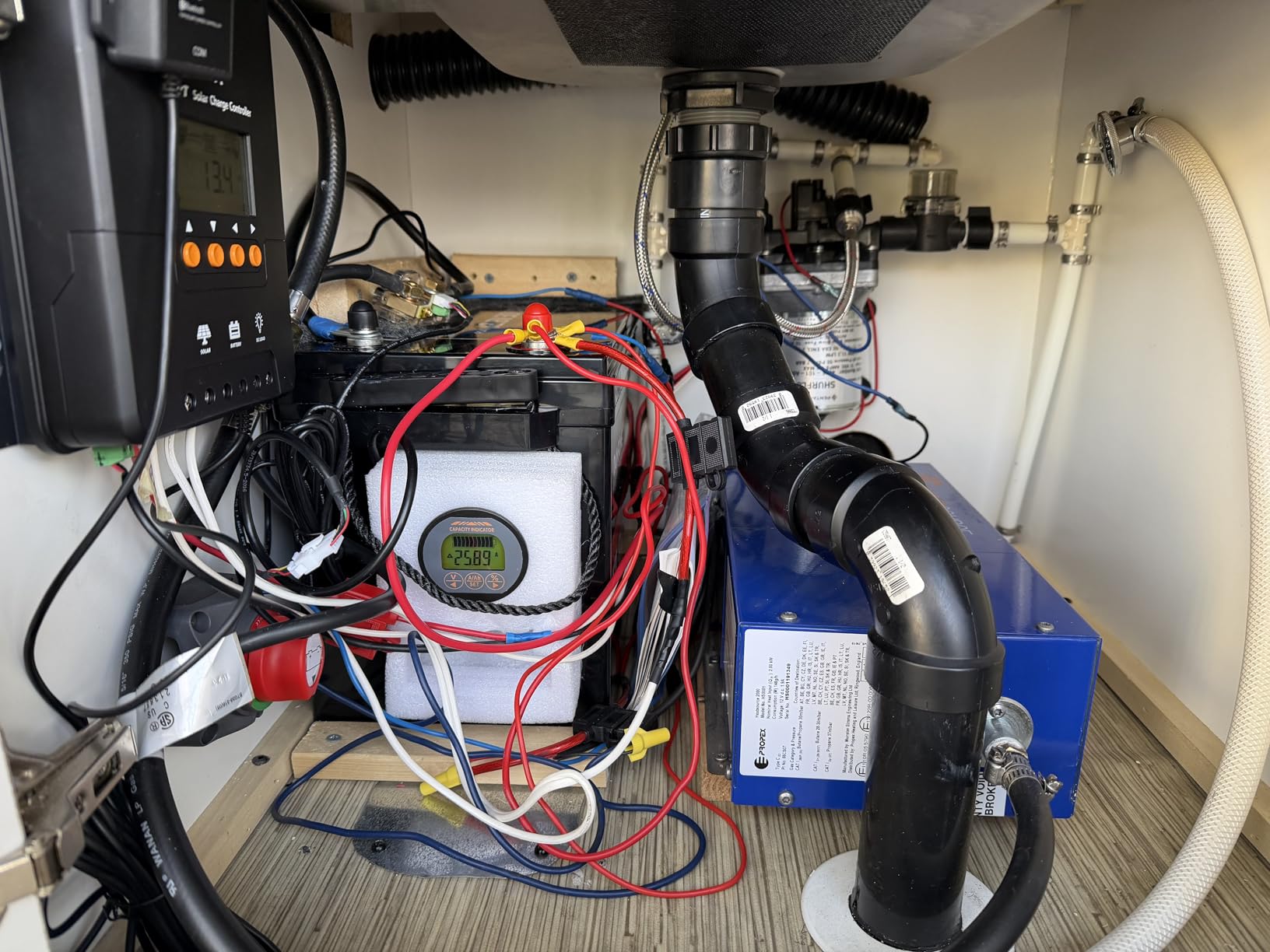
The 200A BMS covers overcharge, over-discharge, overcurrent, overheat and short circuit protection, and rated performance needs a charger delivering 5C or higher. Pair it with a lithium-profile converter or a Victron MPPT controller and it behaves like a much more expensive system.
Cycle Life Claims and What Depth of Discharge Means Here
The rated figures are 4000 cycles at 100% depth of discharge, and up to 15000 cycles at 60% depth of discharge. Those two numbers are not marketing fluff; the second is the honest one for most owners, because you rarely drain a pack to zero.
If you keep your bank between 40% and 90%, the higher cycle figure is realistic. If you regularly run to near empty, plan around the 4000-cycle number. At that rate this pack still outlives most lead-acid banks by a wide margin.
Weight and Physical Footprint
At roughly 61 pounds and measuring 15.16 by 7.6 by 9.84 inches, this is a middle-sized footprint that fits where 100Ah Group 24 cases would have gone, but it is not a physical drop-in for a single Group 24 position. Plan on measuring the bay.
Owners consistently single out the weight as better than expected for a 314Ah rating, which is where lithium earns its keep on payload-sensitive trailers. The IP65 waterproofing and high-strength impact-resistant ABS casing also matter if the bay is exposed to road spray.
The Reports You Should Not Skip
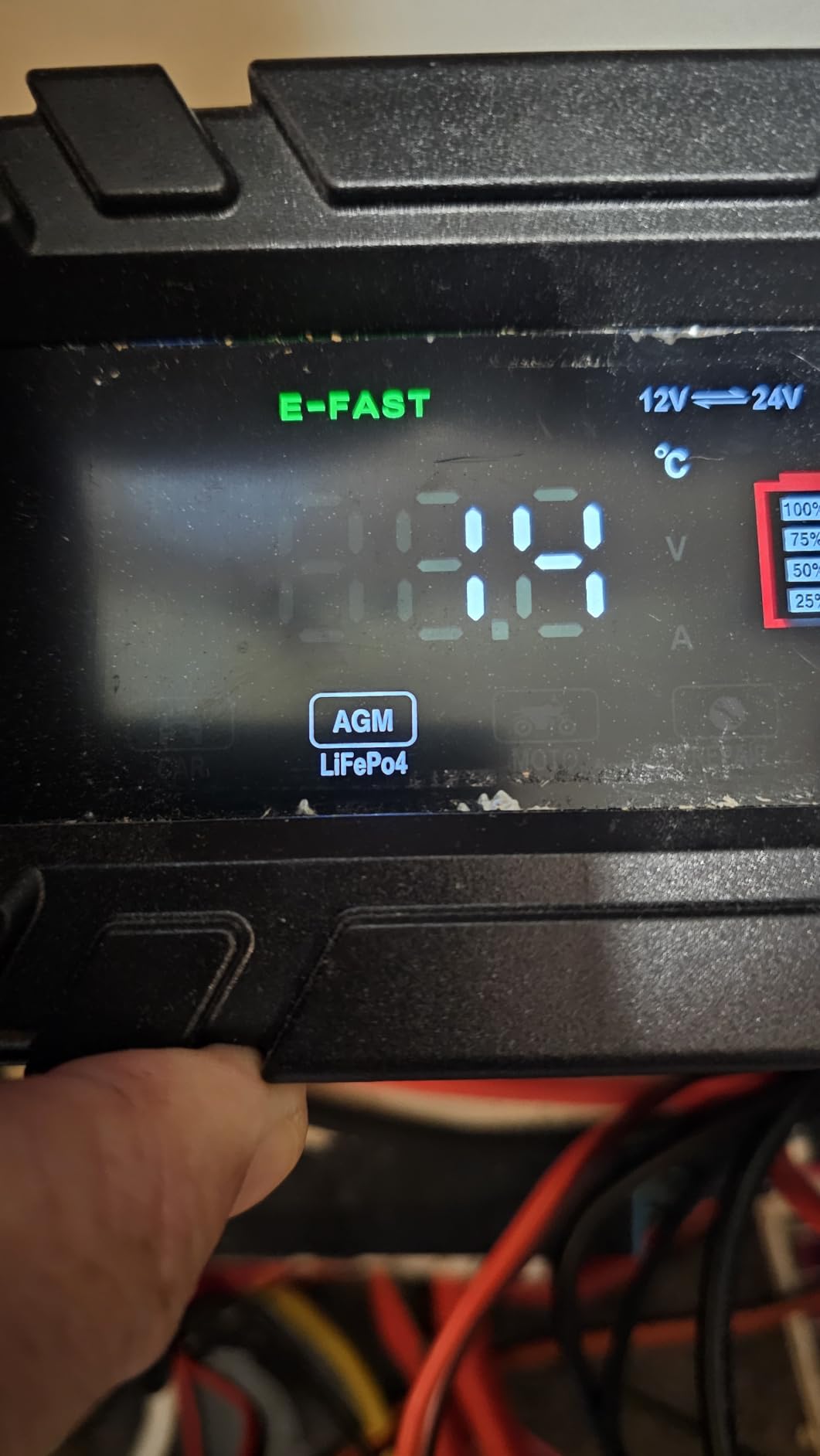
Three complaint patterns appear repeatedly enough to mention plainly. Some batteries arrive unable to accept charge and need a jump from another battery before they wake up. A small number stopped accepting charge after a single cycle. One documented failure occurred after about a year, with the BMS dropping into low-voltage cutoff during a high-reliability backup setup.
This is where the 4.4 average comes from. The failures are not widespread, but they are real enough that anyone running a medical device, a home server or a full-time residence on this pack should read the failure modes carefully.
Warranty Terms Are Narrower Than They Look
The warranty is five years but is advertised as direct-purchase only, which means marketplace purchases may complicate a claim. Customer service did replace a damaged pack quickly and without hassle for some owners, so the process works when it is started properly.
There is also no Bluetooth app and no self-heating. Cold-weather charging stops until the pack warms, which is a protection feature rather than a defect, but it does mean a winter boondocker needs a charging plan.
Charger and Converter Requirements
This pack requires a proper lithium-compatible charger and converter. That is not optional detail; feeding it a lead-acid profile leaves it chronically undercharged and is a common cause of the low-voltage cutoff complaints above.
Owners running Victron inverters and MPPT charge controllers report the cleanest integration of any large pack in this group. If your RV already has Victron hardware, that is a strong argument for this battery specifically.
5. WattCycle 12V 100Ah BCI Group 24 – Best for Tight Compact Camper Bays
- ✓Compact BCI Group 24 footprint
- ✓Runs fridges and 2kW inverters
- ✓Bluetooth remote state of charge check
- ✓Support honored warranty with replacements
- ✕Cold cutoff shutdowns reported not restarting
- ✕BMS failures reported within months in 48V banks
- ✕App connections inconsistent
100Ah
BCI Group 24
23.2 lbs
Built-in Bluetooth
A+ grade cells
The WattCycle stands out on one physical dimension: it is built to the BCI Group 24 footprint rather than the taller convention, measuring 10.24 by 8.23 by 6.61 inches at 23.2 pounds. In a shallow under-bed bay that is often the difference between fitting and not fitting.
Beyond dimensions, it has real capability. Owners run it with fridges, microwaves, 2kW inverters and diesel heaters in small campers, and the built-in Bluetooth lets you check state of charge and shut the battery off remotely when you are away from the rig.
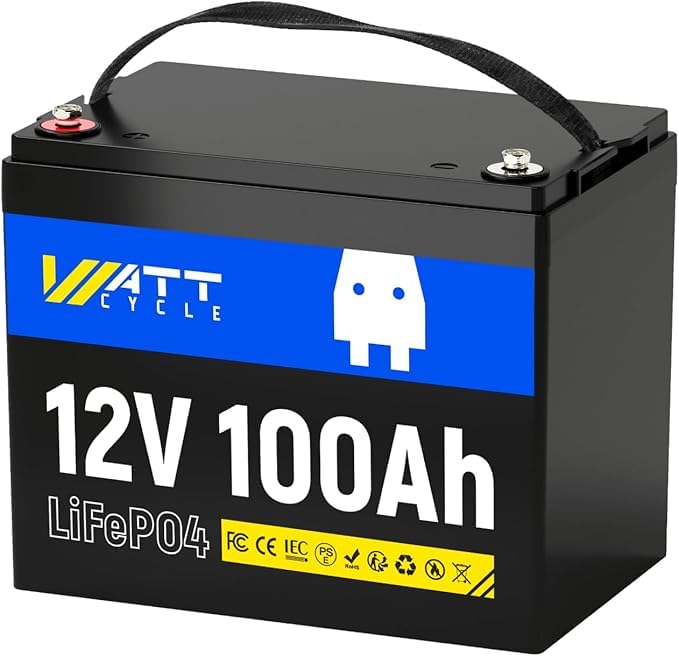
The box contains the battery, an instruction manual, insulating caps and four M8 screws, so you have what you need for the install without a second parts order.
Cell Grade and the 15,000-Cycle Figure
The pack uses A+ grade cells and is rated for up to 15000 cycles. Treat that as a best-case figure at shallow depth of discharge rather than a daily-use number, but it does indicate headroom in the cell grade.
The 100A BMS plate disconnects above roughly 300 amps plus or minus 50 during discharge, giving you a surge window for compressor startup. Operating range is listed from minus 4F to 158F, so cold discharge is not the problem here.
Cold-Weather Cutoff Behavior Is the Main Complaint
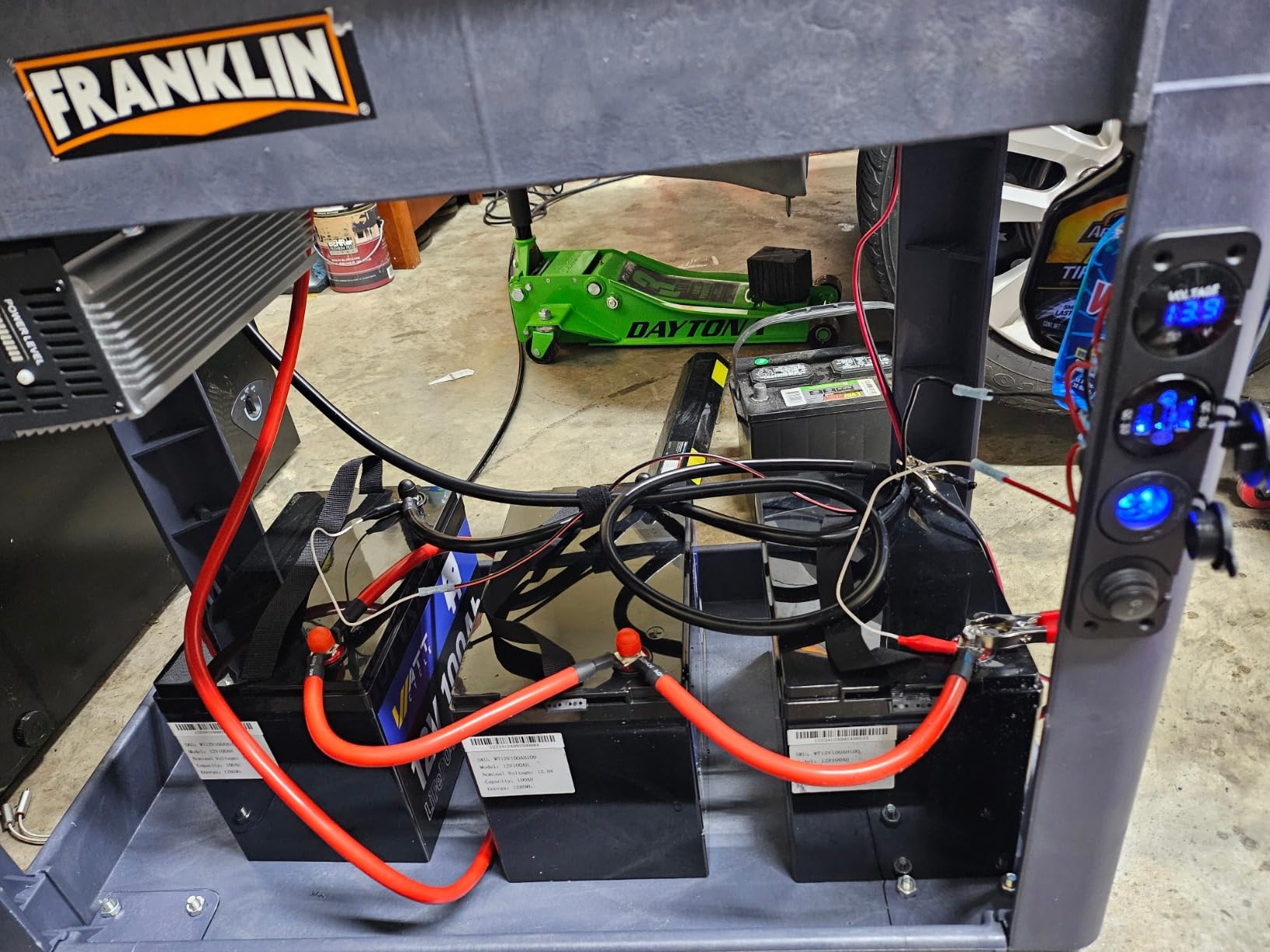
This is the one to weigh carefully. Owners report batteries that stopped charging after a cold-weather cutoff and would not restart. In a battery bank, two of three packs in one installation reportedly failed to recover the same way.
The cutoff itself is correct and protective behavior. The issue is recovery. If you winter camp with this battery, budget for charging discipline or keep it somewhere that stays above freezing.
App Instability and BMS Failure Reports
Two app ecosystems are in play here, BMS Meta and the WattCycle app, and both connect inconsistently according to owners, with the original app breaking after an update. Treat the Bluetooth feature as convenient rather than critical.
Separately, multiple reports describe BMS failures within months when batteries are wired into 48V UPS-style banks. That is a specific configuration rather than normal RV use, but it is a reason to stick to a four-unit parallel maximum and check your BMS behavior before building a large bank.
Support and Warranty Have Been Good
The five-year manufacturer warranty has been honored with full replacement packs and paid return shipping, which is better than many competitors at this tier. Technical support communication is described as sometimes confusing, so have your model number ready.
Against 570 reviews at a 4.3 average, the physical battery is well liked. It is the electronics layer that pulls the score down, and that is an honest trade if you can live with a shunt instead of an app.
Expansion and Certification
You can run up to four in series and four in parallel for a 20.48kWh maximum build. The pack carries SDS, UN38.3, FCC, CE and RoHS certification, which matters if your RV travels internationally or you need documentation for an insurance policy.
Low-temperature protection is included, and the included M8 hardware means the install is straightforward if your existing posts are M8 rather than the larger lead-acid studs.
6. Super Empower 12V 100Ah Group 24 – Best No-Frills Drop-In Energy Storage Battery
- ✓True drop-in Group 24 dimensions
- ✓21.6 lbs is a third lighter than lead-acid
- ✓1280Wh with a 100A BMS
- ✓Charging pauses below 32F
- ✕No Bluetooth monitoring
- ✕Not self-heating for winter charging
- ✕Needs a lithium-profile charger
100Ah 1280Wh
Group 24
21.6 lbs
100A BMS
5-year warranty
This one does less and costs less, and for a lot of owners that is exactly the right trade. It is a plain energy storage pack: 1280 watt hours, a 100A BMS, no app, no heating pad, and a 4.6 rating across 220 reviews.
The physical result is one of the cleanest drop-in fits we saw. At 21.6 pounds and 6.49 by 10.24 by 8.98 inches with M8 terminals, it installs into a standard Group 24 box with no modification, and at a third lighter than the equivalent lead-acid pack it frees real payload capacity.
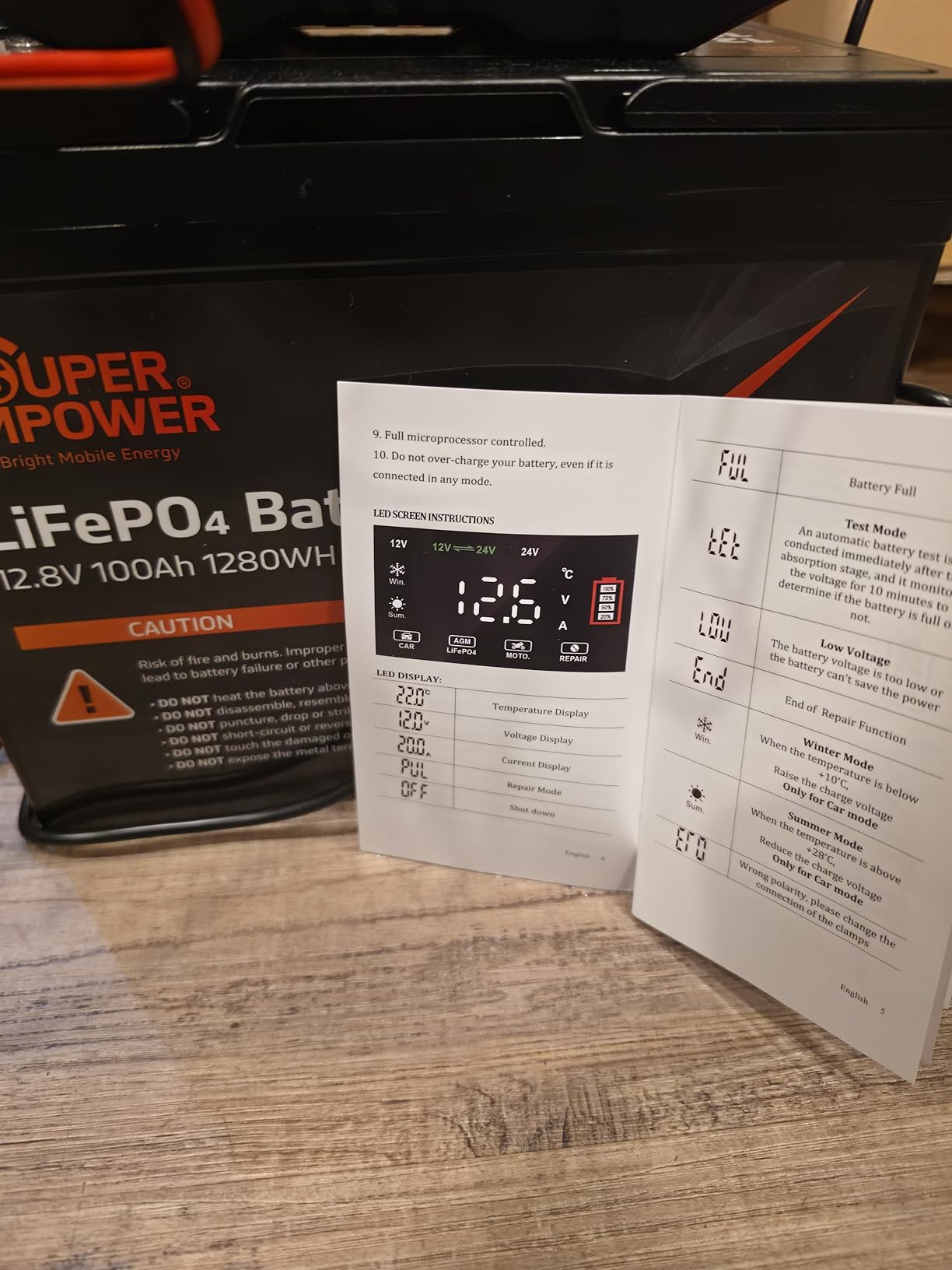
Owners like it for exact sizing, low weight and a clean installation in RV and marine applications. The recurring caveat is simple: it is a no-frills unit, so state of charge needs a separate shunt or monitor.
Temperature Protection Explained Step by Step
The protection profile here is unusually well specified. Charging pauses below 0C (32F). Discharge stops at minus 20C (minus 4F) and resumes above 5C (41F). That means you can still draw power in genuinely cold conditions, you just cannot charge until the pack warms up.
That behavior is exactly what you want from a battery that sits in a cold compartment with no heater. It protects the cells and it never lies to you about state of charge.
What You Give Up Without Bluetooth
Without Bluetooth you lose the ability to check state of charge from your phone and to shut the battery down remotely. For an owner with a battery monitor already installed, that is a minor loss. For an owner whose battery is in an inaccessible compartment, it means crawling into the bay.
Consider a shunt-based monitor as part of the budget if you go this route. The battery is otherwise a strong performer for the money.
Charger and Converter Requirements
The pack needs a lithium-profile charger, and non-lithium chargers are explicitly not recommended. That matters most on conversions, where an existing lead-acid converter will chronically undercharge a LiFePO4 bank.
Three professional charging options are supported, so once you have the right charger the daily routine is uneventful.
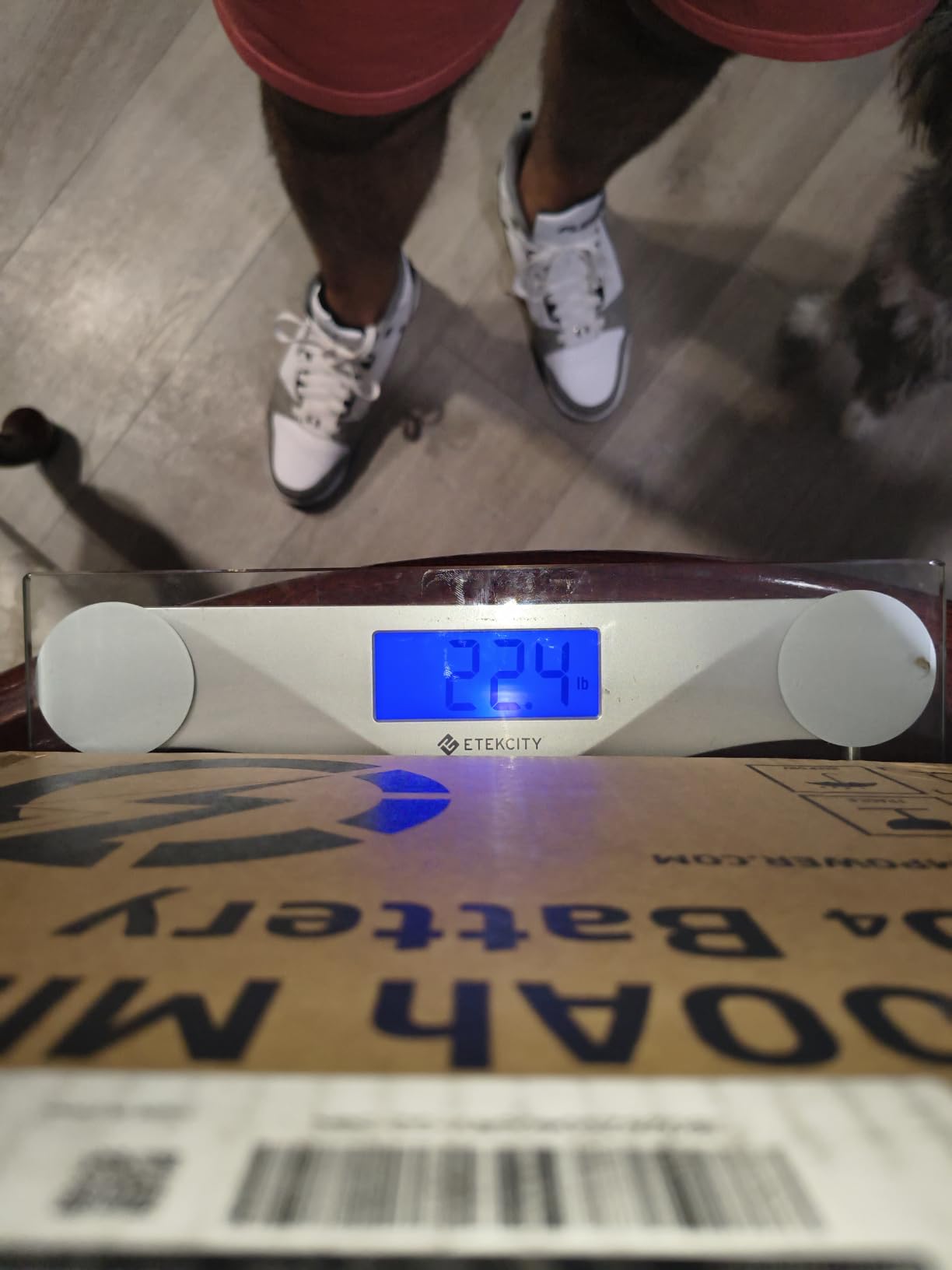
Cell Quality, Resistance and Expansion
Grade A LiFePO4 cells with 40 milliohms of internal resistance, which is on the lower side and helps with inverter loads. Maximum configuration is 4S4P for 51.2V at 400Ah, or 20.48kWh.
The battery is specified for energy storage use only, so it is not appropriate for engine starting, cranking or golf cart use. That is a limitation rather than a flaw, as long as you are replacing house power.
Warranty and Support
The five-year warranty comes with responsive technical support, which owners call out positively. At a 4.6 average with 220 reviews, the consistency of feedback is the strongest argument for this battery.
If you want monitoring and winter charging, spend up. If you want dependable energy storage and a clean physical fit, this is a genuinely good answer.
7. PUPVWMHB 12V 300Ah Bluetooth 200A BMS – Best App-Monitored 300Ah Bank
- ✓3840Wh with a 200A BMS
- ✓App reports cycle count and temperature
- ✓Over 80% capacity after 2000 cycles
- ✓Acid-free design mounts in any orientation
- ✕59 lbs is awkward to handle
- ✕App is shallower than LiTime's
- ✕Cold cutoff stops charging until warm
300Ah 3840Wh
200A BMS
Bluetooth app
59 lbs
5-year warranty
This is the 300Ah option with the most complete feature list at that capacity. It delivers 3840 watt hours, a 200A BMS, and Bluetooth app monitoring that reports current, voltage, temperature and cycle count, which is more data than most competing apps surface.
Buyers highlight the combination of 300Ah capacity, a 200A BMS and a mid-range price for RV, marine and home solar use. The feedback is positive, just less voluminous than the LiTime models.
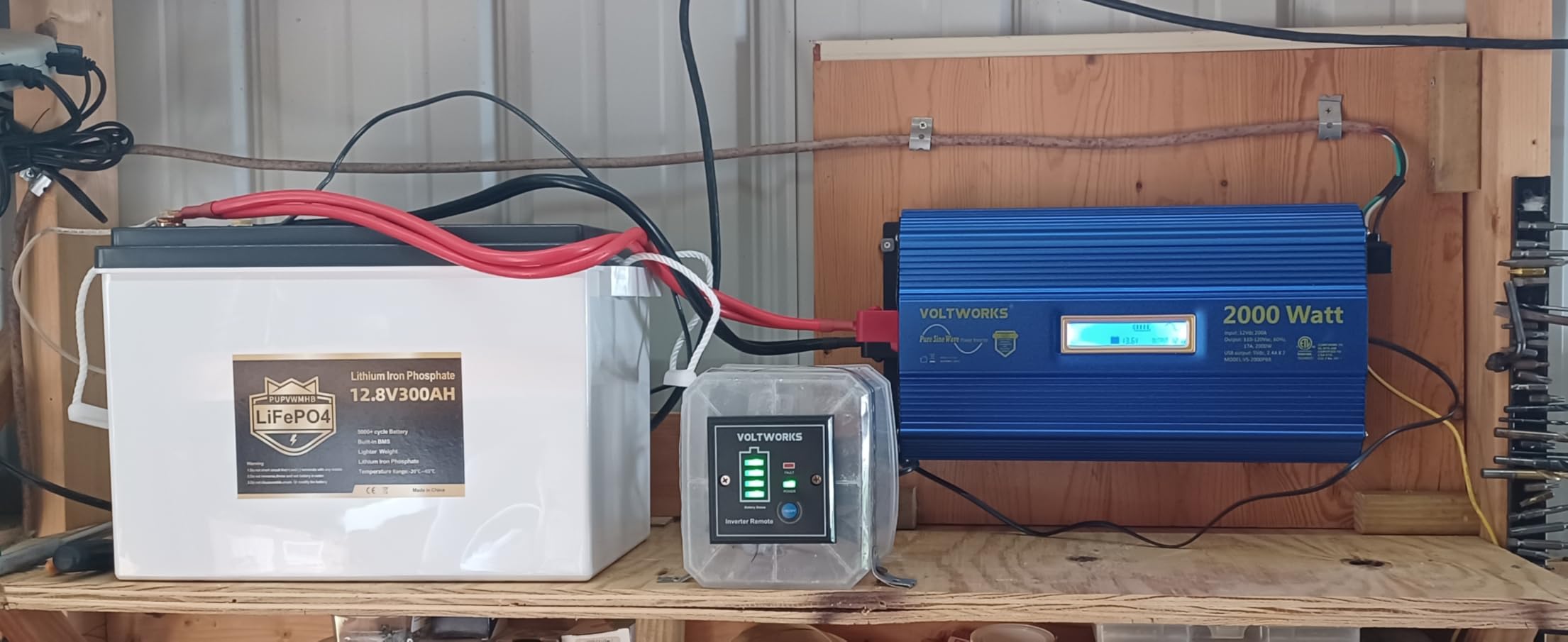
The cycle count readout is the sleeper feature. Knowing how many cycles a battery has taken tells you more about its remaining life than voltage ever will, and few competitors in this group give you that figure at all.
BMS Headroom for Inverter and Household Loads
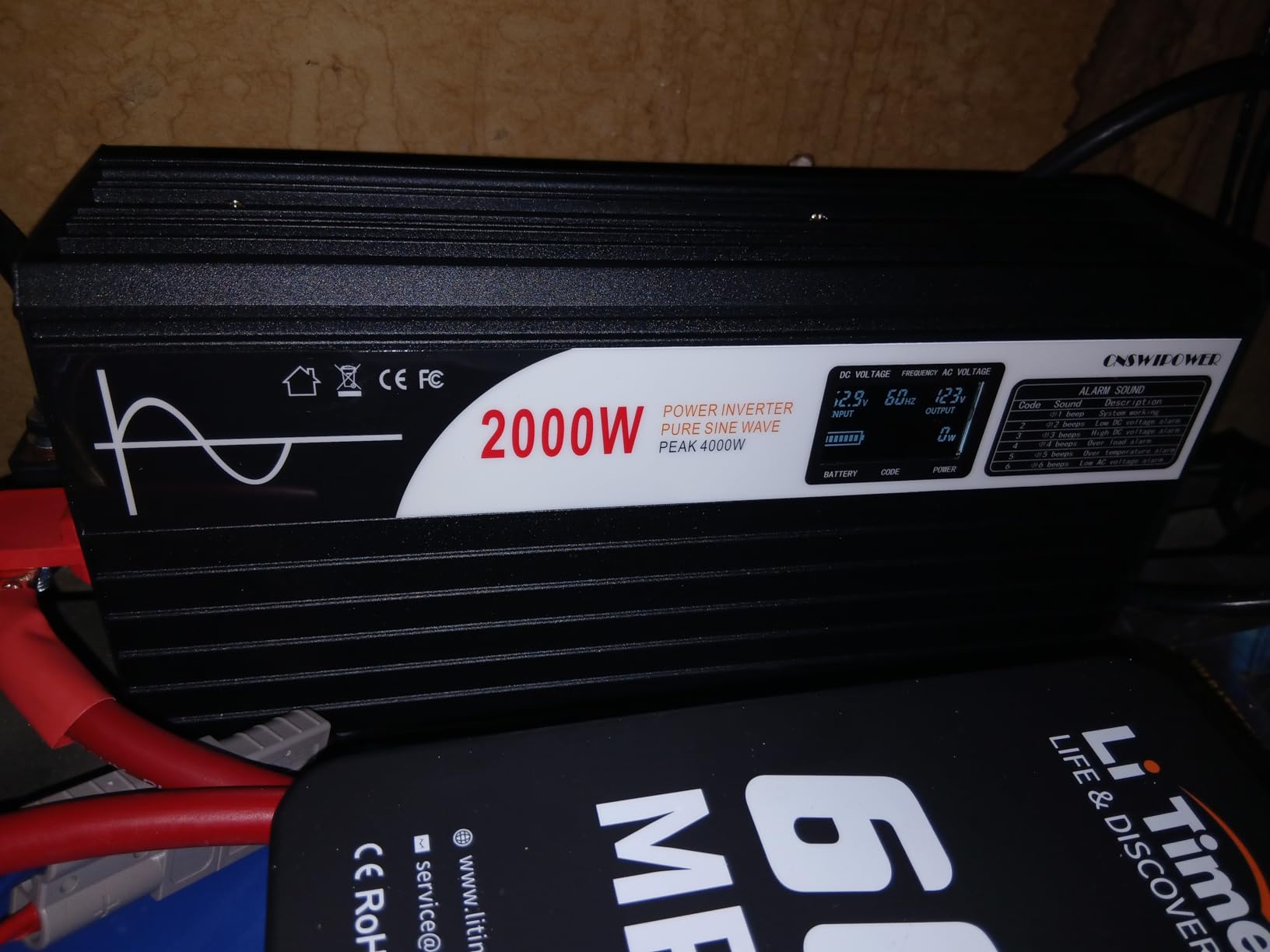
The 200A upgraded BMS handles inverter loads and heavy household appliances without breaking a sweat. At 300Ah, this pack is well matched to a 2000W to 3000W inverter running a microwave, a coffee maker and household devices on a moderate duty cycle.
Capacity expands to 1200Ah or 51.2V, up to 61.44kWh and 40.96kW of load power, so a serious solar build can start with this battery and grow.
Cycle Life Expectations at 80% Retention
The rated figure is that cell capacity remains above 80% after 2000 cycles. That is a more conservative and more meaningful claim than a headline cycle number, because it describes the point where you would start planning a replacement.
Cells carry a UL test certificate, and the acid-free chemistry means the battery can be mounted in any orientation, which is genuinely useful in awkward camper bays.
Weight and Handling
At 59 pounds and 13.58 by 7.48 by 9.64 inches, this is a two-person lift and a tight fit in a Group 24 bay. Measure before ordering, and consider whether your floor structure can carry the load near a wheel well.
Owners mention handling as the main physical drawback. The acid-free design means orientation is not a constraint, but weight still is.
App Depth Compared With the LiTime Ecosystem
The app reports the right things but goes no deeper. Compared with the LiTime app, it is limited in features and reliability, and some owners report less consistent connections. If app quality is your top priority, the LiTime packs are the better pick.
If you mostly want the cycle counter and temperature reading, this is enough, and it removes the need to buy a separate monitor.
Cold-Weather Charging and the Cutoff Release
Like most packs here, this one has a low-temperature cutoff, and charging stops in cold conditions until the pack warms up. There is no self-heating pad, so a frozen bay means a frozen battery that will not recharge.
Plan your charging around morning sun or shore power rather than expecting the pack to sort it out. The five-year warranty and 24-hour support are the parts of the package owners rate highly.
8. VEMDIA 12V 100Ah Group 31 – Best Lightweight Fit with Screw Terminals
- ✓True Group 31 drop-in with screw terminals
- ✓24 lbs is far lighter than lead-acid
- ✓About 5 hours full charge on a 20A charger
- ✓Low-temperature cutoff protects cells
- ✕2-year warranty is the shortest here
- ✕120 milliohm internal resistance is high
- ✕No Bluetooth monitoring
100Ah 1280Wh
Group 31 case
24 lbs
100A smart BMS
2-year warranty
The VEMDIA covers a fitment case none of the other batteries here do: a true Group 31 case with screw terminals at 12.9 by 6.6 by 8.5 inches and 24 pounds. If your battery box takes Group 31 rather than Group 24, this drops in without adapters.
Screw terminals are the other differentiator. Many modern lithium packs use M8 bolts, and owners upgrading from older lead-acid batteries with larger studs find that swap one of the annoying parts of a conversion.
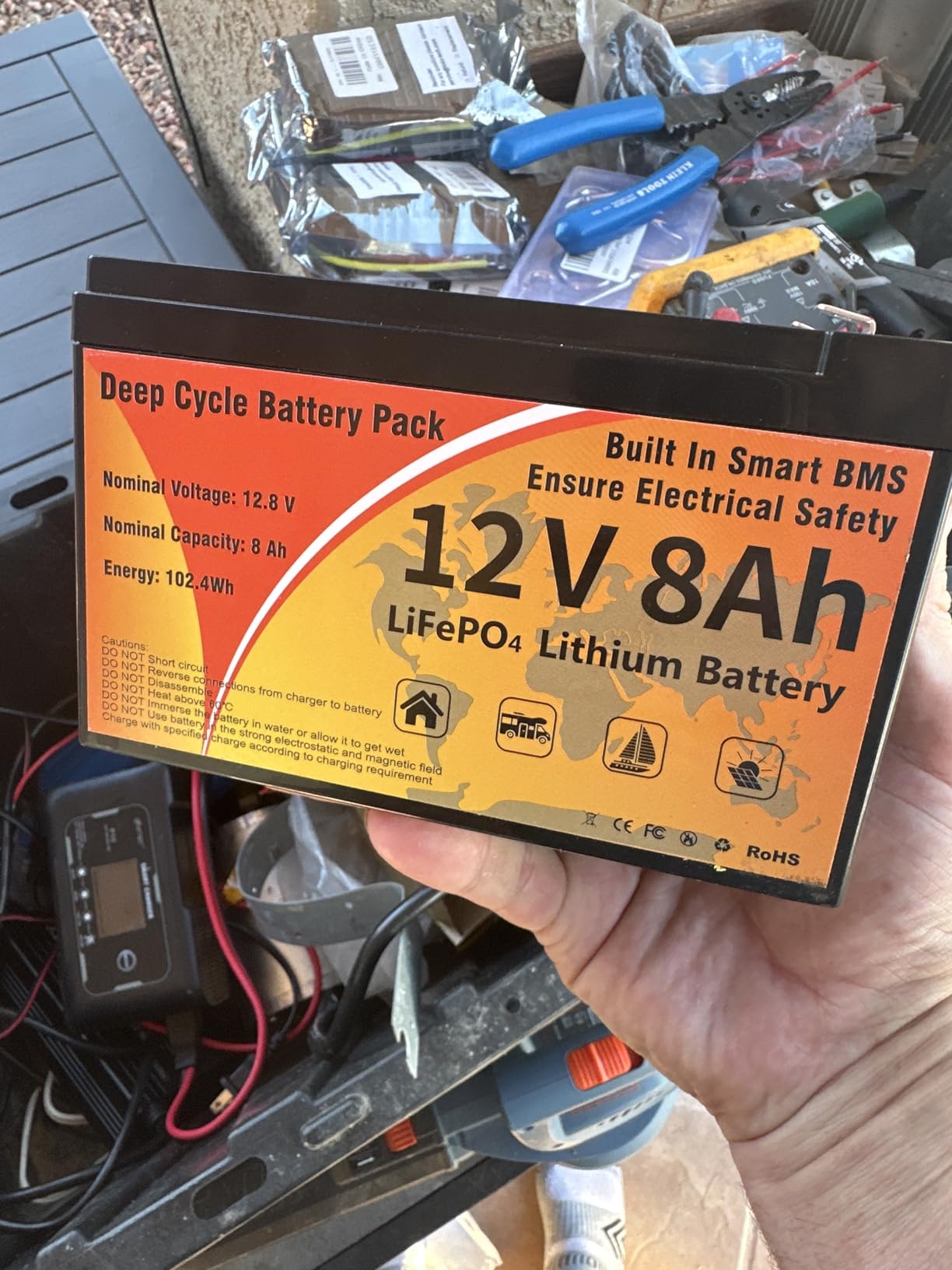
At 100 amp hours and 1280 watt hours it covers lights, a 12V fridge, a fish finder, a lawn mower or a small inverter. It will not run a rooftop air conditioner, and it is not designed to.
Charge Time and the 20A Changer Scenario
Full charge takes roughly five hours with a 14.6V 20A LiFePO4 charger. That is one of the more useful real-world numbers on any battery in this roundup, because it tells you how long you are waiting at a campsite with a small generator or a 20A solar controller.
Compare that to a large 100A bank, where a full recharge from empty can run most of a day. Faster absorption recovery means more usable solar hours per day.
Internal Resistance and What It Costs You
The listed internal resistance is 120 milliohms, noticeably higher than the 40 milliohms of the Super Empower pack. Higher internal resistance means more voltage sag under heavy current and slightly less efficient energy delivery.
For typical RV loads at moderate draw this is not a practical problem. For sustained high-current inverter use it is worth pairing with two batteries in parallel rather than pushing one hard.
Cycle Life Claim and Depth of Discharge
Rated figures are 4000 to 15000 deep cycles depending on depth of discharge, with more than 15000 at 60% depth of discharge. As with the other packs in this lineup, plan on the lower number if you regularly discharge deeply.
Discharge is rated from minus 4F to 140F, and charging cuts off automatically below 32F. That cutoff is protective behavior, and owners treat it as a feature rather than a limitation in cold RV weather.
The Two-Year Warranty Is the Weak Point
Every other battery here carries five years of warranty coverage except this one, which has two. That is the single largest difference between the VEMDIA and its competitors, and it is why a 4.3 average across 186 reviews is not higher.
Against that, support is US-based with a 24-hour response guarantee, which matters more than warranty length alone if something goes wrong in the first two years.
No Bluetooth and No Heating
There is no app and no self-heating pad, so state of charge needs a separate monitor and cold charging depends on ambient temperature. Expansion runs 4S4P up to 51.2V, 400Ah and 20.48kWh.
The box includes insulating caps and M8 terminal bolts. If your application list includes marine engine starting, note that this pack is not designed for cranking despite the compatible-with list on some listings.
How to Choose a Lithium RV Battery for Your Rig
Specs only matter relative to what you run. These are the decisions that actually determine whether your bank works, and most of them are made before you open the box. The lineup below reflects what is currently shipping for 2026 model-year rigs, so sizes and BMS figures are worth re-checking against the listing before you buy.
How much capacity you actually need, in amp hours
Start with your daily load in watt hours, not with a number from a listing. Walk your rig and add up the draw of the fridge, lights, water pump, furnace fan, inverter and anything you plan to run off battery, then multiply by the hours you expect to be off grid. Divide by 12V and you have your required amp hours.
Roughly: lights, phone charging and a water pump need about 200Ah. Add a 12V fridge and you are near 300Ah, and if you are choosing that appliance, our guide to the best RV refrigerators is worth reading before you size the bank around it. Add a 12V air conditioner, a microwave or a coffee maker through a 3000W inverter and you are in the 400Ah to 500Ah range. Full-time off-grid living usually means a bank rather than a single battery.
Then check the BMS rating in amps against your inverter size. A 3000W inverter at 12V wants roughly 250 amps, so pair it with a pack rated at or above that.
Why the BMS matters more than the amp-hour number
The battery management system is the component that decides whether your cells survive. It handles over-discharge, overcharge, overcurrent, short circuits and temperature limits, and its current rating determines how much inverter load you can actually run.
Two BMS behaviors matter more than the rest. Look for one that auto-recovers from an overload after a short delay rather than latching off, and look for one that refuses to charge below 32F rather than forcing a charge into cold cells.
The 32F charging cutoff and cold-weather camping
Lithium iron phosphate cells cannot safely accept a charge at or below 32F (0C). Charging below that threshold can plate lithium onto the electrodes and permanently reduce capacity. Nearly every battery in this lineup enforces a cutoff, which is why so many owners get surprised by a battery that will not charge in January.
You have three options. Buy a self-heating pack, like the LiTime model above, which warms the cells before charging. Keep the battery above freezing by parking in a heated space or removing it and storing it indoors between trips. Or use charging discipline and simply do not charge when the pack is cold.
Bluetooth monitoring and where the battery lives in your RV
If your battery sits under a slide-out floor or in an exterior compartment, Bluetooth is close to essential. Four of our eight picks include app monitoring, and the differences are real: the LiTime and PUPVWMHB apps report cycle count and temperature, while the VEMDIA, Super Empower, dumfume and 460Ah LiTime packs have no app at all.
For those four, budget a shunt-based monitor. It is a small addition that restores the visibility you lose.
Single-purpose versus dual-purpose lithium batteries
Almost every battery in this roundup is a single-purpose energy storage pack, and they explicitly are not for engine starting. Your chassis starter battery is a separate job, and mixing the two is how people end up with a dead 100Ah pack on a Monday morning.
Dual-purpose lithium batteries carry a cold cranking amp rating and can do both jobs. They are a separate purchase from this list, and most owners who want one are also the ones who should budget for a heated premium model. Our picks for the best golf cart batteries cover the high-draw short-burst end of the market if your rig also tows a cart.
Converting an existing lead-acid RV: the converter question
This is the hidden cost almost no one warns you about, and it is the single most useful thing on the RV forums right now. An owner on r/traveltrailers described swapping the RV power converter for an identical-wattage unit configured for LiFePO4, and nothing happened differently until they did.
Why it matters: lead-acid converters finish a bulk charge at a higher voltage and then float. A LiFePO4 pack charged on that profile sits perpetually undercharged, which owners report as batteries that will not hold a full charge or that hit low-voltage cutoff early.
Before you buy, check your converter model and confirm it has a lithium or adjustable charge profile. If it does not, add a lithium-profile converter to your budget. Several batteries in this roundup, including the dumfume pack, explicitly state that a lithium-compatible charger is required.
Are lithium RV batteries worth the money for a hookup camper?
Honest answer: mostly for the weight, not the runtime. If you camp at hookups ninety percent of the time, the extra capacity rarely gets used. What you do get is roughly half the battery weight, which directly adds to your payload rating for gear, a generator or an e-bike.
Where lithium clearly wins is off-grid and solar use, which is the consensus across RV owner forums. Flooded lead-acid batteries still have defenders in some situations, particularly for very low-draw rigs parked for long stretches, so the switch is not mandatory for everyone.
Beyond that, lithium roughly doubles your usable capacity because you can discharge to near zero safely rather than fifty percent, runs thousands of cycles instead of hundreds, charges efficiently on solar, and mounts in any orientation. If you boondock more than a few weekends a year, the payback is straightforward.
Plan the physical side at the same time. A large 300Ah or 460Ah pack may need a bigger battery box than the one you have, and any bay needs to be ventilated and securely strapped down before you load 86 pounds into it. If your rig spends the summer uncovered, our guide to the best RV covers is worth a look alongside the electrical work.
Frequently Asked Questions
Which brand of lithium battery is the best?
For most RVs, LiTime is the strongest overall brand, with three models in our lineup and the highest-rated unit in the group at 4.7 stars. WattCycle and Super Empower cover the compact Group 24 bay, while dumfume and PUPVWMHB offer the best 300Ah and app-monitored options. The best brand depends on your bay dimensions, your inverter size and your climate rather than on any single ranking.
Which brand of LiFePO4 battery is considered the best?
LiFePO4 is the only lithium chemistry most RV owners should buy. Within LiFePO4, LiTime is most widely endorsed by owners, Battle Born and Dakota Lithium are the premium references in forum consensus, and LiTime, Vatrer and WattCycle cover the value tiers. All eight batteries in our roundup are LiFePO4, and buyers should avoid listings that say only lithium-ion or lithium-polymer.
Are lithium batteries worth it for RV?
Yes for anyone who boondocks, runs solar or cares about payload, because a LiFePO4 battery gives roughly twice the usable amp hours of lead-acid at about half the weight and lasts thousands of cycles. For a camper who parks at hookups almost exclusively, the gain is mostly weight savings and may not justify the higher cost. Add the possible cost of a lithium-profile converter when budgeting a conversion.
Which brand of lithium RV battery is the most reliable?
Reliability tracks warranty length and support, and in our lineup LiTime, WattCycle, Super Empower, PUPVWMHB and dumfume all carry five-year warranties. The WattCycle has documented warranty replacements with paid return shipping, and Super Empower support is described as responsive. The dumfume warranty is direct-purchase only, so marketplace buyers should confirm coverage first.
What is the best lithium battery for a motorhome?
For a Class A motorhome with an inverter and air conditioner loads, you need 400Ah or more and a BMS rated at 250 amps or higher, which points to the LiTime 460Ah Group 8D or a 300Ah pack like the PUPVWMHB. Smaller Class B and Class C rigs are well served by a single 100Ah Group 24 lithium battery such as the LiTime or Super Empower models.
Are lithium batteries the best for RVs?
LiFePO4 is generally the best chemistry for RV house power, with twice the usable depth of discharge, roughly half the weight, thousands of cycles and no maintenance. AGM remains a reasonable step up from flooded lead-acid where cost matters most, and flooded lead-acid still has defenders among owners of very low-draw rigs. For solar and off-grid use, lithium is the consensus winner.
Do I need to replace my RV converter for lithium batteries?
Often, yes. A lead-acid converter charges to a higher finishing voltage and then floats, which leaves a LiFePO4 pack chronically undercharged and can trigger early low-voltage cutoff. Check whether your converter has a lithium or adjustable profile, and if not, budget a lithium-compatible converter of the same wattage. Several batteries in this roundup explicitly require a lithium-profile charger.
Can I run an RV air conditioner off lithium batteries?
Yes, but you need substantial capacity and a matching BMS. A rooftop air conditioner through an inverter can draw well over 100 amps, so a 100Ah pack will only run it briefly. For overnight air conditioner use you want 400Ah or more with a 250A BMS, which is exactly what the LiTime 460Ah Group 8D is built for.
How long do lithium RV batteries last?
Expect a service life measured in years rather than seasons. Manufacturer-rated figures in our roundup range from 4000 cycles at full depth of discharge to more than 15000 cycles at partial discharge, and warranties run from two years on the VEMDIA to five years on most of the others. Calendar aging still applies, so plan on capacity checks after several seasons of heavy use.
Which Lithium RV Battery Should You Buy?
Start with the Litime 12V 100Ah Group 24 BT if you want one battery that drops into an existing box, weighs 21 pounds and reports state of charge from your phone. It is the default choice for most Class B and Class C rigs.
If you camp below freezing, move up to the self-heating Litime 100Ah, which charges safely in a cold bay and carries the highest rating in our lineup. If your load is a rooftop air conditioner or a 3000W inverter, go straight to the Litime 460Ah Group 8D, or step down to a 300Ah pack such as the PUPVWMHB if the bay is tight.
For shallow bays, the WattCycle BCI Group 24 is the compact option and the VEMDIA Group 31 covers boxes that take screw terminals. Before any of them go in, confirm your converter has a lithium charge profile and measure the box. Those two checks prevent nearly every problem we saw in owner reports.
Whichever you pick, do the math on your actual daily load first. A battery sized to your rig will outlast any battery you over-buy, and you can always add a second unit later since every model here supports parallel expansion. That is the short version of the best lithium RV batteries decision for 2026.






Leave a Comment