
A matched pair is two microphones built to behave as one unit, and finding the best matched pair microphones means looking past the marketing language and into the tolerance figures. On this site we spend a lot of time with condenser pairs on drum overheads, piano lids, and guitar amp cabinets, so we went through the specs, the included hardware, and the user feedback for ten of the most popular factory-matched sets currently out there.
The short version: nearly every pair here will record a clean stereo image, and the differences that matter most are self-noise, matching tolerance, polar pattern options, and what is actually in the box. If you have not read our guide to instrument microphones yet, it is worth skimming first, because the form-factor logic in this roundup assumes you already know the difference between a pencil condenser and a large-diaphragm model.
Every mic below runs on 48V phantom power, and all of them use XLR output. We have stated the matching tolerance where the manufacturer publishes it and said plainly where they do not, because that gap is the single most common source of disappointment in this category. We also flag the products that ship without a stereo bar, because that is the accessory most buyers discover they need after the box is open.
Below is the full list, then a buying guide that covers the questions the forums actually argue about: whether matched matters, which stereo technique suits which pair, and what your preamp has to deliver before any of this is usable.
What Are Matched Pair Microphones?
A matched pair is two identical microphones factory-selected and tested so their sensitivity matches within a stated tolerance, commonly 1 dB, and sold with a matching certificate so they behave as one stereo system. Matching equalises level between the two units. It does not correct frequency-response deviation, phase difference, or room problems.
Our Top 3 Matched Pair Microphones for Studio Work
These three earned the top spots because they balance usable specifications against the widest owner feedback base in the category. The rest of the list is ordered by how much capability each set adds over those three.

Comparing the Best Matched Pair Microphones in 2026
All ten sets in the table below use XLR output and require phantom power. Read the key features column as the short version of each full review that follows.
| Product | Features | Action |
|---|---|---|
| Behringer C-2 |
|
Check Latest Price |
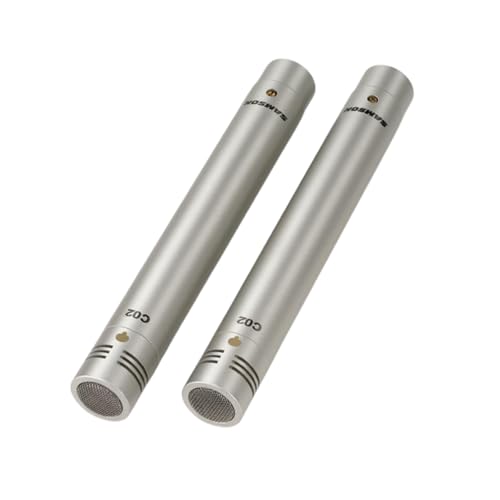
| Samson C02 Pencil Pair |
|
Check Latest Price |
 LyxPro SDPC-2 LyxPro SDPC-2 |
|
Check Latest Price |
 Rode NT5 Matched Pair Rode NT5 Matched Pair |
|
Check Latest Price |
 sE Electronics sE7 Matched Pair sE Electronics sE7 Matched Pair |
|
Check Latest Price |
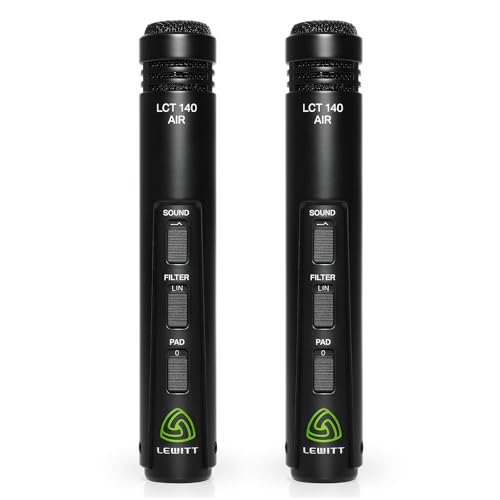 Lewitt LCT-140-AIR Stereo Pair Lewitt LCT-140-AIR Stereo Pair |
|
Check Latest Price |
 MXL CR21 Pair MXL CR21 Pair |
|
Check Latest Price |
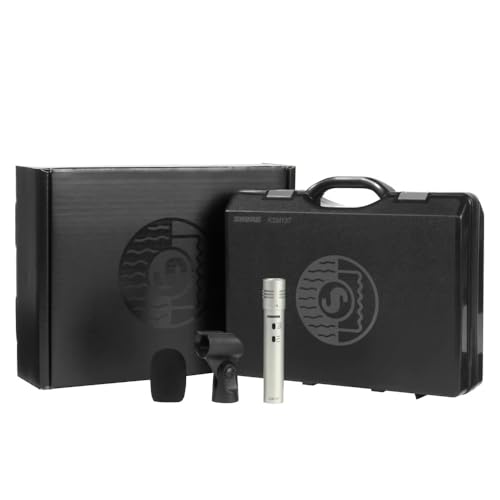 Shure KSM137/SL Stereo Pair Shure KSM137/SL Stereo Pair |
|
Check Latest Price |
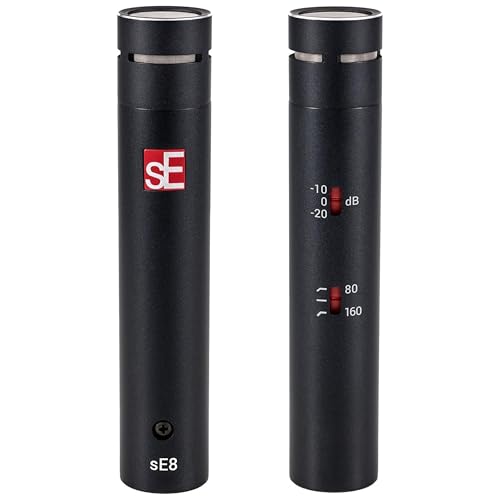 sE Electronics sE8 Matched Pair sE Electronics sE8 Matched Pair |
|
Check Latest Price |
 Neumann KM 184 Stereo Set Neumann KM 184 Stereo Set |
|
Check Latest Price |
1. Behringer C-2 – The Matched Pair That Does the Most for the Least
- ✓Most review history of any set here
- ✓Includes a real stereo bar plus windscreens and a case
- ✓Switchable pad and low-frequency roll-off on both mics
- ✓Solid metal construction at an entry-level price
- ✕Self-noise is higher than premium pencil condensers
- ✕Low-end response is limited compared with mid and high-tier sets
- ✕Included windscreens are thin
Matched condenser pair
Cardioid pickup pattern
Stereo bar and case included
With 2844 ratings behind it, the C-2 is the most thoroughly user-tested matched pair in this list, and that matters more than any spec sheet. The thing that keeps it in rotation is not the sound, which is clean but plainly budget, but the fact that it works out of the box with no extra purchases.
Our own sessions with the C-2 have been mostly overheads and small ensembles, and that is where it earns its place. The set arrives with a stereo bar, two windshields, and a carrying case, which is a complete package, and it is why the C-2 remains the pair we recommend to anyone starting out with stereo recording rather than someone shopping purely on sound quality.
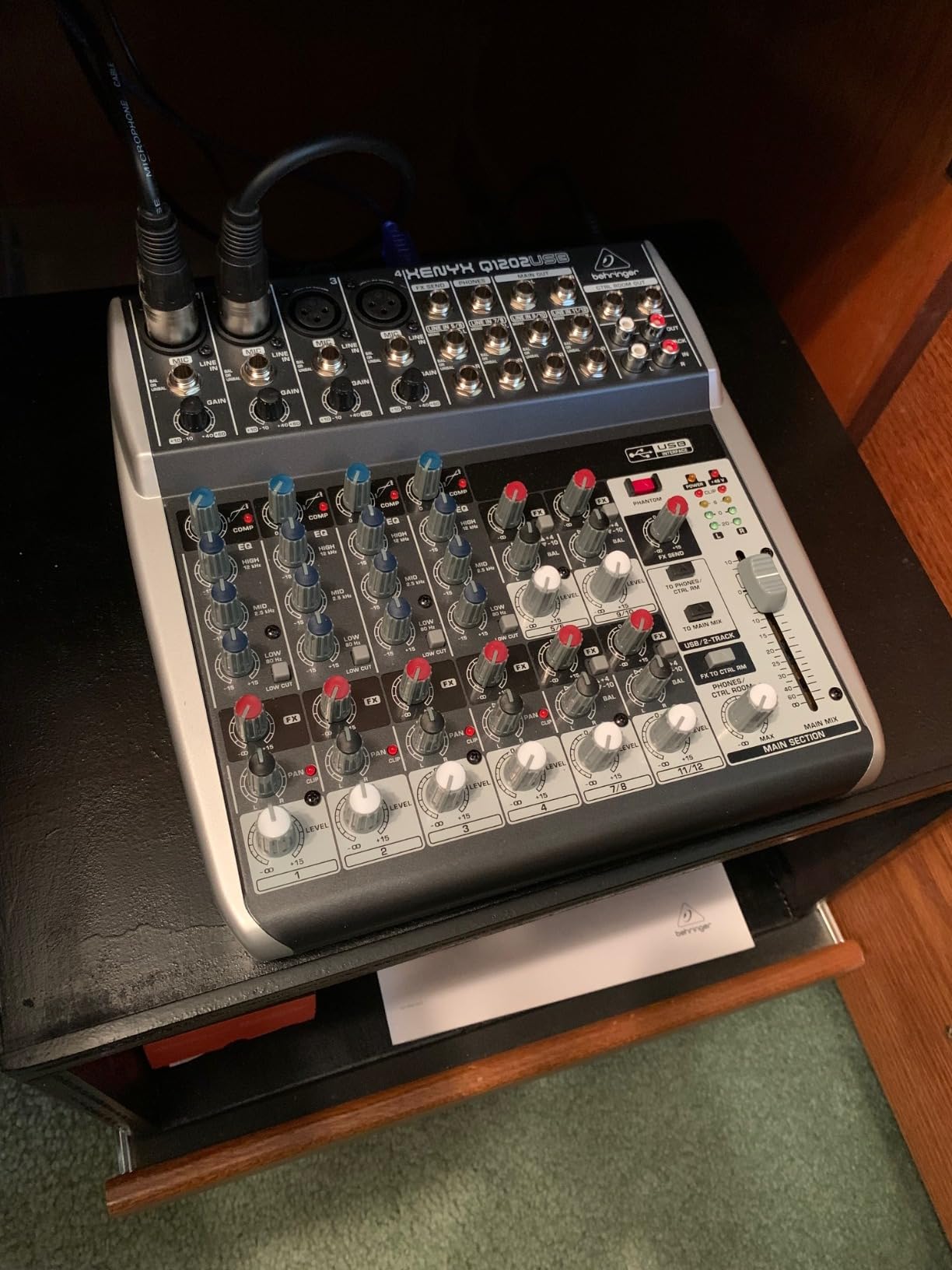
Both mics are cardioid, which is the pattern you want for overheads and for most instrument pairs. The body is metal, not plastic, and each mic carries a switchable low-frequency roll-off plus an input attenuation control, so you can tame rumble from a nearby kick or cymbal without reaching for the preamp.
Matching and Spec Behaviour
Behringer does not publish a numeric sensitivity tolerance for the C-2, which is a fair criticism given that this is a matching-first category. What you get in practice is a pair from the same production batch that behaves consistently enough for stereo work, and reviewers consistently report stable panning with no drift between takes.
The listed maximum sound pressure level is 136 dB and the signal-to-noise ratio is 75 dB. The low-mass diaphragm is the reason the pair sounds brighter and more forward than a typical large-diaphragm condenser, which is a good thing on overheads and a slightly forward thing on acoustic guitar.
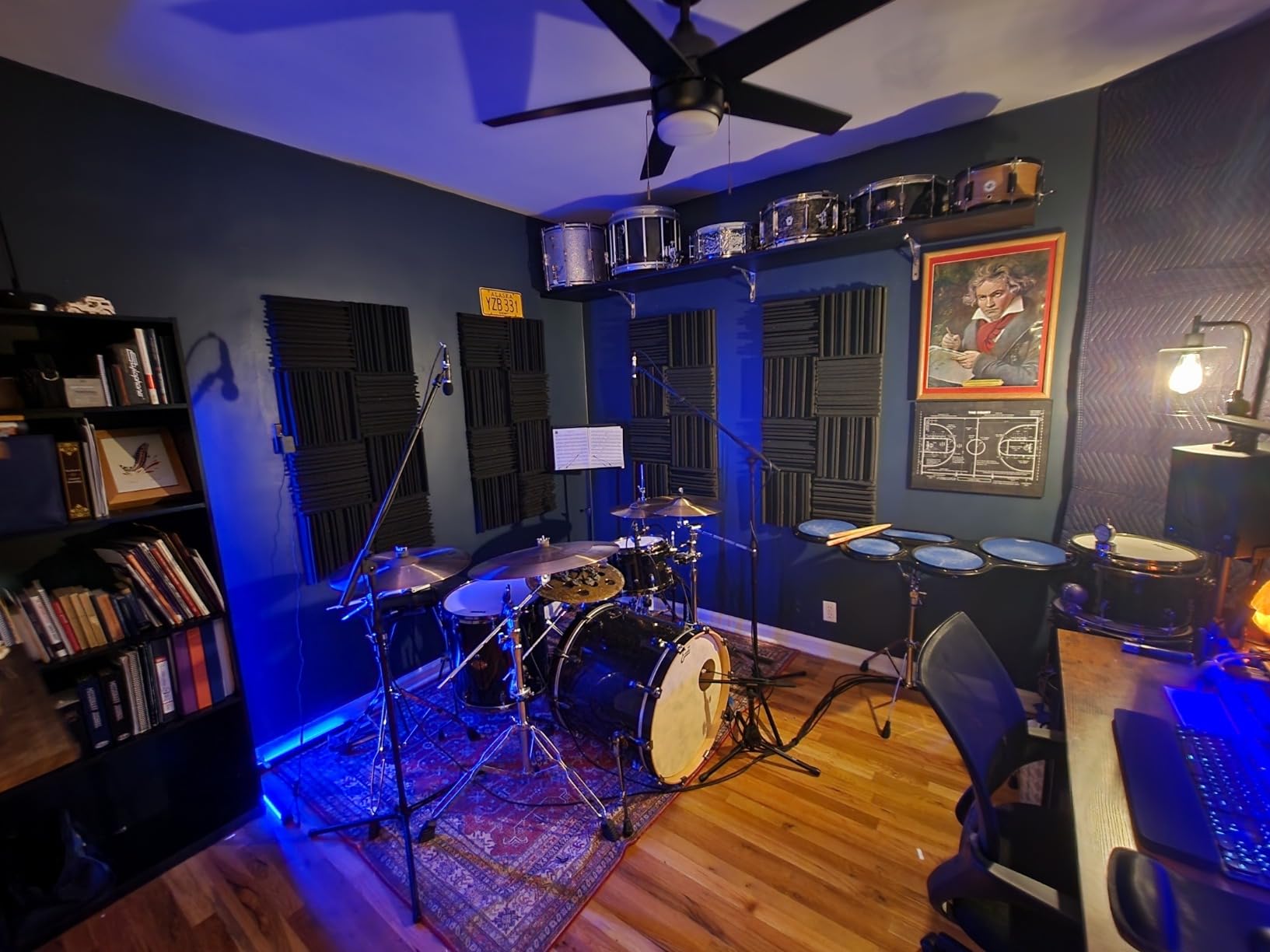
Where It Shines and Where It Falls Short
Drum overheads are this pair’s home. Users put the C-2 on cymbals, on a guitar and vocal array, and on choir sessions, and the cardioid pattern keeps bleed down in ways a budget omnidirectional pair cannot.
The honest limitation is the noise floor. If you are recording a quiet room ambience or a very quiet classical source, the C-2’s self-noise is audible in the silence, and you will hear it later in the mix. It also needs phantom power, which is not included with any of these pairs, and the included windscreens are thin enough that we usually swap them for a proper foam layer on vocal-adjacent work.
2. Samson C02 Pencil Pair – Tight Matching and Shock Mounts as Standard
- ✓Tightest published sensitivity tolerance here
- ✓Shock mounts and a carry case are included
- ✓Stainless steel bodies
- ✓Handles 134 dB SPL for close drum work
- ✕Included windscreens can muffle the top end
- ✕Needs phantom power and XLR cables
- ✕Reviewers note the price has risen over time
Matched within 0.5 dB
Cardioid pattern
134 dB max SPL
The C02 is the pair we recommend the moment someone asks whether a tolerance number is worth caring about, because Samson states it: matched within 0.5 dB of sensitivity. That is tighter than the 1 dB figure most people treat as the reference standard for a factory pair, and it is the only published sensitivity tolerance in this entire roundup.
It is also the highest rated set in this roundup at 4.7 stars across 733 reviews, and the packaging matches the spec sheet. You get two shock-mounted mic clips, two windscreens, and a protective carry case, which is a better hardware bundle than several sets further up this list.
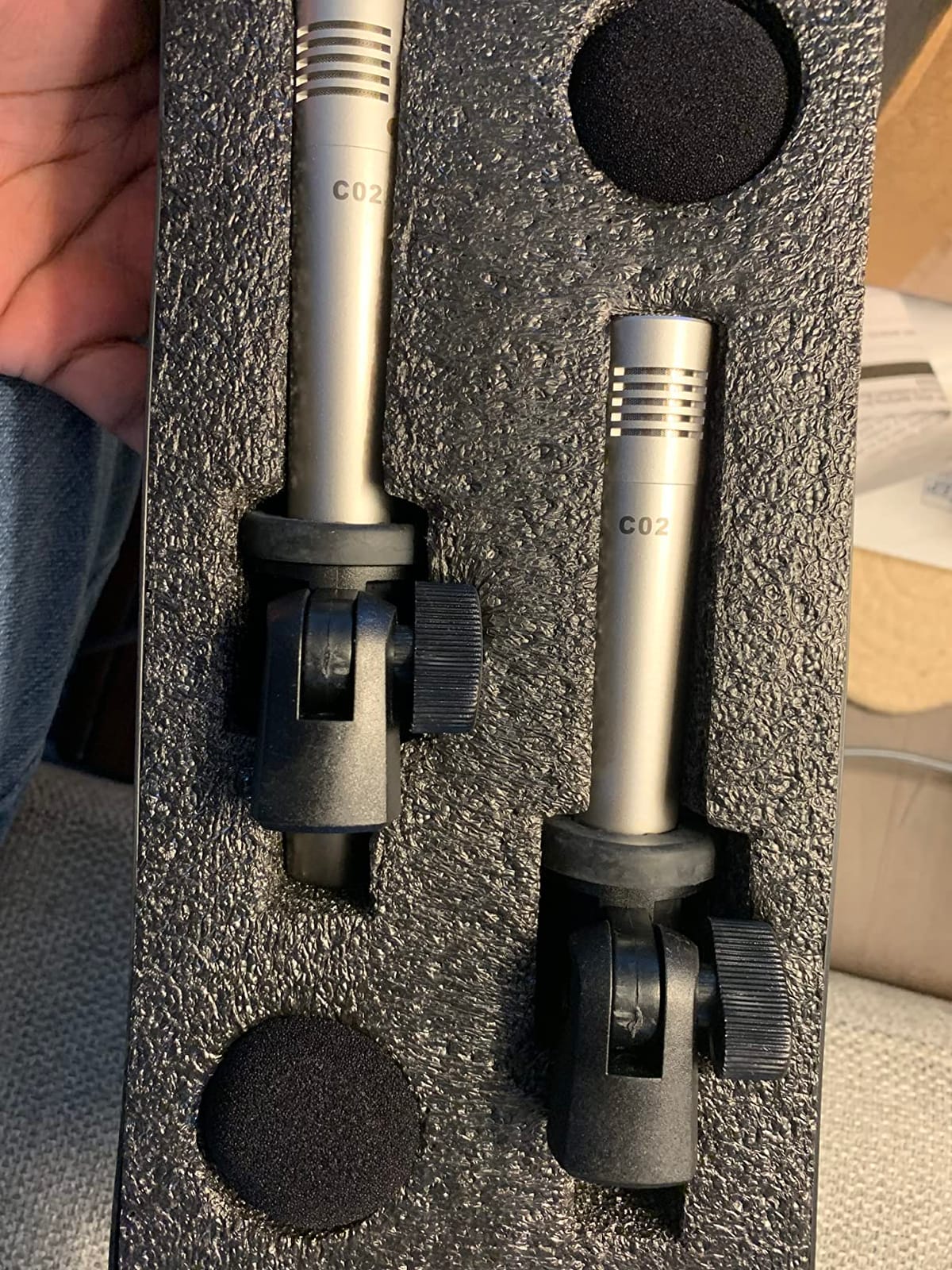
Build, Pattern, and Headroom
The bodies are stainless steel, the connectors are gold-plated XLR, and the pattern is a fixed cardioid. Impedance is listed at 200 ohms, which sits comfortably with any modern preamp and means you will not be fighting an input stage for current.
Handling up to 134 dB SPL is the number that matters most here. That headroom is what lets you hang the pair close over a snare or a cymbal edge without the preamp clipping first, and it is one of the reasons pencil condensers became the default overhead choice rather than a large-diaphragm model.
Real-World Use and the Windscreen Catch
Reviewers use the C02 for acoustic guitar, drum overheads, and piano, and the frequency range of 20 Hz to 20 kHz is broad enough for all three, with an 80 dB signal-to-noise ratio behind it. On piano it is the strongest of the budget options here, because the pair holds up in a decent room better than most of its competitors.
The one recurring complaint is the windscreen. Users find the foam muffles the top end, and the workaround most people settle on is pulling the inner felt layer out. Do that before a session and the pair is genuinely excellent for the money.
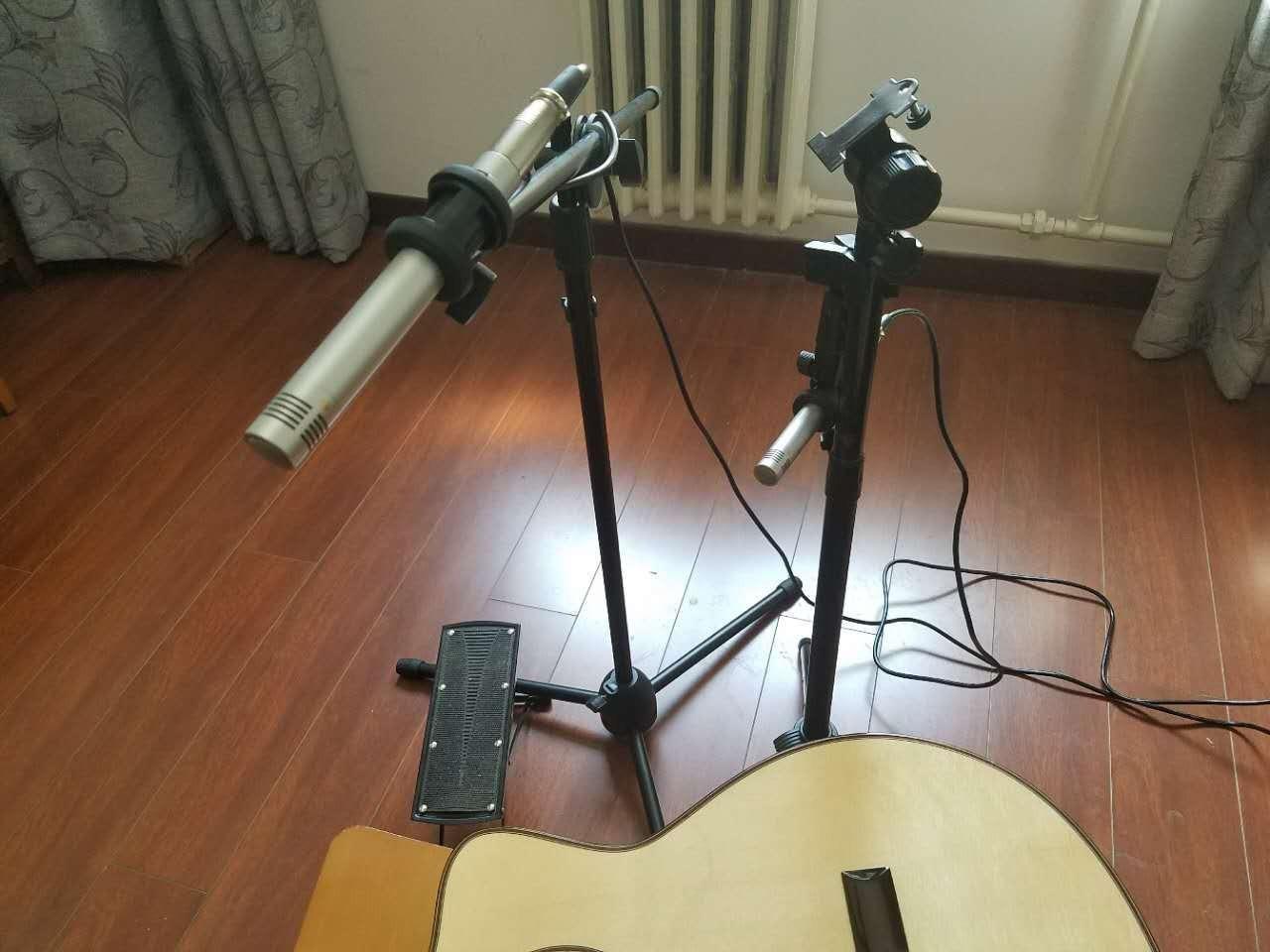
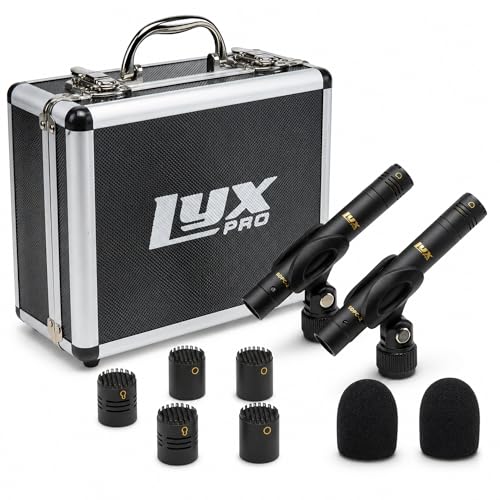
3. LyxPro SDPC-2 – Three Capsule Patterns in One Matched Pair
- ✓Omni
- ✓cardioid
- ✓and super cardioid capsules included
- ✓Very strong sound quality for the tier
- ✓Aluminium carry case in the box
- ✓Works across guitar
- ✓drums
- ✓piano
- ✓and choir
- ✕Paint can flake and mic clips can feel loose
- ✕Carrying case panels are not rugged
- ✕One owner reported electrical noise on a unit that was replaced under warranty
Three interchangeable capsules
30 Hz to 18 kHz
Stereo matched pair
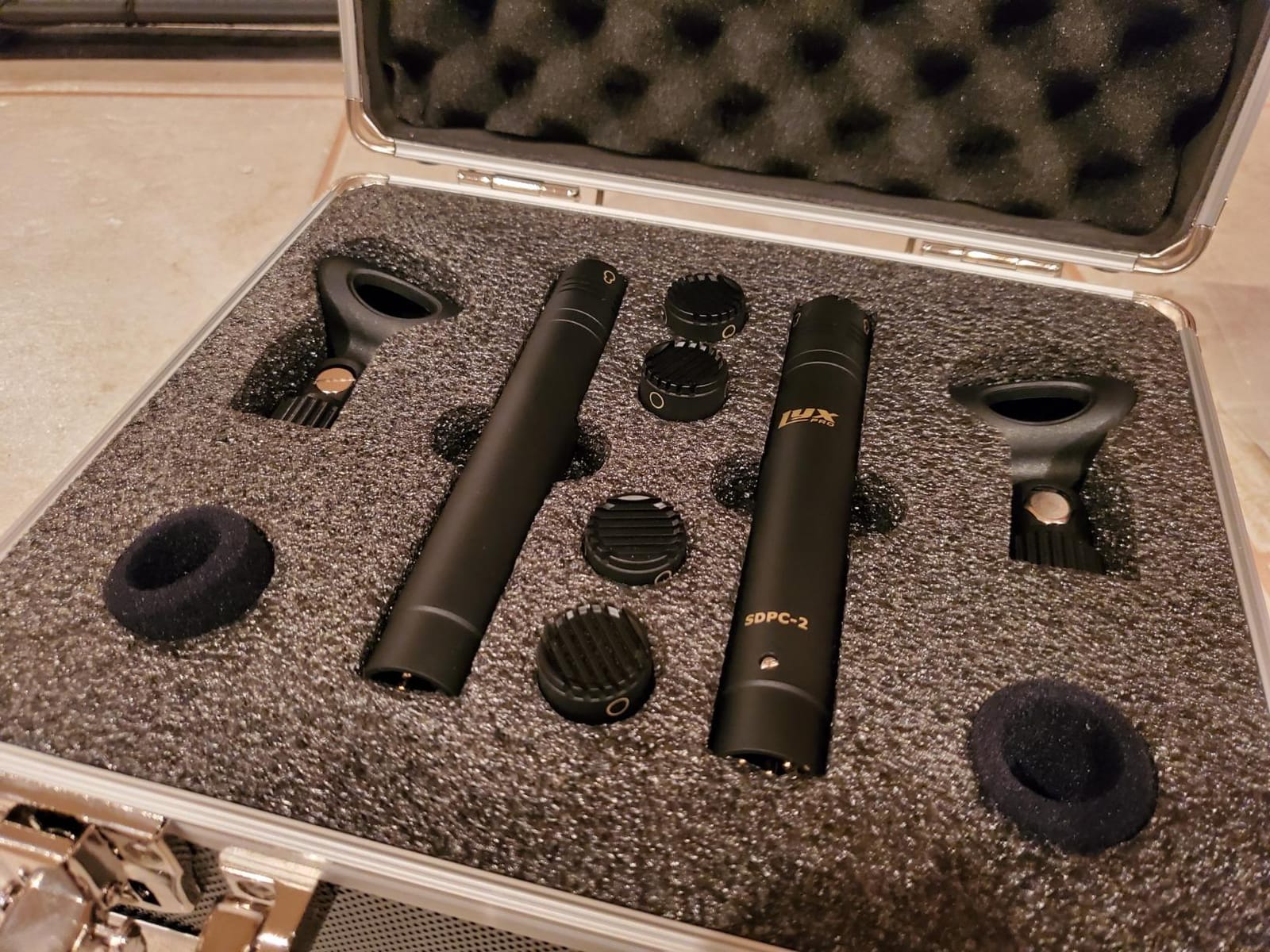
Almost every other matched pair in this roundup locks you to cardioid, and for a lot of sources that is the wrong pattern. The LyxPro SDPC-2 is the only set here that includes omni and super cardioid capsules alongside the default, which turns one purchase into three different pairings depending on what you are recording.
Switching capsules changes the character more than the price tag suggests. Cardioid is the tightest option for overheads, super cardioid adds rear rejection for a more focused instrument capture, and omni gives you the natural room sound that people actually want when they record a piano in a live room.
Specifications and Gain Considerations
Frequency response runs 30 Hz to 18 kHz, sensitivity is -38 dB with a plus or minus 3 dB window, and the signal-to-noise ratio is listed at 70 dB. That figure is the weakest in the roundup and it tells you where the pair belongs: amplified sources and roomy recordings rather than near-silent ambience.
Because the capsules are interchangeable, the sensitivity changes with them, so expect to re-trim your gain when you swap patterns. The output is XLR and the pair runs on standard phantom power, which means it will work with anything on our XLR microphone shortlist.
Where the Build Falls Down
Several reviewers mention paint flaking and mic clips that feel loose in the holder, and the aluminium case is described as having hardboard panels that do not inspire much confidence for touring. One owner reported electrical noise on a single unit and had it replaced under the one-year manufacturer warranty.
None of that touches the audio, and at 4.5 stars across 490 reviews the consensus is that the sound quality compares well with microphones costing several times more. The capsules are the reason to buy it, not the chassis.
4. Rode NT5 Matched Pair – The Most Versatile Pencil Pair in This Roundup
- ✓Very low 16 dB self-noise
- ✓Half-inch gold-sputtered cardioid capsule
- ✓Ten-year warranty and strong metal build
- ✓Consistently praised for a warm
- ✓natural tone
- ✕No stereo bar in the box
- ✕No pad or high-frequency filter switches
- ✕Newer packaging uses a soft carry bag
16 dB self-noise
20 Hz to 20 kHz response
Ten-year warranty
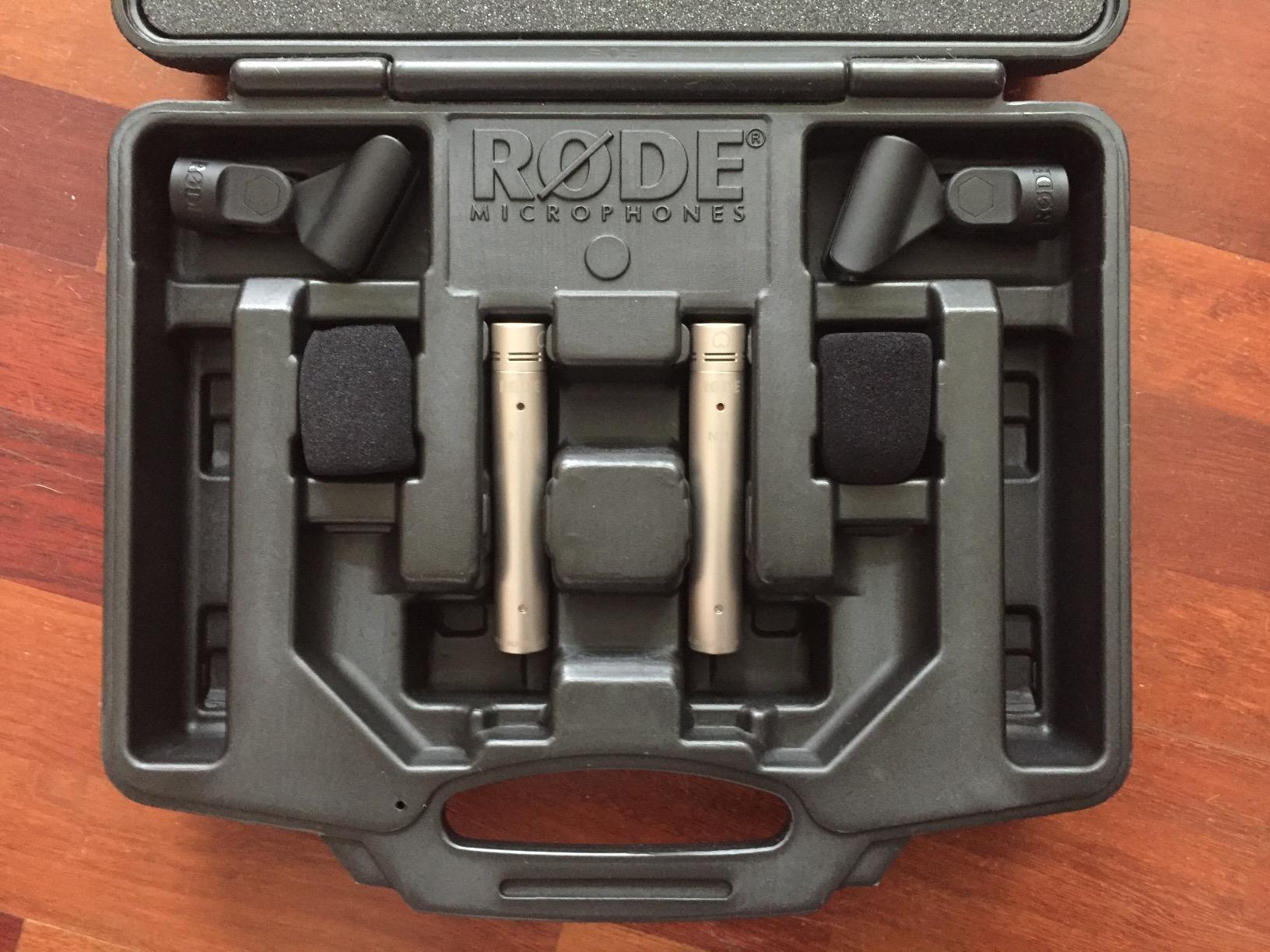
The NT5 pair is the reference point most home studio owners arrive at, and it earns that place on one number: 16 dB of self-noise. Only the Shure set in this roundup publishes something lower, so if you are recording quiet sources and want the room rather than the microphone, this is the pair to shortlist first.
Forums consistently treat the NT5 as the go-to inexpensive matched pair, particularly for piano in a room that already sounds good. That matches what we hear: the half-inch gold-sputtered cardioid capsule has a warm, natural character with a fast enough transient response to sit on drum overheads without sounding brittle.
Sensitivity, Range, and Build
Frequency response is a full 20 Hz to 20 kHz and the impedance is 100 ohms, which makes the pair easy to drive with almost any preamp including entry interfaces. The satin-nickel plated body is machined metal and the whole package weighs 200 g, so the pair hangs cleanly from a boom or a stereo bar without a heavy stand.
Signal-to-noise is listed at 74 dB, and the 16 dB self-noise figure means you can pull meaningful gain in a quiet room before the noise floor competes with the source. For guitar amps, brushed snare, and room ambience that headroom is the difference between a usable take and one you have to noise-reduce.
What You Have to Buy Separately
Two things are absent. There is no stereo bar in the box, and there are no switches on either mic, so no pad for loud sources and no high-pass filter for rumble. You can handle both problems in your preamp, but the pad is a real limitation for close-miking a loud amp pair.
One packaging note: recent production uses a soft carry bag rather than the hard plastic case shown in older listings, and the price has moved up from where this pair launched. Budget for a stereo bar as a separate line item.
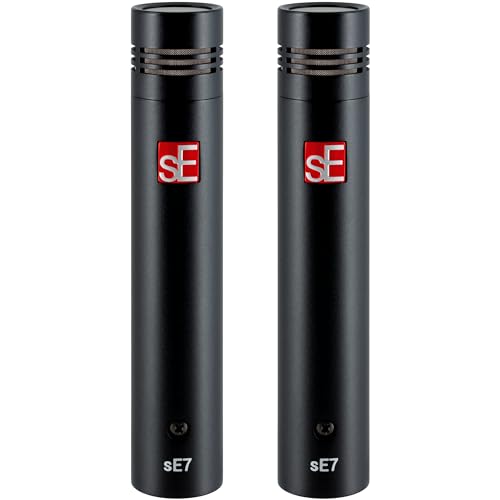
5. sE Electronics sE7 Factory Matched Pair – Switchable Pad and Filter on a Budget
- ✓Only mid-tier set here with both a pad and a high-pass filter on the body
- ✓136 dB max SPL before attenuation
- ✓Stainless steel build
- ✓Transparent natural capture for the tier
- ✕Self-noise is higher than premium references
- ✕Arrives in a plain cardboard box with no case
- ✕Noise is audible in genuinely quiet rooms
10 dB pad and low-cut filter
136 dB max SPL unattenuated
Factory matched pair
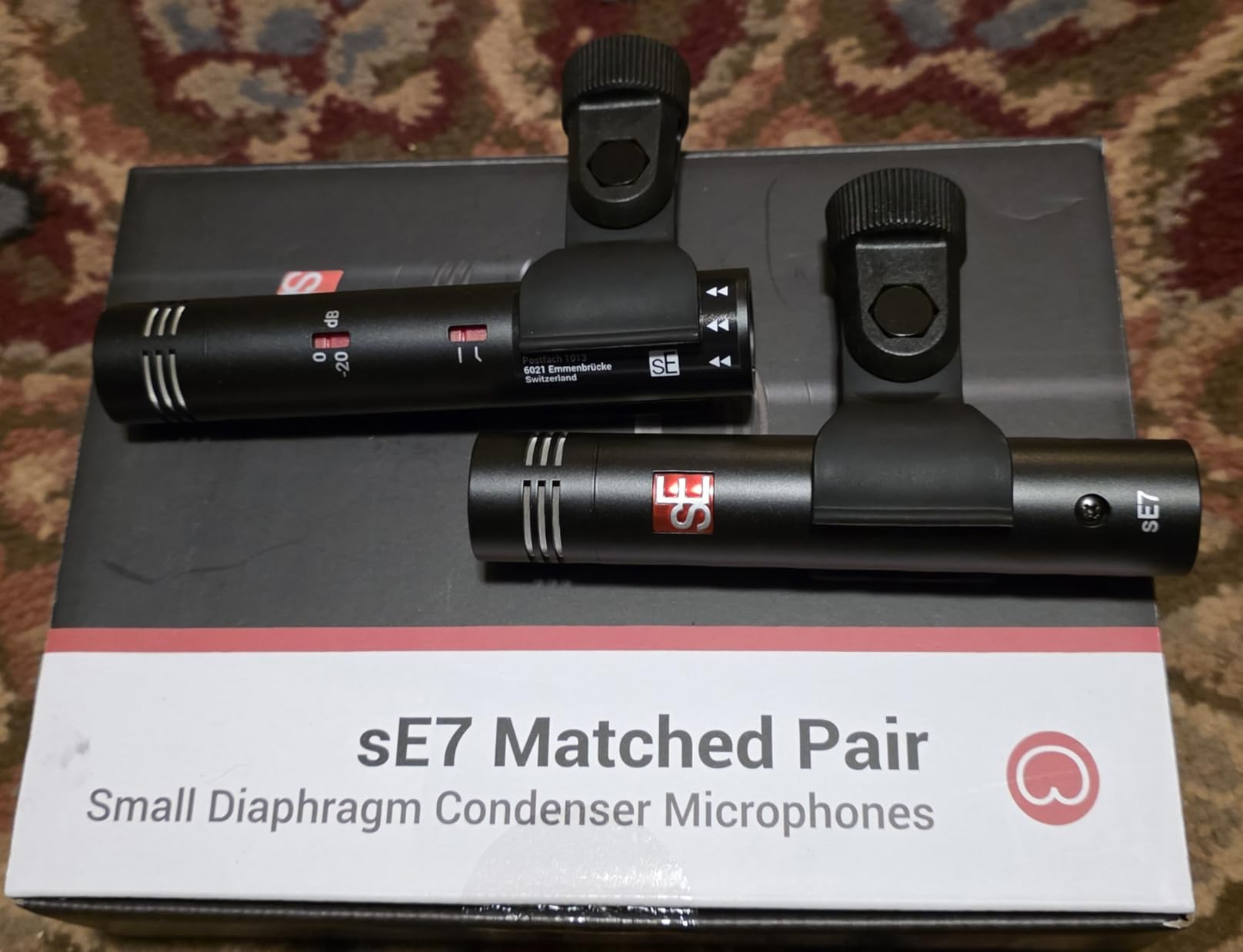
The sE7 pair exists because switching features usually get stripped out to hit a price point, and these two are the exception. Each mic has a 10 dB pad and a low-frequency cut switch, which means you can mix a loud amp pair with a quiet guitar pair using the same set and lose nothing but gain headroom.
sE describes these as factory matched, and the build is a stainless steel body measuring under 5 inches long at 9 ounces. That pencil size is the whole point: it positions easily between a guitar strings, in front of a snare, or on a piano lid without the acoustic shadow a large-diaphragm body would cast.
Maximum SPL and Sensitivity in Practice
Maximum SPL is listed as 136 dB, rising to 156 dB with the pad engaged, and sensitivity is 19 mV/Pa. Impedance sits under 200 ohms and the pair runs on 48V phantom power, so it drops into any XLR preamp without a matching issue.
On acoustic guitar and drum overheads, the sE7 sits in a transparent, uncoloured place where the microphone stops colouring the source. The signal-to-noise ratio is listed at 87 dB, which is a good number on paper, though owners still report the noise floor becoming obvious in a silent room.
What You Are Missing
The box is cardboard with mic clips. There is no case, no stereo bar, and no windscreens beyond whatever the retailer includes, so plan on buying a mount. The two-year warranty extends to three years if you register the pair online, which is worth doing.
At 82 reviews the sample size is smaller than the sets above, and owners frequently compare the sound to the Neumann KM 184, finding it transparent but a step behind on both detail and silence.
6. Lewitt LCT-140-AIR Stereo Pair – Two Voices From One Switch
- ✓Switchable AIR and FLAT characteristics in one pair
- ✓Excellent transient response on fast sources
- ✓Lightweight CNC-machined aluminium bodies
- ✓Transport bag with two pockets plus windscreens
- ✕No shock mounts included
- ✕One owner reported noise and clarity problems on solo piano
- ✕Costs more than the other mid-tier pairs here
Switchable AIR and FLAT modes
CNC aluminium housing
Snap-in clips included
The LCT-140-AIR is unusual in how it solves the two-character problem. Rather than swapping capsules, each mic has a switch that moves between an AIR mode, which opens the top end up, and a FLAT mode that stays neutral. Having both halves of the pair switchable means you can record the same source twice and choose later.
That is genuinely useful on drums and on guitar, where the same performance can sound too dark in a dead room and too exposed in a live one. It is much less useful on sources that need a consistent capture, so if you want one fixed sound, this is not the pair.
Transient Response and Handling
The spec sheet leads with excellent transient response, and the aluminium body is CNC-machined rather than moulded, so the capsule assembly stays consistent. The whole set weighs 580 g, which is light enough to hang both microphones from one boom with a proper shock mount.
Reviewers use the pair on acoustic guitar, strings, piano, and drums, and the signal-to-noise figure of 77 dB sits in the middle of this roundup. The included snap-in clips and the two-pocket transport bag are practical additions that most competitors at this level do not provide.
Where It Falls Short
There is no shock mount in the box, only the snap-in clips, and a bare clip on a pencil condenser will pick up every boom touch. One owner specifically reported noise and clarity problems on solo piano, so if the piano is your main source, test before you commit.
With 38 reviews, the feedback here is thinner than the budget sets. The spec sheet is convincing and the build is convincing, but the long-term owner reports that would settle a real-world question simply are not in yet.
7. MXL CR21 Pair – Transformerless Detail on a Lean Hardware Budget
- ✓Low entry cost for a full matched pair
- ✓Transformerless preamp keeps noise and distortion low
- ✓Fast transient response suits percussion and strings
- ✓Includes mic clips
- ✕Very sensitive to handling noise and plosives
- ✕Lightweight body can feel fragile
- ✕Needs proper shock mounts to sound its best
Transformerless preamp
Small diaphragm capsule
48V phantom power
The CR21 pair is a low-cost entry into stereo recording, and the transformerless preamp is the reason it punches above its bracket. Transformerless designs add almost no noise or distortion of their own, so what you hear is the capsule rather than an iron core colouring the signal.
Owners put the pair on drum overheads, acoustic guitar, and classical instruments, and the general verdict is that it delivers a full, detailed capture for very little money. At 4.6 stars from 42 reviews the rating is strong, though the sample is small.
Sensitivity Is Both Strength and Weakness
The listed self-noise is 18 dB, which is competitive with several sets that cost several times more, and the impedance of 200 ohms pairs cleanly with entry-level preamps. The 48V phantom power requirement is the only electrical condition you have to meet.
What catches people is how sensitive these mics are. Users report handling noise and plosive problems, and the light 130 g body means a finger on the grille is audible in the recording. Proper shock mounts are not optional here, they are the difference between a usable pair and a frustrating one.
How It Compares to the Behringer C-2
The CR21 competes directly with the Behringer C-2, and it does not win that comparison on hardware. The C-2 ships with a stereo bar, a case, and windscreens and carries a pad and a low-cut switch on both bodies, while the CR21 arrives with basic mic clips only.
So the choice is straightforward. Buy the CR21 if you already own stands, shock mounts, and a case and want nothing more than a capable small-diaphragm capsule. Buy the C-2 if you are starting from nothing, because it hands you a working system rather than a capsule. MXL warranty is three years on non-tube models, which is a longer commitment than some sets in this roundup offer.
8. Shure KSM137/SL Stereo Pair – The Quietest and Most Complicated Set
- ✓Lowest self-noise figure in the roundup at 14 dB
- ✓Class A discrete transformerless preamp
- ✓Brass body with gold-plated internal and external connectors
- ✓Ships with the A27M stereo adapter and a case
- ✕Large-diaphragm bodies need dedicated suspension hardware
- ✕Included mounts are not shock mounts
- ✕Very wide dynamic range demands careful gain staging
14 dB self-noise
Subsonic filter below 17 Hz
Stereo adapter in box
The KSM137/SL is the odd microphone out in a list of pencil condensers, and that is exactly its appeal. These are large-diaphragm condensers despite the slim body, and an ultra-thin 2.5 micron gold-layered Mylar diaphragm delivers the detail and transient response that orchestral and choir work needs and that most pencil pairs only approximate.
At 14 dB self-noise this is the quietest set here. For recording a choir in a live room with a pair of overheads, that headroom is the whole argument, because you are capturing a distant source and any microphone noise becomes audible in the ambience between phrases.
Off-Axis Behaviour and the Subsonic Filter
Owners praise the off-axis rejection, which is what keeps one section of an orchestra from smearing across the rest of the section. The built-in subsonic filter rolls off below 17 Hz, so rumble from traffic, HVAC, or a footfall does not eat the headroom you are paying for.
The impedance is 150 ohms and the pair runs on phantom power like everything else here. Signal-to-noise is listed at 78 dB, and the two foam windscreens in the box are for handling rather than for wind outdoors.
The Honest Catch
This is a large-diaphragm body, so positioning is a different job. The included mounts are not shock mounts, and a 2.5 micron gold-layered diaphragm on a heavy body transmits every stand movement unless you invest in proper isolation. Budget for suspension hardware.
The dynamic range is also wide enough that gain staging becomes a real task on an entry interface. If you cannot give the pair clean gain, you will record it too quietly or not at all. At 43 reviews, one owner also reports a single unit failing after about two weeks, which is a single report rather than a pattern.
9. sE Electronics sE8 Matched Pair – Neutral Capture With Two Pad Settings
- ✓Handcrafted individually tuned gold-sputtered capsules
- ✓Two pad and two low-cut settings per mic
- ✓Includes stereo mounting bar plus case windscreens and clips
- ✓Owners compare it favourably to Neumann and AKG sets
- ✕Costs more than the other sE pair
- ✕Small review base for a long-term opinion
- ✕One owner felt it performed below their older microphones
Two switchable pads and low-cuts
Super cardioid pattern
Stereo mounting bar included
The sE8 pair is the more complete of the two sE sets here, and for most people it is the one to buy. The capsules are individually tuned by hand, the circuitry is transformerless Class A, and both mics carry two pad settings and low-cut filters, which is the most flexible switching layout in the roundup.
Unlike the sE7, the sE8 is super cardioid rather than cardioid. That tighter rear rejection helps when you are placing the pair over a drum kit or in front of a guitar amp in a room with a loud source behind the microphones.
Packaging Is the Real Upgrade
The box includes a stereo mounting bar, a durable carrying case, windscreens, and clips. That bar is the accessory forum users single out as being worth nearly as much as the microphones themselves, because a matched pair that cannot be mounted symmetrically is a matched pair you will position badly.
Frequency range is listed from 28 Hz to 20 kHz, impedance is 110 ohms, and signal-to-noise is 79 dB. An optional omnidirectional capsule is compatible, though the general consensus in discussions is that the super cardioid is the configuration to stick with.
Where the Evidence Is Thin
Twenty-six reviews is not much to judge a set on, and the average rating of 4.4 sits below the other sE option here. One owner reported performing worse than older microphones they owned, which is the kind of report worth taking seriously when the sample is this small.
Owners who are happy describe the sound as natural, transparent, and uncoloured, and several make direct comparisons to Neumann and AKG sets while spending considerably less. The two-year warranty extends to three years on registration.
10. Neumann KM 184 Stereo Set – The Reference Standard for Detail
- ✓Reference-class capture with exceptional low self-noise
- ✓Warm transparent sound with superb off-axis response
- ✓Swivel mounts plus windscreens and a jeweller's case included
- ✓Legendary build consistency
- ✕No pad and no high-pass filter switches
- ✕Jeweller's case is impractical for touring
- ✕Needs clean preamp gain for quiet sources
Reference-class cardioid condenser
Two mics with swivel mounts
Jeweller's case
The KM 184 stereo set is the pair that most of the other sets in this roundup are implicitly measured against, and a long-running Gearspace owner describes an Audio-Technica pair as usable anywhere a KM 184 would be, but without the characteristic Neumann tone. That is the honest summary of what you are buying here.
It is a small-diaphragm cardioid condenser with a 16 dB self-noise figure and an 81 dB signal-to-noise ratio, in a matte black metal body. The sound is warm and natural with excellent off-axis response, which is what makes it work on acoustic guitar, piano, strings, and percussion without moving.
The Buying Experience
This is the set where the packaging is part of the product. You receive two KM 184 MT microphones, two WNS100 windscreens, two SG21/17MT swivel mounts, and a jeweller’s case. Elegant, and completely impractical if the pair needs to travel to sessions regularly.
Build consistency is the reason for the reputation. Two microphones from this set will behave the same way as each other, and they will behave that way in five years, which is the durability argument that matters more than any frequency chart.
Why the Rating Is the Lowest Here
At 4.2 stars from 29 reviews, this is the lowest-rated set in the roundup, and the reason is value rather than quality. Owners consistently call it a buy-once investment and just as consistently note the price.
There are no switches on either mic, so no pad for loud sources and no high-pass filter for rumble, and the pair is unsuitable for very high SPL sources without external attenuation. If you need either of those, the sE8 and the sE7 both give you switches in a pair that sits well below the reference tier.
How to Choose a Matched Pair
Start with the source, not the spec sheet. A pair for drum overheads needs headroom, a pair for room ambience needs silence, and a pair for acoustic guitar needs to be small enough to position without casting an acoustic shadow. Everything else in this guide follows from that first decision.
Form Factor: Small Diaphragm or Large Diaphragm
Small-diaphragm condensers dominate this list because they combine fast transient response with a consistent polar pattern across the frequency range, and they are physically small enough to position accurately as a pair. That is why the Behringer, Samson, LyxPro, Rode, both sE sets, Lewitt, and MXL are all pencil-format.
Large-diaphragm condensers capture more low end and more detail at the top, at the cost of weight and handling sensitivity. The Shure KSM137/SL is the only one here, and it earns its place for orchestra and choir work where detail and low self-noise outrank ease of positioning.
Matching Tolerance and Where the Pair Was Matched
Only some manufacturers publish a tolerance figure. The Samson C02 states matching within 0.5 dB, which is the tightest published figure in this roundup, and most other sets describe themselves as factory matched without giving a number. Where a number is absent, assume the pair came from the same production batch and assume you will get consistency without a guaranteed figure.
More important than the number is who did the matching. A pair matched by the manufacturer comes with a certificate and a traceable process. A pair matched by a retailer is two singles pulled from separate production batches and tested together, which is fine but is not the same product. Buyers report discovering the difference only after opening the box, so check the listing language before you buy.
Self-Noise and Your Preamp
The self-noise numbers across these sets are not a like-for-like comparison, because several brands publish a signal-to-noise ratio instead. Where you have a choice, the quieter floor is the one that matters for distance miking, and the pads and filters on a pair tell you how loud it can go before you need the pad anyway.
For quiet sources, look at whichever self-noise or signal-to-noise figure the manufacturer publishes and take the lower number between the two microphones in the set. The Shure KSM137/SL and the Rode NT5 are the quietest options here, and the LyxPro SDPC-2 is the one to avoid if the room itself is the sound you are recording.
Included Hardware and Polar Pattern
Look for a stereo bar or mounting bar first. The Behringer C-2 and the sE8 include one, and forum users consistently describe the bar as being worth nearly as much as the microphones. The Rode NT5, Lewitt pair, and MXL pair do not include one, so add it to your list.
Then decide on pattern. Cardioid is the default and the right answer for most sources. Super cardioid gives you more rear rejection at the cost of some proximity effect. Omnidirectional gives you the room, and only the LyxPro set here includes an omni capsule in the box. If you are still working out the pattern, our guide to boundary microphones covers the trade-offs in more depth.
What the Matching Certificate Guarantees, and What It Does Not
A certificate guarantees sensitivity matching, meaning the two microphones output the same level for the same input. That is what keeps the stereo image stable and panning predictable, and it is why recordings made years apart still blend together when you match them.
It does not guarantee identical frequency response, matching phase at every frequency, freedom from capsule drift over time, or a fix for room problems. Users who drop a beautiful pair into an untreated room and blame the microphones are the most common complaint in this category, and the certificate cannot help with that.
Matched Pair or Two Identical Singles?
Two identical singles will often work, and the argument that a factory pair is the only way to get a stereo image is not really true. What you lose without the pair is the guaranteed tolerance, the certificate, and the peace of mind that both microphones came from the same test run.
There is also a well-supported counter-argument in the field recording community, where contributors pair two different shotgun microphones with similar sound and polar characteristics and get a usable stereo image. Matching matters most when the two halves of a pair are being blended and the source is quiet, which is exactly where the difference in level between two unmatched units shows up as phantom movement.
Our view after working with sets like these: buy the matched pair when the sound is quiet, when the two halves will be heavily blended, or when you are recording the same room over several sessions. Buy two singles when you are on a strict budget and your sources are loud and unblended.
Which Stereo Technique Should You Use With a Matched Pair?
The pair sets the ceiling on your stereo image, but the technique you choose determines whether you reach it. Three setups cover almost everything these microphones get used for.
X/Y: The Coincident Crossed Pair
Cross the capsules at 90 degrees with the bodies touching, usually on a stereo bar. Because there is no distance between them, arrival time differences are zero and the image is completely mono-compatible, which makes X/Y the safest choice for anything that might be played back on a phone or a mono PA.
The tradeoff is a narrower image and strong off-axis coloration from the rear capsule, so X/Y is a poor fit for a live room with a loud source behind the microphones. It is the standard choice for acoustic guitar pairs and for drum overheads in a controlled space.
ORTF: The Spaced Pair
Space the pair 12 to 17 cm apart at an angle of 90 to 135 degrees. The wider image and the natural depth are the reason ORTF is the default for orchestral and room recording, because the short spacing keeps phase problems manageable while giving a much wider soundstage than X/Y.
Being spaced means the pair is no longer coincident, so mono compatibility is worse. The Lewitt and LyxPro sets are easy to position this way because the bodies are narrow, and any pair on a stereo bar will do the job if the bar holds them at a fixed angle.
Spaced Pair and Blumlein for Room and Ambience
Push the microphones much wider apart, 60 cm or more, and the image becomes genuinely wide and the room becomes part of the recording. This is how you capture a live room, an audience, or an ensemble, and it is the technique most often associated with a low self-noise pair such as the Neumann KM 184 set or the Shure KSM137/SL.
Blumlein takes the opposite approach by using a figure-8 pair at 90 degrees, and none of the sets in this roundup ships with a figure-8 capsule. If that is your target, you need multi-pattern microphones instead, which is a different buying decision entirely.
What Your Interface or Preamp Needs
Every microphone here is a condenser with XLR output, so your preamp needs to supply 48V phantom power. Most modern interfaces do, but a few older or bus-powered designs do not, and a condenser without phantom power produces silence rather than degraded sound.
The second requirement is gain headroom. Pencil condensers are quiet sources, and the ones built for room and ambience recording are quieter still, so you need a preamp that delivers clean gain rather than gain that arrives with noise attached. A 2 dB noise penalty applied to both channels of a pair is worse than an unmatched tolerance, because it is inconsistent between takes.
Third, watch the impedance. These sets range from 100 ohms on the Rode NT5 to 200 ohms on the Samson, Lewitt, and MXL pairs, and all of them fall comfortably inside what any modern discrete preamp expects. You will not run into a load problem, but a very low-impedance input can still damp the output stage, so avoid the cheapest possible preamp if you own one.
Finally, gain structure matters more with a pair than with a single mic because you will pan the two channels hard. Match the gain and trim on each side in your interface rather than correcting a level difference later, because a pan-dependent level change in the DAW is hard to undo cleanly.
Frequently Asked Questions
What are matched pair microphones?
A matched pair is two identical microphones factory-selected and tested so their sensitivity matches within a stated tolerance, commonly 1 dB, and sold with a matching certificate so they behave as one stereo system. Matching equalises level between the two microphones so the stereo image stays stable, but it does not correct frequency-response deviation, phase difference, or room problems.
Should I buy a matched pair or two identical single microphones?
Buy a matched pair when the source is quiet, when the two halves will be heavily blended, or when you are recording the same room across several sessions. Two identical singles can still produce a usable stereo image, and field recorders regularly pair two different microphones with similar characteristics, but you give up the stated tolerance, the certificate, and the guarantee that both microphones came from the same test run.
Do matched pair microphones need phantom power?
Yes. Every matched pair in this roundup is a condenser design with XLR output and requires 48V phantom power from your interface or preamp. A condenser without phantom power produces silence rather than degraded sound, so check that your preamp supplies it before you buy.
How do you set up a matched stereo pair?
For X/Y, cross the capsules at 90 degrees with the bodies touching on a stereo bar for a narrow, fully mono-compatible image. For ORTF, space the pair 12 to 17 cm apart at an angle of 90 to 135 degrees for a wider, more natural image. For room and ambience work, push the microphones 60 cm or more apart, which is why a low self-noise pair such as the Neumann KM 184 set is often used for that application.
What does a microphone matching certificate actually mean?
A matching certificate guarantees sensitivity matching, meaning both microphones output the same level for the same input. It does not guarantee identical frequency response, matching phase at every frequency, freedom from capsule drift over time, or any correction for room acoustics. It is also worth checking who performed the matching, since a pair matched by the manufacturer is a different product from two singles matched by a retailer.
The Best Matched Pair Microphones to Buy in 2026
Start with the Behringer C-2 if you want a complete, working system with a stereo bar, windscreens, and a case already in the box, and if your sources are loud enough that its noise floor never becomes the problem. It is the pair we recommend more often than any other, and its 2844 ratings tell you a decade of owner reports exist for whatever you are recording.
Choose the Samson C02 when matching accuracy is the point. A published tolerance of 0.5 dB plus included shock mounts makes it the most precisely specified set here, and the top rating in this roundup at 4.7 stars. Pick the Rode NT5 matched pair when silence matters more than switching, since its 16 dB self-noise and ten-year warranty suit someone who will keep the same pair for years.
For switchable tone on guitar and drums, the Lewitt LCT-140-AIR gives you two characters from one pair. For three polar patterns, the LyxPro SDPC-2 is the only option on the list. For quiet orchestral work, the Shure KSM137/SL trades handling simplicity for a 14 dB noise floor, and the sE8 or the Neumann KM 184 set are the premium choices for anyone who wants a permanent reference pair.
Whichever one you settle on, buy the mounting hardware at the same time, keep the certificate with the case, and match your gain in the interface rather than in the DAW. Those three habits solve most of the problems that people blame on the microphones themselves.






Leave a Comment