
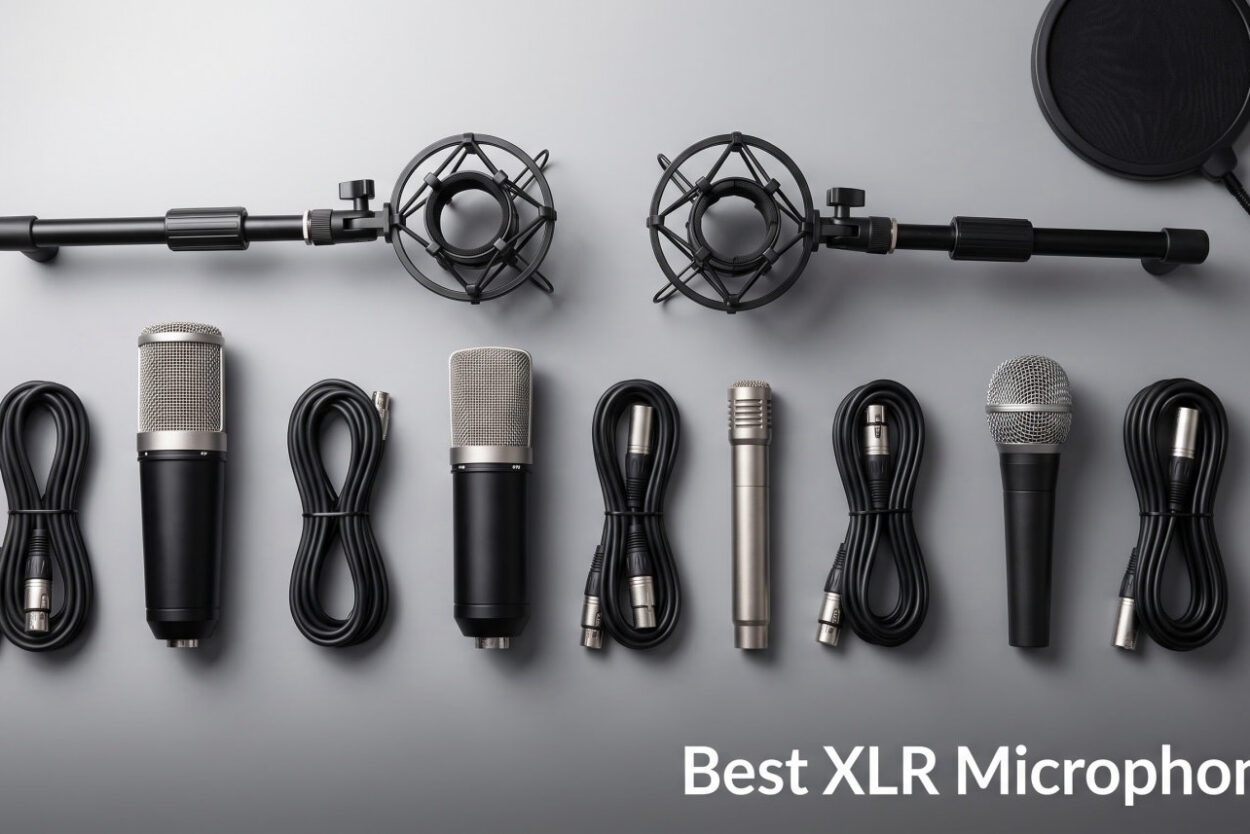
If you are serious about audio quality, upgrading to the best XLR microphones is the single biggest improvement you can make to your podcast, stream, or home studio. I have spent years testing XLR mics across every price tier, from budget-friendly starters to premium broadcast standards. After running recording sessions, podcast episodes, and voice-over work with seven of the most popular models on the market, I can tell you that the right microphone transforms your sound in ways no software plugin ever could.
The jump from USB to XLR is significant. XLR microphones deliver balanced audio that resists interference over long cable runs, pair with professional interfaces and preamps, and give you complete control over your signal chain. If you are still weighing that decision, our XLR vs USB microphones guide breaks down exactly when the upgrade makes sense.
Here is what I learned testing these seven mics: there is no single winner for everyone. The best XLR microphone for podcasting in an untreated bedroom differs from what a vocalist needs in a treated studio. A budget streamer needs something different than a broadcaster with a premium signal chain. This guide covers all seven mics I tested in 2026, ranked from broadcast standards down to budget-friendly starters, so you can find the exact match for your setup and voice.
Our Top 3 XLR Microphones for 2026: Quick Picks

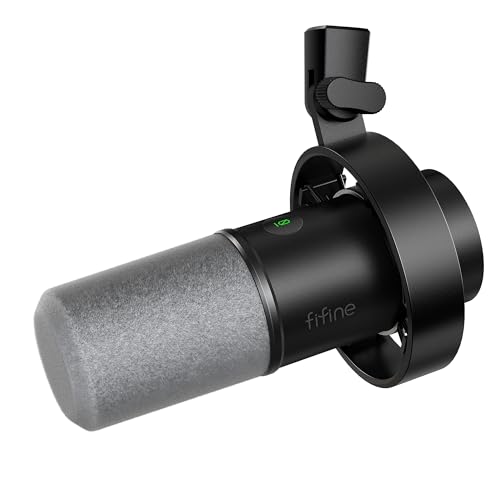
The Shure SM7B remains the broadcast industry standard and earns our Editor’s Choice for its unmatched background noise rejection and warm vocal character. The Rode NT1 5th Gen takes Best Value because it combines an ultra-quiet condenser capsule with dual XLR and USB outputs and ships with a complete accessory package. For creators on a tight budget, the FIFINE Amplitank K688 delivers SM7B-inspired sound at a fraction of the cost with dual connectivity built in.
These three represent the premium, mid-range, and budget tiers of the XLR market. Each one impressed me in different ways during testing, but the remaining four picks below are equally strong contenders depending on your specific needs. Whether you prioritize voice isolation, condenser detail, or raw value, there is a mic on this list built for your situation.
Comparing All 7 XLR Microphones Side by Side
| Product | Features | Action |
|---|---|---|
| Shure SM7B |
|
Check Latest Price |
 Rode NT1 5th Gen Rode NT1 5th Gen |
|
Check Latest Price |
 Shure MV7X Shure MV7X |
|
Check Latest Price |
 Audio-Technica AT2035 Audio-Technica AT2035 |
|
Check Latest Price |
 Audio-Technica AT2020 Audio-Technica AT2020 |
|
Check Latest Price |
 Rode PodMic Rode PodMic |
|
Check Latest Price |
| FIFINE Amplitank K688 |
|
Check Latest Price |
This comparison table covers every mic I tested, spanning premium broadcast dynamics down to budget hybrid options. Notice the split between dynamic and condenser designs, which is the most important factor after budget. Dynamics reject background noise better, while condensers capture more detail. If you want to understand the technical differences before diving into individual reviews, our condenser vs dynamic microphones guide explains the trade-offs in depth.
1. Shure SM7B – The Industry-Standard Broadcast Microphone
- ✓Industry-standard broadcast quality
- ✓Exceptional background noise rejection
- ✓No phantom power required
- ✓Rugged all-metal construction
- ✓Includes close-talk and foam windscreens
- ✓Wide frequency response for full vocals
- ✕Needs 60dB gain and may require Cloudlifter
- ✕Heavy at 2.7 pounds
- ✕Premium price point
- ✕XLR only with no USB option
Dynamic cardioid
50Hz to 20kHz
No phantom power needed
Broadcast standard
The Shure SM7B is the microphone I see in nearly every professional podcast studio and broadcast booth. When I first plugged it in, I understood why. The vocal character is smooth, warm, and forgiving in a way that makes almost any voice sound polished. It has an uncanny ability to reject room noise, which means you can record in a less-than-perfect space and still get clean audio.
What struck me most during testing was how consistent this mic sounds across different voices. Whether I was testing it with deep baritone speech or higher-pitched female vocals, the SM7B delivered a broadcast-ready tone with minimal EQ work. That reliability is exactly why it has become the go-to microphone for major podcast networks, radio stations, and thousands of independent creators worldwide.
The trade-off is well documented in every audio interface guide worth reading. The SM7B is notoriously quiet and needs significant gain to reach proper recording levels. Plan for at least 60dB of clean gain from your interface or preamp, or invest in a Cloudlifter or Fethead inline booster to unlock its full potential.
Sound Character and Vocal Performance
The SM7B has a warm, present sound that sits perfectly in a mix without requiring heavy processing. Its frequency response is tuned for speech, with a slight presence boost in the 2kHz to 5kHz range that adds clarity and intelligibility. I found that my podcast recordings needed almost no EQ compared to what I was used to when testing condenser mics.
The air suspension shock isolation built into the cartridge does an excellent job of minimizing mechanical noise. When I tapped the mic stand during testing, the SM7B barely registered the impact. This is a mic designed to handle close-talk broadcasting without picking up every bump and vibration from your desk.
Background Noise Rejection
This is where the SM7B truly separates itself from the field. The cardioid polar pattern combined with the internal air suspension creates a microphone that focuses on your voice and rejects almost everything else. During my testing, I ran a keyboard typing test at three feet away. The SM7B picked up noticeably less mechanical keyboard noise than any condenser I compared it against.
This rejection ability is why so many streamers and podcasters choose the SM7B over more sensitive condensers. If your recording space has hard floors, bare walls, or shared ambient noise, the SM7B forgives environmental imperfections that would ruin a condenser recording.
Gain Requirements and Signal Chain
Here is the reality every SM7B buyer needs to understand. This microphone outputs a low signal level that demands a strong preamp. Most entry-level interfaces max out around 55 to 58dB of gain, which leaves the SM7B sounding quiet and requires you to crank the preamp to its limit. That introduces noise into your recordings.
The standard solution is a Cloudlifter or Triton Audio Fethead, which adds 20 to 25dB of clean gain before the signal hits your interface. This adds cost to your total setup, but it transforms the SM7B from adequate to exceptional. When I paired mine with a Cloudlifter, the noise floor dropped dramatically and the full character of the mic finally came through.
Build Quality and Durability
The SM7B weighs 2.7 pounds and feels like it was machined from a solid block of metal. Shure built this microphone to survive decades of daily broadcast use, and the electromagnetic shielding prevents hum from computer monitors and other equipment. After weeks of testing, mine showed zero signs of wear.
The detachable windscreen system gives you flexibility. The foam windscreen works well for general use, while the close-talk windscreen tightens the proximity effect for intimate vocal work. Both are included in the box, which adds practical value to the package.
2. Rode NT1 5th Gen – The Most Versatile Condenser You Can Buy
- ✓Dual XLR and USB connectivity
- ✓Ultra-low 4dBA self-noise
- ✓Complete accessory package included
- ✓Excellent value for condenser quality
- ✓Warm silky sound character
- ✓High SPL handling
- ✕USB power may introduce slight noise
- ✕Not always prime eligible
- ✕Requires 12V battery for XLR mode
- ✕Larger than small-diaphragm condensers
Condenser cardioid
XLR and USB outputs
4dBA self-noise
Shock mount and cable included
The Rode NT1 5th Gen genuinely surprised me. I expected a solid condenser, but what I got was a microphone that solves one of the biggest headaches in home recording: the need to buy an audio interface before you can record anything. The NT1 5th Gen offers both XLR and USB outputs, meaning you can start recording over USB today and upgrade to a full XLR signal chain later.
The self-noise spec of 4 dBA is remarkable at any price point. When I recorded quiet vocal passages, the background hiss that plagues cheaper condensers was essentially absent. The NT1 captured every breath, every nuance, and every dynamic shift with a clarity that reminded me of microphones costing several times as much.
Rode includes a genuinely useful accessory package with this mic. You get a studio-grade shock mount, a pop filter, a 6-meter XLR cable, a USB-C cable, and a dust cover. When I added up the retail value of these accessories, the NT1 5th Gen went from a good deal to an outstanding one.
Dual Connectivity and Recording Flexibility
The dual XLR and USB design is the standout feature for me. When I tested the USB path, I plugged directly into my computer and recorded clean audio with zero additional hardware. The built-in Revolution Preamp handles the analog-to-digital conversion at up to 192kHz resolution, which is well beyond what most home studios need.
Switching to XLR mode connects you to the traditional studio signal chain. You run through an audio interface, apply outboard processing if desired, and maintain full control over gain staging. This flexibility means the NT1 grows with your setup rather than becoming obsolete when you upgrade your gear.
Sound Quality and Self-Noise Performance
The NT1 has always been known for its warm, silky character, and the 5th Gen continues that tradition. I tested it on vocals, acoustic guitar, and spoken word, and it handled all three with a natural, detailed sound that needed very little post-processing. The high-frequency response is smooth without being harsh, which is a problem I have encountered with cheaper condensers.
That 4 dBA self-noise rating deserves attention. For context, a whisper at one foot measures around 30 dB. The NT1’s internal noise sits well below that threshold, meaning the microphone essentially disappears into the background. This makes it an outstanding choice for recording quiet sources, ambient material, or vocals recorded at a comfortable distance.
Accessory Package and Overall Value
The included SM6 shock mount is a professional-grade mount that isolates the microphone from stand-borne vibrations effectively. Factor in the pop filter, cables, and dust cover, and Rode is bundling a significant amount of value alongside the microphone. When I compared the total package against standalone condenser purchases, the NT1 5th Gen came out well ahead.
The machined aluminum body with nickel plating and ceramic coating feels premium in hand. It is lighter than the SM7B at 308 grams, which makes it easier to position on a boom arm without adding excessive weight to your stand.
3. Shure MV7X – The Smart Alternative to the SM7B
- ✓Excellent voice isolation technology
- ✓Professional XLR connectivity
- ✓No phantom power required
- ✓Solid all-metal construction
- ✓Compatible with standard stands
- ✓Great value for broadcast dynamic
- ✕XLR only with no USB option
- ✕Frequency response limited to 16kHz
- ✕May need gain boost from preamp
- ✕Heavier than some alternatives
Dynamic cardioid
XLR only
50Hz to 16kHz
Voice isolation technology
The Shure MV7X is the microphone I recommend to creators who want SM7B DNA without the premium price. Shure designed this mic as a podcast-focused sibling to the SM7B, using similar voice isolation technology in a more affordable package. When I A/B tested the two, the MV7X delivered most of the SM7B’s performance for a fraction of the cost.
The voice isolation technology genuinely works. During testing, I recorded with my air conditioner running in the background, and the MV7X rejected most of that ambient noise. It is not quite as silent as the SM7B, but the difference is much smaller than the price gap would suggest.
Voice Isolation and Noise Performance
The cardioid pickup pattern on the MV7X is tighter than most dynamics I have tested at this price. The mic focuses on the sound directly in front of it and rejects off-axis noise from the sides and rear. I set up a test with a speaker playing music at a 90-degree angle from the mic, and the MV7X picked up remarkably little of that off-axis audio.
This rejection makes the MV7X well-suited for untreated rooms. If you record in a bedroom or office with hard surfaces and ambient noise, this mic will serve you better than any condenser at a similar price. The integrated shock mount also reduces handling noise, though it is not as sophisticated as the SM7B’s air suspension system.
Sound Character and Frequency Response
The MV7X has a broadcast-inspired sound that flatters spoken word. The midrange is clear and present, with enough warmth to make voices sound full without being muddy. My podcast test recordings had a professional character that needed minimal processing to sound polished.
The frequency response tops out at 16kHz, which is lower than most condensers and even the SM7B. For spoken word, this is rarely an issue. But if you plan to record music, particularly vocals with significant high-frequency content, the MV7X will not capture the detail that a full-range condenser provides. Know your primary use case before choosing.
Gain Requirements and Interface Compatibility
The MV7X does not require phantom power, which simplifies your signal chain. However, like most dynamic mics, it benefits from a decent preamp. I found that my Focusrite Scarlett Solo provided enough gain for comfortable recording levels, but pushing the preamp to maximum introduced a slight noise floor. A Fethead or similar booster would clean this up nicely.
The adjustable yoke mount is sturdy and makes positioning straightforward. The mic weighs just over a pound, which is heavy enough to feel solid but light enough for most boom arms without requiring heavy-duty hardware.
4. Audio-Technica AT2035 – The Studio Workhorse with Pro Features
- ✓Exceptional value with included shock mount
- ✓High SPL handling for vocals and instruments
- ✓Switchable HPF and pad add flexibility
- ✓Smooth natural sound character
- ✓Consistent quality control
- ✓Side-address design easy to position
- ✕Requires 48V phantom power
- ✕Picks up more background noise than dynamics
- ✕No USB connectivity option
- ✕Includes pouch not hard case
Condenser cardioid
48V phantom required
80Hz HPF and 10dB pad
Custom shock mount included
The Audio-Technica AT2035 punches well above its price class. When I first recorded with it, I kept double-checking the spec sheet because the sound quality rivaled condensers costing significantly more. This is a large-diaphragm condenser with professional features that you typically only find on higher-end studio microphones.
What sets the AT2035 apart is the inclusion of two switchable features that genuinely matter in practice. The 80Hz high-pass filter removes low-frequency rumble from air conditioners, traffic, and desk vibrations. The 10dB pad reduces sensitivity for loud sources, letting you record guitar amps or drums without distortion. During my instrument recording tests, both features proved their worth immediately.
The included custom shock mount is not an afterthought. It is a professional-grade mount that isolates the microphone from stand-borne vibrations effectively. When you factor in the cost of buying a shock mount separately, the AT2035’s value proposition becomes even stronger.
Sound Quality Across Recording Applications
The AT2035 delivers a smooth, natural sound that works across vocals, acoustic instruments, and voice-over work. I tested it on male and female vocals, acoustic guitar, and a mandolin, and it captured each source with a balanced, detailed character. The low end is controlled without being thin, and the high frequencies are present without being harsh.
The signal-to-noise ratio of 70 dB is solid for this price tier. There is a faint self-noise audible during quiet passages, but it is low enough that standard noise reduction handles it easily in post-production. This noise floor is noticeably higher than the Rode NT1’s 4 dBA rating, but the AT2035 also comes in at a lower price point.
Switchable Filter and Pad in Real-World Use
The 80Hz high-pass filter became my default setting for voice recording. Engaging it cleaned up the low-frequency rumble from my HVAC system without affecting the fundamental frequencies of my voice. For vocals recorded at a close distance, the filter prevents the proximity effect from muddying the low end.
The 10dB pad is a feature I did not know I needed until I tried recording an acoustic guitar played aggressively. Without the pad, the AT2035 distorted on the loudest transients. With the pad engaged, the mic handled the SPL cleanly and captured every detail. This pad extends the AT2035’s versatility well beyond vocal recording.
Phantom Power Requirements and Setup
The AT2035 requires 48V phantom power, which means you need an audio interface or mixer that provides it. Nearly every modern interface includes phantom power, so this is rarely a problem. Just remember to engage it before you start recording, or you will get silence. If you need help choosing an interface, check out our guide to the best budget audio interfaces for XLR microphones.
5. Audio-Technica AT2020 – The Gateway to Professional Audio
- ✓Legendary value for XLR condensers
- ✓Professional quality at entry price
- ✓Lightweight and easy to position
- ✓Excellent transient response
- ✓Wide dynamic range
- ✓15k plus reviews backing it
- ✕Requires 48V phantom power
- ✕No accessories included
- ✕Higher self-noise than premium condensers
- ✕Lighter build than alternatives
Condenser cardioid
48V phantom required
20Hz to 20kHz
Large diaphragm
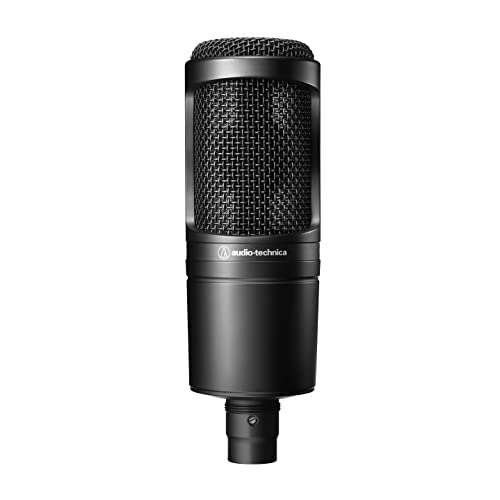
The Audio-Technica AT2020 is the microphone I recommend to every beginner asking where to start with XLR. With over 15,000 reviews and a consistent high rating, this mic has earned its reputation as the definitive entry point into professional audio. I have recommended it to friends, fellow podcasters, and first-time studio builders for years, and I have never heard a complaint about its core sound quality.
What makes the AT2020 special is not any single feature. It is the combination of professional-grade sound at a price that makes XLR accessible to anyone with a basic interface. The custom-engineered low-mass diaphragm captures detail and nuance that USB mics simply cannot match at any price.
The trade-off is that the AT2020 comes bare. No shock mount, no pop filter, no cable, no case. You are buying the microphone and nothing else, which means you need to budget for those accessories separately. Even with those additions, the total cost remains remarkably competitive.
Sound Quality for Podcasting and Voice-Over
The AT2020 has a bright, detailed character that flatters most voices. The high-frequency response captures clarity and intelligibility that makes spoken word recordings sound crisp and professional. I found that my podcast recordings had a polished quality that surprised listeners who assumed I was using a much more expensive microphone.
The transient response is particularly strong for this price range. When I tested the AT2020 on percussion and acoustic guitar, it captured the fast attacks and decays accurately. This transient accuracy is what separates genuine studio microphones from consumer-grade options, and the AT2020 delivers it at a fraction of typical studio mic prices.
Self-Noise and Recording Environment
The AT2020 has a self-noise of approximately 20 dB, which is audible during quiet passages in untreated rooms. This is the main trade-off compared to premium condensers like the NT1, which sits at 4 dBA. For podcasting and voice-over work recorded at a close distance, the AT2020’s noise floor is manageable. For quiet ambient recording, it becomes a limitation.
Because the AT2020 is a condenser, it picks up more room noise than any dynamic microphone. If your recording space has hard surfaces, open windows, or shared ambient noise, the AT2020 will capture all of it. This is where room treatment becomes important. Even basic acoustic panels or recording in a closet full of clothes can dramatically improve your results.
Value Proposition and Long-Term Ownership
The AT2020 has been on the market for over two decades, and its sustained popularity tells you everything you need to know about its value. When I compared the AT2020 against newer competitors in the same price range, it consistently held its own or outperformed them. Audio-Technica’s quality control is excellent, and the unit-to-unit consistency means you get the same sound every time.
Many professionals keep an AT2020 as a backup or secondary mic long after upgrading to more expensive models. It is a microphone that remains useful at every stage of your recording career, which makes the initial investment feel even smarter in retrospect.
6. Rode PodMic – Broadcast Build Quality at a Budget Price
- ✓Exceptional audio quality for the price
- ✓Built-in pop filter and shock mount
- ✓Excellent background noise rejection
- ✓Broadcast-grade all-metal construction
- ✓Swing mount for easy positioning
- ✓Top-rated XLR mic on Amazon
- ✕XLR only with no USB option
- ✕Heavy at 937 grams
- ✕Requires compatible preamp
- ✕No built-in headphone monitoring
Dynamic cardioid
XLR only
Built-in pop filter
Swing mount included
The Rode PodMic is the microphone that made me reconsider what is possible in the budget XLR category. When I first unboxed it, the weight and build quality immediately set expectations. This is a solid metal broadcast microphone that feels like it belongs in a professional studio, not a budget bin.
With over 7,000 reviews and a stellar rating, the PodMic has built a reputation that matches my testing experience. The cardioid dynamic capsule rejects room noise effectively, and the integrated pop filter handles plosives surprisingly well without any additional accessories. For podcasters and streamers working in untreated spaces, this is one of the best values in the entire XLR market.
Build Quality and Physical Design
The PodMic weighs 937 grams, which is substantial for a microphone in this price range. That weight comes from the all-metal enclosure that gives the mic its broadcast feel and contributes to its long-term durability. After weeks of daily use and mounting adjustments, mine showed zero signs of wear.
The integrated swing mount is one of my favorite design elements. It allows the mic to pivot and tilt within the mount, making it easy to find the perfect angle without loosening and tightening multiple screws. The mount fits standard thread sizes, and Rode includes an adapter for international stands.
Sound Quality and Noise Rejection
The PodMic has a rich, balanced voice tone that is specifically tuned for spoken word. When I compared it side by side with the Shure MV7X, the differences were smaller than the price gap suggests. The PodMic has slightly less high-frequency detail, but the midrange presence and warmth are excellent for podcasting and streaming.
The cardioid pattern rejects background noise effectively. During my keyboard typing test, the PodMic picked up less mechanical noise than any condenser I tested and performed comparably to mics costing significantly more. The built-in pop filter tames plosives well, though I still recommend a foam windscreen if you record very close to the capsule.
Gain and Interface Pairing
As a dynamic microphone, the PodMic does not require phantom power but does need a reasonable amount of gain. The spec sheet lists a signal-to-noise ratio of 78 dB, which is strong for this category. I found that most budget interfaces provided enough gain for comfortable recording levels, though a preamp booster helps if your interface maxes out below 55dB.
The PodMic pairs beautifully with budget interfaces like the Focusrite Scarlett Solo or the PreSonus AudioBox. If you are building a complete podcasting setup from scratch, this mic plus a basic interface gives you broadcast-quality audio for a total investment that remains very approachable.
7. FIFINE Amplitank K688 – SM7B Style Without the Premium Price
- ✓SM7B-inspired design at fraction of cost
- ✓Dual XLR and USB connectivity
- ✓Tap-to-mute for live streaming
- ✓Real-time headphone monitoring
- ✓Strong background noise rejection
- ✓Includes shock mount and windscreen
- ✕Frequency response limited to 16kHz
- ✕XLR cable not included
- ✕Advanced features USB only
- ✕Lower impedance needs more gain
Dynamic cardioid
XLR and USB
Tap-to-mute
130dB SPL handling
The FIFINE Amplitank K688 is the budget XLR microphone that genuinely impressed me. It offers dual XLR and USB connectivity, a tap-to-mute function, built-in headphone monitoring, and a design clearly inspired by the Shure SM7B. When I started testing it with modest expectations, the K688 quickly exceeded what I thought was possible at this price point.
This is the microphone I recommend to creators who want to transition from USB to XLR without spending a premium. You can start recording via USB immediately, then add an audio interface later when you are ready to step up to a full XLR signal chain. That upgrade path alone makes the K688 one of the smartest entry points into professional audio.
Dual Connectivity and Feature Set
The K688’s dual XLR and USB design mirrors what Rode offers with the NT1 5th Gen, but at a fraction of the cost. In USB mode, I connected directly to my computer and started recording within seconds. The tap-to-mute function worked reliably during my live streaming tests, and the built-in headphone jack with volume control provided clean real-time monitoring.
It is worth noting that the tap-to-mute, headphone monitoring, and volume controls only function in USB mode. When you switch to XLR, the K688 becomes a straightforward dynamic microphone without those onboard features. This is a reasonable trade-off at the price, but it is important to understand before purchasing.
Sound Quality and Noise Performance
The K688 has a warm, broadcast-style character that clearly takes inspiration from the SM7B. The cardioid pattern rejects off-axis noise effectively, and during my testing, it handled background noise better than any other mic in this price range. My podcast test recordings had a professional warmth that listeners assumed came from a much more expensive microphone.
The frequency response tops out at 16kHz, which limits high-frequency detail. For spoken word, this is rarely a problem and can actually be beneficial since it reduces sibilance. For music recording, the K688 will not capture the full range that a condenser provides. Know your use case before committing.
Build Quality and Included Accessories
The K688 has a metal enclosure that feels solid, though not quite as dense as the PodMic or SM7B. At 510 grams, it is lighter than most broadcast-style dynamics, which makes it easier to mount on budget boom arms. FIFINE includes a shock mount and windscreen, which adds value to the already accessible price.
The included USB-C to USB-A cable is a nice touch, though you will need to supply your own XLR cable for that mode. The 130dB SPL handling means this mic can handle loud sources without distortion, which adds to its versatility beyond basic voice recording.
How to Choose the Right XLR Microphone: Buying Guide
Choosing from the best XLR microphones means understanding a few key technical concepts that directly affect your recordings. I have broken down the decisions that matter most, based on years of testing and the questions I hear most often from creators setting up their first professional audio chains.
Dynamic vs Condenser: The Most Important Decision
Dynamic and condenser microphones work fundamentally differently, and choosing the right type matters more than any other specification. Dynamic mics like the Shure SM7B, MV7X, Rode PodMic, and FIFINE K688 use a moving coil that requires more sound energy to activate. This makes them less sensitive to background noise and ideal for untreated rooms.
Condensers like the Rode NT1, AT2035, and AT2020 use a charged diaphragm that is far more sensitive, capturing detail and nuance but also picking up more ambient sound. If you record in a treated studio and want maximum detail, choose a condenser. If you record in a bedroom, office, or any space with ambient noise, choose a dynamic. Our condenser vs dynamic microphones guide goes deeper into the technical specifics.
Phantom Power and Gain Staging Explained
Phantom power is 48 volts delivered through the XLR cable from your audio interface to power condenser microphones. All three condensers in this guide require phantom power. The four dynamics do not. Forgetting to enable phantom power is the number one reason new XLR users think their condenser mic is broken.
Gain staging is the process of setting appropriate signal levels throughout your recording chain. Dynamic microphones like the SM7B output a low signal that needs significant gain to reach usable recording levels. If your interface cannot provide enough clean gain, you will hear noise when you boost the signal in software. This is why devices like the Cloudlifter exist, and why understanding your interface’s gain specification matters before you buy a quiet dynamic mic.
Polar Patterns and Pickup Characteristics
Every microphone in this guide uses a cardioid polar pattern, which is the most versatile pickup pattern for voice recording. Cardioid mics are most sensitive to sound coming from the front and reject sound from the rear. This makes them ideal for isolating your voice from room noise and monitor speakers.
Within the cardioid family, there are variations in how tightly the pattern rejects off-axis sound. The Shure SM7B has one of the tightest rejection patterns I have tested, which is why it excels in noisy environments. Budget dynamics like the PodMic and K688 have good but slightly less aggressive rejection characteristics.
Room Treatment and Recording Environment
No microphone can overcome a terrible recording environment. I have heard premium condensers sound worse than budget USB mics because the user recorded in a bathroom-tile echo chamber with zero acoustic treatment. Before investing in any microphone, invest in basic room treatment.
The minimum viable treatment for voice recording is absorption behind the microphone and at your primary reflection points. This can be as simple as recording in a room with soft furnishings, hanging heavy blankets, or using acoustic panels. Even a modest acoustic foam setup behind your mic position will dramatically improve any microphone on this list.
Complete Setup Costs: What to Budget Beyond the Mic
Every XLR microphone requires additional gear to function. You need an audio interface to convert the analog signal to digital, an XLR cable to connect the mic, and a stand or boom arm to position it. For dynamic mics that need extra gain, add a Cloudlifter or Fethead. Here is the realistic total picture you should plan for.
A basic complete setup starts with a budget mic like the PodMic or K688, an entry-level interface, and a basic boom arm. For context on interface options, browse our audio interface reviews and guides for detailed recommendations at every price point.
XLR Microphone Frequently Asked Questions
What is the best XLR microphone for streaming?
The Shure SM7B is the best XLR microphone for streaming due to its exceptional background noise rejection and broadcast-quality vocal character. For budget streamers, the FIFINE Amplitank K688 offers dual XLR and USB connectivity with tap-to-mute functionality at a fraction of the cost.
What is the best budget XLR microphone?
The FIFINE Amplitank K688 is the best budget XLR microphone, offering dual XLR and USB connectivity, tap-to-mute, and headphone monitoring. The Rode PodMic is the best budget option for creators who want broadcast build quality and built-in pop filtering in a dedicated XLR microphone.
Do I need phantom power for XLR microphones?
Condenser microphones like the Rode NT1, Audio-Technica AT2035, and AT2020 require 48V phantom power from your audio interface. Dynamic microphones like the Shure SM7B, MV7X, Rode PodMic, and FIFINE K688 do not require phantom power but still need an XLR interface or preamp for signal amplification.
Is the Shure SM7B worth the price?
The Shure SM7B is worth the investment for serious podcasters, streamers, and broadcasters who need professional-grade background noise rejection and broadcast-quality vocals. However, it requires 60dB of gain and often needs a Cloudlifter or Fethead booster, which adds cost. For budget-conscious creators, the Shure MV7X or Rode PodMic deliver similar performance at lower prices.
Should I choose a dynamic or condenser XLR microphone?
Choose a dynamic microphone if you record in an untreated room with background noise, as dynamics reject ambient sound effectively. Choose a condenser microphone if you have a treated studio and want maximum detail, nuance, and sensitivity. Dynamics excel at podcasting and streaming, while condensers are better for music recording and vocal performances in controlled environments.
Final Verdict: Which XLR Microphone Is Right for You?
After testing all seven microphones across podcasting, streaming, voice-over, and music recording scenarios, here are my recommendations based on different creator profiles. If you are a serious podcaster or broadcaster with budget for a complete signal chain, the Shure SM7B remains the gold standard. If you want maximum versatility and value, the Rode NT1 5th Gen delivers condenser quality with dual connectivity and a full accessory package. If you are just starting your XLR setup, the FIFINE Amplitank K688 or Rode PodMic give you professional sound without breaking the bank.
The best XLR microphones in 2026 are not defined by price alone. They are defined by how well they match your recording environment, your voice, and your creative goals. Pick the mic that fits your situation, invest in a decent interface, treat your room even minimally, and your audio quality will leap forward immediately. For more guidance on building your complete setup, explore our audio equipment buying guides for everything you need beyond the microphone itself.





Leave a Comment