
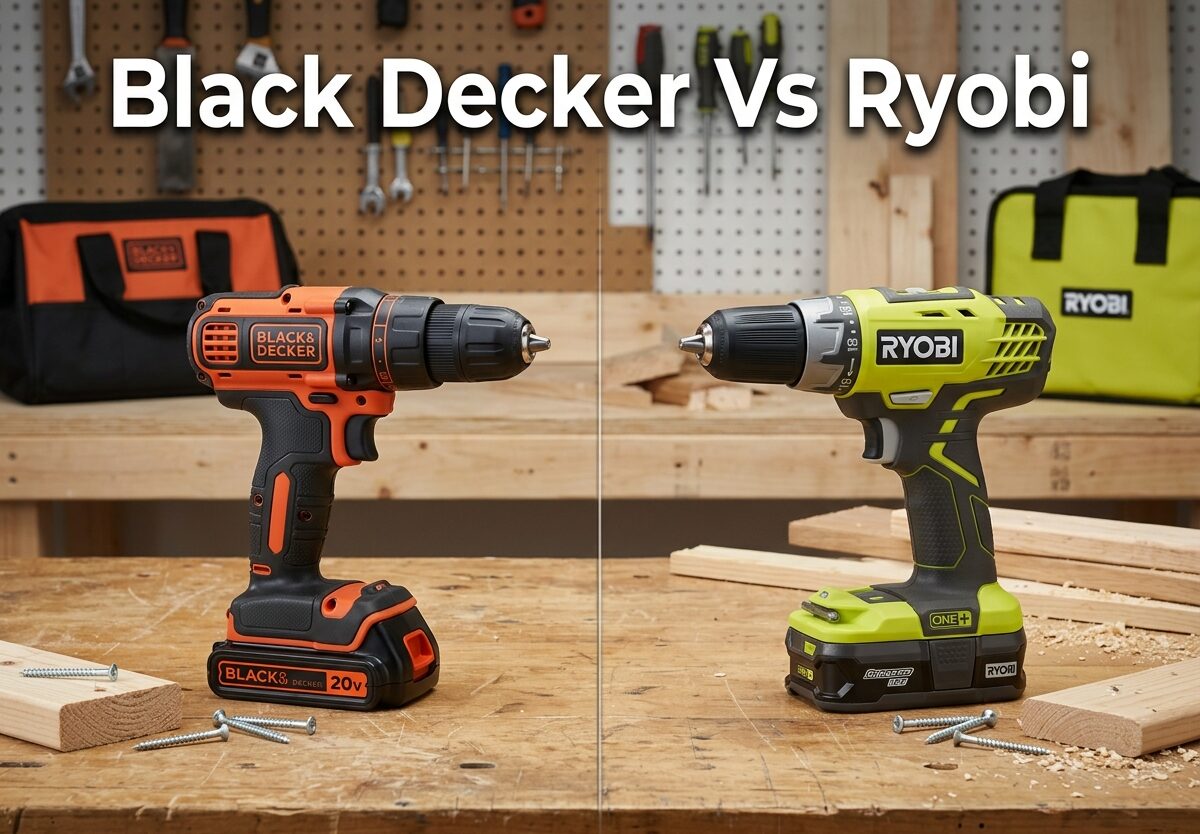
Choosing between Black+Decker and Ryobi means deciding between two very different approaches to power tools. Both brands occupy the budget-friendly end of the market, but they target different types of users and offer distinct long-term value propositions. This Black Decker vs Ryobi comparison breaks down the critical differences in battery ecosystems, performance, build quality, and overall value so you can make the right choice for your specific needs.
The battery platform you choose today will determine which tools you can use for years to come. Both brands use proprietary battery systems that don’t cross-compatibile, making this a decision with lasting consequences for your tool collection. I’ve spent years researching power tool brands and analyzing real user experiences to help you understand which brand offers better value for your situation.
Black Decker vs Ryobi: The Quick Answer
Ryobi wins for most homeowners and DIYers building a tool collection. The ONE+ battery ecosystem spans 280+ tools with consistent compatibility, while Black+Decker frequently changes battery designs and offers a more limited selection. Black+Decker works for extremely occasional users who need basic tools at the lowest possible upfront cost, but Ryobi delivers better long-term value through its extensive ecosystem and more reliable performance.
Brand Overview: Company Background and Market Position
Understanding who owns these brands helps explain their different approaches to the power tool market. Black+Decker is owned by Stanley Black & Decker, a massive tool conglomerate that also owns DeWalt, Craftsman, and Porter-Cable. This corporate structure places Black+Decker as the entry-level option in a tiered brand portfolio targeting budget-conscious consumers who may eventually upgrade to professional brands.
Ryobi is owned by Techtronic Industries (TTI), the same company that owns Milwaukee, one of the most respected professional tool brands. This relationship gives Ryobi access to Milwaukee’s engineering expertise and manufacturing capabilities, which explains why Ryobi tools often outperform their price point. TTI positions Ryobi as its consumer-grade brand while Milwaukee targets professionals, creating a clear division between the two product lines.
Is Ryobi made by Black and Decker? No, they’re completely separate companies competing in the same market segment. Is Ryobi basically Milwaukee? While both brands share the same parent company and some manufacturing facilities, Ryobi uses different components, battery platforms, and quality standards to meet a lower price point. The engineering influence is visible, but Ryobi tools are not simply rebadged Milwaukee products.
Battery Ecosystem Comparison: ONE+ vs 20V MAX
The battery platform represents the most significant difference between these brands and determines your long-term investment value. Ryobi’s ONE+ system uses an 18V lithium-ion battery platform that has remained consistent for over 15 years. This backward and forward compatibility means batteries from a decade ago still work in tools released in 2026. The ONE+ ecosystem encompasses 280+ tools across multiple categories, including drills, saws, outdoor equipment, and even specialty tools like soldering stations and air inflators.
Black+Decker’s 20V MAX POWERCONNECT system offers fewer tools with less consistency in battery design over time. The platform includes around 50-75 tools, covering basic needs but lacking the extensive selection that Ryobi provides. Black+Decker has historically changed battery designs more frequently, creating compatibility issues between older and newer tools. This inconsistency means your current Black+Decker batteries might not work with future tool purchases, forcing you to reinvest in new batteries as you expand your collection.
Battery capacity options favor Ryobi as well. The ONE+ platform offers batteries ranging from 1.5Ah compact cells to 12Ah high-capacity packs, letting you choose the right balance of weight and runtime for each application. Black+Decker offers fewer capacity options, typically limiting choices to standard 1.5Ah or 2Ah batteries. Both brands use lithium-ion chemistry with similar charge times, but Ryobi’s greater range of options provides more flexibility for different use cases.
The charging systems also differ in practicality. Ryobi offers dual and quad chargers that can charge multiple batteries simultaneously, a valuable feature for users with larger tool collections. Black+Decker primarily offers single-battery chargers, though some models include USB ports for charging phones and other devices. For users building a comprehensive tool collection, Ryobi’s charging ecosystem better accommodates multiple batteries and tools.
Performance and Power Comparison
Real-world performance testing reveals clear advantages for Ryobi in most power metrics. The typical Ryobi drill delivers 300-500 inch-pounds of torque compared to Black+Decker’s 200-350 inch-pounds range. This difference becomes noticeable when drilling into dense materials or driving larger fasteners. Ryobi’s higher torque output means fewer stalled applications and less frustration during demanding tasks.
Motor technology contributes significantly to this performance gap. Ryobi has increasingly adopted brushless motors across its premium tool lines, offering improved efficiency, longer runtime, and extended motor life. Black+Decker continues to rely primarily on brushed motors, which cost less to manufacture but generate more heat and wear out faster. While both brands offer brushless options in select tools, Ryobi’s brushless lineup is more extensive and accessible at lower price points.
Speed ranges and control also favor Ryobi in most comparisons. The typical Ryobi drill offers two-speed gearboxes with 0-450 RPM on low and 0-1,750 RPM on high, compared to Black+Decker’s common 0-350/1,300 RPM range. This higher top speed makes Ryobi tools more versatile for drilling smaller holes and working with materials that benefit from faster bit rotation. Variable speed triggers on both brands perform adequately, but Ryobi’s tend to offer smoother modulation throughout the range.
In practical testing, Ryobi drills consistently outperform Black+Decker in drilling speed and driving power. Tests drilling 1-inch holes through 2x lumber typically show Ryobi completing the task 15-20% faster than comparable Black+Decker models. This performance gap widens in more demanding applications like drilling through metal or dense hardwoods, where Ryobi’s superior torque and motor technology provide clear advantages.
Build Quality and Durability
Are Black and Decker tools good quality? They’re adequate for light, occasional use but fall short for regular DIY projects. Black+Decker tools typically feature more plastic construction, thinner gear housings, and less robust internal components. This cost-focused approach keeps prices low but results in tools that may struggle with extended use or demanding applications. The build quality reflects Black+Decker’s positioning as tools for homeowners who need a drill a few times per year rather than weekly users.
Ryobi occupies the middle ground between true consumer-grade tools like Black+Decker and professional brands like DeWalt and Milwaukee. The construction quality incorporates more metal components, reinforced gear housings, and better materials in high-wear areas. While not built for daily professional use, Ryobi tools hold up well under regular homeowner and DIY use. Reddit users in r/Tools consistently describe Ryobi as “90% of the quality of DeWalt or Milwaukee at 60% of the price,” reflecting this positioning in the market.
Long-term durability data from user reports shows Ryobi tools typically lasting 3-5 years with regular use, while Black+Decker tools often show significant wear within 1-2 years of regular use. Battery longevity also favors Ryobi, with users reporting 4-6 years of service from ONE+ batteries compared to 2-3 years for Black+Decker 20V MAX batteries. This difference compounds the value advantage of Ryobi’s ecosystem over time.
Both brands offer limited warranties, but the terms reveal their confidence in product durability. Ryobi provides a 3-year warranty on most power tools, while Black+Decker typically offers 2-year coverage. This additional year of protection reflects Ryobi’s greater confidence in build quality and provides better peace of mind for buyers investing in a growing tool collection.
Tool Range and Ecosystem Size
The ecosystem size represents the most compelling reason to choose Ryobi for anyone planning to build more than a basic tool collection. With 280+ ONE+ compatible tools, Ryobi offers everything from basic drills and saws to specialty tools like nailers, glue guns, and even cleaning equipment. This extensive selection means you can continue expanding your collection while using the same batteries across all tools. The ONE+ system even includes outdoor power equipment like string trimmers, blowers, and lawn mowers, creating a truly comprehensive battery platform.
Black+Decker’s 20V MAX ecosystem covers basic needs but quickly runs out of expansion options. You’ll find drills, saws, and some outdoor tools, but the selection pales compared to Ryobi’s offerings. For users who might eventually want specialty tools like oscillating multi-tools, heat guns, or powered paint sprayers, Black+Decker’s limited ecosystem becomes a significant constraint. This limitation forces users to either abandon the brand or invest in additional battery platforms as their needs grow.
The tool availability factor also favors Ryobi due to its exclusive partnership with The Home Depot. This retail relationship means consistent stock availability across the country and access to new tools as they’re released. Black+Decker tools appear in multiple retailers but with less consistent inventory and sometimes region-specific product selections. For users who value being able to find replacement tools or accessories locally, Ryobi’s Home Depot partnership provides better accessibility.
Why does Lowes not sell Ryobi? Because Ryobi has an exclusive retail partnership with The Home Depot, which means you won’t find Ryobi tools at Lowes or most other major hardware retailers. This exclusivity can be inconvenient if Home Depot isn’t your preferred shopping destination, but it also ensures consistent availability and dedicated shelf space for the full ONE+ ecosystem.
Price and Value Analysis
Black+Decker wins on initial purchase price, with most cordless tools priced 20-30% lower than comparable Ryobi offerings. A basic Black+Decker 20V drill kit typically costs $60-80, while Ryobi’s entry-level drill kits run $80-100. This price difference makes Black+Decker attractive for buyers with extremely limited budgets or those who only need a tool for a single project.
However, the value equation shifts dramatically when considering long-term ownership. Ryobi’s battery ecosystem stability means your initial battery investment continues paying dividends as you add tools. A ONE+ battery purchased five years ago still works in tools released in 2026, protecting your investment. Black+Decker’s changing battery designs mean older batteries may become obsolete, forcing repeated purchases of new batteries as you expand your collection.
Battery replacement costs also favor Ryobi over time. The larger ONE+ ecosystem creates a robust aftermarket for batteries, with third-party options available at competitive prices. Black+Decker’s smaller ecosystem and changing designs result in fewer aftermarket options and higher prices for official replacement batteries. Over a 5-year ownership period, these differences can add up to hundreds of dollars in savings for Ryobi users.
The total cost of ownership analysis clearly favors Ryobi for anyone planning to own more than 2-3 cordless tools. While Black+Decker may cost less upfront, the combination of battery compatibility issues, more frequent replacement needs, and limited expansion options makes Ryobi the better value for serious consideration. Reddit user feedback consistently shows that homeowners who initially chose Black+Decker to save money often regret the decision when they want to expand their tool collection and find their ecosystem limited.
Best Use Cases and Applications
Black+Decker works well for specific, limited use cases. If you need a drill for hanging pictures occasionally, assembling flat-pack furniture a few times per year, or light household maintenance, Black+Decker provides adequate performance at minimal cost. The tools handle basic tasks without issue and represent a reasonable investment for users who genuinely need power tools only a few times per year. Apartment dwellers, renters, and anyone with minimal DIY needs find Black+Decker sufficient for their limited requirements.
Ryobi shines in more extensive DIY and homeowner applications. For new homeowners setting up their first tool collection, Ryobi’s extensive ecosystem means you can start with a basic drill kit and add tools as needed while using the same batteries throughout. Home maintenance projects, furniture building, deck construction, and remodeling tasks all benefit from Ryobi’s superior power and durability. The ONE+ system’s outdoor equipment options also make Ryobi attractive for homeowners who want battery-powered lawn tools that share batteries with their workshop equipment.
For woodworking projects, Ryobi’s better power and precision controls provide superior results. The higher torque output handles hardwood drilling and driving without stalling, while smoother speed control helps prevent screw stripping and workpiece damage. Black+Decker can manage basic woodworking tasks but struggles with dense materials or precise applications where control matters.
Yard work and outdoor maintenance represent another area where Ryobi’s ecosystem advantages become clear. The ability to use the same batteries in string trimmers, blowers, hedge trimmers, and even lawn mowers creates tremendous convenience and cost savings. Black+Decker offers some outdoor tools but nothing approaching Ryobi’s comprehensive outdoor equipment lineup. For homeowners wanting a complete battery-powered yard maintenance solution, Ryobi’s ONE+ system provides unmatched versatility.
Recommendations by Skill Level
Complete Beginners: Start with Ryobi if you have any intention of doing more than one or two projects. The slightly higher initial cost pays off quickly when you add a second or third tool and can use the same batteries. Ryobi’s better performance also makes learning easier because tools perform more predictably and with less frustration.
Occasional Users: Black+Decker makes sense only if you truly use tools rarely and have no plans to expand your collection. If you’re uncertain about your future DIY plans, Ryobi provides a safer investment that accommodates growth. The ecosystem stability means your batteries remain valuable even if your tool usage increases over time.
Regular DIYers: Ryobi is clearly the better choice. The performance advantages, tool selection, and ecosystem benefits all align with the needs of users who tackle projects regularly. Black+Decker tools will feel underpowered and may not hold up to frequent use, making Ryobi the more reliable long-term investment.
New Homeowners: Ryobi wins hands down. Home ownership inevitably creates needs for tools you didn’t anticipate, and Ryobi’s expansive ecosystem means you can add tools as needed while maintaining battery compatibility. The outdoor equipment options alone make Ryobi attractive for homeowners, while the power and durability handle the diverse projects that come with maintaining a home.
Frequently Asked Questions
Which brand is better, Ryobi or Black and Decker?
Ryobi is better for most users due to its extensive ONE+ ecosystem of 280+ tools, consistent battery compatibility, and superior performance. Black+Decker works only for extremely occasional users who need basic tools at the lowest upfront cost with no plans to expand their collection.
Is Ryobi made by Black and Decker?
No, Ryobi is owned by Techtronic Industries (TTI), a completely separate company from Stanley Black & Decker. TTI also owns Milwaukee, which is why Ryobi tools often share design elements and engineering with Milwaukee products despite targeting different market segments.
Are Black and Decker tools good quality?
Black+Decker tools are adequate for light, occasional use but lack the durability and performance for regular DIY projects. They feature more plastic construction, lower torque output, and shorter expected lifespan compared to Ryobi tools. For basic household tasks a few times per year, they’re acceptable but not ideal for building a long-term tool collection.
Why does Lowes not sell Ryobi?
Ryobi has an exclusive retail partnership with The Home Depot, meaning Ryobi tools are only sold at Home Depot and authorized dealers. This exclusivity arrangement ensures consistent product availability across the country but limits purchasing options for consumers who prefer shopping at other retailers like Lowes.
Is Ryobi basically Milwaukee?
While both brands are owned by the same parent company (Techtronic Industries) and share some manufacturing facilities, Ryobi is not simply a rebadged Milwaukee product line. The brands use different components, battery platforms, and quality standards to meet their respective price points. Ryobi benefits from Milwaukee’s engineering expertise but targets the consumer market rather than professional users.
Is Ryobi Chinese or Japanese?
Ryobi is a Japanese brand that was founded in 1943, but like most modern power tool companies, manufacturing is distributed globally. Current Ryobi tools are primarily manufactured in China and other Asian countries under the ownership of Techtronic Industries, a Hong Kong-based company. The brand’s Japanese heritage remains in its design philosophy and product development.
Final Verdict and Recommendations
This Black Decker vs Ryobi comparison reveals a clear winner for most users. Ryobi’s extensive ONE+ ecosystem, superior performance, better build quality, and long-term value make it the smarter choice for anyone planning to build a collection of cordless power tools. The 280+ compatible tools, consistent battery platform, and relationship with Milwaukee’s engineering create a system that grows with your needs while protecting your initial investment.
Choose Ryobi if you’re a new homeowner, regular DIYer, or anyone who anticipates needing more than two or three cordless tools. The ecosystem advantages compound over time, and the performance differences make projects easier and more enjoyable. Reddit’s r/Tools community consistently recommends Ryobi over Black+Decker for good reason – the value proposition is undeniable for users who actually use their tools regularly.
Choose Black+Decker only if you genuinely need tools for extremely occasional use and have no plans to expand your collection. The lower upfront price makes sense for apartment dwellers, renters, or anyone who needs a drill for one specific project and won’t use it again for months. Just be aware that choosing Black+Decker means committing to a limited ecosystem with uncertain battery compatibility and limited expansion options.
For most readers facing this Black Decker vs Ryobi decision, Ryobi is the better long-term investment. The slightly higher initial cost pays dividends through better performance, greater versatility, and an ecosystem that accommodates your growing needs. When you’re ready to start building your tool collection, the ONE+ system provides a foundation that will serve you well for years to come.






Leave a Comment