
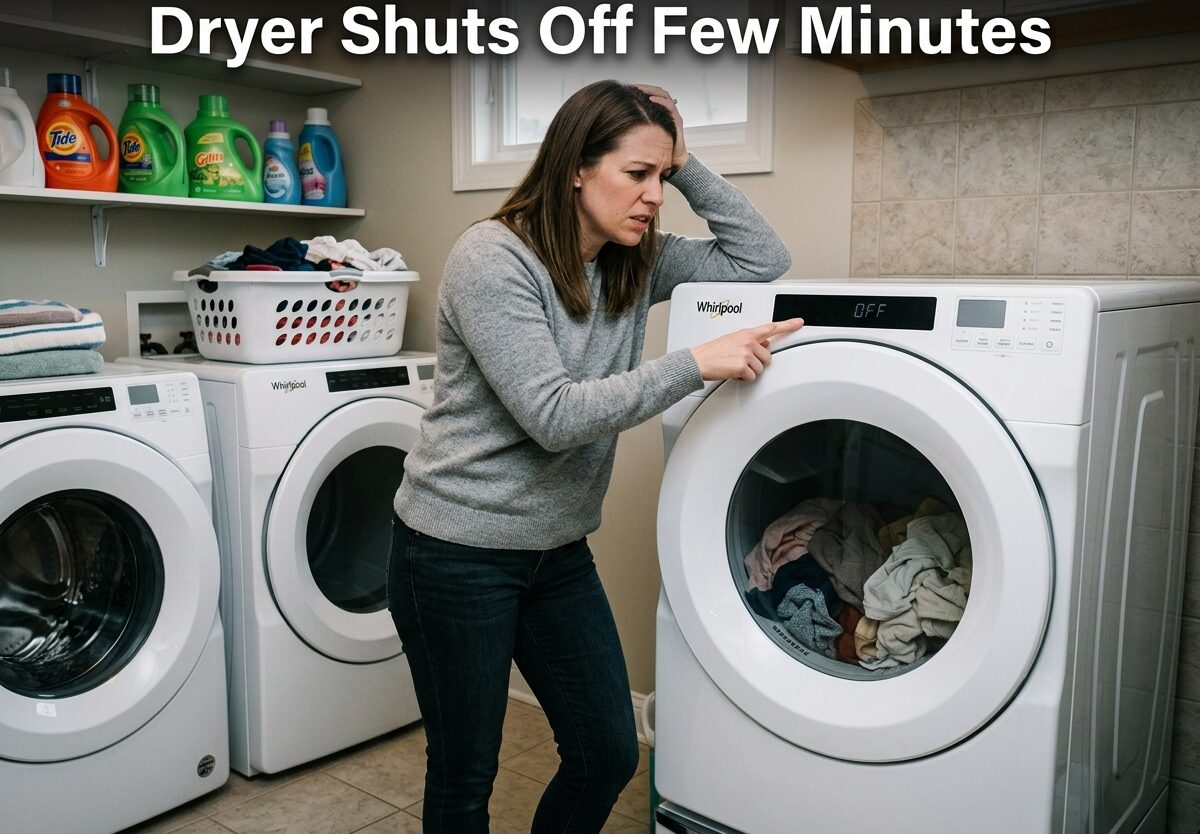
When your dryer shuts off after running for just a few minutes, it’s frustrating and confusing. You load it up, press start, and everything seems normal. Then the cycle stops prematurely with clothes still damp. This problem isn’t random—your dryer is intentionally shutting down as a protective response to an underlying issue.
Based on my experience researching and troubleshooting dryer problems, this is one of the most common complaints homeowners face. The good news is that most causes are identifiable and fixable. Let me walk you through exactly why this happens and what you can do about it.
Why Your Dryer Shuts Off After a Few Minutes
The short answer: your dryer’s safety sensors are detecting a problem and cutting power to prevent damage or fire. Modern dryers have multiple thermal protection devices that monitor temperature, airflow, and component operation. When something isn’t right, the dryer shuts itself off rather than risking a hazard.
Understanding this is important because repeatedly restarting an overheating dryer without addressing the root cause can lead to permanent damage or serious safety risks. Let’s look at the six most common culprits behind this issue.
Overheating and Airflow Restriction (Most Common Cause)
Restricted airflow is the number one reason dryers shut off after a few minutes. Your dryer needs proper ventilation to expel hot, moist air. When airflow is blocked, internal temperatures rise rapidly and trigger safety shutoffs.
The most frequent culprit is lint buildup. Lint accumulates in multiple places: the lint trap (which you might clean regularly), the vent hose behind the dryer, and the external vent hood that exhausts outside. Even a partially clogged vent can cause problems. I’ve seen dryers shut down simply because the external vent flap was stuck closed by a bird nest or accumulated debris.
Another common issue is a crimped or crushed vent hose. If your dryer is pushed too close to the wall, the transition hose can get compressed, creating a serious restriction. Flexible vinyl foil vents are particularly prone to collapsing and should be replaced with rigid metal ducting whenever possible.
Symptoms of airflow restriction include: longer drying times, excessive heat on the dryer’s exterior surface, clothes feeling unusually hot to the touch when the cycle stops, and the dryer restarting after cooling down for 10-15 minutes.
Dryer Motor Overheating
The dryer motor is a workhorse that drives the drum and blower wheel. Like any electric motor, it generates heat during operation. Under normal conditions, this heat dissipates through proper ventilation and the motor’s internal cooling system.
When a motor begins to fail due to age, worn bearings, or internal damage, it runs hotter than normal. The increased friction and electrical resistance cause temperatures to climb faster. Most dryer motors have a thermal overload protector that cuts power when the motor overheats—this is what causes the premature shutdown.
A telltale sign of motor overheating is a buzzing or humming noise just before the dryer stops. You might also notice a burning smell or the motor struggling to start when you first turn on the dryer. Unlike simple airflow issues, motor problems typically worsen over time and the shutdown intervals get shorter.
Motor overheating can also be caused by the very airflow restriction mentioned above. When the blower wheel can’t move air properly, the motor works harder and generates more heat, creating a vicious cycle that leads to shutdown.
Faulty or Broken Drive Belt
The drive belt connects the motor to the drum, allowing the drum to rotate. Over time, this belt can become worn, stretched, or frayed. When the belt becomes too loose or breaks completely, the drum may stop turning even though the motor continues running.
Some dryers have sensors that detect when the drum isn’t spinning properly, which can trigger a shutdown. More commonly, a failing belt will slip or squeal before it breaks, causing irregular drum movement that the dryer’s control system detects as abnormal.
Symptoms of belt problems include: loud squealing or screeching noises during operation, the drum not spinning when the dryer is running, or the dryer starting normally but stopping after a few minutes with a humming sound.
If you can spin the drum easily by hand through the door opening when the dryer is off, this often indicates a broken belt. This is usually a straightforward repair that most homeowners can handle with basic tools.
Defective Door Switch or Latch
Your dryer has a door switch that prevents operation when the door is open—a critical safety feature. The switch is activated by a small plastic latch or button on the door frame. If this switch malfunctions or the door doesn’t close properly, the dryer may start initially but shut off after a few minutes of vibration.
Door switch failures can happen due to physical damage, moisture exposure, or simple wear and tear. Sometimes the plastic strike on the door that presses the switch becomes worn or misaligned. Other times, the switch mechanism itself fails internally.
You can test this by listening for a clicking sound when you manually press the switch with your finger (with the dryer unplugged, of course). No click usually means a failed switch. Also check if the door feels loose or doesn’t seem to close securely. Sometimes simply cleaning lint from the door catch mechanism or tightening the door hinges can resolve the issue.
Malfunctioning Moisture Sensor
Many modern dryers feature moisture-sensing technology that detects when clothes are dry and automatically ends the cycle. Metal bars inside the drum measure electrical resistance changes as moisture evaporates from fabrics. This system is designed to save energy and prevent over-drying.
However, these sensors can malfunction or become coated with fabric softener residue, detergent buildup, or mineral deposits from hard water. When this happens, the sensor may incorrectly signal that clothes are dry when they’re still wet, causing the dryer to shut off prematurely.
Symptoms of sensor issues include: the dryer consistently stopping with damp clothes, the problem occurring regardless of load size or fabric type, and the issue developing gradually over time rather than suddenly.
Cleaning the moisture sensor bars with rubbing alcohol and a soft cloth is a simple first step. Locate them inside the drum (they look like metal strips or bars) and wipe them thoroughly. If cleaning doesn’t help, the sensor itself may need replacement.
Blown Thermal Fuse
A thermal fuse is a safety device designed to blow and cut power when temperatures exceed safe limits. Unlike a thermostat that resets when temperatures normalize, a blown thermal fuse is a one-time protection device that must be replaced.
Thermal fuses typically blow due to prolonged overheating from restricted airflow, a failing thermostat, or a defective heating element. The fuse sacrifices itself to prevent fire hazards and serious damage to other components.
If your thermal fuse has blown, the dryer may not start at all, or it may start briefly before shutting down. The dryer won’t run until the fuse is replaced—but simply replacing it without addressing the underlying cause will result in another blown fuse.
Testing a thermal fuse requires a multimeter to check for continuity. No continuity means the fuse is blown. Before replacing it, you must identify what caused the overheating, or the new fuse will blow again as well.
Step-by-Step Troubleshooting Guide
Here’s the systematic approach I recommend for diagnosing why your dryer shuts off after a few minutes. Start with the easiest checks and work your way through the list.
Step 1: Clean the lint trap thoroughly. Remove lint from the screen and wash it with warm, soapy water. Fabric softener residue can clog the mesh even when it looks clean. Let it dry completely before reinstalling.
Step 2: Check the vent hose behind the dryer. Pull the dryer away from the wall carefully and inspect the vent hose. Look for kinks, crushing, or disconnections. Remove and clean the hose if it’s full of lint. Replace any flexible vinyl foil hose with rigid metal ducting.
Step 3: Inspect the external vent. Go outside and locate where your dryer vents. Check that the flap opens freely and isn’t blocked by lint, debris, or animal nests. Clean it thoroughly if needed.
Step 4: Test the door switch. With the dryer unplugged, press the door switch manually. You should hear a click. If no click, or if the switch feels loose, the switch likely needs replacement.
Step 5: Run a test cycle. After cleaning and inspecting, run the dryer on a no-heat or air-only setting for 10-15 minutes. If it stays running, the issue is likely heat-related. If it still shuts off on air-only, the problem is mechanical or electrical.
Step 6: Check the drive belt. Try to spin the drum by hand through the door. If it spins freely with little resistance, the belt may be broken. If it’s difficult to turn, the belt is probably intact.
Step 7: Clean the moisture sensors. Locate the metal sensor bars inside the drum and clean them with rubbing alcohol on a cloth or cotton ball.
Step 8: Consider professional diagnosis. If you’ve completed steps 1-7 and the problem persists, it’s time to call a technician. The issue may be with internal components like the motor, thermal fuse, or control board.
Safety Warnings and Precautions
Never ignore a dryer that shuts off mid-cycle. This is a warning sign that something is wrong. Continually restarting an overheating dryer can lead to motor failure, electrical damage, or fire.
Lint is a fire hazard. Accumulated lint is highly flammable. The U.S. Fire Administration reports that dryer fires cause approximately $35 million in property loss annually. Clean your lint trap before every load and have your vent system professionally cleaned annually.
Unplug before working. Always unplug your dryer before performing any inspection or repair. For gas dryers, also turn off the gas supply valve.
Gas dryer precautions. If you have a gas dryer and smell gas, immediately evacuate your home and call your gas company from outside. Don’t attempt to diagnose or repair gas connections yourself unless you’re properly qualified.
Don’t bypass safety devices. Never remove or bypass thermal fuses, door switches, or other safety components. These are there to protect you and your home.
When to Call a Professional
Some dryer repairs are well-suited for DIY, while others require professional expertise. Call a qualified appliance technician if: the motor needs replacement (this involves significant disassembly), you’re uncomfortable with electrical testing or multimeter use, the dryer is under warranty and DIY repairs might void coverage, or you have a gas dryer with any gas-related concerns.
Professional repair typically costs between $100-300 depending on the problem and your location. For older dryers nearing the 10-15 year mark, it may be worth comparing repair costs to the price of a new unit.
FAQ
Why is my dryer turning off every few minutes?
Your dryer is turning off because its safety sensors detect a problem—most commonly overheating from restricted airflow, motor issues, or a failing component. The shutdown is a protective response to prevent fire hazards or permanent damage to the appliance.
What are the warning signs of a dryer fire?
Warning signs include excessive heat on the dryer exterior, a burning smell during operation, clothes taking much longer than normal to dry, lint accumulating around the dryer base, the dryer shutting off repeatedly, visible lint or debris around the vent opening, and unusual humming or buzzing noises before shutdown.
Is a clogged vent causing my dryer to shut off?
Yes, a clogged vent is the most common cause of dryers shutting off after a few minutes. Restricted airflow causes internal temperatures to rise rapidly, triggering thermal safety devices that cut power to prevent overheating and potential fire hazards.
How to fix a dryer that won’t stay on?
Start by cleaning the lint trap thoroughly and checking for vent obstructions behind the dryer and at the external vent hood. Ensure the door closes securely and the door switch clicks. Test the dryer on an air-only setting. If problems persist, check the drive belt and moisture sensors, or call a professional for motor or electrical issues.
Can I still use my dryer if it keeps shutting off?
No, you should stop using your dryer and diagnose the problem before running it again. Repeatedly restarting a dryer that’s shutting off due to overheating can cause permanent damage or create a serious fire hazard. The shutdown is a warning sign that requires attention before further use.
Conclusion
Regular maintenance prevents most dryer shutdown issues. Clean your lint trap before every load—every single time. Inspect and clean your vent hose and external vent at least once per year. Avoid overloading the dryer, which strains the motor and heating elements. Use the appropriate heat setting for each fabric type, and consider using dryer balls to improve airflow and reduce drying time.
If your dryer shuts off after a few minutes, don’t ignore it or keep restarting it hoping the problem will resolve itself. Use the troubleshooting steps above to identify and address the cause. Your dryer will thank you with reliable performance, and you’ll avoid potential safety hazards.

Leave a Comment