
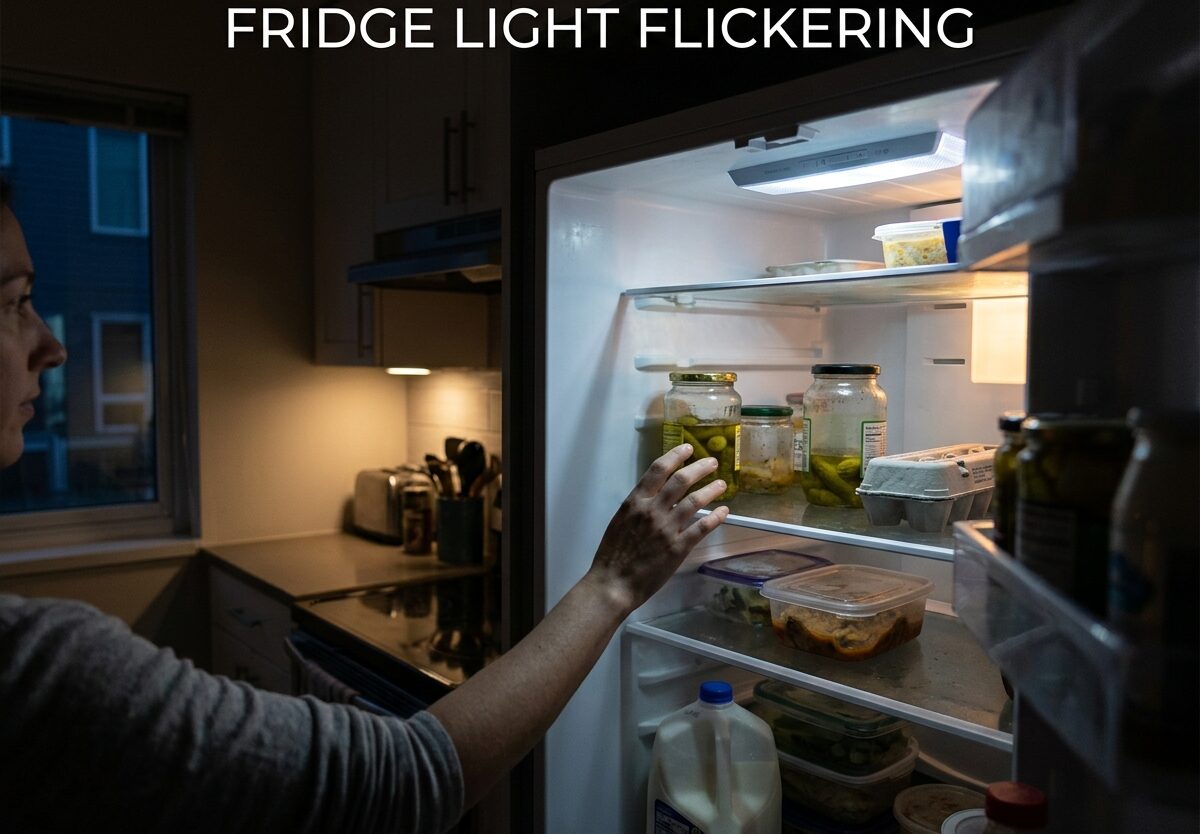
You open your refrigerator door to grab a quick snack, and instead of a steady glow, you’re greeted by a strobe light show. That annoying flickering isn’t just frustrating—it often signals that something needs attention before the light fails completely.
Fridge light flickering is one of those household annoyances that starts small but can indicate bigger issues lurking behind the scenes. I’ve seen this problem in everything from older refrigerators with traditional bulbs to modern models with sophisticated LED modules. The good news is that most causes are relatively straightforward to diagnose, and many fixes are simple enough for DIY repair.
In this guide, I’ll walk you through the common causes of refrigerator light flickering, step-by-step troubleshooting methods, and help you determine when it’s time to call in a professional. Based on real repair experiences and manufacturer insights, you’ll have everything you need to restore that steady illumination.
Common Causes of Fridge Light Flickering
Understanding why your refrigerator light is flickering starts with identifying the root cause. The issue typically falls into one of several categories, ranging from simple bulb problems to more complex electrical issues.
LED Light Module Failure
Modern refrigerators use LED light modules instead of traditional bulbs. These LED arrays are more energy-efficient but can fail in ways that cause flickering before complete failure. The most common culprit is a failing LED driver board that regulates power to the lights.
What makes LED module failure particularly tricky is that condensation can build up inside the light assembly, causing corrosion on the circuit board over time. This is especially common in humid climates or during summer months when there’s more moisture in the air. The corrosion creates inconsistent electrical connections, resulting in that annoying flicker pattern.
Door Switch Malfunction
The door switch is a small but critical component that tells your refrigerator when to turn the light on and off. When this switch starts failing, it can’t maintain a consistent connection, causing the light to flicker or work intermittently.
Door switches are mechanical components that wear out over time. Every time you open and close your refrigerator door, this switch activates. After thousands of cycles, the internal contacts can degrade or become dirty, leading to poor electrical conductivity. You might notice the flickering happens more when the door is partially open or at certain angles.
Loose Electrical Connections
Vibration from the refrigerator’s compressor and everyday movement can loosen electrical connections over time. A loose wire in the light circuit creates intermittent contact, which manifests as flickering.
This issue is particularly common in older refrigerators or units that have been moved recently. The wiring harness that connects to the light assembly can become partially disconnected, or the socket holding the bulb may have loose contacts. Sometimes simply reseating these connections resolves the problem entirely.
Power Supply Issues
Your refrigerator’s light operates on a specific voltage, and fluctuations in power delivery can cause flickering. This might be related to the refrigerator’s internal power supply or even your home’s electrical system.
A less commonly discussed issue is the relationship between your refrigerator and GFCI outlets. Some refrigerators plugged into GFCI outlets can experience flickering lights when the outlet trips or when there are ground fault issues. The refrigerator’s compressor startup can sometimes trigger sensitive GFCI outlets, causing momentary power interruptions to the light circuit.
Control Board Problems
In modern refrigerators with electronic controls, the main control board regulates power to all components, including the lights. When this board starts failing, it can send inconsistent power to the light module.
Control board issues often manifest alongside other problems—temperature fluctuations, ice maker malfunctions, or display errors. If you notice multiple systems acting up alongside the flickering light, the control board might be the common denominator.
How to Fix Fridge Light Flickering: Step-by-Step Guide
Before you call a repair technician or order replacement parts, try these troubleshooting steps. I recommend proceeding in order, starting with the simplest fixes first.
Step 1: Perform a Power Reset
A power reset can resolve many minor electrical glitches, especially after power outages or electrical storms. This simple step clears any temporary issues in the refrigerator’s electronic systems.
To perform a power reset, unplug your refrigerator from the wall outlet or turn off the circuit breaker that supplies power to the unit. Wait at least 60 seconds—this allows the capacitors in the control board to fully discharge. Then restore power and monitor the light behavior over the next few door openings. Many users report this resolves temporary flickering, especially after power interruptions.
Step 2: Visually Inspect the Light Assembly
With the refrigerator door open, carefully examine the light module or bulb. Look for obvious signs of damage like blackening on bulbs, visible moisture or condensation in the LED housing, or loose components.
For traditional bulbs, check if the filament is broken or if there’s darkening at the base of the bulb. For LED modules, look for any discoloration on the circuit board or signs of water damage. If you see obvious physical damage, replacement is likely necessary.
Step 3: Check and Reseat Connections
This step requires removing the light cover to access the wiring. Always unplug the refrigerator before working with electrical components to avoid shock.
Once you have access to the light assembly, gently disconnect and reconnect the wiring harness. This can restore proper contact if loose connections are the culprit. For bulb-style fixtures, remove the bulb and inspect the socket for corrosion or deformation. A small amount of electrical contact cleaner can help clean dirty socket contacts.
Step 4: Test the Door Switch
The door switch is typically located where the door makes contact with the refrigerator frame. With the door open, press and release the switch multiple times while observing the light behavior.
If the light flickers inconsistently when you manipulate the switch, or if pressing the switch doesn’t reliably control the light, the switch is likely failing. These are inexpensive parts (typically $5-15) and are relatively easy to replace with basic tools.
Step 5: Check Your GFCI Outlet
If your refrigerator is plugged into a GFCI outlet, check if the outlet has tripped. Press the “reset” button on the outlet and monitor whether the flickering continues.
Some refrigerators simply don’t work well with GFCI outlets due to the compressor’s power draw characteristics. If you suspect this is the issue, consult an electrician about whether a standard outlet would be more appropriate for your refrigerator circuit.
Brand-Specific Fridge Light Problems
Different refrigerator manufacturers have unique designs and common failure points. Understanding your brand’s specific issues can speed up diagnosis and repair.
Samsung Refrigerator Light Issues
Samsung refrigerators are known for a specific flickering pattern that indicates the unit has entered self-diagnostic mode. This often happens after power outages or when the refrigerator is restarted. The lights may flash in a specific sequence that corresponds to error codes.
Additionally, Samsung models may trigger a flickering light alert when the external temperature is too high. The refrigerator uses the light as a visual warning system. If you notice consistent flickering that corresponds to specific patterns, consult your owner’s manual for diagnostic code interpretation.
Whirlpool Fridge Light Troubleshooting
Whirlpool refrigerators commonly experience LED module failures in side-by-side models. The LED light assembly is a sealed unit in many Whirlpool models, meaning individual LED replacement isn’t possible—the entire module must be replaced.
Whirlpool’s official recommendation often starts with the power reset procedure mentioned earlier. If that doesn’t resolve the issue, the next step is typically replacing the LED light assembly, which costs between $50-120 depending on the model.
LG and Frigidaire Diagnostic Modes
Both LG and Frigidaire refrigerators have diagnostic modes that use light flashing to communicate error conditions. These brands may use the refrigerator light to indicate problems with the ice maker, temperature sensors, or other systems—not just the light itself.
If you notice rhythmic flashing patterns (like three flashes followed by a pause), this is likely a diagnostic code rather than a simple light malfunction. Your owner’s manual or manufacturer website will have code interpretation guides specific to your model.
DIY vs Professional Repair Costs
Understanding the potential costs can help you decide whether to tackle the repair yourself or call a professional. Here’s a realistic breakdown based on typical repair scenarios.
Simple Bulb or Switch Replacement: $5-30 DIY
If you’re dealing with a standard bulb replacement or a faulty door switch, this is an ideal DIY project. Bulbs cost $3-10, and door switches typically run $5-15. These repairs require minimal tools and can be completed in under 15 minutes, even for beginners.
LED Module Replacement: $50-150 DIY, $150-300 Professional
LED light modules are more expensive and sometimes require disassembling part of the refrigerator interior. The part itself typically costs $50-120. If you’re comfortable with basic repairs, this is still very doable as a DIY project. Professional service calls for this issue typically range from $150-300 including parts and labor.
Control Board Repair: $200-400 Professional
Control board issues are generally not recommended for DIY repair unless you have electronics experience. Control boards cost $100-200 plus professional installation fees. Some technicians can repair specific components on the board (like replacing a failed resistor) for less than a full board replacement.
Forum users frequently report spending $150-300 on professional repairs for fridge light issues, with LED module replacement being the most common service. However, many also share successful DIY repairs completed for under $20 when the issue is simply a bulb or switch.
Preventing Future Fridge Light Issues
While some component failures are inevitable, proper maintenance can extend the life of your refrigerator’s lighting system and prevent many common issues.
Control Humidity Levels
Excess humidity is a major enemy of LED modules and electrical connections. If you live in a humid climate, consider running a dehumidifier near your refrigerator, especially during summer months. This reduces condensation buildup inside the light assembly that causes corrosion.
Gentle Door Switch Use
Avoid slamming your refrigerator door, which creates unnecessary stress on the door switch mechanism. Also, be mindful of how you open the door—don’t use excessive force or pry at the switch area. These mechanical switches have a finite lifespan, and gentle use extends their life.
Regular Visual Inspections
Every few months, take a moment to visually inspect your refrigerator’s light assembly when you have the door open. Look for early signs of moisture buildup, loose components, or anything that seems unusual. Catching problems early often means simpler, less expensive repairs.
Address Power Issues Promptly
If you notice lights flickering elsewhere in your home when the refrigerator compressor kicks on, this could indicate a broader electrical issue. Have a qualified electrician evaluate your home’s electrical system to ensure adequate power supply and proper grounding.
Frequently Asked Questions
Can a faulty refrigerator cause lights to flicker?
Yes, a faulty refrigerator can cause lights to flicker. The refrigerator’s compressor startup draws significant power, which can cause momentary voltage drops that affect other lights on the same circuit. However, if only the fridge light flickers, the issue is likely internal to the refrigerator itself—often a failing LED module, loose connection, or faulty door switch.
How do I stop my light bulb from flickering?
To stop a flickering fridge light, start with a power reset: unplug the refrigerator for 60 seconds, then restore power. If that doesn’t work, check for loose bulb connections and clean the socket contacts. For LED modules, inspect for moisture damage or corrosion. Test the door switch by pressing it multiple times to see if the flickering correlates with switch movement. If these steps don’t resolve the issue, you may need to replace the bulb, LED module, or door switch.
Do flickering lights indicate an electrical problem?
Flickering fridge lights can indicate electrical problems, but not always. If the flickering is isolated to the refrigerator light, it’s typically a component issue like a failing LED module or door switch. However, if lights throughout your home flicker when the refrigerator runs, this suggests a broader electrical issue requiring professional evaluation. Also, frequent flickering accompanied by other refrigerator malfunctions (temperature problems, ice maker issues) may indicate control board failure.
What are the signs of a dying refrigerator?
Signs of a dying refrigerator include: food spoiling faster than usual, the motor running constantly or not running enough, visible frost buildup in the freezer, water leaks underneath the unit, unusual noises (clicking, buzzing, or grinding), and yes—electrical issues like flickering lights or display malfunctions. If your refrigerator is over 10-15 years old and showing multiple symptoms, replacement may be more cost-effective than repair.
How much does it cost to fix a fridge light?
DIY repairs for simple bulb or switch replacements cost $5-30. LED module replacement runs $50-150 if you do it yourself. Professional repairs typically range from $150-300 for LED module replacement and $200-400 for control board issues. The cost varies significantly based on the refrigerator brand, model, and whether the repair is done DIY or by a professional technician. Many forum users report successful DIY repairs under $20 for basic bulb and switch issues.
Conclusion
Fridge light flickering is more than just an annoyance—it’s often your refrigerator’s way of signaling that something needs attention. Whether it’s a simple bulb replacement, a faulty door switch, or a more complex LED module failure, understanding the cause helps you make informed repair decisions.
Start with the simple troubleshooting steps: perform a power reset, check for loose connections, and test the door switch. Many flickering issues can be resolved in under 15 minutes with minimal cost. For more complex problems like control board failures or persistent LED module issues, don’t hesitate to consult a professional technician.
Remember that addressing flickering lights promptly can prevent more extensive damage and potentially save you money on more expensive repairs down the road. Your refrigerator’s lighting system is designed to last, and with proper maintenance and timely repairs, you can restore that steady, reliable illumination every time you open the door.

Leave a Comment