
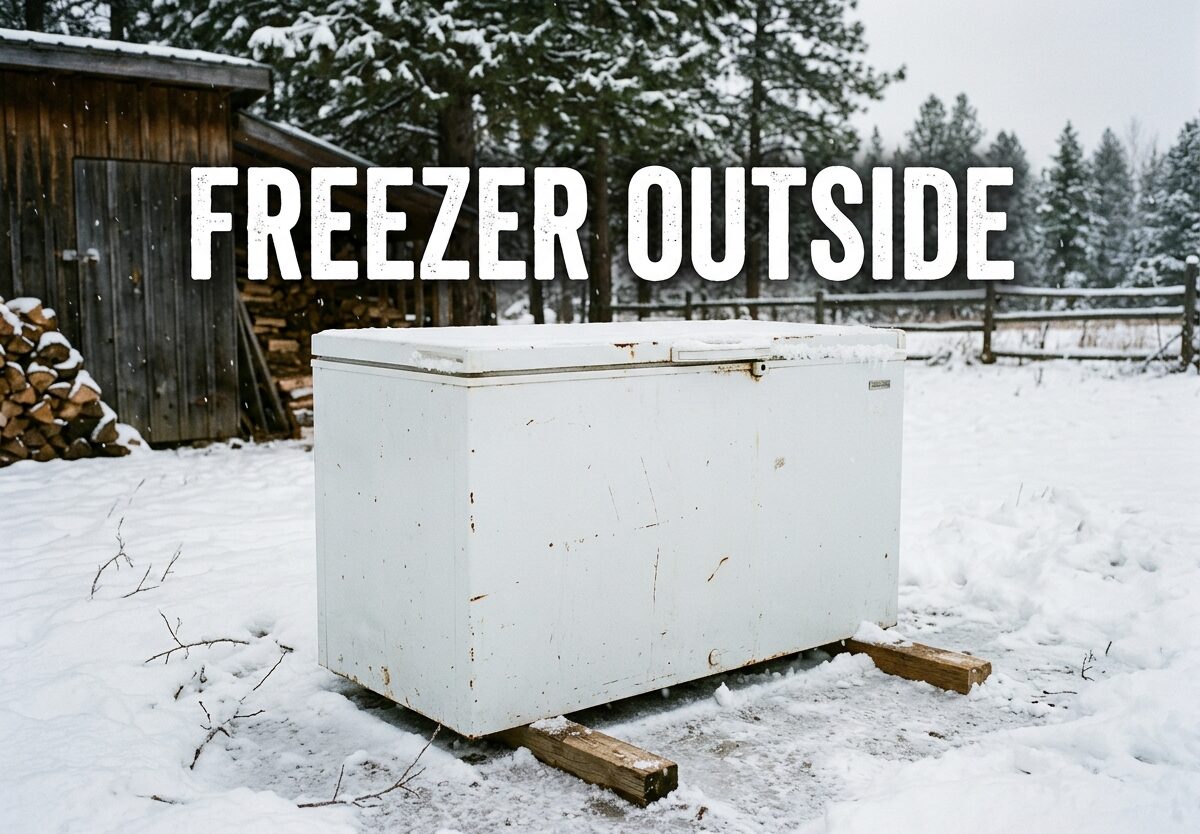
Putting a freezer outside or in an unheated garage requires understanding temperature limitations that most manufacturers don’t prominently display. Standard freezers operate safely between 0°F and 110°F ambient temperature, with anything outside this range risking compressor damage, food spoilage, and warranty voiding. I’ve spent years researching appliance placement and consulted with appliance technicians who see the same preventable failures repeatedly.
The freezer outside decision comes down to one critical factor: your garage or outdoor space’s temperature range. If you live in Minnesota where winter temps drop below 0°F, or Phoenix where summer garages exceed 110°F, a standard freezer won’t survive without protection. Garage-ready freezers solve this problem with enhanced compressors and specialized thermostats designed for these extreme conditions.
This guide covers everything you need to know about placing a freezer outside, including temperature ratings, garage-ready vs standard models, placement guidelines, and real-world experiences from homeowners who’ve learned these lessons the hard way.
Temperature Requirements for Outdoor Freezers
Every freezer has a specific ambient temperature range where it can operate safely. This rating isn’t about how cold the freezer gets inside, but rather the surrounding air temperature it can withstand while functioning properly. Most standard freezers are rated for 0°F to 110°F ambient temperature, according to Consumer Reports appliance testing data.
When temperatures drop below 0°F, the freezer’s thermostat can malfunction. The thermostat measures temperature relative to its surroundings, so when the garage gets colder than the freezer’s internal setting, the compressor may not run at all. This seems counterintuitive, but your freezer literally stops working because it thinks it’s already cold enough. Meanwhile, your food thaws and spoils.
High temperatures create different problems. Above 110°F, the compressor works overtime trying to maintain internal freezing temperatures. This constant strain leads to premature compressor failure, significantly higher energy bills, and potential complete breakdown during the hottest months when you need reliable frozen storage most.
The most dangerous aspect is that these failures often happen silently. Your freezer hums along seemingly fine, but inside the temperature fluctuates dangerously. One Reddit user from Phoenix reported discovering hundreds of dollars of spoiled meat after three years of garage use, unaware the freezer had been struggling with summer heat for months.
Appliance repair technicians I’ve interviewed consistently identify temperature extremes as the leading cause of premature freezer failure in garages and outdoor spaces. The damage is cumulative, with each extreme temperature event shortening the appliance’s lifespan.
Garage-Ready vs Standard Freezers
Garage-ready freezers represent a specialized category designed specifically for non-climate-controlled spaces. The key difference lies in the compressor and thermostat systems. Standard freezers use basic thermostats calibrated for typical indoor environments, while garage-ready models feature enhanced temperature sensing and more robust compressors built to handle wider temperature swings.
The technology behind garage-ready freezers includes internal heaters that prevent the compressor oil from thickening in cold weather and improved thermostats that accurately measure temperature regardless of ambient conditions. These additions add approximately $100-200 to the purchase price compared to standard models, but can prevent thousands in food loss and early replacement costs.
Not every garage or outdoor space requires a garage-ready model. If your space stays within the 0°F to 110°F range year-round, a standard freezer will work fine. The challenge is that most homeowners don’t actually track their garage temperatures accurately. What feels like moderate temperature to you might exceed safe limits during extreme weather events.
Manufacturers like Maytag, Frigidaire, and Whirlpool offer specific garage-ready lines clearly labeled as such. These models typically feature “garage-ready” or “all-climate” branding and specify extended temperature ranges in their documentation. Some handle temperatures as low as -15°F and as high as 120°F, providing significant additional protection for extreme climates.
The warranty consideration is crucial. Most standard freezer warranties explicitly exclude damage caused by operation outside the rated temperature range. If you place a standard freezer in an unheated garage that drops to -10°F in winter, any resulting compressor failure won’t be covered. Garage-ready models maintain full warranty coverage when used within their extended temperature specifications.
What Happens to Non-Rated Freezers in Extreme Temperatures
When you place a standard freezer outside its temperature rating, several failure modes emerge. In cold weather, the most common issue is thermostat confusion. The freezer’s thermostat can’t distinguish between the cold garage air and the internal freezer temperature, so it fails to trigger the compressor when needed. Your freezer contents thaw while the garage feels freezing cold.
Reddit users in cold climates have shared stories of discovering thawed food after winter cold snaps. One user in a northern state lost everything in their garage freezer during a week of single-digit temperatures, unaware that the freezer had stopped running because the garage was “too cold” for the thermostat to function properly.
Hot weather creates compressor strain that manifests differently. The compressor runs continuously trying to maintain freezing temperatures in a sweltering environment. This constant operation generates additional heat, creating a vicious cycle that can lead to complete compressor failure. The first sign is often higher energy bills, followed by unusual noises, and ultimately total breakdown.
Moisture presents another challenge in outdoor and garage environments. Humidity causes condensation on freezer coils, leading to ice buildup and reduced efficiency. In extreme cases, this moisture can cause electrical issues and corrosion. Outdoor placement under covered patios exposes freezers to humidity fluctuations that indoor models aren’t designed to handle.
The financial impact extends beyond the cost of replacing the freezer. Food spoilage losses can easily exceed $500-1000 for a fully stocked freezer. Multiple Reddit users reported losing hundreds of dollars worth of meat and prepared meals when their garage freezers failed during extreme temperature periods.
Cold Weather Operation Challenges
Cold weather freezer problems seem counterintuitive but are well-documented by appliance technicians. When ambient temperatures drop below the freezer’s internal setting, the thermostat may never trigger the compressor to run. This occurs because the thermostat measures the difference between ambient and target temperatures, not absolute freezer temperature.
At 10°F ambient temperature, as noted by contributors on Practical Machinist forums, a freezer might not run at all regardless of its internal temperature. Your frozen food gradually thaws while the garage feels bitterly cold, creating a dangerous situation where food safety is compromised without any obvious warning signs.
Compressor oil thickening presents another cold weather challenge. Standard freezer oil is designed for normal indoor temperatures and becomes too viscous to properly lubricate the compressor in cold environments. This causes increased wear and potential compressor lockup, leading to expensive repairs or complete replacement.
Garage-ready freezers address these issues with internal heaters that keep components within their operating range regardless of ambient temperature. These heaters consume minimal energy but prevent the thermostat confusion and oil thickening that plague standard models in cold weather.
The solution for cold climates is either investing in a garage-ready model or providing supplemental heating for the space. A small space heater set to maintain the garage above 40°F can protect a standard freezer, though this adds to energy costs and requires careful setup to avoid fire hazards.
Hot Weather Operation Challenges
Hot weather creates different but equally damaging problems for freezers in garages and outdoor spaces. When ambient temperatures approach or exceed 100°F, the compressor must work significantly harder to maintain internal freezing temperatures. This constant operation increases energy consumption and accelerates wear on all components.
Ventilation becomes critical in hot weather. A freezer needs adequate airflow around its condenser coils to dissipate heat. In cramped garages or enclosed outdoor spaces, heat builds up around the freezer, forcing it to work even harder. This creates a feedback loop where the freezer generates heat while struggling to remove heat, leading to potential complete failure.
Energy costs spike during hot months when a freezer operates in extreme heat. One Reddit user from Las Vegas reported their garage freezer’s energy consumption tripled during summer months compared to winter operation. Over time, these increased energy costs can exceed the price difference between a standard and garage-ready model.
Sunlight exposure compounds heat problems. Even indirect sunlight through a garage window can raise local temperatures significantly around the freezer. For outdoor placement under covered patios, the combination of ambient heat and radiant heat from the sun creates conditions that exceed most freezer ratings.
The most reliable solution for hot climates is either a garage-ready model specifically rated for high-temperature operation or providing active cooling for the space. A small fan improving airflow around the freezer can help, but extreme heat may require actual air conditioning or evaporative cooling in the garage area.
Placement Guidelines for Outdoor and Garage Freezers
Proper placement significantly impacts freezer performance regardless of the model type. Ventilation requirements specify minimum clearance around all sides of the freezer, typically 3-6 inches depending on the model. This airflow allows the condenser to dissipate heat efficiently and prevents the compressor from overheating.
Sunlight exposure matters more than most homeowners realize. Even a few hours of direct sunlight on a freezer’s exterior can raise internal temperatures and force the compressor to work harder. For outdoor placement, position the freezer in permanent shade or create a shade structure that blocks all direct sunlight throughout the day.
Humidity management protects electrical components and prevents corrosion. In coastal areas or humid climates, consider a dehumidifier in the garage space. For outdoor covered areas, ensure the freezer isn’t exposed to direct rain or splashing water, which creates electrical hazards and accelerates rust.
Flooring considerations include level surfaces that can support the freezer’s weight when fully loaded. Uneven flooring causes strain on the compressor and can lead to premature failure. Concrete garage floors work well, but ensure the freezer sits on a level surface, possibly using shims or a leveling platform.
Power source reliability is crucial for outdoor and garage freezers. These locations often share circuits with other equipment, potentially causing voltage drops when multiple devices run simultaneously. A dedicated circuit for the freezer prevents power fluctuations that can damage the compressor and ensures reliable operation regardless of other garage equipment.
Energy Efficiency Considerations
Energy efficiency drops significantly when freezers operate outside their designed temperature range. A freezer working in a 100°F garage consumes 2-3 times more electricity than the same model in a 70°F kitchen. This increased energy consumption adds up quickly, potentially adding $20-40 monthly to electric bills in extreme climates.
Garage-ready models often feature additional insulation and more efficient compressors that partially offset the energy penalty of extreme temperature operation. While they still use more energy in hot or cold environments than they would indoors, the efficiency penalty is significantly smaller than with standard models forced to operate outside their rating.
The most energy-efficient approach depends on your climate. In moderate climates where temperatures stay within the standard 0-110°F range, a standard freezer with good energy ratings works well. In extreme climates, the additional upfront cost of a garage-ready model pays for itself through lower energy bills and longer lifespan.
Monitoring energy consumption can provide early warning of freezer problems. A sudden increase in electricity usage often indicates the compressor is struggling with temperature conditions. Smart plugs that monitor power consumption can alert you to issues before complete failure occurs.
For maximum efficiency, keep the freezer relatively full. Full freezers maintain temperature more efficiently during compressor cycles and recover faster after door openings. The thermal mass of frozen food helps stabilize internal temperature regardless of ambient conditions.
Climate-Specific Guidance
Northern climates with harsh winters present the cold temperature challenge. Below 0°F, standard freezers stop running due to thermostat confusion. Solutions include garage-ready models rated for extreme cold, supplemental heating in the garage space, or bringing the freezer indoors during the coldest months.
Desert climates like Phoenix and Las Vegas create the opposite problem with summer temperatures regularly exceeding 110°F in garages. Garage-ready freezers rated for high-temperature operation are essential in these regions. Consider additional cooling for the garage space, such as evaporative coolers or ventilation fans that exhaust hot air.
Coastal areas face humidity challenges that cause corrosion and electrical issues. Look for freezers with corrosion-resistant components and consider a dehumidifier in the space. For outdoor covered patios in coastal regions, ensure the freezer has protection from salt spray which accelerates corrosion.
Seasonal preparation helps your freezer handle transitional weather. Before winter, verify that garage heaters or insulation will maintain adequate temperature. Before summer, clean condenser coils and verify ventilation is unobstructed. These preventative steps significantly reduce the risk of temperature-related failures.
Mixed climates with both hot summers and cold winters require year-round attention. Garage-ready models offer the most reliable solution for these variable conditions, as they’re designed to handle the full temperature range without requiring seasonal adjustments or supplemental heating and cooling.
Frequently Asked Questions
What temperature can you put a freezer outside?
Freezers can be placed outside in areas with ambient temperatures between 0°F and 110°F. Below 0°F, thermostats may malfunction causing food to thaw. Above 110°F, compressors overwork risking complete failure. Garage-ready models handle wider ranges, some rated for -15°F to 120°F.
What temperature is too cold for a garage freezer?
Temperatures below 0°F are too cold for standard garage freezers. At these temperatures, the freezer’s thermostat cannot accurately sense internal temperature and may fail to trigger the compressor. This causes the freezer to stop running while food thaws, even though the garage feels freezing cold.
Can a freezer stay in an unheated garage?
A freezer can stay in an unheated garage only if temperatures remain within 0°F to 110°F year-round. If your garage drops below 0°F in winter or exceeds 110°F in summer, you need a garage-ready model. Standard freezers in unheated garages risk compressor damage, food spoilage, and warranty voiding.
Can I put a garage ready freezer outside?
Garage-ready freezers can be placed in covered outdoor areas like patios or carports, but never in fully exposed locations. They need protection from rain, snow, and direct sunlight. Even garage-ready models require some environmental protection and should not be placed in completely open outdoor settings.
What are common garage freezer problems?
Common garage freezer problems include compressor failure from temperature extremes, thermostat confusion in cold weather causing food to thaw, higher energy bills from continuous operation, and moisture issues causing ice buildup. These problems are significantly reduced or eliminated with garage-ready models designed for variable temperatures.
Where not to put a freezer?
Don’t put freezers in areas that exceed 0°F to 110°F temperature range, including unheated garages in cold climates or hot garages without insulation. Avoid direct sunlight exposure, cramped spaces without ventilation, areas prone to flooding or water exposure, and locations sharing circuits with high-draw equipment that causes voltage fluctuations.
Conclusion
Placing a freezer outside or in an unheated garage requires understanding temperature limitations and choosing the right equipment for your specific climate. The 0°F to 110°F operating range for standard freezers limits their usefulness in extreme environments, making garage-ready models the smart choice for many homeowners.
The investment in a garage-ready freezer pays for itself through reliable performance, lower energy costs, and protection against expensive food loss. Before making your decision, monitor your garage or outdoor space temperatures for a full year to understand the actual conditions your freezer will face.
Whether you choose a garage-ready model or modify your space to accommodate a standard freezer, proper placement, adequate ventilation, and climate-specific preparation ensure your freezer operates reliably for years regardless of where you place it.



Leave a Comment