
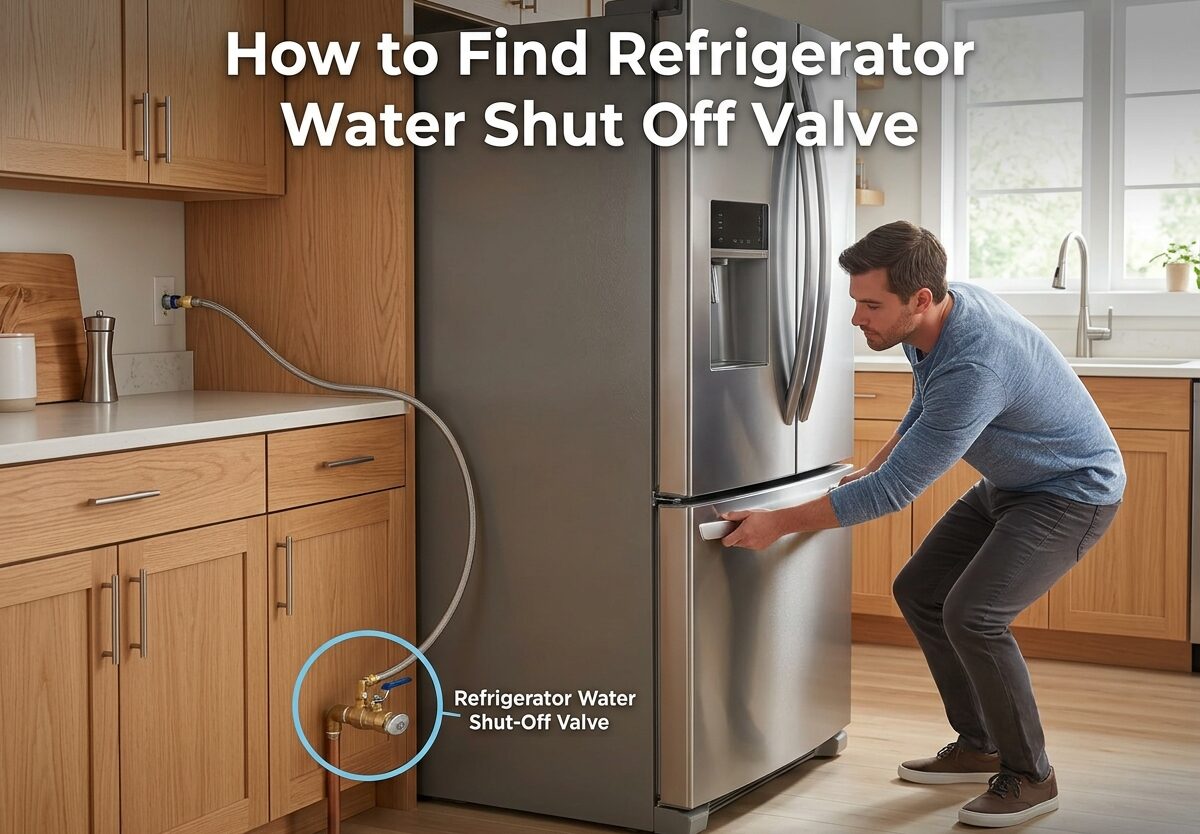
Knowing how to find refrigerator water shut off valve locations in your home can save you from expensive water damage and stressful emergencies. Whether you’re dealing with a leak, replacing your refrigerator, or performing routine maintenance, being able to quickly locate and shut off your fridge’s water supply is an essential homeowner skill. In this guide, I’ll walk you through every possible location where your valve might be hiding, how to identify different valve types, and exactly what to do if you can’t find one at all.
Why Finding Your Refrigerator Water Shut Off Valve Matters
Before we dive into locations, let me explain why this matters. A refrigerator water shut off valve controls the water supply to your ice maker and water dispenser. When something goes wrong—a leak in the water line, a malfunctioning ice maker, or when you need to move the fridge—you need to stop water flow immediately. Without knowing where this valve is, you might have to shut off water to your entire house, which is inconvenient and unnecessary.
I’ve seen homeowners panic when they discover a puddle behind their refrigerator, unable to stop the water flow because they never located their shut-off valve beforehand. Taking 10 minutes to find yours today could prevent thousands of dollars in water damage later. Let’s make sure you’re prepared.
How to Find Refrigerator Water Shut Off Valve – Common Locations
Your refrigerator water shut off valve is typically installed in one of several standard locations. While every home is different, plumbers follow similar conventions. Here are the most common places you’ll find the valve, listed in order of likelihood:
Behind the refrigerator – This is the most obvious location. Look for a small valve on the water line coming out of the wall or floor behind your fridge. You might need to pull the refrigerator away from the wall to see it clearly.
Under the kitchen sink – Many homes route refrigerator water lines through the cabinet under the sink. Look for a small valve connected to the cold water supply line, often on the back wall of the cabinet or inside the sink base cabinet.
In the basement – If your kitchen is on the first floor with a basement below, the shut-off valve might be in the basement ceiling directly under your refrigerator. Look up where the fridge sits above you.
In a crawl space – Similar to basements, homes with crawl spaces often have the valve installed in the crawl area beneath the kitchen. You may need to go under the house to locate it.
In an adjacent cabinet – Sometimes the valve is installed in a cabinet next to the refrigerator, especially in newer homes with convenient access panels. Check any cabinets within a few feet of your fridge.
In a utility room – In some homes, particularly those with complex plumbing, the refrigerator water line might be routed to a utility area or mechanical room where the main water lines enter the house.
How to Find Refrigerator Water Shut Off Valve by Tracing the Line
If checking these common locations doesn’t reveal your valve, it’s time to trace the water line from your refrigerator back to its source. This method works even when the valve is in an unusual location.
Start by pulling your refrigerator away from the wall carefully. You’ll see a water line connected to the back of the fridge—this is usually either a flexible plastic tubing (often white or braided steel) or a copper line. Follow this line as it extends toward the wall or floor.
The line will typically disappear through a hole in the wall or floor. This is where you need to investigate further. If you have access behind the wall (like in an unfinished basement or crawl space), go there and look for where the line emerges. The shut-off valve should be within a few feet of where the line connects to your home’s water supply.
In some cases, you might need to open access panels or remove a section of drywall to find the valve. Before doing this, check if there’s an access panel already in place—many builders install these for exactly this purpose.
Refrigerator Water Shut Off Valve Types Explained
Once you locate a valve, it helps to understand what type you’re dealing with. Different valve types operate differently, and identifying yours will help you shut off water correctly.
Ball valve – This is the most common and reliable type. You’ll recognize it by a lever handle. When the handle is aligned with the pipe, water flows. To shut off water, turn the handle 90 degrees so it’s perpendicular to the pipe. Ball valves are quick and reliable, making them the preferred choice for modern installations.
Gate valve – Older homes often have gate valves, which feature a round handle that looks like a small wheel. To shut off water, turn the handle clockwise until it stops. These valves can be prone to issues if not used regularly—they may stick or not fully close. If you have a gate valve, test it periodically to ensure it works properly.
Saddle valve – This is a small valve clamped directly onto a copper water pipe. While once common, saddle valves are now widely discouraged by plumbers. They pierce a small hole in the pipe and are notorious for leaking or failing to fully shut off. If you discover a saddle valve, consider having it replaced with a proper ball valve by a professional plumber.
How to Turn Off Water to Refrigerator – Step-by-Step Instructions
Once you’ve located your valve, follow these steps to safely shut off water to your refrigerator. I recommend practicing this process before an emergency occurs.
Step 1: Turn off the ice maker – Before shutting off the water supply, disable your ice maker to prevent it from trying to cycle. This is usually done by lifting the metal wire arm beside the ice bin or using the control panel to turn off the ice maker function.
Step 2: Locate the shut-off valve – Using the locations and tracing methods described above, find your refrigerator water shut off valve. Make sure you have clear access to it.
Step 3: Shut off the water – For a ball valve, turn the lever 90 degrees until it’s perpendicular to the pipe. For a gate valve, turn the round handle clockwise until it stops. If you have a saddle valve, turn the small screw or knob clockwise until tight.
Step 4: Verify water is off – After closing the valve, dispense water from the refrigerator’s water dispenser to confirm the flow has stopped. If water continues flowing, the valve may be faulty or you might have closed the wrong valve.
Step 5: Disconnect the water line if needed – If you’re moving the refrigerator or replacing the water line, you can now safely disconnect the line from the back of the fridge. Have a towel ready to catch any remaining water in the line.
What If No Shut Off Valve Exists – Solutions and Options
Many homeowners discover that their home doesn’t have a dedicated refrigerator water shut off valve, especially in older homes. This is a common situation, and you have several options depending on your needs.
Temporary solution – If you need to shut off water immediately for a repair or leak, you can turn off the main water supply to your house. This is typically located where the main water line enters your home, often in the basement, utility room, or outside near the meter. While inconvenient, this stops all water flow and prevents damage.
Install a new shut-off valve – The best long-term solution is to have a plumber install a proper shut-off valve for your refrigerator water line. This is a relatively simple job that involves cutting into the existing water line and installing a ball valve with a connection point for the refrigerator line. The cost is typically reasonable, and the convenience and safety are worth the investment.
Replace saddle valves – If your home has a saddle valve that doesn’t work properly, have it replaced with a proper ball valve. Saddle valves are unreliable and can fail when you need them most. A plumber can remove the saddle valve and install a proper tee with a ball valve in its place.
Consider a dual-valve installation – If you’re planning a kitchen remodel or replacing your refrigerator, consider having two shut-off valves installed—one for the refrigerator and one for a potential future water source like a second refrigerator or water filter system.
Turning Water Back On to Your Refrigerator
After completing your repair or maintenance, you’ll need to restore water flow to your refrigerator. Follow these steps to ensure a proper restart:
Step 1: Reconnect the water line – If you disconnected the water line, reconnect it securely to the refrigerator’s water inlet. Make sure the connection is tight to prevent leaks.
Step 2: Open the shut-off valve – Slowly turn the valve back on. For ball valves, turn the lever 90 degrees until it’s aligned with the pipe. For gate valves, turn counterclockwise until fully open. Don’t force it—if it’s stuck, call a plumber rather than risking breaking the valve.
Step 3: Check for leaks – After turning on the water, carefully inspect all connections for leaks. Pay special attention to the connection at the refrigerator and the shut-off valve itself. Use a dry paper towel to check for moisture at connection points.
Step 4: Purge air from the line – Dispense water from the refrigerator’s water dispenser for 2-3 minutes to remove any air in the line. You may hear sputtering initially, which is normal.
Step 5: Restart the ice maker – Lower the ice maker arm or use the control panel to turn the ice maker back on. It may take 24 hours for the ice maker to begin producing ice again as the freezer cools the new water supply.
Step 6: Discard first batch of ice – The first batch of ice after reconnecting the water line may be discolored or contain air bubbles. Discard this batch and wait for the second cycle before using the ice.
Brand-Specific Refrigerator Water Valve Locations
While the general locations apply to all refrigerators, some brands have specific characteristics worth noting:
Whirlpool refrigerators – Most Whirlpool models follow standard installation practices, with valves typically behind the unit, under the sink, or in the basement. If you can’t find the valve, check for an access panel on the back wall of the cabinet next to the refrigerator.
Samsung refrigerators – Samsung often uses flexible plastic water lines that can be easier to trace. Follow the line from the back of the refrigerator—it’s usually white or clear plastic tubing that leads directly to the shut-off valve.
LG refrigerators – Similar to Samsung, LG typically uses braided steel or plastic lines. The water connection point is often at the bottom right corner of the back of the refrigerator, making it easier to trace the line.
GE refrigerators – GE recommends checking under the sink first, as many installations route through the sink cabinet. If not there, check the basement or crawl space below the kitchen.
Emergency Tips for Water Line Leaks
If you discover an active leak from your refrigerator water line, quick action is essential. Follow these emergency steps:
First, locate and shut off the refrigerator water shut off valve immediately. If you can’t find it, turn off the main water supply to your house to stop all water flow. This is your emergency backup option.
Next, unplug your refrigerator to prevent electrical hazards from water exposure. Water and electricity are a dangerous combination, so safety comes first.
Then, remove as much standing water as possible using towels, a wet vacuum, or a mop. The faster you remove water, the less damage will occur to flooring and subflooring.
Finally, call a plumber or appliance repair technician. Water line repairs aren’t typically DIY projects unless you have plumbing experience. A professional can properly diagnose the issue and prevent future leaks.
Frequently Asked Questions
How to find fridge water line shut off valve?
Start by checking behind your refrigerator, under the kitchen sink, in the basement beneath the fridge, or in adjacent cabinets. If not found, trace the water line from the back of the refrigerator to where it connects to your home’s water supply. Most valves are within 3-6 feet of the refrigerator. If you still can’t locate it, check your home’s blueprints or consult a plumber.
How to locate and turn off the water supply to your refrigerator?
First, disable the ice maker by lifting the wire arm or using the control panel. Then locate the shut-off valve behind the fridge, under the sink, or in the basement. Turn ball valves 90 degrees perpendicular to the pipe, or turn gate valves clockwise until tight. Verify water is off by dispensing from the water dispenser. If no valve exists, shut off the main house water supply.
What do I do if I can’t find my water shut off valve?
If you can’t find a dedicated refrigerator shut-off valve, you have two options: turn off your main house water supply as a temporary solution, or have a plumber install a new shut-off valve on the refrigerator water line. Many older homes lack dedicated fridge valves, making installation a worthwhile investment for safety and convenience.
What does a fridge water shut off valve look like?
Refrigerator water shut off valves are small valves, typically 1/4 inch, connected to your home’s cold water supply. Ball valves have a lever handle that turns 90 degrees. Gate valves have a round wheel-shaped handle. Saddle valves are small clamp-on devices attached directly to copper pipes. The valve connects to a flexible plastic or copper water line leading to your refrigerator.
Where is the water shut off valve for Samsung refrigerator?
Samsung refrigerator water shut off valves are typically found in the same locations as other brands: behind the refrigerator, under the kitchen sink, in the basement below the fridge, or in an adjacent cabinet. Samsung often uses white or clear plastic tubing that’s easy to trace from the refrigerator connection point (usually at the bottom right back corner) back to the valve.
Is there a shut off valve for refrigerator water line?
Most modern refrigerators with water lines should have a dedicated shut-off valve, but not all homes do, especially older ones. The valve is typically installed within 3-6 feet of where the refrigerator water line connects to your home’s plumbing. If your home doesn’t have one, a plumber can easily install a ball valve for safety and convenience.
Conclusion
Learning how to find refrigerator water shut off valve locations in your home is simple but essential knowledge for any homeowner. Taking a few minutes now to locate and understand your valve can prevent panic and water damage later. Remember, the most common locations are behind the refrigerator, under the sink, in the basement, or in adjacent cabinets.
If you discover your home lacks a dedicated shut-off valve, consider having one installed. The small investment provides peace of mind and convenience whenever you need to work on your refrigerator. And if you encounter any issues with your valve, such as difficulty turning it or incomplete water shutoff, consult a plumber to ensure it’s functioning properly.
Now that you know how to find refrigerator water shut off valve locations and operate them safely, you’re prepared for any situation that requires shutting off water to your fridge. Practice the process a few times to build confidence, and keep this guide handy for quick reference when you need it most.





Leave a Comment