
If you’ve ever stared at your mini fridge’s temperature dial wondering which way makes it colder, you’re not alone. I’ve spent countless hours researching and testing compact refrigerator settings, and the confusion is completely understandable. Different brands use different numbering systems, and getting the temperature right matters for both food safety and beverage enjoyment. Let me walk you through exactly how to make your mini fridge colder and optimize its cooling performance.
Understanding Mini Fridge Temperature Settings
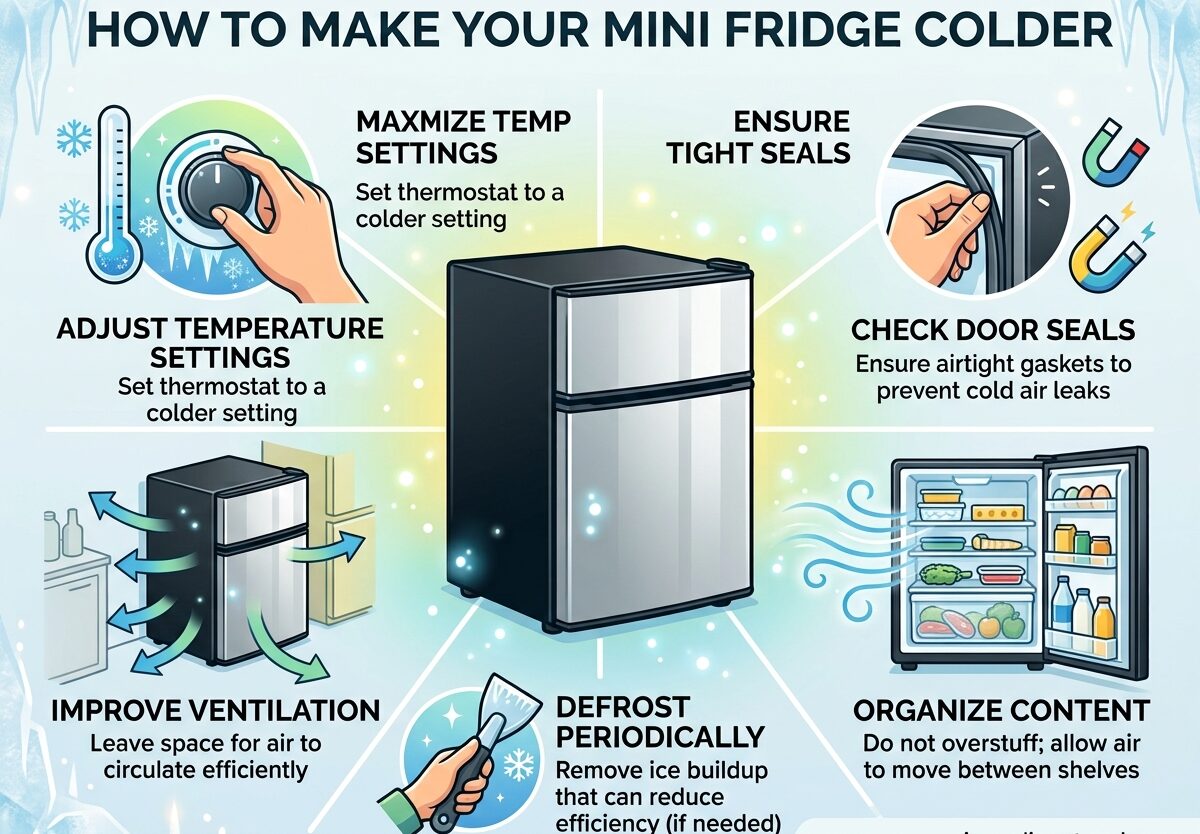
The most common question I hear about mini fridges is which direction makes the temperature colder. Here’s the direct answer: on most mini fridges, the highest number on the temperature dial is the coldest setting. If your dial goes from 1 to 5, then 5 is coldest. If it goes from 1 to 7, then 7 is coldest. Setting 1 is typically the warmest setting.
This counterintuitive system confuses many people because we naturally associate lower numbers with lower temperatures. The logic is that higher numbers represent higher cooling power or more intensive operation. However, I should note that a few older or specialized models reverse this system, so it’s always worth checking your owner’s manual if you’re unsure.
The temperature dial works by controlling your thermostat, which regulates when the compressor cycles on and off. Higher settings tell the thermostat to maintain colder temperatures, meaning the compressor will run more frequently and for longer periods to achieve that lower temperature.
What Temperature Should a Mini Fridge Be?
According to FDA food safety guidelines, your refrigerator should maintain a temperature at or below 40°F (4°C) to safely store perishable foods. This is the critical threshold for slowing bacterial growth and preventing foodborne illness. For beverages, you can safely go warmer, but food storage requires maintaining this temperature consistently.
Most quality mini fridges can achieve temperatures between 35°F and 42°F (1.7°C to 5.6°C) in the main compartment, which puts them in the safe zone for food storage. However, I’ve found that cheaper models or thermoelectric coolers may struggle to reach these temperatures, especially in warm rooms. Some compact models max out around 45-50°F, which is fine for drinks but inadequate for perishable foods.
For optimal beverage cooling, aim for 35-38°F. Skincare products and cosmetics typically prefer 45-55°F, while most food items stay safest at 35-40°F. The freezer compartment, if your mini fridge has one, should maintain 0°F (-18°C) for proper frozen food storage.
How to Make Your Mini Fridge Colder
Start by turning your temperature dial to the highest number and wait at least 24 hours before assessing the results. The cooling system needs time to stabilize after any adjustment. I recommend placing a refrigerator thermometer inside to monitor actual temperature rather than guessing based on dial position alone.
Proper placement dramatically affects cooling performance. Your mini fridge needs at least 2-4 inches of clearance on all sides for adequate airflow. Never operate it on carpet or place it directly against a wall. I’ve seen countless forum posts from people whose mini fridges couldn’t cool properly simply because they were trapped in tight spaces with no ventilation.
Room temperature matters more than most people realize. Mini fridges struggle in hot environments or direct sunlight. If your room exceeds 75°F (24°C), your fridge will work harder and may not reach optimal temperatures. Consider moving it to a cooler location if possible.
How you load the fridge affects cooling too. Don’t overstuff it, as air needs to circulate around items. However, a reasonably full fridge actually holds cold temperature better than an empty one because the thermal mass of the contents helps stabilize temperature when the compressor cycles off.
Check the door seal regularly. A damaged or dirty gasket lets warm air infiltrate, forcing your fridge to work harder. Clean the seal with mild soap and warm water monthly, and replace it if you notice cracks or loss of flexibility.
Common Cooling Problems and Solutions
If your mini fridge still isn’t cold enough on the highest setting after 24 hours, check these common issues. First, verify the unit is level. An unbalanced fridge can prevent proper door sealing and compressor operation. Use a bubble level and adjust the leveling feet if needed.
Frost buildup on the back wall indicates the defrost system might be malfunctioning. Manual defrost by unplugging for 24 hours with doors open, then restart. If frost returns quickly, you may have a faulty defrost timer or thermostat requiring professional repair.
If the compressor never runs, check that the unit has power and the thermostat is calling for cooling. Listen for the compressor clicking on. A constantly running compressor that never cycles off might indicate low refrigerant, a worn compressor, or leaking door seals.
Some models cut power entirely when you adjust the temperature dial, which can seem like a malfunction. This is actually a safety feature in some units. If this happens, wait 5-10 minutes before assuming something is wrong.
When troubleshooting, remember that ambient temperature significantly affects performance. If your room is unusually hot or cold, your mini fridge will struggle to maintain consistent temperatures. This isn’t necessarily a defect, just a limitation of the cooling system’s design capacity.
Initial Setup and Moving Guidelines
If you just purchased or moved your mini fridge, proper setup is crucial for optimal cooling. Always transport the unit upright. If it was laid on its side during transport, keep it upright for 24 hours before plugging it in. This allows refrigerant to settle properly and prevents compressor damage.
Allow 24 hours for initial cool-down after first plugging in or after moving. The unit needs this time to reach stable operating temperature. Don’t adjust the dial during this period, and avoid frequently opening the door while it’s cooling down.
Never operate your mini fridge on carpet or enclosed cabinets without ventilation. The condenser coils need airflow to dissipate heat. Blocked airflow is the number one cause of poor cooling performance I’ve encountered.
Energy Efficiency Considerations
Running your mini fridge at the coldest setting increases energy consumption. The compressor runs more frequently and works harder to maintain lower temperatures. For most users, a setting around the middle of the dial provides adequate cooling while keeping energy costs reasonable.
Consider your usage patterns when choosing temperature settings. If you primarily store beverages, you don’t need food-safe temperatures. If you store perishable foods, the energy cost is worth the safety. I recommend using a thermometer to find the warmest setting that still keeps food at 40°F or below.
Regular maintenance improves efficiency. Clean the condenser coils annually, ensure door seals are tight, and don’t position the fridge near heat sources. These simple steps reduce energy waste while maintaining optimal cooling performance.
When to Call a Professional
Some cooling problems require professional repair. If you notice the compressor never runs, constantly runs without cycling, or makes unusual noises, contact a qualified appliance technician. Refrigerant leaks and compressor failures aren’t DIY-friendly repairs.
Thermostat replacement is usually repairable but requires specific parts knowledge. If your mini fridge is still under warranty, contact the manufacturer before attempting any repairs yourself. Unauthorized repairs can void your coverage.
FAQs
Is a mini fridge colder on 1 or 5?
On most mini fridges, setting 5 is colder than setting 1. The higher the number on the temperature dial, the colder the refrigerator will run. This system means the maximum number represents maximum cooling power.
Can you make a mini fridge colder?
Yes. Turn the temperature dial to the highest number, ensure proper ventilation with 2-4 inches clearance, keep it level, avoid direct sunlight, and don’t overstuff the interior. These adjustments help maximize cooling performance.
What temperature is appropriate for a mini fridge?
For food safety, maintain 40°F (4°C) or below per FDA guidelines. Beverages are best at 35-38°F, while skincare products prefer 45-55°F. Most quality mini fridges can achieve 35-42°F in optimal conditions.
Why is my mini fridge not going lower than 8 degrees?
If you mean 8°C (46°F), your fridge may be at its cooling limit, especially if it’s a thermoelectric model. Check for proper ventilation, clean the door seal, ensure the unit is level, and verify the room isn’t too hot. If problems persist, the thermostat or compressor may need repair.
How long does a mini fridge take to get cold?
Allow 24 hours for a mini fridge to reach optimal temperature after initial setup or moving. After temperature adjustments, wait 4-6 hours before reassessing. Never open the door frequently during the initial cooling period.
Is a fridge colder on 1 or 7?
On a 1-7 scale, setting 7 is the coldest. The highest number always represents maximum cooling power. Setting 1 is the warmest setting on this scale. Check your manual if unsure, as a few rare models reverse this system.
Conclusion
Making your mini fridge colder starts with understanding that the highest number on your temperature dial is the coldest setting. Turn it up, ensure proper ventilation, maintain adequate clearance, and allow time for adjustments to take effect. Most cooling issues stem from improper placement or setup rather than mechanical failure.
Remember that food safety requires maintaining 40°F or below, so use a thermometer to verify actual temperature rather than relying on dial position alone. With proper setup and maintenance, your mini fridge can provide reliable cooling for beverages, snacks, or supplemental food storage. If problems persist after following these guidelines, professional diagnosis may be needed to rule out mechanical issues.




Leave a Comment