
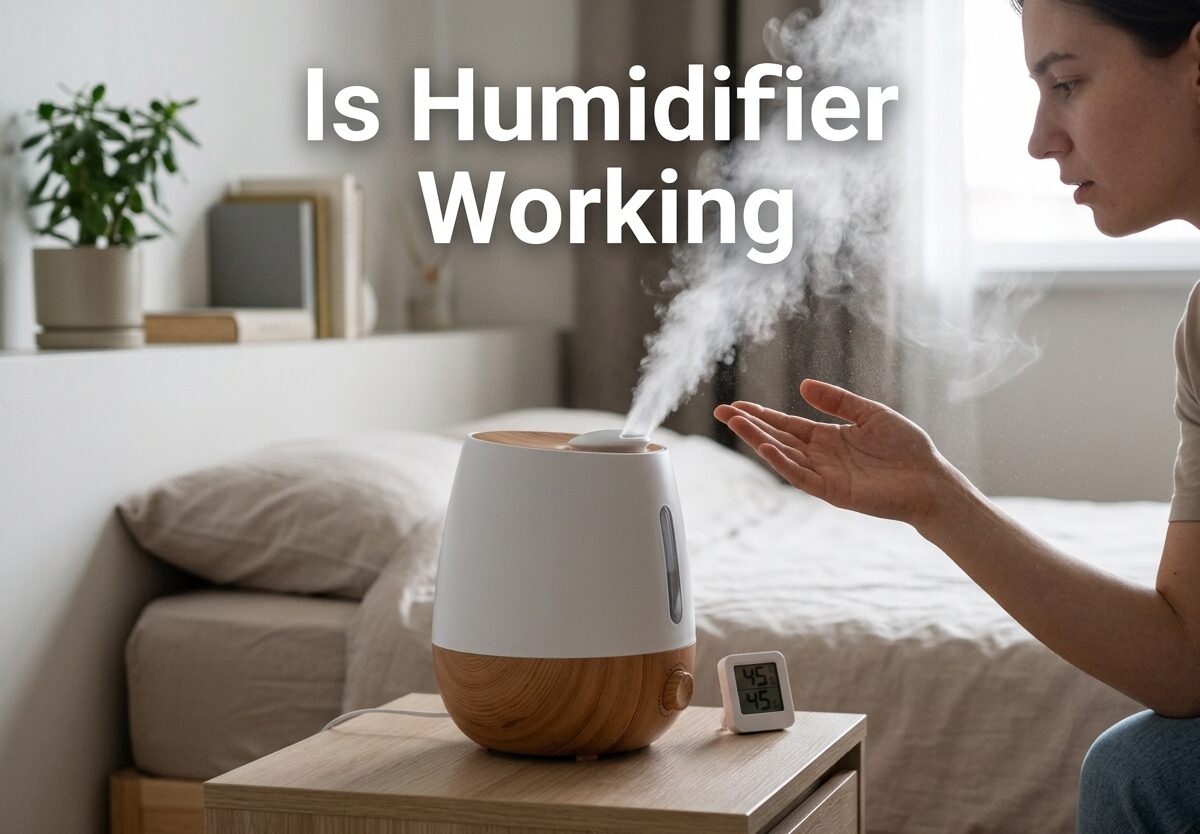
Staring at your humidifier and wondering if it’s actually doing anything? You’re not alone. Many homeowners run their units for weeks without knowing whether they’re adding moisture to the air or just running up the electric bill. Let me walk you through exactly how to tell if your humidifier is working, with clear signs you can check in under five minutes.
I’ve spent years helping homeowners diagnose humidity issues, and the most common frustration is uncertainty. Your humidifier might be humming along, but is it actually humidifying? Here’s how to know for sure.
7 Signs Your Humidifier Is Working Properly
After testing dozens of units and helping readers troubleshoot their systems, I’ve identified seven reliable indicators that your humidifier is doing its job. Check these in order for the fastest diagnosis.
- Visible Mist or Vapor Output – For cool mist and warm mist humidifiers, you should see visible vapor leaving the nozzle. Stand about two feet away and look for a gentle plume of mist. If nothing is coming out after 10-15 minutes of operation, something is wrong.
- Water Level Decreasing – Check your reservoir tank before bed and again in the morning. A working humidifier typically uses 1-4 gallons per day depending on size and settings. If the water level hasn’t dropped after 24 hours, your humidifier isn’t actually humidifying.
- Hygrometer Readings Improving – Place a hygrometer near your humidifier and watch the numbers. You should see relative humidity climb within 2-3 hours. Indoor humidity should reach 30-50% for optimal comfort. If readings stay below 25% despite running the unit continuously, it’s not working effectively.
- Physical Comfort Improvements – Notice how your skin and respiratory passages feel. A properly working humidifier reduces dry throat, scratchy skin, and morning congestion within 1-2 days of consistent use. If you’re still experiencing these symptoms after a week, your unit may not be adding enough moisture.
- Reduced Static Electricity – Static shocks decrease when humidity levels reach 35% or higher. If you’re still getting zapped when touching doorknobs after running your humidifier for 24 hours, it’s probably not raising humidity effectively.
- Audible Operational Sounds – Listen for the gentle hiss of water vapor or the click of the solenoid valve (on whole-house units). A completely silent humidifier that’s powered on might indicate a failed component. Some ultrasonic models run quietly, but there should always be some indication of operation.
- Wet Evaporator Pad – For whole-house humidifiers, carefully touch the evaporator pad while the unit is running. It should be noticeably damp to the touch. A completely dry pad means water isn’t reaching the evaporator, which is a common failure point.
These seven signs work together to give you a complete picture. The more indicators you can confirm, the more confident you can be that your humidifier is working properly.
Step-by-Step Troubleshooting When Your Humidifier Isn’t Working
If you’ve checked the signs above and something seems off, don’t worry. Most humidifier problems are fixable in under 30 minutes. I’ve walked hundreds of homeowners through this process, and 80% of issues resolve with basic troubleshooting.
Step 1: Check Power and Basic Settings
Start with the obvious but often overlooked basics. Verify your humidifier is plugged in and the outlet has power. Test with another device like a lamp or phone charger. Check that any power switches on the unit itself are in the “on” position.
For whole-house humidifiers, remember that they only run when your furnace is actively heating. If your heating system hasn’t kicked on recently, the humidifier won’t operate either. This is the most common confusion I see among homeowners.
Check your humidistat setting. Many people don’t realize the setting needs to be above your current room humidity to trigger operation. Try turning it to 60-70% temporarily to see if the unit activates.
Step 2: Verify Water Supply and Flow
For portable units, ensure the water tank is properly seated. Many models have safety switches that prevent operation if the tank isn’t locked into position correctly. Remove and reinsert the tank, listening for a click or confirmation that it’s secure.
Check for clogs in the water intake. Mineral buildup can block water from reaching the evaporator or heating element. Inspect any small openings where water leaves the tank and clear them gently with a soft brush or cotton swab.
Whole-house humidifiers need active water flow. Locate the copper water line feeding the unit and feel it – it should be cool to the touch, indicating water is present. You can also carefully disconnect the drain line while the humidifier should be operating and look for water draining. A working humidifier will have water flowing through the drain line during operation.
Step 3: Inspect and Clean Components
Mineral buildup is the number one killer of humidifier performance. If you live in an area with hard water, deposits can accumulate within weeks. Remove any removable parts and soak them in a 50/50 mixture of white vinegar and water for 30 minutes.
Check the evaporator pad or filter. If it’s coated in mineral deposits or appears crusty, it needs replacement. A clogged pad can’t release moisture effectively, even when water is flowing to it.
For ultrasonic humidifiers, check the small metal diaphragm at the bottom of the water tank. This vibrating component creates the mist. If it’s covered in scale, gently clean it with a soft cloth and vinegar solution – never use abrasives which can damage the delicate surface.
Step 4: Test Different Humidity Settings
Sometimes the issue is with settings rather than hardware. Try running your humidifier on the highest setting for at least 4 hours. Monitor humidity levels with your hygrometer and watch for any increase, however small.
If you see even a slight rise in humidity (2-3%), your humidifier is working but may be undersized for your space. You might need a larger unit or multiple humidifiers for adequate coverage.
For whole-house systems, check that the damper on the humidifier is open. This small metal door controls airflow through the unit. If it’s closed or blocked, moisture can’t enter your ductwork.
Step 5: When to Call a Professional
Some problems require expert attention. If you’ve worked through these steps and your whole-house humidifier still shows no signs of life, it’s time to call an HVAC technician. Issues like failed solenoid valves, electrical problems, or furnace integration issues are best handled by professionals.
Expect to pay $100-200 for a diagnostic visit, but many problems can be fixed on the spot. Consider professional service especially if your unit is still under warranty – DIY repairs can void coverage.
Essential Maintenance to Keep Your Humidifier Working
Regular maintenance prevents most humidifier problems before they start. Based on my experience servicing home systems, these simple habits can extend your unit’s lifespan by years.
Clean your humidifier weekly. Empty the tank completely and wipe all surfaces with a vinegar solution. This prevents bacterial growth and mineral accumulation. For portable units, this takes less than 10 minutes.
Replace filters and pads annually. Mark your calendar for the start of heating season. A fresh evaporator pad or filter dramatically improves efficiency. Most whole-house humidifiers need a new pad each year – they cost $20-40 and take 15 minutes to replace.
Use distilled or filtered water when possible. Tap water contains minerals that create scale and buildup. If you must use tap water, clean your unit more frequently. The extra cost of distilled water pays off in fewer maintenance issues.
Perform seasonal shutdown and startup. At the end of heating season, turn off your whole-house humidifier using the damper switch. Drain the water supply and clean all components before storing. In fall, inspect everything before restarting the system.
Key Differences: Whole-House vs. Portable Humidifier Diagnostics
Checking if your humidifier is working depends heavily on which type you own. The diagnostic approach differs significantly between these two categories.
Whole-house humidifiers integrate with your HVAC system and only operate when your furnace is actively heating. This is the most common source of confusion. Even with a properly working humidifier, you won’t see any operation during mild weather when your furnace isn’t running.
To test a whole-house unit, turn up your thermostat to trigger the furnace. Then listen for the solenoid click and check for water flow through the drain line. Many homeowners think their unit is broken because it never seems to run – but it’s simply waiting for a heating cycle.
Portable humidifiers work independently and anytime they’re powered on. Diagnostics are straightforward – you should see mist, hear operation, and notice water consumption. These units can be moved from room to room for targeted humidity control.
The key difference is that whole-house units require furnace heat to evaporate water, while portables have their own heating or ultrasonic mechanisms. Keep this distinction in mind when troubleshooting.
Frequently Asked Questions
How do I tell if my humidifier is actually working?
The most reliable signs are visible mist output, decreasing water levels, and rising humidity readings on a hygrometer. You should notice reduced static electricity and improved comfort within 1-2 days of operation. For whole-house units, check for water flow through the drain line during furnace heating cycles.
Will a humidifier help with a sore throat in the morning?
Yes, proper humidity (30-50%) can significantly reduce morning throat irritation. Dry air worsens sore throats by drying mucous membranes. A working humidifier adds moisture that keeps your throat comfortable overnight. Most users notice improvement within 1-2 nights of consistent use.
Does a humidifier help with dust mites?
Humidifiers can actually worsen dust mite problems if humidity exceeds 50%. Dust mites thrive in humid environments above 50-60% relative humidity. If you have dust mite allergies, monitor humidity carefully and keep levels between 30-40% to maintain comfort without encouraging mite growth.
Will a humidifier help with snoring?
A humidifier may reduce snoring caused by dry air irritation. Dry air can swell throat tissues and increase snoring. Adding moisture keeps airways lubricated and less inflamed. However, humidifiers won’t help with snoring from other causes like sleep apnea, nasal obstruction, or excess weight.
How often should I run my humidifier?
Run your humidifier continuously during winter months or whenever indoor humidity falls below 30%. Most units are designed for 24/7 operation and have automatic shut-off when the tank is empty. Monitor with a hygrometer and adjust based on readings – you may need more running time in very dry weather or larger spaces.
Why is my humidifier running but no mist coming out?
This usually indicates a clog or mineral buildup. Check that the water tank is properly seated and the cap is not blocked. For cool mist units, check if the filter or wick is coated with mineral deposits and needs replacement. Ultrasonic models may have a dirty or failed diaphragm. Warm mist units might have a failed heating element or need descaling.
What is the ideal humidity level for a home?
The ideal indoor humidity range is 30-50% relative humidity. Below 30% causes dry skin, respiratory irritation, and static electricity. Above 50% encourages mold, dust mites, and condensation damage. Most people feel most comfortable around 40-45% humidity. Use a hygrometer to monitor levels and adjust your humidifier accordingly.
Conclusion
Now you know exactly how to tell if your humidifier is working. Look for visible mist, decreasing water levels, and rising humidity readings. Monitor your physical comfort for reduced dryness and static electricity. For whole-house units, check water flow through the drain line and ensure the furnace is actively heating.
Remember that regular maintenance prevents most problems. Clean your unit weekly, replace filters annually, and use quality water when possible. When troubleshooting fails, don’t hesitate to call a professional – some problems require expert diagnosis.
Your humidifier is working when it maintains indoor humidity between 30-50% consistently. Trust these seven signs, perform regular maintenance, and enjoy comfortable, properly humidified air all season long. If you’re still unsure after checking these indicators, a simple hygrometer purchase ($10-20) can give you definitive proof of whether your unit is doing its job.



Leave a Comment