
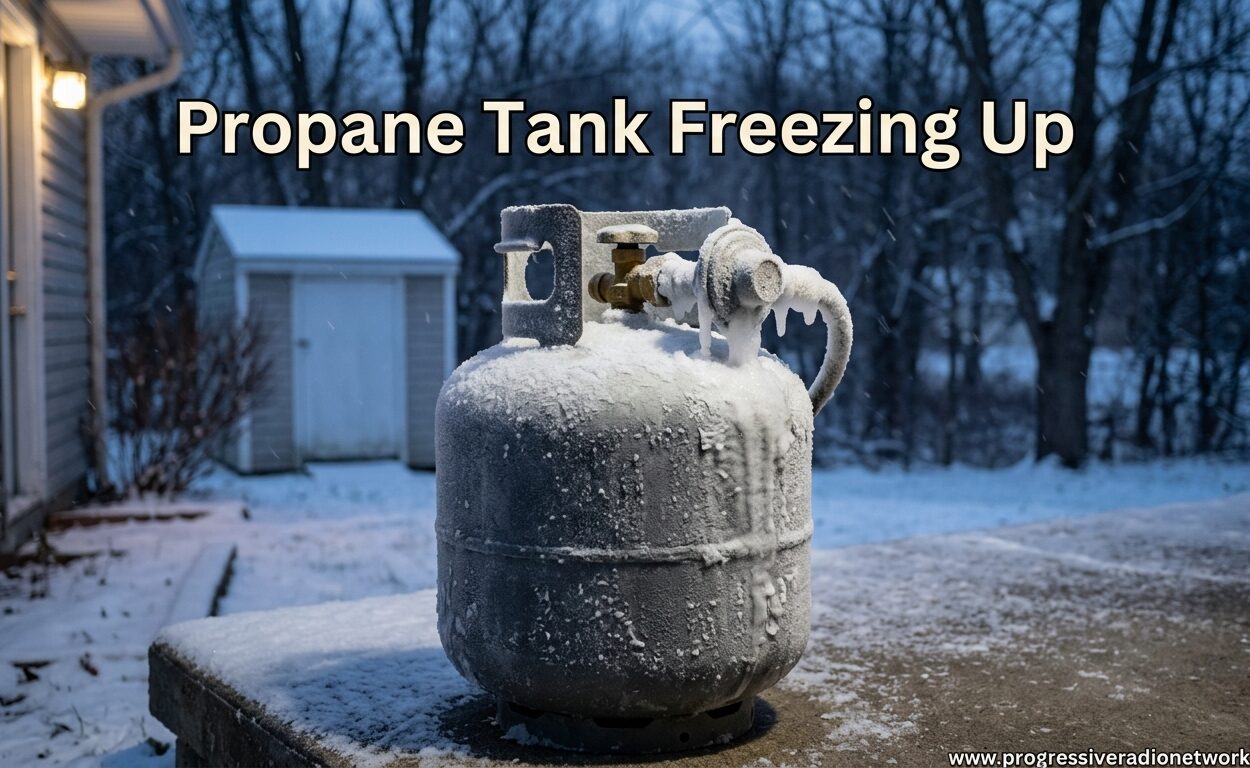
When you notice frost or ice forming on your propane tank during use, you’re experiencing a common phenomenon known as propane tank freezing up. This happens when liquid propane vaporizes into gas too quickly, absorbing heat from the tank walls and causing the exterior temperature to drop below freezing. Understanding why this occurs and how to prevent it can save you from inconvenient gas interruptions and potential safety issues.
I’ve seen this problem affect everyone from weekend grillers to RV owners relying on propane for heat. The good news is that propane tank freezing is usually manageable once you understand the science behind it and take the right precautions.
In this guide, I’ll explain exactly why propane tanks freeze up, how to match your tank size to your appliance’s BTU rating, and what steps you can take to prevent freezing from happening in the first place.
Why Propane Tanks Freeze Up
Propane tanks freeze up because of a physics phenomenon called vaporization. Inside your tank, propane exists as a liquid under pressure. When you open the valve and use your appliance, the liquid propane must convert to gas before it can burn. This phase change from liquid to vapor requires heat energy.
The heat comes from the surrounding air and the tank walls themselves. As liquid propane vaporizes, it absorbs heat, causing the tank temperature to drop. When high-BTU appliances demand gas faster than the tank can absorb replacement heat, the tank cools rapidly and frost forms on the exterior.
This is why you’ll often see a frost line appear on your tank during heavy use. The frost line actually shows you where the liquid level sits inside the tank. Above the line, vapor propane doesn’t cause as much cooling. Below the line, rapid vaporization pulls heat from the steel walls, causing moisture in the air to condense and freeze.
Charles’ Law explains the relationship between temperature and pressure in gases. As propane temperature drops, so does the pressure inside your tank. This pressure drop can reduce gas flow to your appliance, creating a frustrating cycle where less propane reaches your burner just when you need it most.
Propane Temperature to Pressure Reference
Understanding how temperature affects propane pressure helps explain why tanks struggle in cold weather. Here’s a quick reference showing how pressure drops as temperature decreases:
- -44°F: 0 PSI (propane’s actual freezing point)
- -30°F: 5 PSI (minimal usable pressure)
- -20°F: 15 PSI
- -10°F: 25 PSI
- 0°F: 35 PSI
- 20°F: 50 PSI
- 40°F: 70 PSI
- 60°F: 95 PSI
- 80°F: 125 PSI
- 100°F: 160 PSI
Notice how pressure drops dramatically in cold weather. At -20°F, you only have 15 PSI available. This explains why propane performs poorly in winter conditions and why tank freezing becomes a bigger problem when ambient temperatures are already low.
Signs Your Propane Tank is Freezing
Recognizing the early signs of propane tank freezing can help you take action before your equipment fails. Watch for these indicators:
- Frost or ice formation: White frost coating the tank exterior, often in a horizontal band showing liquid level
- Reduced flame size: Your grill, heater, or generator flame becomes noticeably smaller or weaker
- Appliance stuttering: Equipment runs intermittently or shuts down unexpectedly
- Regulator issues: The regulator becomes covered in frost or makes unusual sounds
- Pressure gauge drop: If your tank has a gauge, it shows lower pressure than expected
I’ve noticed that frost formation itself isn’t necessarily a problem. A light coating of frost simply means your tank is working properly and absorbing heat as designed. The real concern is when frost becomes thick ice or when reduced pressure affects your appliance’s performance.
Is a Frozen Propane Tank Dangerous?
A frozen propane tank isn’t typically dangerous in itself, but it does indicate potential issues that require attention. The frost you see is water condensation from the air freezing on the cold tank surface, not propane leaking. However, there are real safety concerns to understand:
The big danger: Never attempt to heat a frozen propane tank with an open flame, torch, or any direct heat source. Propane tanks are equipped with pressure relief valves designed to vent excess pressure. Applying direct heat can cause rapid pressure buildup and trigger the relief valve, releasing flammable gas into the air.
In extreme cases, direct heating can cause a BLEVE (Boiling Liquid Expanding Vapor Explosion). This occurs when a pressurized container catastrophically fails. While rare with properly maintained propane tanks, the risk increases significantly when people try to thaw frozen tanks with torches or heat guns.
When to be concerned: If you notice thick ice buildup, unusual sounds from the tank, or if your appliance keeps shutting off due to low pressure, turn off the tank valve and let it warm naturally. Never continue using a tank that shows signs of damage or excessive ice accumulation.
How to Prevent Propane Tank Freezing
Preventing propane tank freezing comes down to one principle: ensure your tank can supply gas at the rate your appliance demands it. Here are the most effective methods ranked from most to least important:
Match Tank Size to BTU Requirements
The most common cause of propane tank freezing is using a tank that’s too small for your appliance’s BTU rating. A standard 20-pound grill tank contains about 4.7 gallons of propane and can reliably supply approximately 60,000 to 80,000 BTU per hour in warm conditions.
If your appliance exceeds this capacity, the tank will freeze. For example, a 75,000 BTU generator running at full load will quickly overwhelm a 20-pound tank, causing rapid freezing and pressure drop.
Use Larger Tanks for High-BTU Appliances
For appliances rated above 60,000 BTU, consider upgrading to a larger tank:
- 30-pound tank: Approximately 7 gallons, suitable for up to 100,000 BTU/hour
- 40-pound tank: Approximately 9.4 gallons, suitable for up to 130,000 BTU/hour
- 100-pound tank: Approximately 23.6 gallons, suitable for up to 250,000 BTU/hour
I’ve found that stepping up to a 40-pound tank solves most freezing issues for medium-BTU applications like outdoor heaters and medium-sized generators.
Use Multiple Tanks Together
Connecting two tanks together with an automatic changeover regulator effectively doubles your vaporization capacity. As one tank draws liquid, the other can rest and warm up. This setup is common for RVs and homes using propane as a primary fuel source.
Protect Tanks from Wind
Wind removes heat from your tank surface through convective cooling. Creating a windbreak around your tank using a temporary barrier or permanent enclosure can significantly reduce freezing. Just ensure proper ventilation and never enclose a tank indoors without proper ventilation systems.
Use Propane Tank Warmers
Electric tank warmers are available that wrap around your tank and provide gentle, controlled heating. These are thermostatically controlled to prevent overheating and are specifically designed for propane tanks. Avoid using homemade heating solutions or blankets that aren’t rated for propane use.
Store Tanks Properly
When not in use, store tanks in a temperature-controlled space. Keeping tanks warmer before use gives them a thermal buffer. However, never store propane tanks indoors or in enclosed living spaces due to safety concerns.
Matching Tank Size to BTU Requirements
Understanding the relationship between tank size and BTU demand is crucial for preventing freezing. Here are common appliance BTU ratings and recommended tank sizes:
Gas Grills: Most residential grills range from 30,000 to 60,000 BTU. A standard 20-pound tank works well for these applications unless you’re grilling for extended periods in cold weather.
Outdoor Patio Heaters: These typically consume 40,000 to 50,000 BTU per hour. A 20-pound tank is usually sufficient, but expect 8-10 hours of runtime before needing a refill.
Portable Generators: Small generators (3,000-4,000 watts) use around 60,000-80,000 BTU per hour at full load. This pushes the limits of a 20-pound tank. For whole-house backup generators, consider installing a permanent 100-gallon or larger tank.
RV Furnaces: RV furnaces typically range from 20,000 to 40,000 BTU. While a 20-pound tank can handle this demand, most RVs use two 30-pound tanks with an automatic changeover system for extended use.
Weed Burners and Torches: These high-demand tools can consume 100,000+ BTU per hour. A 20-pound tank will freeze quickly. Use at minimum a 40-pound tank, preferably larger.
What to Do If Your Tank Freezes
If your propane tank freezes during use, follow these steps to resolve the issue safely:
- Turn off the appliance: Stop drawing gas from the tank immediately.
- Close the tank valve: Shut off the propane supply at the tank.
- Let it warm naturally: Allow the tank to warm up to ambient temperature. This may take 30 minutes to several hours depending on conditions.
- Use warm water if necessary: In an emergency, you can pour lukewarm water (under 120°F) over the frosted area. Never use hot water or boiling water.
- Prevent recurrence: Once thawed, consider the prevention methods above or upgrade to a larger tank.
I’ve used the warm water method during ice fishing trips when my heater tank froze. It works effectively as a temporary solution, but addressing the root cause (insufficient tank capacity) is the better long-term fix.
Frequently Asked Questions
How do you stop a propane tank from freezing up?
The most effective way to stop propane tank freezing is to match your tank size to your appliance’s BTU rating. For high-BTU appliances over 60,000 BTU, use a larger tank (30lb, 40lb, or 100lb). You can also connect multiple tanks together, protect tanks from wind, use electric tank warmers, or reduce the BTU demand on your appliance.
Why would my propane tank ice up on the outside when grilling?
Your propane tank ices up on the outside because rapid vaporization of liquid propane absorbs heat from the tank walls, causing the exterior temperature to drop below freezing. Moisture in the air then condenses and freezes on the cold surface. The frost line typically shows where the liquid propane level sits inside the tank.
Is it safe to use a frosted propane tank?
Light frost on a propane tank is generally safe and indicates normal operation. However, thick ice buildup can restrict gas flow and cause pressure issues. Never attempt to heat a frozen tank with open flames, torches, or direct heat sources as this can cause dangerous pressure buildup. Let frozen tanks warm naturally before continued use.
What temperature does a propane tank freeze?
Propane itself doesn’t freeze until -44°F, but your tank can develop frost at much warmer temperatures because the freezing you see is water condensation from the air, not frozen propane. Tanks typically begin frosting when ambient temperatures are below 50°F and high BTU demand causes rapid vaporization cooling.
Can propane tanks explode when frozen?
Frozen propane tanks are unlikely to explode under normal conditions. However, attempting to thaw a frozen tank with direct heat sources like torches or fires can cause catastrophic tank failure. Always let frozen tanks warm naturally. Propane tanks have pressure relief valves designed to vent excess pressure safely, but heating tanks can overwhelm these safety features.
Conclusion
Propane tank freezing up is a common issue that stems from the physics of vaporization and heat transfer. When your appliance demands gas faster than your tank can supply it, rapid cooling causes frost to form on the exterior surface. This is normal to some extent, but excessive freezing can reduce gas flow and affect your equipment’s performance.
The key takeaways are simple: match your tank size to your appliance’s BTU requirements, protect tanks from wind when possible, and never attempt to thaw frozen tanks with direct heat sources. For most users, upgrading to a larger tank or connecting multiple tanks together will solve chronic freezing issues.
If you’re experiencing repeated problems with propane tank freezing, consider consulting with a propane professional who can assess your specific setup and recommend appropriate solutions tailored to your climate and usage patterns.

Leave a Comment