
Living in an apartment, condo, or rental without proper dryer vent access can feel frustrating. You need to dry clothes, but there’s no way to exhaust hot air outside. This leads many renters and homeowners to ask: can you vent dryer indoors safely?
The short answer comes with a critical warning upfront. Venting a dryer indoors is only possible for electric dryers, and even then, it should be a temporary solution with strict maintenance requirements. Gas dryers must never be vented indoors due to carbon monoxide risks that can kill you in hours.
I’ve researched the safety guidelines, building codes, and real user experiences to create this comprehensive guide on how to vent dryer indoors while minimizing risks to your home and health.
⚠️ CRITICAL SAFETY WARNING: Read Before Proceeding
Before considering any indoor venting solution, you need to understand the serious risks involved. The U.S. Fire Administration reports that dryers cause approximately 2,900 home fires each year, leading to 5 deaths and $35 million in property loss annually. Indoor venting increases these risks significantly when done improperly.
NEVER vent a gas dryer indoors under any circumstances. Gas dryers produce carbon monoxide, an odorless, colorless gas that can be lethal within hours. There is no safe indoor venting solution for gas dryers. Period.
The International Residential Code (IRC Section M1502) explicitly requires dryer exhaust to be vented outdoors. Indoor venting violates building codes in most jurisdictions and can void your home insurance if damage occurs.
For electric dryers only, indoor venting carries these specific risks:
- Fire hazard: Lint accumulation in indoor vent kits creates fuel for fires. Lint is highly flammable and can ignite from dryer heat alone.
- Moisture damage: Electric dryers release 2-4 gallons of water per load into your indoor air. This leads to mold, mildew, and structural damage over time.
- Reduced efficiency: Indoor venting restricts airflow, causing longer drying times and higher energy bills.
- Air quality concerns: Lint particles circulating in your home can trigger allergies and respiratory issues.
What Happens When You Vent Dryer Indoors
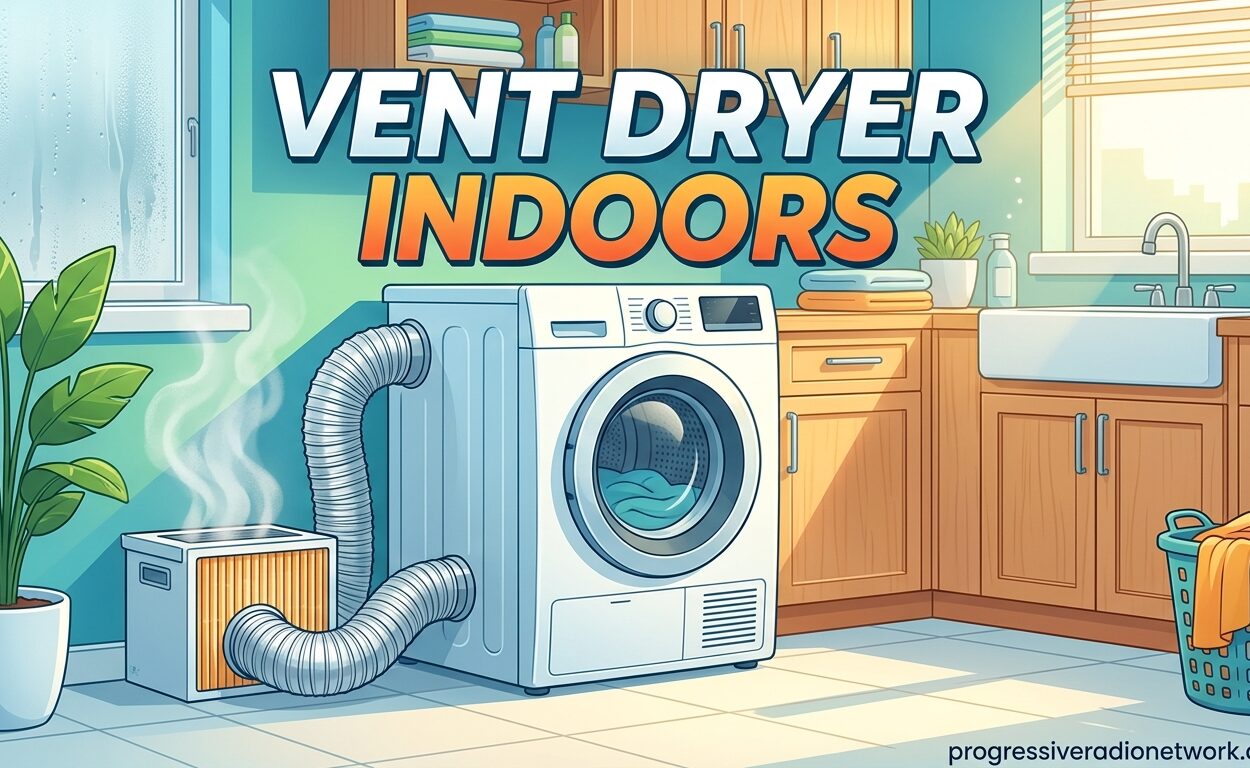
When you vent dryer indoors, you’re redirecting hot, moist air and lint particles into your living space instead of outside. An indoor dryer vent kit typically consists of a flexible hose connecting to a plastic reservoir containing water. The theory is that the water traps lint while allowing heat to circulate back into your room.
In reality, the system doesn’t work as perfectly as advertised. Reddit users who’ve tried indoor venting report common problems:
- Humidity overload: One user in Denver reported that venting into their garage was “awful unless I open the garage door.” Another noted extended drying times and condensation issues wherever the dryer vented.
- Lint spreading: Despite filtration systems, fine lint particles escape and settle on surfaces throughout the room. A Maine customer who used indoor venting for one winter ended up repainting walls and cleaning lint from their furnace intake come spring.
- Musty smells: Stagnant water in lint traps becomes a breeding ground for bacteria, creating unpleasant odors that circulate back into your home.
The moisture problem compounds with each load. Your home’s indoor humidity should stay between 30-50%. A single dryer load can spike humidity well above 60%, creating ideal conditions for mold growth behind walls, in insulation, and on surfaces you can’t even see.
Pros and Cons of Indoor Dryer Venting
Understanding the trade-offs helps you make an informed decision about whether indoor venting is right for your situation.
Pros:
- Temporary solution: Works when you absolutely cannot vent outside, such as in apartments with no exterior access.
- Heat recovery: Some warm air circulates back into your living space, potentially reducing heating costs in winter (though this benefit is minimal compared to the risks).
- Low upfront cost: Indoor vent kits cost significantly less than professional venting installation or ventless dryer options.
Cons:
- Fire risk: Lint accumulation increases fire hazard substantially. Daily maintenance is non-negotiable.
- Moisture damage: Mold, mildew, and structural issues from excess humidity can cost thousands to repair.
- Higher energy bills: Restricted airflow causes 15-30% longer drying times.
- Code violation: Most building codes prohibit indoor venting, and insurance claims may be denied if damage occurs.
- Maintenance burden: Requires daily attention that many renters eventually neglect.
- Air quality reduction: Lint particles and potential VOCs from synthetic fabrics circulate in your breathing air.
How to Vent Dryer Indoors Safely (Electric Dryers Only)
If you have an electric dryer and absolutely must vent indoors temporarily, follow this installation process to minimize risks:
Step 1: Confirm your dryer type.
Check if your dryer is electric or gas. Gas dryers have a gas line connection at the back and typically have a removable bottom panel revealing the burner assembly. Electric dryers have a large power cord plug (220-240V) and no gas connection. If you have a gas dryer, stop here and explore alternative solutions.
Step 2: Purchase an indoor vent kit.
Look for a kit with a large-capacity lint reservoir, secure hose clamps, and a water filtration system. Avoid the cheapest options – they often lack adequate filtration capacity.
Step 3: Clear the installation area.
Choose a location away from furniture, curtains, and flammable materials. The area should have good airflow and be far from smoke detectors (the lint particles can trigger false alarms).
Step 4: Install the vent hose.
Connect the flexible hose to your dryer’s exhaust port using the provided clamps. Secure all connections tightly to prevent lint leaks. Route the hose directly to the reservoir without sharp bends that restrict airflow.
Step 5: Set up the reservoir.
Fill the reservoir with clean water according to manufacturer instructions. Position it on a stable surface where it won’t tip over. Ensure it’s placed where you can easily access it for daily maintenance.
Step 6: Test the system.
Run the dryer on air fluff (no heat) for 5 minutes while monitoring for leaks. Check all hose connections and ensure air is flowing into the reservoir properly. Only after verifying the setup should you use heat settings.
Daily and Weekly Maintenance You Cannot Skip
Indoor venting requires a maintenance routine that most people underestimate. Reddit users who’ve had success emphasize that “they should not be a permanent solution” and require constant attention.
Daily tasks (non-negotiable):
- Clean the lint trap: Remove and clean lint from the reservoir screen before every single load. This prevents fire hazards and maintains airflow.
- Check water level: Ensure the reservoir has adequate water for filtration. Refill with clean water as needed.
- Inspect for leaks: Check hose connections for lint escaping and tighten clamps if necessary.
- Monitor humidity: Use a hygrometer to track indoor humidity levels. If it consistently exceeds 55%, you need better ventilation or a dehumidifier.
Weekly tasks:
- Deep clean the reservoir: Empty all water and scrub the container to remove lint buildup and bacterial film.
- Check for mold: Inspect the area around the vent for any signs of mold or mildew. Address immediately if found.
- Inspect the hose: Check for holes, kinks, or lint accumulation inside the hose. Replace if damaged.
- Clean behind dryer: Move the dryer and clean any lint that has accumulated around the exhaust area.
Consider running a dehumidifier in the same room as your dryer. This helps manage the excess moisture produced during drying cycles and reduces the risk of mold development.
Better Alternatives to Indoor Venting
Given the risks and maintenance burden of indoor venting, exploring better alternatives makes sense for most situations:
Window vent kits: These kits allow you to vent through a window using a specially designed panel that accommodates the vent hose. This is often the simplest middle-ground solution for renters. The panel fits into most windows and can be removed when not in use. Window venting maintains proper exhaust to the outside while requiring minimal permanent installation.
Ventless condenser dryers: These dryers use a condensation system to remove moisture from clothes, collecting water in a reservoir that you empty manually. They require no external venting at all. While more expensive upfront, condenser dryers eliminate the fire risk, moisture damage, and maintenance headaches of indoor vent kits. They’re ideal for apartments and condos where outdoor venting isn’t possible.
Heat pump dryers: The most energy-efficient option available. Heat pump dryers use a closed-loop system that recycles heat while extracting moisture into a drain or collection tank. They use up to 50% less energy than traditional dryers and operate at lower temperatures, protecting your clothes. While the initial cost is higher, the energy savings and safety benefits make them an excellent long-term investment.
Perpendicular wall venting: If your laundry area is on an exterior wall, a professional can install a vent that goes directly through the wall behind the dryer. This may require landlord approval if you rent, but it’s the safest and most permanent solution to proper dryer ventilation.
Is Indoor Venting Ever Worth the Risk?
After reviewing the safety concerns, maintenance requirements, and real user experiences, indoor venting should only be considered as a last resort temporary solution for electric dryers. The fire hazards, moisture damage potential, and daily maintenance burden make it impractical for most situations.
If you must vent dryer indoors temporarily, commit to the maintenance schedule without fail. Purchase a quality indoor vent kit, monitor humidity daily, and plan to transition to a better solution within a few months.
For a permanent solution, invest in a ventless dryer technology or work with your landlord to install proper venting. The upfront cost is higher, but the peace of mind, safety, and long-term savings make it worthwhile.
Frequently Asked Questions
Is it safe to have a dryer vent indoors?
Venting a dryer indoors is only potentially safe for electric dryers when using a proper indoor vent kit with strict daily maintenance. Gas dryers must never be vented indoors due to carbon monoxide risks. Even with electric dryers, indoor venting creates fire hazards from lint buildup, moisture damage leading to mold, and reduced air quality. The U.S. Fire Administration reports thousands of dryer fires annually, and indoor venting increases these risks. Most building codes prohibit indoor venting, and it should only be considered a temporary solution when outdoor venting is absolutely impossible.
What is the best way to vent a dryer indoors?
The safest indoor venting method for electric dryers involves using a quality indoor vent kit with a water-filled lint reservoir. Install the kit with secure hose connections, place the reservoir away from flammable materials, and ensure good airflow around the unit. Fill the reservoir with clean water according to manufacturer instructions. Never use homemade solutions like pantyhose or stockings, as they create serious fire hazards. Commit to daily maintenance including cleaning the lint trap before each load, checking water levels, and monitoring indoor humidity. Use a dehumidifier in the same room to manage excess moisture. Remember this is a temporary solution only.
How do you vent a dryer without a vent outside?
If you cannot vent outside, your options include indoor vent kits for electric dryers (temporary solution only), ventless condenser dryers, heat pump dryers, or window vent kits. Indoor vent kits require daily maintenance and create moisture and fire risks. Ventless dryers use condensation technology to remove moisture without external venting, collecting water in a reservoir. Heat pump dryers are the most efficient, using a closed-loop system that recycles heat. Window vent kits allow proper outdoor venting through a specially designed window panel. For gas dryers, no indoor solution exists – you must vent outside. Consider the long-term costs and risks before choosing indoor venting.
Is it safe to run a dryer vent under a house?
Venting a dryer under a house, in a crawlspace, or basement is never safe. The trapped moisture creates ideal conditions for mold and wood rot in your home’s structural components. Lint accumulation in these confined spaces creates a significant fire hazard that may go undetected until it’s too late. Additionally, the humid air can damage insulation and promote pest infestations. Building codes require dryer exhaust to be vented to the outdoors, away from windows and doors. If your laundry area is below grade or lacks exterior wall access, consult a professional about proper venting solutions. Never route dryer exhaust into enclosed spaces beneath your living area.
What is the best way to vent a dryer indoors?
The safest indoor venting method for electric dryers involves using a quality indoor vent kit with a water-filled lint reservoir. Install the kit with secure hose connections, place the reservoir away from flammable materials, and ensure good airflow around the unit. Fill the reservoir with clean water according to manufacturer instructions. Never use homemade solutions like pantyhose or stockings, as they create serious fire hazards. Commit to daily maintenance including cleaning the lint trap before each load, checking water levels, and monitoring indoor humidity. Use a dehumidifier in the same room to manage excess moisture. Remember this is a temporary solution only.
How do you vent a dryer without a vent outside?
If you cannot vent outside, your options include indoor vent kits for electric dryers (temporary solution only), ventless condenser dryers, heat pump dryers, or window vent kits. Indoor vent kits require daily maintenance and create moisture and fire risks. Ventless dryers use condensation technology to remove moisture without external venting, collecting water in a reservoir. Heat pump dryers are the most efficient, using a closed-loop system that recycles heat. Window vent kits allow proper outdoor venting through a specially designed window panel. For gas dryers, no indoor solution exists – you must vent outside. Consider the long-term costs and risks before choosing indoor venting.
Is it safe to run a dryer vent under a house?
Venting a dryer under a house, in a crawlspace, or basement is never safe. The trapped moisture creates ideal conditions for mold and wood rot in your home’s structural components. Lint accumulation in these confined spaces creates a significant fire hazard that may go undetected until it’s too late. Additionally, the humid air can damage insulation and promote pest infestations. Building codes require dryer exhaust to be vented to the outdoors, away from windows and doors. If your laundry area is below grade or lacks exterior wall access, consult a professional about proper venting solutions. Never route dryer exhaust into enclosed spaces beneath your living area.
Conclusion: Making the Right Choice for Your Home
Deciding to vent dryer indoors involves weighing serious risks against temporary convenience. The fire hazards, moisture damage potential, and maintenance demands make indoor venting a solution of last resort for electric dryers only. Gas dryers must always be properly vented outdoors – there are no exceptions to this safety rule.
If you’re facing a situation without proper outdoor vent access, consider window vent kits or investing in ventless dryer technology as safer long-term solutions. These options may cost more upfront but protect your home from fire risks, mold damage, and air quality issues that can affect your family’s health.
The choice is clear: when you need to vent dryer indoors, choose the safest option available and transition to proper venting as soon as possible. Your safety and your home’s integrity depend on it.






Leave a Comment