
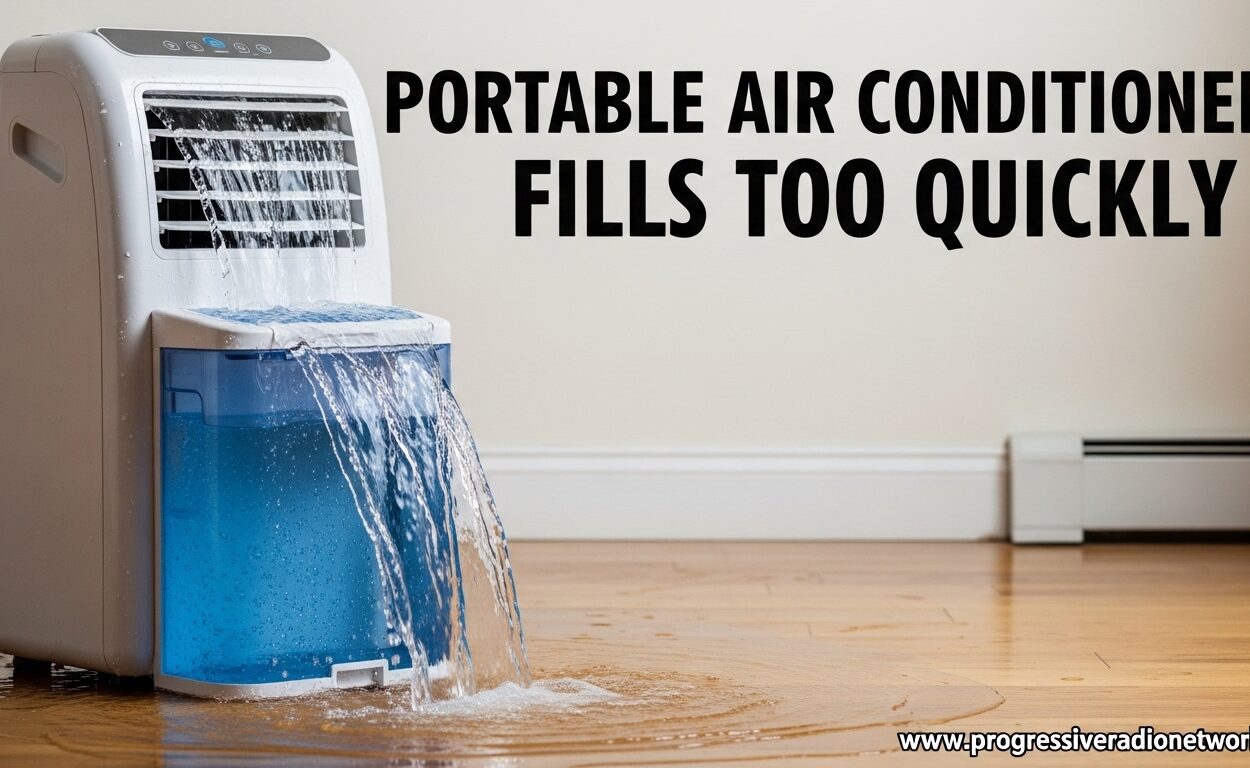
You wake up to find your portable air conditioner has shut off again, the “full tank” light blinking. You just emptied it two hours ago. If your portable air conditioner fills too quickly, you’re not alone. This is one of the most common complaints we hear from portable AC owners.
Portable air conditioners fill with water because they remove humidity from the air during the cooling process. This moisture condenses on the cold evaporator coils and collects in a water tank. In humid conditions, this tank can fill remarkably fast, sometimes within an hour or two.
In this guide, I’ll explain why your portable air conditioner fills too quickly, how to drain it properly, and what you can do to reduce how often you need to empty it.
Why Your Portable AC Fills Too Quickly
Several factors contribute to rapid water accumulation in your portable air conditioner. Understanding these causes will help you determine if your unit is working normally or if there’s a problem that needs attention.
High Humidity Levels
The most common reason portable ACs fill quickly is simply high humidity. When the air in your room contains a lot of moisture, your unit works overtime to remove it. In very humid conditions, some units can collect a gallon or more of water per hour.
If you live in a humid climate or it’s a particularly muggy day, expect to drain your unit more frequently. This is normal operation and actually shows your dehumidification is working effectively.
New Unit Initial Use
Many users report their new portable air conditioner fills too quickly during the first few weeks of operation. This happens because new units are working extra hard to remove excess moisture from building materials, drywall, and furniture in the room.
This initial dehumidification phase typically lasts 2-4 weeks. After this period, you should notice the tank filling less frequently as the room’s moisture content stabilizes.
Unit Size vs Room Size
An oversized portable air conditioner for your room can cause rapid cycling and increased condensation. When a unit is too powerful, it cools the air quickly but doesn’t run long enough to properly evaporate the collected water.
Conversely, an undersized unit will run continuously, collecting more moisture overall. The key is matching your unit’s BTU rating to your room size for optimal performance.
Dirty Air Filters
Clogged or dirty air filters restrict airflow and reduce your unit’s efficiency. This can cause the evaporator coils to become too cold, leading to excess condensation that collects faster than the unit can evaporate it.
Clean your filters every 2-4 weeks during heavy use. This simple maintenance task can significantly reduce how quickly your tank fills.
Operating in Heat Mode
When using your portable AC in heat mode during winter months, it will fill with water much faster than in cooling mode. This is because the unit is working to dehumidify while also heating, producing significantly more condensate.
For heat mode operation, continuous drainage is highly recommended to avoid frequent tank emptying.
Fully vs Partially Self-Evaporating Models
Not all portable air conditioners handle water the same way. Understanding which type you have will help you manage expectations and choose the right drainage solution.
Fully Self-Evaporating Units
Fully self-evaporating portable ACs use the collected condensate to cool the condenser coils, evaporating most of the water automatically. These models can eliminate up to 70% of collected water through evaporation.
However, even fully self-evaporating units will still need draining in very humid conditions. The evaporation system simply extends the time between emptying.
Partially Self-Evaporating Units
Partially self-evaporating models only eliminate about 30-50% of collected water through evaporation. These units will need more frequent draining, especially in humid environments.
If you have a partially self-evaporating model and live in a humid climate, plan on draining your tank daily or set up continuous drainage.
How to Tell Which Type You Have
Check your owner’s manual or look at your unit’s specifications. Fully self-evaporating models will typically advertise this feature prominently. Another clue: if your unit fills extremely quickly, it’s likely a partially self-evaporating model.
How to Drain Your Portable Air Conditioner
Draining your portable AC properly prevents leaks and water damage. Here’s the step-by-step process for manual draining.
Step 1: Turn Off and Unplug
Always turn off your unit and unplug it before attempting to drain. This prevents electrical shock and ensures the compressor has stopped running.
Step 2: Locate the Drain Plug
The drain plug is typically located at the bottom or back of the unit. On most models, you’ll need to remove a small panel or cap to access it. Some units have the drain plug hidden behind the bottom grille.
If you can’t find it, consult your owner’s manual. Different brands place it in different locations, and some models even have a secondary drain port for continuous drainage.
Step 3: Position a Drain Pan
Place a shallow pan or container underneath the drain plug. Standard portable AC tanks hold 1-2 gallons, so choose a container with adequate capacity. Position it close to the unit to minimize spills.
Step 4: Remove the Drain Plug
Unscrew or pull out the drain plug carefully. Water will begin flowing immediately. Be prepared for the flow rate and have towels ready for any splashing.
Step 5: Let the Tank Drain Completely
Allow all water to drain out. This may take 5-10 minutes depending on how full the tank is. Rocking the unit gently can help remove water from corners of the tank.
Step 6: Replace the Drain Plug
Once the tank is empty, replace the drain plug securely. A loose or missing drain plug will cause leaks during operation. Make sure it’s tightened properly before running the unit again.
Continuous Drainage Setup Guide
If you’re tired of emptying your tank constantly, setting up continuous drainage is the solution. This allows water to drain automatically as it’s collected.
Required Materials
You’ll need a drain hose (usually included with your unit), a nearby floor drain, or a condensate pump if gravity drainage isn’t possible. The hose should be 5/8 inch or 3/4 inch diameter, depending on your unit’s drain port.
Gravity Drain Setup
For gravity drainage, the portable AC must be higher than the drain point. Connect one end of the hose to your unit’s drain port and route the other end to a floor drain or window.
The hose must slope downward continuously to prevent water from backing up. Avoid kinks or sharp bends in the hose that could block water flow.
Using a Condensate Pump
When your portable AC is located below the drain level or too far from a drain, a condensate pump is necessary. These pumps automatically activate when the water reaches a certain level and push it through the hose to your drain point.
Condensate pumps are relatively inexpensive and can pump water vertically up to 15-20 feet, giving you much more flexibility in unit placement.
Pump vs Gravity Drain
Gravity drains are simpler and require no additional equipment, but they limit your placement options. Pumps add cost but allow you to place your portable AC anywhere in the room and drain water over longer distances.
Error Codes Related to Water Tank
When your portable air conditioner’s water tank fills too quickly or has drainage issues, the unit may display specific error codes and shut down to prevent water damage.
FE Error Code on Black & Decker
The FE error code on Black & Decker portable air conditioners specifically means “tank full.” When this appears, your unit has detected the water tank is at capacity and will not operate until drained.
If you’re seeing the FE error frequently, even after draining, check that the tank is seating properly and the drain plug is tight. Also verify the float switch isn’t stuck or obstructed by debris.
Other Common Water-Related Error Codes
Different brands use different error codes for water tank issues. E4, E5, and P1 are common codes indicating full tanks or drainage problems across various manufacturers.
Always consult your owner’s manual to understand what each code means for your specific model. Most water-related error codes are resolved by simply draining the tank.
What to Do When Error Appears
When you see a water-related error code, turn off the unit immediately. Drain the tank completely, then check that the drain plug is secure and the tank is properly seated in its compartment.
If the error persists after draining, there may be an issue with the float sensor or drainage system that requires professional service.
Tips to Prevent Rapid Tank Filling
While you can’t completely eliminate water collection, these strategies will help extend the time between drainings and keep your unit running efficiently.
Reduce Indoor Humidity Sources
Cooking, showering, and drying clothes indoors all add moisture to the air. Use exhaust fans in bathrooms and kitchens, cover pots when cooking, and consider a clothes dryer that vents outside.
Indoor plants and aquariums also contribute to humidity. In very humid conditions, running a separate dehumidifier can help reduce the load on your portable AC.
Clean Filters Regularly
Dirty filters reduce airflow and cause excess condensation. Clean or replace your filters every 2-4 weeks during heavy use. This is one of the most effective ways to optimize your unit’s performance.
Some units have washable filters that can be cleaned with mild soap and water. Allow them to dry completely before reinstalling to prevent mold growth.
Maintain Proper Room Sealing
Keep doors and windows closed while your portable AC is running. Open doors allow humid air to enter, increasing condensation. Weather stripping around doors and windows can also help maintain consistent indoor humidity.
Avoid using your portable AC in rooms that are open to other spaces without doors. This makes it impossible for the unit to effectively dehumidify the area.
Annual Coil Cleaning
The evaporator coils inside your unit can accumulate dust and debris over time, reducing efficiency. Annual professional cleaning can restore performance and reduce water collection issues.
Some DIY-friendly users can clean coils themselves using coil cleaner and a soft brush, but be careful not to damage the delicate fins.
Consider Your Unit’s Placement
Place your portable AC away from direct sunlight and heat sources. Sunlight streaming through windows can create localized heat and humidity, causing your unit to work harder.
Also ensure there’s adequate clearance around the unit for proper airflow. Most manufacturers recommend at least 12-18 inches of clearance on all sides.
FAQ’s
Why does my portable AC fill up so fast?
Portable ACs fill quickly because they remove humidity from the air as part of the cooling process. High humidity levels, new units during initial dehumidification, dirty filters, and oversized units can all contribute to rapid tank filling. This is often normal operation in humid conditions.
Should I continuously drain my portable AC?
Continuous drainage is highly recommended if you need to drain your tank more than once per day, live in a humid climate, or use your unit in heat mode. Setting up a drain hose or condensate pump eliminates the need for manual draining and prevents unexpected shutdowns when the tank fills.
What is the 3 minute rule for air conditioners?
The 3 minute rule refers to waiting 3 minutes after turning off an AC before restarting it. This allows pressure in the refrigerant system to equalize, preventing compressor damage. Most modern portable ACs have built-in delays that enforce this rule automatically.
How often should I drain my portable air conditioner?
Draining frequency depends on humidity levels and your unit’s evaporative efficiency. In normal conditions, you may need to drain every 1-3 days. In very humid weather or with partially self-evaporating models, you might need to drain every few hours. Setting up continuous drainage eliminates this maintenance task.
Why does my portable AC fill with water when heating?
When operating in heat mode, portable ACs produce significantly more condensate because they’re dehumidifying while heating. The warm air holds more moisture, which condenses rapidly when cooled by the system. For heat mode operation, continuous drainage is strongly recommended to avoid frequent tank emptying.
Conclusion
When your portable air conditioner fills too quickly, it’s usually a sign that it’s working hard to remove humidity from your space. While frequent draining can be frustrating, it’s often normal operation rather than a defect.
The solutions range from simple maintenance like cleaning filters to setting up continuous drainage with a hose or pump. For most users, especially those in humid climates, continuous drainage is the best long-term solution.
If you’re experiencing extreme filling rates or persistent error codes even after proper draining and maintenance, it may be time to consult a professional. However, most issues can be resolved with the troubleshooting steps outlined in this guide.


Leave a Comment