
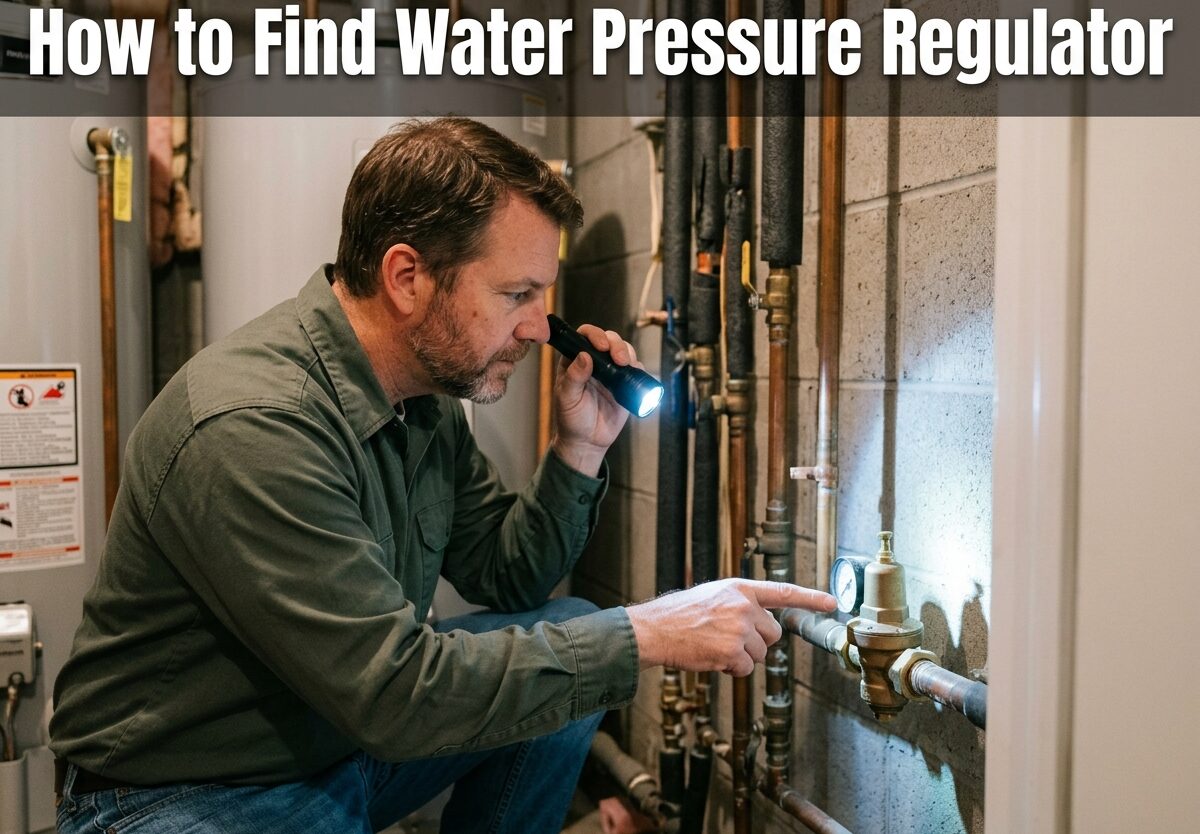
If you’re dealing with high water pressure issues or simply want to understand your home’s plumbing system, learning how to find water pressure regulator locations is an essential skill. This unassuming brass valve protects your entire plumbing system from damage caused by excessive municipal water pressure.
I’ve helped countless homeowners locate their pressure reducing valves (PRVs), often buried in unexpected places. Let me walk you through exactly where to look and how to identify this crucial component.
What is a Water Pressure Regulator
A water pressure regulator, also called a pressure reducing valve or PRV, is a brass fitting installed on your main water line that reduces incoming municipal water pressure to a safe level for your home’s plumbing system.
Municipal water supplies often deliver water at 80-100 PSI or higher, which can damage residential plumbing pipes, appliances, and fixtures over time. The regulator steps this pressure down to a manageable 40-60 PSI, protecting your investment and preventing costly water damage.
Without this device, high water pressure can burst pipes, damage water heaters, shorten appliance lifespans, and cause noisy plumbing vibrations known as water hammer. Finding your water pressure regulator is the first step in diagnosing pressure-related plumbing issues.
What Does a Water Pressure Regulator Look Like
Identifying a water pressure regulator is straightforward once you know what to look for. The device is typically made of brass and has a distinctive bell-shaped body with a cone or hexagonal fitting at each end.
Key visual features include:
- Bell-shaped brass body – The most recognizable characteristic
- Adjustment screw – Usually on the bell portion, often with a locknut
- threaded connections – Standard pipe fittings on both ends
- Manufacturer label – May show PSI rating and brand name
Most residential regulators are approximately 3-4 inches in diameter and 4-6 inches long. The bell shape is your primary identification clue – it looks like a brass bell or cone between two sections of pipe.
Where to Find Your Water Pressure Regulator
The standard residential water pressure regulator location is typically outside your home, just past the main shut-off valve for your water supply. This positioning allows the regulator to protect your entire plumbing system while leaving the main shut-off accessible for emergencies.
Here are the most common locations in order of likelihood:
- Outside near the foundation – Look for a brass bell-shaped valve on the main water line where it enters your home
- In a basement – Follow the main water line from where it enters the house
- In a garage – Often located near the water heater or where the main line enters
- In a crawl space – Check near the front of the house where the water line enters
- In an outdoor meter box – Some installations place the regulator in the same box as the water meter
- Near the water heater – Sometimes installed close to hot water systems
The key is to trace your main water line from where it enters your property. The regulator will be installed shortly after the main shut-off valve, before the line branches to supply your home’s fixtures and appliances.
Common Locations by Home Type
Where you find water pressure regulator installations depends heavily on your home’s construction and foundation type. Different builders have different preferences, but there are patterns based on home architecture.
Houses with Basements: In homes with basements, the regulator is typically located near the front foundation wall where the main water line enters. Look for the main shut-off valve first – the regulator is usually installed immediately after it, often within 2-3 feet of entry. The brass bell shape will be visible among the copper or PEX piping.
Houses with Crawl Spaces: For crawl space homes, you’ll need to go under the house. The regulator is usually installed near the front where the water line enters the crawl space. Bring a flashlight – crawl spaces are notoriously dark, and the brass regulator may be obscured by insulation or other plumbing components.
Slab Foundation Homes: Slab homes present the biggest challenge since the main water line enters through the concrete slab. Look for the regulator in one of these locations: garage (near water heater), utility closet, outdoor meter box near the street, or in a wall access panel. Some builders install a separate valve box in the yard specifically for the regulator.
Garage Installations: Many homes place the water system components in the garage for easy access. Look near the water heater or along the wall where the main line enters. The regulator may be mounted at eye level or near the ceiling depending on the plumbing layout.
Outdoor Meter Boxes: In some regions, particularly warmer climates, the entire water system entry point is located outside. Look for a rectangular or round box in the ground near the street or sidewalk. This box may contain your water meter, main shut-off, and pressure regulator all together.
Mobile Homes: Mobile home water pressure regulator location follows a different pattern. Look underneath the home where the water hose connects from the ground supply. Mobile homes often use an external regulator attached to the water inlet, visible as a brass fitting where the hose connects to the home’s undercarriage. Some mobile home communities have centralized pressure regulation at the supply point, meaning individual homes may not have their own regulators.
How to Find Your Water Pressure Regulator Step by Step
Follow this systematic approach to locate your water pressure regulator:
Step 1: Locate Your Main Water Shut-Off Valve
Start by finding your main water shut-off valve. This is typically located where the main water line enters your home. The regulator is almost always installed immediately after this valve, so finding the shut-off is your best starting point.
Step 2: Trace the Water Line Entry Point
Go outside and identify where the water pipe comes from the ground or street into your home. Follow this line inside. The regulator will be on this main line, not on any branch lines.
Step 3: Check Typical Installation Areas
Based on your home type, check the most likely locations. Basement users should look near the front wall, garage users should check near the water heater, and slab foundation owners should check outdoor meter boxes first.
Step 4: Look for the Brass Bell Shape
Scan the visible plumbing for the distinctive bell-shaped brass fitting. It’s significantly larger than standard pipe fittings and has the characteristic cone or bell shape that sets it apart from other valves.
Step 5: Check for Buried Valve Boxes
If you can’t find the regulator indoors, look for rectangular or round boxes in your yard near the water meter. These may be buried under grass or landscaping. Use a metal detector if needed – the brass regulator will be detectable.
Do All Homes Have a Water Pressure Regulator
Not all homes have water pressure regulators, though most modern homes do. Whether your home has one depends on several factors.
Homes connected to municipal water systems with high pressure (above 80 PSI) almost always have regulators installed. This is often required by local building codes to protect plumbing infrastructure. If you live in a city or suburban area with city water, you likely have a regulator.
Homes on well water systems may or may not have regulators. Well pumps typically produce pressure in the 40-60 PSI range, which is already safe for residential plumbing. However, some well systems still include regulators for consistency and appliance protection.
Older homes built before the 1980s may lack regulators if the municipal water pressure was historically lower. If your home was built before pressure regulation became common and hasn’t been updated, you might not have one.
Mobile homes are a unique case – some have individual regulators, while others rely on community-wide pressure regulation at the supply point. Check with your mobile home park management if you can’t locate one.
The only way to confirm whether you have a regulator is to visually locate it or check your home’s plumbing inspection records from when it was built or last renovated.
Signs Your Water Pressure Regulator May Be Failing
Once you find your water pressure regulator, it’s important to recognize when it’s not working properly. Pressure regulators typically last 10-15 years, but they can fail prematurely.
High Pressure Symptoms: If your regulator fails in the open position, you’ll experience high water pressure throughout your home. Signs include banging pipes when faucets turn off (water hammer), faucets that spray too forcefully, frequent leaking from supply lines, and premature wear on washing machine hoses and toilet fill valves.
Low Pressure Symptoms: A regulator stuck in the restricted position causes low water pressure. You’ll notice weak shower flow, slow-filling toilets, and faucets that trickle instead of flow. Sometimes sediment buildup mimics regulator failure, so check your aerators and showerheads first.
Visual Wear Indicators: Look for corrosion, mineral deposits, or water staining around the regulator body. A leaking regulator may show white mineral crusts where water has been dripping. The adjustment screw area is particularly prone to leaks as the internal spring and diaphragm wear out.
If you suspect your regulator is failing, test your water pressure with a gauge that screws onto a hose bibb. Normal residential pressure should be 40-60 PSI. Readings above 80 PSI indicate a failed or missing regulator.
What to Do If You Can’t Find Your Water Pressure Regulator
Sometimes, despite thorough searching, you simply cannot locate a water pressure regulator. This doesn’t necessarily mean something is wrong – you may not have one, or it may be in an unexpected location.
Check for Buried Valve Boxes: Many homes have underground valve boxes containing the regulator near the water meter. Look for rectangular outlines in your yard, particularly near the sidewalk or street. These boxes may be covered by grass or landscaping. A metal detector can help locate the brass regulator underground.
Contact Your Water Company: Your municipal water provider can tell you whether your address has a recorded regulator installation. Some water companies maintain records of customer-side equipment, especially in newer developments. They may also know typical installation practices for your neighborhood.
When to Call a Plumber: If you’re experiencing pressure problems but can’t locate a regulator, a licensed plumber can help. They have specialized equipment to trace lines and locate buried components. A plumber can also determine if your home actually needs a regulator if one isn’t present.
Remember that not having a regulator isn’t automatically a problem – it’s only an issue if your actual water pressure exceeds 80 PSI. A simple pressure test will tell you whether you need to install a regulator for your home’s protection.
Frequently Asked Questions
How do I locate my water pressure regulator?
Start by finding your main water shut-off valve where the line enters your home. The regulator is typically installed immediately after this valve. Look for a brass bell-shaped fitting on the main water line. Common locations include basements near the front wall, garages near water heaters, outdoor meter boxes, or crawl spaces where the line enters. Trace the main water line from outside entry point inward to spot the bell-shaped PRV.
Where would I find the water pressure regulator?
The water pressure regulator is most commonly found where the main water line enters your home, just after the main shut-off valve. Look outside near your foundation, in your basement along the front wall, in your garage near the water heater, in a crawl space, or in an outdoor meter box. The device is brass and bell-shaped, making it visually distinct from other plumbing valves.
How much does a plumber charge to replace a water pressure regulator?
Plumber costs for water pressure regulator replacement typically range from $250 to $500, including parts and labor. The regulator itself costs $50 to $150 depending on brand and quality. Labor charges vary by region and accessibility – difficult-to-reach regulators cost more to replace. Emergency service or after-hours calls will increase the total cost.
What psi should a water pressure regulator be set at?
A water pressure regulator should be set between 40 and 60 PSI for optimal home plumbing performance. Most manufacturers recommend 50 PSI as the ideal setting. Pressures below 40 PSI may result in weak shower flow, while pressures above 80 PSI can damage pipes, fixtures, and appliances. If your pressure exceeds 80 PSI, you risk pipe bursts, water hammer, and shortened appliance lifespan.
Conclusion
Learning how to find water pressure regulator locations in your home is a valuable plumbing skill that can help you diagnose pressure issues and protect your investment. The brass bell-shaped valve is typically installed where your main water line enters, just after the shut-off valve.
Remember that not all homes have regulators, and that’s okay if your water pressure is already in the safe 40-60 PSI range. But if you’re experiencing symptoms of high or low pressure, locating and checking your regulator is an important diagnostic step.
Whether you find your regulator in the basement, garage, crawl space, or outdoor meter box, knowing its location puts you in control of your home’s water pressure. If you can’t locate it or suspect it’s failing, don’t hesitate to contact a licensed plumber who can assess your system and make necessary adjustments or replacements.


Leave a Comment