
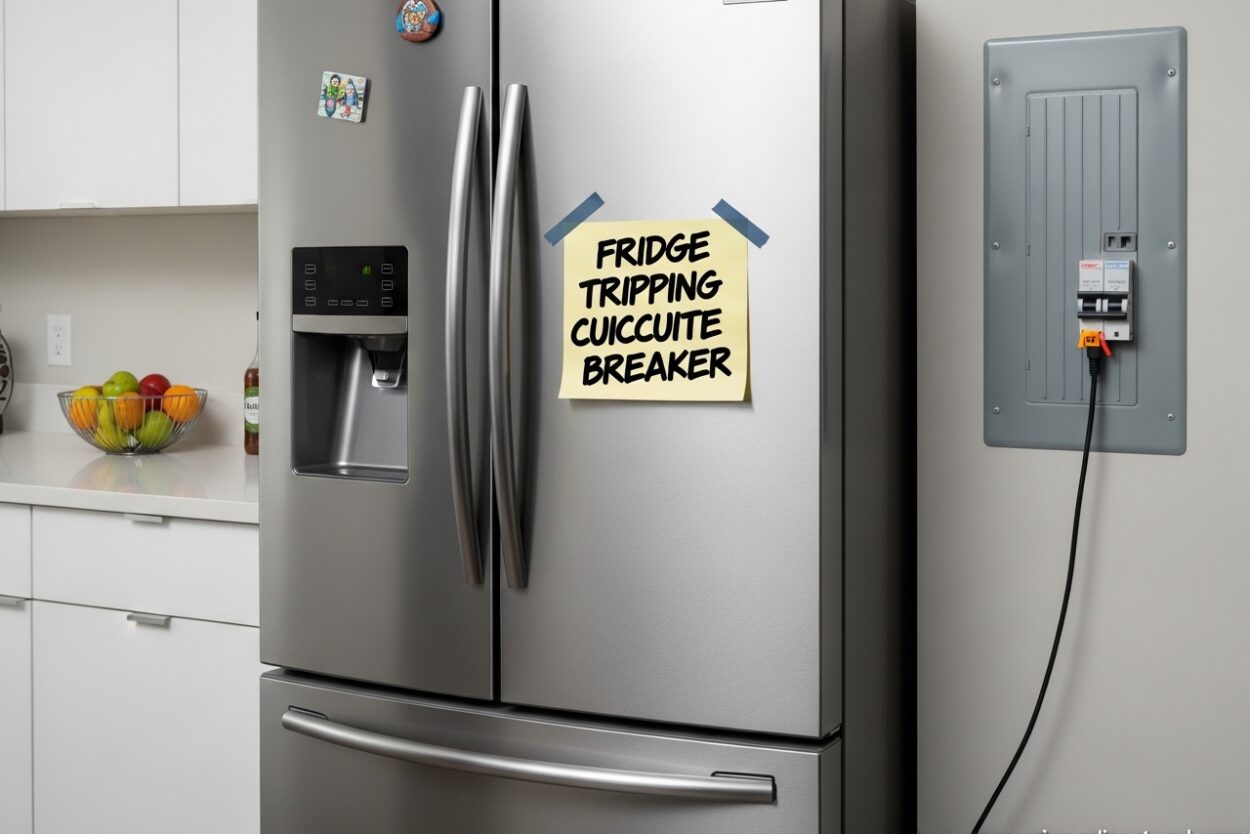
Your refrigerator just tripped the circuit breaker again. Maybe it happened right when the compressor kicked on, or perhaps it waited 45 minutes into the defrost cycle. The food inside is warming up, you’re worried about spoilage, and you need answers about why your Fridge Tripping Circuit Breaker keeps happening.
I’ve seen this scenario countless times. A fridge tripping the circuit breaker isn’t just annoying—it’s your home’s electrical system telling you something is wrong. The issue could be as simple as an overloaded circuit or as serious as a failing compressor. Let me walk you through exactly what’s happening, how to diagnose the problem, and what you should do next.
What is a Tripped Circuit Breaker?
A circuit breaker is a safety device designed to protect your home’s electrical system from damage caused by excessive current flow. When a breaker “trips,” it shuts off power to prevent overheating, electrical fires, or equipment damage. Think of it as a safety switch that detects when something draws too much power or creates a dangerous electrical fault.
Breakers trip for two main reasons: overloads (too many devices drawing power) and short circuits (where electricity flows where it shouldn’t). Your refrigerator tripping the breaker indicates one of these conditions is occurring, and you need to identify which one before attempting to use the appliance again.
Fridge Tripping Circuit Breaker: Common Causes
Understanding why your refrigerator is tripping the breaker starts with recognizing when the trip happens. The timing is often your biggest clue—immediate trips point to different problems than those occurring 20-45 minutes into the cycle.
Overloaded Circuit
This is the most common cause and the easiest to fix. Refrigerators require significant power, especially during compressor startup. If your fridge shares a circuit with other appliances or electronics, the combined draw can exceed the breaker’s capacity (typically 15-20 amps). Older homes often have kitchens with fewer circuits, making overload more likely.
The telltale sign: the breaker trips when the compressor tries to start, especially if another appliance on the same circuit is running.
Defrost Heater Short Circuit
The defrost heater melts ice buildup on the evaporator coils during the defrost cycle. When this heater fails or its insulation deteriorates, it can create a short circuit to ground. Because the defrost cycle runs periodically, this type of short often trips the breaker 20-45 minutes after the compressor stops—which is exactly when defrost begins.
I’ve found this to be one of the most common causes of intermittent tripping that frustrates homeowners because it’s unpredictable.
Compressor or Capacitor Failure
The compressor is your fridge’s motor, and it requires a capacitor to provide the extra boost needed for startup. When either component fails, they can draw excessive current or create a direct short to ground. Compressor failures usually cause immediate trips when the fridge attempts to start, while failing capacitors might allow intermittent operation before tripping.
These repairs typically cost between $200-400, making them a significant consideration for older refrigerators.
Start Relay Problems
The start relay controls power to the compressor. When it fails stuck in the “on” position, it can cause the compressor to draw locked-rotor current—far more than the breaker can handle. Start relays are relatively inexpensive parts ($15-50) but can mimic more serious compressor issues.
Power Cord Damage
Frayed, pinched, or damaged power cords can expose live wires that contact each other or the ground. This creates a direct short circuit that trips the breaker immediately. Inspect your cord carefully, especially behind the fridge where it might rub against the wall or other components.
GFCI and AFCI Sensitivity
Modern electrical safety outlets (GFCI) and breakers (AFCI) are designed to detect ground faults and arc faults. However, some refrigerators—especially newer models with inverter compressors—can generate electrical patterns that these sensitive devices interpret as faults. This doesn’t mean your fridge is defective, but it does mean you may need an electrician to evaluate your outlet setup.
Step-by-Step Troubleshooting Guide
Before diving into complex diagnostics, let’s establish some safety guidelines. Never bypass a circuit breaker or remove the ground prong from your fridge’s plug. These measures protect you from electrocution. If you’re uncomfortable with any step, it’s time to call a professional.
Step 1: Note When the Trip Occurs
Timing is your diagnostic key. Write down exactly when the breaker trips:
- Immediately when plugged in or compressor starts
- 20-45 minutes after the fridge runs (suspect defrost heater)
- Randomly throughout the day (possible overload or intermittent short)
- Only at night or during high electrical usage periods
Step 2: Check the Breaker First
Breakers themselves can fail after years of use. Try resetting the breaker fully—flip it all the way to OFF, wait 30 seconds, then flip to ON. If it feels loose, makes crackling sounds, or won’t stay reset, the breaker itself may need replacement by an electrician.
Step 3: Eliminate the Overload Possibility
Move your fridge to a different outlet on a different circuit, preferably one you know serves only lights or outlets (no large appliances). If the trips stop, you’ve confirmed an overloaded circuit. The long-term solution is either having an electrician install a dedicated circuit for your refrigerator or relocating other appliances off the existing circuit.
Step 4: Inspect the Power Cord
Unplug the fridge and examine the entire length of the power cord. Look for kinks, fraying, mouse damage, or signs of wear where the cord enters the refrigerator cabinet. Any damage means the cord must be replaced—this is not a repair to attempt with tape or electrical tape.
Step 5: Test on a Non-GFCI Outlet
If your fridge is plugged into a GFCI outlet, try temporarily connecting it to a standard outlet (if safe and accessible). Some refrigerators are incompatible with GFCI protection due to their normal electrical characteristics. If the fridge works fine on a standard outlet, consult an electrician about proper kitchen outlet configuration.
Step 6: Advanced Component Testing
For trips that occur at predictable intervals (especially 20-45 minute marks), the defrost heater is likely the culprit. Testing requires a multimeter to check for continuity and resistance values. If you’re comfortable with electrical testing, you can access the defrost heater (usually behind the freezer back panel) and measure resistance—typically 20-40 ohms is normal. Outside this range indicates failure.
Brand-Specific Fridge Tripping Issues
Certain refrigerator models have known issues that make them prone to tripping breakers. Understanding these patterns can speed your diagnosis.
Samsung Refrigerators
Many Samsung models produced between 2014-2020 experience compressor startup issues that trip breakers immediately. The inverter compressors in these units sometimes draw excessive inrush current, which sensitive AFCI breakers interpret as a fault. Samsung has addressed this in some models with updated capacitors and software fixes.
Whirlpool and KitchenAid
Whirlpool-owned brands commonly experience defrost heater failures in side-by-side and bottom-freezer models. The heater element runs along the evaporator coils and can short against the metal housing, causing trips precisely 20-45 minutes into the defrost cycle.
LG Refrigerators
LG models with inverter compressors sometimes experience control board failures that send incorrect signals to the compressor. This can cause the compressor to attempt starting multiple times rapidly, creating electrical patterns that trip AFCI breakers. The issue is often resolved by replacing the main inverter board rather than the compressor itself.
Frigidaire and GE
These brands most commonly experience start relay failures in their top-freezer and bottom-freezer models. The relay (mounted on the compressor) fails closed, keeping the start winding engaged and drawing excessive current. This is actually one of the easier and less expensive repairs if caught before compressor damage occurs.
When to Call a Professional
Some refrigerator tripping issues are DIY-friendly, but others require professional expertise. Call an appliance repair technician if:
- You’ve identified the compressor as the problem and the fridge is under warranty
- The defrost heater tests bad and you’re uncomfortable disassembling the freezer interior
- You’ve ruled out simple causes but can’t pinpoint the issue
- The fridge is less than 5 years old and compressor problems are suspected
Contact a licensed electrician if:
- Your breaker feels hot to the touch or shows burn marks
- Multiple breakers trip simultaneously
- You smell burning plastic near the electrical panel
- You need to install a dedicated circuit for your refrigerator
Professional repair costs typically range from $150-400 for common issues like defrost heaters and capacitors, while compressor replacement can exceed $600-800, making replacement more economical for older units.
Repair vs Replace: Age-Based Decision Guide
Before investing in repairs, consider your refrigerator’s age and the repair cost relative to replacement value. As a general rule:
Under 5 years old: Repair is almost always worthwhile, especially for components like defrost heaters, capacitors, and start relays. The fridge likely has 10+ years of remaining service life.
5-10 years old: Evaluate repair costs against a new fridge ($800-2,500 for comparable models). Repairs under $300 are usually worth it, but compressor replacement might not be.
Over 10 years old: Major repairs typically aren’t cost-effective. Even expensive new refrigerators pay for themselves over 8-10 years through improved energy efficiency compared to older units.
Preventing Future Breaker Trips
Once your refrigerator is running reliably again, these maintenance practices can prevent future trips:
Install a dedicated circuit: The National Electrical Code requires refrigerators to have dedicated circuits in new construction. This eliminates overload as a possibility and provides the cleanest power delivery.
Clean condenser coils annually: Dust buildup forces the compressor to work harder and draw more current. Vacuum or brush the coils (usually behind or beneath the fridge) once a year.
Check door gaskets: Worn gaskets let warm air in, causing the fridge to run longer and work harder. Replace gaskets that don’t seal properly.
Avoid GFCI outlets for refrigerators: While code-compliant in some jurisdictions, GFCI outlets can cause nuisance trips with modern refrigerators. Consult an electrician about the safest configuration for your kitchen.
Address trips promptly: Each breaker trip potentially damages the compressor’s start components. Ignoring the problem will likely lead to more expensive repairs down the road.
Frequently Asked Questions
What do I do if my fridge keeps tripping the breaker?
First, stop resetting the breaker repeatedly—this can damage both your electrical system and the refrigerator. Note when trips occur (immediately vs. after running), try the fridge on a different outlet, and inspect the power cord for damage. If the problem persists, call an appliance repair technician for professional diagnosis.
What would cause a refrigerator to kick off the circuit breaker?
The most common causes include overloaded circuits (fridge sharing power with other appliances), defrost heater failures causing short circuits 20-45 minutes into the cycle, compressor or capacitor failures causing immediate trips, damaged power cords, and start relay failures. The timing of the trip often indicates which component is at fault.
Is it worth fixing a 7 year old fridge?
For a 7-year-old refrigerator, repairs under $300 are typically worth it, especially for common issues like defrost heaters ($150-250) or start relays ($100-150). However, if the compressor has failed and replacement costs exceed $500, you should consider upgrading to a new, more energy-efficient model instead.
What are signs of a failing refrigerator compressor?
Key signs include the fridge tripping the breaker immediately when trying to start, loud clicking or buzzing from the back of the fridge, the refrigerator not cooling at all, the compressor running continuously without cooling, and burning smells near the compressor area. If you notice these symptoms, professional diagnosis is recommended.
Why does my fridge trip the breaker at night?
Nighttime tripping often indicates an overloaded circuit that’s being taxed by other appliances or electrical patterns in your home. It can also mean the defrost cycle is running at night and has a failing heater. Grid voltage fluctuations at night can sometimes cause sensitive breakers to trip when combined with a marginal refrigerator issue.
Can a GFCI outlet cause a fridge to trip the breaker?
Yes, GFCI outlets can cause nuisance tripping with modern refrigerators, especially those with inverter compressors. The compressor’s normal electrical patterns can mimic ground faults to sensitive GFCI sensors. If your fridge works fine on a standard outlet, consult an electrician about proper outlet configuration for your kitchen.
Conclusion
Dealing with a refrigerator tripping your circuit breaker is frustrating and potentially expensive if ignored. By paying attention to when the trips occur, you can narrow down the cause significantly—immediate trips suggest compressor or capacitor issues, while trips occurring 20-45 minutes into the cycle point to defrost heater failures.
Start with the simple checks: verify the breaker itself is functioning, test on a different circuit, and inspect the power cord. If these don’t resolve the issue, the problem is likely internal to the refrigerator and will require either DIY repair (for accessible components like start relays) or professional service.
Most importantly, don’t keep resetting a tripping breaker hoping the problem will resolve itself. Each trip can cause incremental damage to both your electrical system and your refrigerator. Address the issue promptly, and your fridge will provide reliable service for years to come.



Leave a Comment