
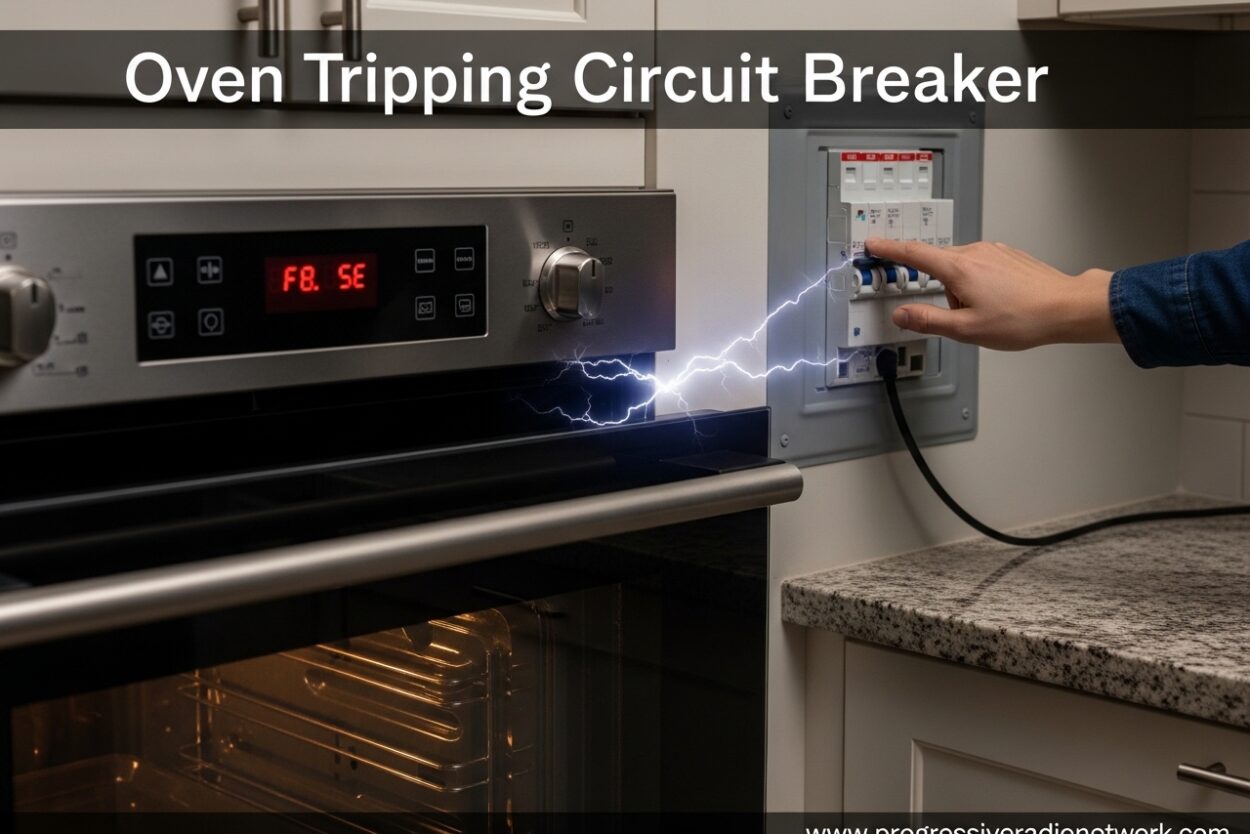
There’s nothing more frustrating than preparing dinner only to have your oven shut down mid-cook. When your oven keeps tripping the circuit breaker, it’s not just an inconvenience. It’s a warning sign that something is wrong with your electrical system or the appliance itself.
I’ve seen this problem hundreds of times, and in most cases, the issue stems from one of six specific causes. Understanding why your oven is tripping the breaker can help you decide whether it’s a simple fix or time to call a professional. Let me walk you through exactly what’s happening and what you can do about it.
What Is a Circuit Breaker and Why Does It Trip?
Before diving into the causes, it helps to understand what your circuit breaker actually does. A circuit breaker is a safety device designed to protect your home’s electrical wiring from damage caused by excess current. When too much electricity flows through a circuit, the breaker trips and cuts off power to prevent wires from overheating and potentially causing a fire.
Think of it like a safety valve on a pressure cooker. When pressure builds up beyond safe limits, the valve releases. Similarly, when electrical current exceeds the breaker’s rated capacity (usually 30-50 amps for oven circuits), it trips to protect your home. The breaker tripping means it’s doing its job. The real question is why your oven is drawing more power than it should.
Why Would My Oven Keep Tripping the Breaker?
Based on my experience helping homeowners diagnose electrical issues, here are the six most common reasons an oven trips the circuit breaker, ranked from most frequent to least frequent.
Circuit Overload
The most common cause is simply too much power being drawn on the same circuit. Electric ovens require dedicated circuits with specific amperage ratings, typically 30-50 amps. If your oven shares a circuit with other appliances, or if the circuit itself is undersized, the breaker will trip when the oven demands full power.
This often happens in older homes where the electrical system wasn’t designed for modern high-wattage appliances. I’ve seen cases where homeowners unknowingly plug additional appliances into the same outlet, not realizing they’re overloading the circuit. The breaker trips as a protective measure.
Short Circuit
A short circuit occurs when a hot wire comes into contact with a neutral wire or ground wire, creating a path of least resistance with little to no electrical resistance. This causes a sudden spike in current flow that immediately trips the breaker.
In ovens, short circuits often develop in the internal wiring due to age, heat damage, or rodent activity. I’ve also seen short circuits occur at the terminal block where the oven connects to your home’s wiring. These connections can loosen over time, causing arcing and short circuits when the oven heats up and metal components expand.
Faulty Heating Element
The heating element is the workhorse of your oven, and it’s also one of the most common failure points. Over time, the metal in heating elements degrades due to repeated heating and cooling cycles. This can cause the element to develop microscopic cracks that allow electricity to leak to ground.
When a heating element fails, it often draws more current than normal as the internal resistance changes. I’ve inspected many ovens where the bake element or broil element shows visible damage, blistering, or separation. Sometimes the damage is obvious, but other times it requires testing with a multimeter to detect the fault.
Ground Fault
A ground fault happens when current escapes the intended path and flows through an unintended path to ground. This is particularly dangerous because it can cause electric shock. In ovens, ground faults often develop due to moisture buildup or deteriorated wire insulation.
I’ve seen ground faults occur when cleaning liquids seep into electrical connections, or when condensation forms inside the oven cavity. The moisture creates a conductive path for electricity to flow to the oven’s metal chassis, which then causes the breaker to trip. Ground fault circuit interrupters (GFCIs) are designed to detect these faults, but standard breakers will also trip in response to the imbalance.
Faulty Circuit Breaker
Sometimes the problem isn’t your oven at all. It’s the breaker itself. Circuit breakers can weaken over time, especially if they’ve tripped repeatedly. A faulty breaker may trip prematurely even when the current draw is within normal limits.
I’ve diagnosed cases where homeowners spent hundreds of dollars repairing their oven, only to discover the real issue was a 15-year-old breaker that needed replacement. If your breaker feels loose, makes crackling sounds, or doesn’t reset firmly, it might be the culprit rather than your oven.
Terminal Block or Fan Issues
The terminal block is where your oven’s internal wiring connects to your home’s electrical supply. These connections can loosen over time due to thermal expansion and contraction, causing increased resistance and heat buildup. Loose connections draw more current and can trip the breaker.
Additionally, many modern ovens have cooling fans that run after use to dissipate heat. If these fans fail, the oven can overheat internally, triggering thermal protection that trips the breaker. I’ve seen fan failures cause intermittent tripping that only happens during longer cooking sessions.
How to Fix an Oven Tripping Circuit Breaker
Now that you understand the causes, here’s a systematic approach to diagnosing and fixing the problem. Always prioritize safety when working with electrical appliances.
Step 1: Perform a Quick Reset Test
Start by turning off the oven at the control panel. Wait 5 minutes, then reset the breaker by flipping it fully off and back on. Try running the oven on a lower setting first. If it works on low heat but trips at higher temperatures, you’re likely dealing with a heating element issue or thermal overload problem.
Step 2: Check for Circuit Overload
Make sure no other appliances are running on the same circuit. Check what’s plugged into nearby outlets. If you find other appliances sharing the circuit, try running the oven alone. This simple test can immediately identify if overload is the issue.
Step 3: Inspect the Heating Elements
With the oven completely cool and power disconnected, visually inspect both the bake element (bottom) and broil element (top). Look for blisters, cracks, separation, or any visible damage. Even small imperfections can cause problems. If elements look damaged, replacement is usually straightforward and inexpensive.
Step 4: Examine the Terminal Block
This step requires removing the oven’s access panel. If you’re uncomfortable working with electricity, skip to the professional help section. For those proceeding, ensure power is completely off at the breaker panel. The terminal block is usually located at the back of the oven. Check for loose, discolored, or burnt connections. Tighten any loose terminals and replace any that show signs of heat damage.
Step 5: Test Individual Components
If you have a multimeter, you can test the heating elements for proper resistance. Most oven elements should read between 15-30 ohms. Significantly lower or higher readings indicate a problem. You can also test the oven fan by running it through a cleaning cycle and listening for proper operation.
Step 6: Consider the Breaker Itself
If all oven components test fine, the breaker might be faulty. Try swapping it with a similar breaker in your panel (if you have matching spares). If the problem follows the breaker, you’ve found your culprit. Breaker replacement is usually inexpensive but should be done by a licensed electrician.
When to Call a Professional
While some oven issues are DIY-friendly, others require professional expertise. I recommend calling a professional if you notice any of these red flags: the breaker trips immediately upon resetting, you smell burning plastic or electrical odors, you see visible sparks or smoke, the oven is brand new and still under warranty, or you’re uncomfortable working with electrical systems.
For electrical issues like faulty breakers, wiring problems, or circuit upgrades, always hire a licensed electrician. They have the training and equipment to work safely with your home’s electrical system. For internal oven components like control boards or complex wiring issues, an appliance repair technician specializing in ovens is your best bet.
Expect to pay $100-200 for a service call, plus parts. A complete heating element replacement typically runs $150-300, while breaker replacement costs $100-250. These costs vary by location and the extent of the problem.
How to Prevent Your Oven from Tripping the Breaker
Prevention is always better than repair. Here are some tips to keep your oven running reliably: avoid running other high-wattage appliances on the same circuit while using the oven, clean spills promptly to prevent moisture buildup, have your electrical system inspected if you live in an older home, schedule annual professional maintenance for your oven, and replace aging breakers proactively if they’re over 15 years old.
When installing a new oven, always verify that your electrical circuit meets the manufacturer’s specifications. Many new ovens require 40-amp circuits, while older homes may have only 30-amp service. Upgrading your circuit during installation prevents future problems.
Frequently Asked Questions
Why would my oven keep tripping the breaker?
The most common reasons include circuit overload, short circuits, faulty heating elements, ground faults, a failing breaker itself, or loose terminal block connections. Heating element failure is the single most frequent cause I encounter, especially in ovens over 5 years old.
How do you fix an appliance that keeps tripping?
Start by identifying when the tripping occurs. If it happens immediately, suspect a short circuit. If it happens after heating up, check the heating elements and fan. Test components with a multimeter, inspect wiring connections, and ensure the circuit isn’t overloaded. Always disconnect power before performing any inspections.
Can an electrician fix an electric oven?
Electricians handle the electrical supply side including breakers, wiring, and circuits. For internal oven components like heating elements, control boards, or fans, you’ll need an appliance repair technician. Many homeowners need both services if the problem involves both the electrical system and the oven itself.
How to prevent an oven from tripping?
Ensure your oven has a properly sized dedicated circuit, avoid running other appliances on the same circuit, clean heating elements regularly, address moisture issues promptly, and schedule annual maintenance. For new installations, verify your electrical system meets the oven’s requirements before use.
Is it dangerous if my oven keeps tripping the breaker?
Yes, repeatedly tripping breakers indicate an electrical problem that could pose fire or shock hazards. Never bypass the breaker or attempt to force it to stay engaged. If your oven trips the breaker more than twice, stop using it until you’ve identified and fixed the underlying cause.
Why does my oven trip the breaker when heating up?
This pattern typically indicates a heating element problem or thermal expansion issue. As the element heats up, internal cracks may expand and cause current leakage. Alternatively, loose connections may expand and create shorts. These issues often don’t appear until the oven reaches higher temperatures, making them intermittent and harder to diagnose.
Conclusion
Dealing with an oven tripping circuit breaker is frustrating, but understanding the root cause makes it much more manageable. Whether it’s a faulty heating element, loose wiring connections, or an aging breaker, most problems have straightforward solutions once identified.
Remember that your breaker is doing its job by tripping. It’s protecting you from potential electrical fires. Rather than repeatedly resetting it, take the time to properly diagnose the issue. When in doubt, always err on the side of caution and call a professional. Your safety is worth more than the cost of a service call.
If you’re experiencing this issue regularly, don’t ignore it. Electrical problems rarely fix themselves and usually worsen over time. Addressing the problem now will save you money, frustration, and potential safety hazards down the road.



Leave a Comment