
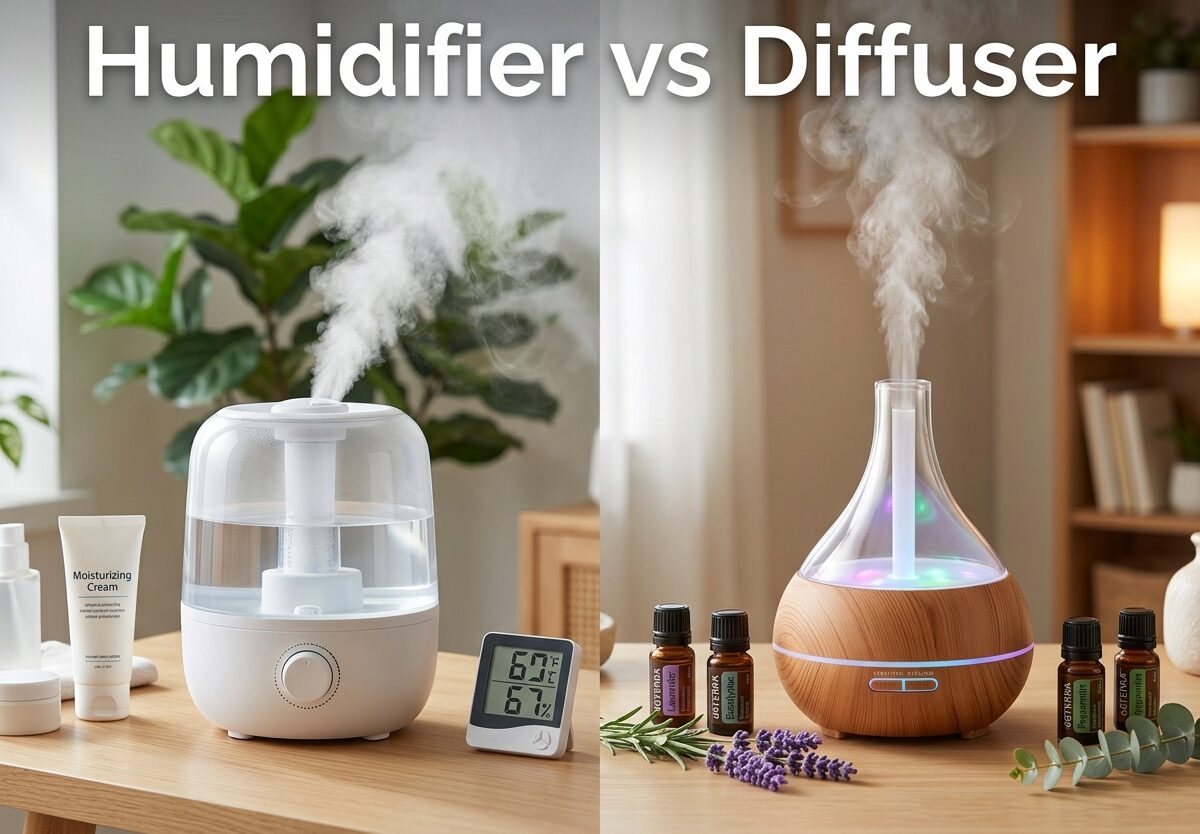
Standing in the home goods aisle, staring at two similar-looking devices, I’ve been there. You want to improve your home’s air quality, but you’re not sure whether a humidifier or diffuser is the right choice. Both devices mist water into the air, both sit on your nightstand, and both promise to make your home feel more comfortable.
But they serve completely different purposes.
After testing both devices extensively and researching the science behind how they work, I’ll break down exactly what each device does, the key differences you need to know, and which one will actually solve your specific problems. No marketing fluff – just practical information to help you make the right choice.
What is a Humidifier?
A humidifier is a device designed to add moisture to the air in your home. When indoor air becomes dry – especially during winter months when heating systems run constantly – a humidifier increases humidity levels to a more comfortable range.
Humidifiers work by releasing water vapor into the air through various methods. Some boil water to create steam, others use a fan to blow air through a wet wick, and ultrasonic models vibrate water at high frequencies to create a fine cool mist.
The primary purpose of a humidifier is addressing physical discomforts caused by dry air. Think scratchy throats, dry skin that won’t seem to absorb lotion, static electricity shocks, and respiratory irritation. When indoor humidity drops below 30%, these problems become noticeable.
Most humidifiers can cover anywhere from 300 to 1,000 square feet, depending on their size and output capacity. They typically hold 1-6 gallons of water and need refilling every 24-48 hours with continuous use.
What is a Diffuser?
A diffuser is designed specifically for aromatherapy – dispersing essential oils into the air to create fragrance or provide therapeutic benefits. While many diffusers use water as a carrier, their primary purpose is scent distribution, not humidity control.
Most modern diffusers use ultrasonic technology to break down essential oils mixed with water into microscopic particles. These particles are then released as a fine mist that carries the scent throughout your room. Some diffusers use heat or pressurized air instead, but the goal remains the same – scent delivery.
Here’s the important distinction: while diffusers do release water vapor along with the essential oils, the amount is minimal. A diffuser might use 1/4 cup of water over several hours. Compare that to a humidifier, which can use gallons per day.
Diffusers are typically smaller than humidifiers, covering 100-500 square feet. They’re designed for intermittent use – running for 30 minutes to a few hours at a time rather than continuously. Many feature LED lights and timers for creating ambiance.
Humidifier vs Diffuser: Key Differences Explained
The fundamental difference comes down to purpose. A humidifier exists to modify your home’s humidity levels – a measurable, physical change in your environment. A diffuser exists to disperse scent and potentially provide aromatherapy benefits – a sensory experience rather than an environmental modification.
Think of it this way: a humidifier is like a humidifying system for a greenhouse, while a diffuser is like a perfume for your room. Both release something into the air, but one changes the air’s properties while the other adds fragrance.
The water consumption difference is dramatic. A typical bedroom humidifier might use 1-3 gallons of water daily. A diffuser running the same amount of time might use a few ounces. This directly reflects their different purposes – one is meant to noticeably affect humidity, the other isn’t.
Runtime also differs significantly. Humidifiers are designed to run for hours or even continuously, while diffusers typically operate in shorter sessions. This isn’t just about design – it reflects how our bodies respond to each device. Continuous humidity is beneficial, but continuous scent exposure can become overwhelming or cause sensitivity.
The maintenance requirements vary too. Humidifiers need regular cleaning to prevent bacteria and mold growth in standing water – weekly deep cleaning is recommended. Diffusers need cleaning too, but less frequently since they hold less water and run for shorter periods.
Cost difference is worth noting. Basic diffusers typically cost $15-40, while quality humidifiers start around $40 and can exceed $150 for larger models. This reflects the different engineering requirements – humidifiers need to process much more water and often include filters or more complex systems.
| Purpose | Primary Benefit | How It Works | Moisture Output | Best For |
|---|---|---|---|---|
| Add moisture to air | Relieves dry air symptoms | Releases water vapor continuously | High (gallons daily) | Dry skin, sinus issues, baby rooms |
| Disperse essential oils | Aromatherapy and fragrance | Mists water and oil mixture intermittently | Minimal (ounces per session) | Relaxation, mood enhancement, scent |
Benefits of Using a Humidifier
The benefits of proper humidity extend beyond just comfort. I’ve noticed significant improvements in several areas when maintaining indoor humidity between 30-50%.
Skin health improves dramatically. Dry, itchy skin becomes less noticeable. Lotions and moisturizers absorb better instead of sitting on the surface. If you live in a cold climate where winter means cracked hands and flaky skin, a humidifier can make a noticeable difference.
Sinus and respiratory relief is one of the most immediate benefits. Dry air irritates nasal passages and throat, making you more susceptible to infection and slowing recovery when you do get sick. Proper humidity keeps mucus membranes moist and functioning as they should.
Sleep quality often improves. I’ve found I wake up less often with dry throat or congestion. Many people report fewer snoring issues and less morning throat irritation when using a humidifier in the bedroom.
Your home benefits too. Hardwood floors and wooden furniture are less prone to cracking and warping. Static electricity shocks decrease significantly. Houseplants thrive better with proper humidity, and some electronics may last longer without the stress of excessive dryness.
For parents, humidifiers are often recommended for babies’ rooms. Infants have more sensitive respiratory systems and can’t clear their noses as effectively. Proper humidity helps them breathe and sleep better, especially during cold season.
Benefits of Using a Diffuser
The benefits of diffusers center on aromatherapy and sensory experience rather than physical changes to your environment. While scientific research on aromatherapy varies, many people report real benefits from regular use.
Stress relief and relaxation are the most commonly reported benefits. Scents like lavender, chamomile, and bergamot are associated with calming effects. I’ve found using a diffuser with these scents in the evening helps create a transition between daytime activity and nighttime rest.
Mood enhancement is another major benefit. Citrus scents like lemon and orange can feel energizing. Peppermint and eucalyptus can feel invigorating when you need focus. The ability to change your environment’s scent can genuinely affect how a room feels.
Natural fragrance without chemicals appeals to many people. Instead of artificial air fresheners with questionable ingredients, diffusers use pure essential oils. You control exactly what’s being released into your air, and the scent dissipates naturally rather than lingering synthetically.
Some people report specific therapeutic benefits. Eucalyptus when congested, peppermint for headaches, lavender for anxiety – these traditional uses have been passed down for generations. While individual responses vary, many find genuine relief through targeted essential oil use.
Diffusers also create ambiance. Many feature soft LED lighting that can function as a nightlight. The gentle mist output can be visually relaxing. The whole sensory experience – sight, smell, and the subtle sound – can contribute to a calming environment.
Types of Humidifiers
Understanding the different types of humidifiers helps you choose the right one for your situation.
Cool mist humidifiers are the most common type. They use a fan to evaporate water or ultrasonic technology to create a cool mist. They’re energy efficient and safe around children since there’s no hot water. However, they can be noisier and require regular cleaning to prevent bacterial growth.
Warm mist humidifiers boil water to create steam. They tend to be quieter and can kill bacteria through the boiling process. Some allow you to add medicated vapors for congestion relief. The downside is higher energy use and potential burn risk – not ideal for children’s rooms.
Ultrasonic humidifiers use high-frequency vibrations to create an extra-fine mist. They’re virtually silent and very energy efficient. However, the fine mist can settle as white dust if your water is mineral-heavy. Many people use distilled water to avoid this issue.
Evaporative humidifiers use a fan to blow air through a wet wick or filter. They’re self-regulating – humidity naturally limits evaporation, so they won’t over-humidify. However, the filters need regular replacement, and they can be noisy due to the fan.
Types of Diffusers
Just like humidifiers, diffusers come in several varieties with different strengths and limitations.
Ultrasonic diffusers are the most popular type. They use water and essential oils, creating a visible mist. They’re quiet, often include LED lights, and can double as a humidifier in very small spaces. The water helps disperse the oil efficiently and extends the diffuser’s runtime.
Nebulizing diffusers don’t use water. They pressurize air to atomize pure essential oil directly into the air. This creates a stronger scent and preserves the oil’s therapeutic properties. However, they’re louder, use oil more quickly, and are typically more expensive upfront.
Heat diffusers warm essential oils to encourage evaporation. They’re simple and quiet, but heat can alter some therapeutic properties of the oils. They’re best for fragrance rather than therapeutic aromatherapy.
Reed diffusers are entirely passive – no electricity or water needed. Reeds absorb essential oil from a container and release scent naturally. They’re great for continuous, subtle fragrance in small spaces but don’t offer the same intensity or control as active diffusers.
Safety Considerations
Both devices require proper use and maintenance to be safe. Here are the key considerations.
Clean your humidifier regularly. Standing water is a breeding ground for bacteria and mold. I recommend cleaning with white vinegar weekly and using distilled water if possible to minimize mineral buildup. Never let water sit in the tank when not in use.
Watch humidity levels. Too much humidity can be just as problematic as too little. Levels above 60% can encourage mold and dust mites growth. A simple hygrometer can monitor your levels – most homes are comfortable between 30-50% humidity.
Be cautious with essential oils. Some people experience respiratory irritation from certain oils, especially in concentrated form. If you have asthma or allergies, introduce diffusers gradually. Never use essential oils in a humidifier unless it’s specifically designed for that purpose – oils can damage standard humidifiers and create safety issues.
Keep both devices away from furniture and electronics to prevent moisture damage. Place them on a waterproof surface or waterproof coaster. This is especially important for ultrasonic models that can release more moisture than expected.
For children’s rooms, cool mist humidifiers are safer than warm mist models. With diffusers, use child-safe essential oils and keep the device out of reach. Some pediatricians recommend avoiding diffusers in very young children’s rooms altogether – consult your child’s doctor if you’re unsure.
Which Should You Choose?
The decision comes down to what problem you’re trying to solve.
Choose a humidifier if you experience physical symptoms of dry air – dry skin that won’t heal, scratchy throat, sinus irritation, frequent nosebleeds, or excessive static electricity. If your home humidity consistently drops below 30%, a humidifier will make a noticeable difference in your comfort.
Choose a diffuser if your primary goal is aromatherapy, fragrance, or creating a specific atmosphere. If you love the idea of coming home to a lavender-scented room, or you want to experiment with different essential oil blends for mood enhancement, a diffuser is what you need.
Consider both if you have the budget and space. Many people use a humidifier for overnight humidity control and a diffuser for targeted aromatherapy sessions. They serve different purposes and can complement each other well.
Or consider a combination unit – some humidifiers include essential oil trays or diffusers with stronger humidifying capabilities. These can be a good middle ground if you want both functions without buying two separate devices.
Remember that neither device is a substitute for medical treatment. If you have chronic respiratory issues, severe skin problems, or persistent sleep difficulties, consult a healthcare provider. These devices are supportive tools, not cure-alls.
Frequently Asked Questions
Is a humidifier or diffuser better?
Neither is universally better – they serve different purposes. A humidifier is better if you need to add moisture to dry air to relieve physical symptoms like dry skin, scratchy throat, or sinus irritation. A diffuser is better if your goal is aromatherapy, home fragrance, or creating a relaxing atmosphere. Many people benefit from having both devices for different needs.
Are diffusers ok for lungs?
Most diffusers are safe for lungs when used properly with high-quality essential oils. However, some people may experience irritation from certain oils or strong scents. If you have asthma, allergies, or respiratory conditions, introduce diffusers gradually and discontinue use if you notice coughing, wheezing, or increased congestion. Always use pure essential oils rather than synthetic fragrances, and ensure proper room ventilation.
What kind of humidifier is best for RSV?
For RSV and other respiratory illnesses, cool mist humidifiers are typically recommended by pediatricians. Warm mist humidifiers can create steam that might worsen congestion in some cases. The cool mist helps thin mucus and soothe irritated airways. Always clean the humidifier daily when someone is sick, and use distilled water to prevent mineral buildup. Consult your pediatrician for specific guidance about managing RSV symptoms at home.
Is it good to sleep with a humidifier?
Yes, sleeping with a humidifier can improve sleep quality, especially if you live in a dry climate or use heating/air conditioning that dries the air. Proper humidity helps prevent dry throat and nasal passages, reduces snoring, and can make breathing more comfortable overnight. Keep humidity between 30-50%, place the humidifier several feet from your bed, and clean it regularly to prevent bacteria growth. Many people report waking up more rested and less congested when using a bedroom humidifier.
Conclusion
The humidifier vs diffuser choice becomes clear once you understand their different purposes. If you’re dealing with dry air symptoms – skin irritation, sinus problems, or discomfort from low humidity – a humidifier is the practical solution that will make a measurable difference in your environment.
If your goal is aromatherapy, fragrance, or creating a pleasant atmosphere, a diffuser is what you need. It won’t significantly affect your home’s humidity, but it will transform your space through scent and mood.
Many households ultimately benefit from both devices. The humidifier handles the practical work of maintaining comfortable humidity levels, while the diffuser provides aromatherapy benefits when desired. Understanding what each device does – and doesn’t do – means you can choose the right tool for your needs and avoid disappointment.
Start by identifying what problem you’re trying to solve. From there, the right choice becomes obvious.



Leave a Comment