
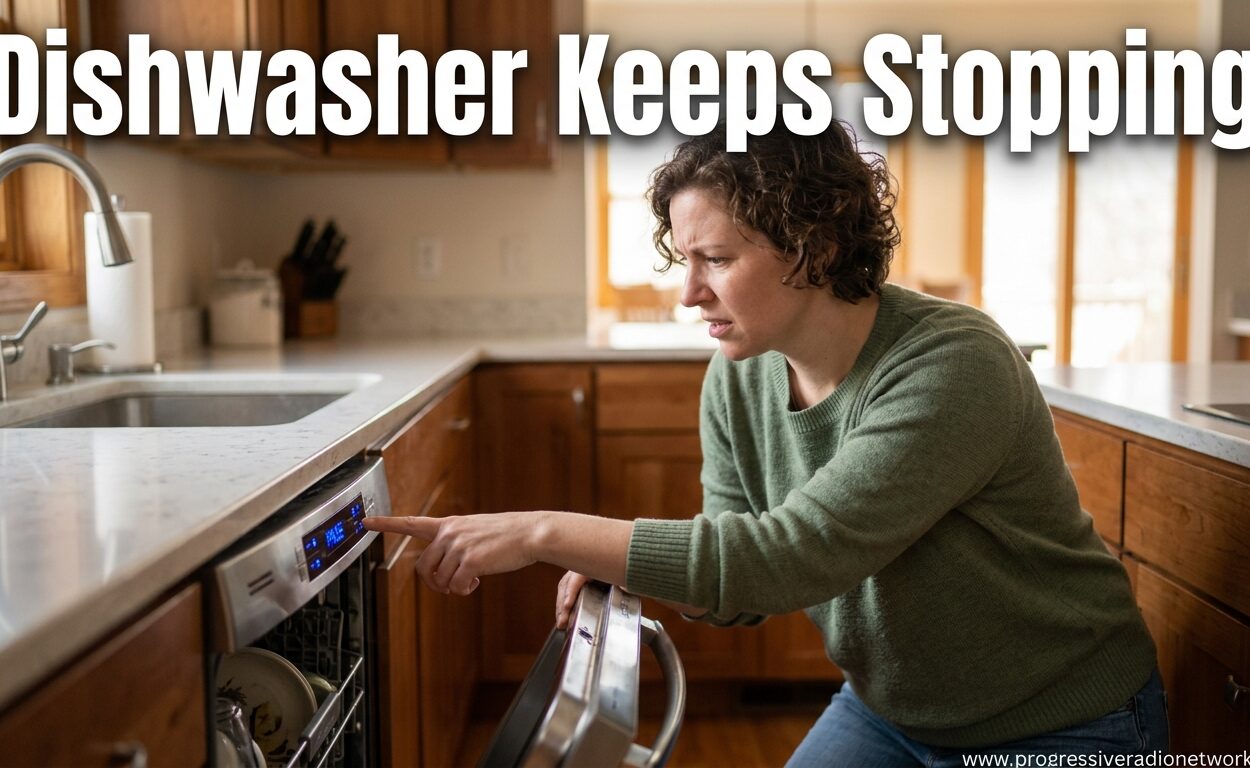
A dishwasher that keeps stopping mid-cycle is typically caused by a faulty door latch switch, power interruption, drain blockage, water supply problem, thermal fuse failure, or a malfunctioning control board. Most of these issues trigger safety sensors that immediately halt operation to prevent damage or safety hazards.
There’s nothing more frustrating than loading your dishwasher, starting a cycle, and coming back later to find it stopped halfway through with wet, soapy dishes. This problem affects all major brands including Bosch, Whirlpool, Samsung, LG, and GE.
The average dishwasher lasts 10-12 years with proper maintenance, but a dishwasher that keeps stopping why it happens is important to understand. Ignoring the issue can lead to water damage, electrical problems, or complete appliance failure.
Safety First: Before You Start Troubleshooting
Before attempting any dishwasher repairs, always disconnect the power supply. Either unplug the unit or turn off the circuit breaker dedicated to your dishwasher. This prevents electrical shock while inspecting components.
If you notice water pooling around your dishwasher during operation, stop using it immediately. This could indicate a serious leak that may cause water damage to your flooring or subfloor. Water and electricity don’t mix, making this a potentially dangerous combination.
Some repairs require specialized tools and knowledge. If you’re uncomfortable working with appliances or electrical components, there’s no shame in calling a professional technician.
Quick Checks You Can Do First
Before diving into complex repairs, try these simple checks that solve many dishwasher stopping issues. These quick tests take less than 15 minutes and often reveal the problem.
1. Check the Door Latch
The most common cause of a dishwasher stopping mid-cycle is a faulty door latch. Open and close the door firmly several times. Listen for a distinct clicking sound that indicates the latch is engaging properly.
Run a cycle while gently pressing against the door. If the dishwasher continues running when you apply pressure, the door latch switch is likely failing and needs replacement.
2. Verify Power Supply
Make sure your dishwasher is receiving consistent power. Check that the plug is securely inserted into the outlet. For hardwired units, verify the circuit breaker hasn’t tripped.
Test the outlet with another small appliance to confirm it’s working. Sometimes power fluctuations can cause your dishwasher to stop unexpectedly without tripping the breaker completely.
3. Perform a Hard Reset
Many modern dishwashers have control boards that can glitch. A simple reset often resolves unexplained stopping issues. Turn off the dishwasher, unplug it or flip the breaker, wait 5 minutes, then restore power.
After resetting, try running a short cycle to see if the problem persists. This simple fix resolves many electronic control issues that cause random stopping.
4. Inspect the Drain Hose
A clogged drain hose is a frequent culprit. Locate the drain hose (usually connected to your sink’s drain or garbage disposal) and check for kinks or blockages.
Disconnect the hose and flush it with water if you suspect a clog. Many users report that using soda crystals overnight dissolved stubborn blockages that were causing their dishwasher to stop mid-cycle.
5. Check Water Supply Valve
Ensure the water supply valve under your sink is fully open. Partially closed valves can cause insufficient water flow, triggering safety sensors that stop the cycle.
Listen during the fill cycle. If you don’t hear water entering the dishwasher within 2 minutes of starting, there may be a problem with the water inlet valve or supply line.
6. Clean the Filter
A clogged filter can cause drainage issues that trigger automatic stopping. Locate your dishwasher’s filter (usually at the bottom of the tub) and remove any debris or food particles.
Clean the filter thoroughly under running water. A dirty filter is one of the easiest problems to fix and resolves many drainage-related stopping issues.
7. Look for Error Codes
Check your dishwasher’s display panel for flashing lights or error codes. These codes provide valuable clues about what’s causing the stopping problem.
Write down any codes you see and consult your owner’s manual or the error code reference section below to understand what they mean.
7 Common Reasons Your Dishwasher Keeps Stopping
1. Door Latch or Door Switch Failure
A faulty door latch is the number one reason dishwashers stop mid-cycle. The door switch tells the control board that the door is securely closed. If this switch fails or the latch doesn’t engage properly, the dishwasher immediately stops running as a safety precaution.
Symptoms of a bad door latch include the dishwasher stopping when you walk near it, needing to press on the door to keep it running, or the cycle stopping at random intervals. Door latch assemblies cost $20-50 and are relatively easy to replace yourself.
Over time, door latches wear out from regular use. The plastic components can crack, or the electrical switch can fail due to moisture exposure. Most latches can be replaced in under 30 minutes with basic tools.
2. Power Supply Problems
Power interruptions cause your dishwasher to stop unexpectedly. These issues range from loose connections and faulty outlets to tripped breakers and wiring problems within the unit itself.
Signs of power issues include the dishwasher completely losing power (no lights, no display), the display flickering, or the unit resetting to default settings. Sometimes power surges can damage the control board, causing random stopping.
Check your home’s electrical panel for tripped breakers. Test the outlet with a multimeter or another appliance. For hardwired dishwashers, inspect the wiring connections where the unit connects to your home’s electrical system.
3. Water Inlet Valve Failure
The water inlet valve controls water flow into your dishwasher. When this valve fails or becomes clogged with sediment, the dishwasher can’t fill properly and will stop the cycle.
Typical symptoms include long fill times, low water pressure during operation, or the dishwasher stopping shortly after starting. You might notice the dishwasher humming but no water entering.
Water inlet valves can fail due to mineral buildup, debris in the water line, or electrical failure. Replacing a water inlet valve costs $30-80 and requires basic mechanical skills. Shut off the water supply before attempting this repair.
4. Drain Blockages and Pump Issues
Clogged drains or failing drain pumps are frequent causes of mid-cycle stopping. If water can’t drain properly, the dishwasher’s safety sensors trigger and halt the cycle to prevent overflow.
Common indicators include water left in the bottom after the cycle stops, unusual humming noises during drain cycles, or the dishwasher stopping at the same point every time (usually during the drain phase).
Drain blockages often occur in the drain hose, air gap, or garbage disposal connection. Food debris, grease buildup, and even broken glass can cause obstructions. A drain pump replacement costs $50-150 depending on your model.
5. Thermal Fuse Failure
The thermal fuse is a safety device that protects your dishwasher from overheating. When it blows, it cuts power to the control board, causing the dishwasher to stop completely.
A blown thermal fuse means your dishwasher won’t run at all or may start briefly then stop. This usually happens due to overheating from restricted airflow, a failing heating element, or a malfunctioning thermostat.
Thermal fuses cost $10-30 but indicate an underlying issue that caused them to blow. Simply replacing the fuse without addressing the root cause will result in another blown fuse. Professional diagnosis is often recommended for thermal fuse failures.
6. Float Switch Malfunction
The float switch monitors water level in your dishwasher. If it malfunctions or gets stuck, it can falsely signal that the dishwasher is overfilling, causing it to stop immediately.
Symptoms include the dishwasher stopping during the fill cycle, water not filling properly, or the unit continuously draining. The float is typically a small plastic cup or mushroom-shaped device in the bottom of the tub.
Sometimes the float gets stuck due to debris or mineral buildup. Cleaning around the float mechanism can resolve the issue. If the switch itself has failed, replacement costs $15-40 and is usually straightforward.
7. Control Board Failure
The electronic control board is the brain of your dishwasher. When it fails, you may experience random stopping, incorrect cycle behavior, or complete failure to operate.
Control board failure often manifests as unexplained stopping patterns, the dishwasher starting and stopping on its own, or the display showing random numbers and symbols. Power surges, moisture damage, and age can all cause control board failure.
Replacing a control board is expensive ($150-400) and requires some technical skill. Before investing in a new board, try resetting the unit and checking all other components first. Sometimes what appears to be a control board issue is actually a simpler problem.
Brand-Specific Troubleshooting Notes
Different dishwasher brands have unique quirks and common failure points. Knowing these brand-specific issues can help you diagnose problems faster.
Bosch: Bosch dishwashers are known for vent fan issues that cause stopping. The E15 error code indicates water in the base pan, triggering the flood safety switch. Also check the door latch assembly, which is a common failure point on Bosch models.
Whirlpool: Whirlpool dishwashers often have problems with the thermal fuse located in the control console. The F1 error code indicates a bad thermal fuse or control board issue. Whirlpool models also commonly develop drain pump problems around 5-7 years of use.
Samsung: Samsung dishwashers display specific error codes on the digital display. The 5E error indicates drainage issues, while the 4E code points to water supply problems. Samsung’s door latch design is also prone to failure in older models.
LG: LG dishwashers have a unique drain hose design that can cause siphoning issues. If your LG dishwasher stops mid-cycle, check that the drain hose is properly elevated (typically 32-36 inches from the floor). The AE error code indicates a drainage problem specific to LG models.
GE: GE dishwashers commonly experience thermal fuse failures in the control board area. The C2 error code on newer GE models indicates a latch issue. GE’s float switch design is also susceptible to debris buildup.
Common Dishwasher Error Codes Reference
Understanding your dishwasher’s error codes can save significant diagnostic time. Here are common codes by brand:
| Brand | Error Code | Meaning | Action Required |
|---|---|---|---|
| Bosch | E15 | Water leak detected | Check for leaks, dry base pan |
| Bosch | E22 | Drain pump blocked | Clean filter and drain hose |
| Whirlpool | F1 | Thermal fuse blown | Replace thermal fuse/control board |
| Whirlpool | F2 | Door latch issue | Check door latch assembly |
| Samsung | 5E | Drainage problem | Check drain hose and pump |
| Samsung | 4E | Water supply issue | Check water inlet valve |
| LG | AE | Drainage error | Check drain hose installation |
| LG | IE | Water inlet error | Check water supply and valve |
| GE | C2 | Door latch problem | Inspect door latch switch |
| GE | C3 | Drainage issue | Check drain system |
DIY vs Professional Repair: What You Should Know
Deciding whether to tackle dishwasher repair yourself or call a professional depends on the specific problem and your comfort level with appliance repair. Here’s a comparison to help you decide:
| Repair Type | Average DIY Cost | Average Pro Cost | Skill Level |
|---|---|---|---|
| Door Latch Replacement | $20-50 | $150-200 | Beginner |
| Water Inlet Valve | $30-80 | $180-250 | Intermediate |
| Drain Pump Replacement | $50-150 | $200-300 | Intermediate |
| Control Board Replacement | $150-400 | $350-500 | Advanced |
| Thermal Fuse | $10-30 + diagnostic | $150-250 | Intermediate |
Simple repairs like door latches, filters, and drain cleaning are good DIY projects. These require basic tools and minimal technical knowledge. However, control board replacement and complex electrical issues are best left to professionals unless you have experience with appliance repair.
Consider the age of your dishwasher when making repair decisions. If your unit is over 10 years old and requires expensive repairs, replacement might be more cost-effective than fixing it.
Step-by-Step Troubleshooting Guide
Follow this systematic approach to diagnose why your dishwasher keeps stopping:
Step 1: Observe When It Stops
Pay attention to exactly when your dishwasher stops. Does it stop during filling, washing, draining, or at random intervals? This timing provides important clues about which component is failing.
Step 2: Check for Error Codes
Look at the display panel for any flashing lights or error codes. Write these down and refer to your owner’s manual or the error code table above.
Step 3: Inspect the Door
Test the door latch by running a cycle while gently pressing on the door. If it continues running with pressure applied, the door latch switch is failing.
Step 4: Verify Power Supply
Ensure the dishwasher is receiving consistent power. Check outlets, breakers, and wiring connections. Listen for buzzing sounds that might indicate electrical problems.
Step 5: Check Water Supply
Confirm the water supply valve is fully open. Listen for water entering the dishwasher. Check the water inlet valve for proper operation.
Step 6: Inspect Drainage System
Check the drain hose for kinks or clogs. Clean the filter and check the drain pump. Look for obstructions in the air gap or garbage disposal connection.
Step 7: Test the Float Switch
Locate the float in the bottom of the dishwasher tub. Move it up and down to ensure it moves freely. Check for debris that might be preventing proper operation.
Step 8: Consider Professional Help
If you’ve checked all these components and the problem persists, or if you’re uncomfortable performing any of these tests, it’s time to call a professional appliance repair technician.
Frequently Asked Questions
Why is my dishwasher randomly stopping?
Random stopping usually indicates a failing door latch switch, loose electrical connection, or malfunctioning control board. The door latch is the most common culprit – test by running a cycle while pressing on the door. If it continues running with pressure, the latch needs replacement.
What is the lifespan of an average dishwasher?
The average dishwasher lasts 10-12 years with proper maintenance. Regular cleaning, proper loading, and addressing issues promptly can extend this lifespan. If your dishwasher is over 10 years old and requires expensive repairs, replacement might be more cost-effective.
Is there a reset button on my dishwasher?
Most dishwashers don’t have a physical reset button. To reset, turn off the dishwasher, unplug it or flip the circuit breaker, wait 5 minutes, then restore power. Some models have a reset button sequence – check your owner’s manual for model-specific instructions.
How to fix dishwasher from stopping mid-cycle thinking it’s open?
This problem indicates a faulty door latch switch. First, clean the door gasket and latch mechanism thoroughly. If the problem persists, test the door switch with a multimeter for continuity. If the switch fails the test, replace the door latch assembly. This repair typically costs $20-50 and takes less than 30 minutes.
Why does my dishwasher stop and leave water in the bottom?
Water remaining in the bottom indicates a drainage problem. Check the drain hose for kinks or clogs, clean the filter, and inspect the drain pump. If your drain hose connects to a garbage disposal, ensure the knockout plug was removed. A clogged air gap can also cause this issue.
Can a power surge cause my dishwasher to keep stopping?
Yes, power surges can damage the dishwasher’s control board, causing random stopping, display glitches, or complete failure. If you suspect surge damage, try a hard reset first. If problems continue, the control board may need replacement. Consider installing a surge protector to prevent future damage.
How much does it cost to fix a dishwasher that keeps stopping?
Repair costs vary widely depending on the problem. DIY door latch replacement costs $20-50, while professional control board replacement runs $350-500. Simple issues like cleaning filters or resetting the unit are free. Always get a professional diagnosis for expensive repairs to determine if fixing is worthwhile.
When should I replace instead of repair my dishwasher?
Consider replacement if your dishwasher is over 10 years old, repair costs exceed 50% of a new unit’s price, or you’ve had multiple repairs in the past year. Also, replacing might be better if you want improved energy efficiency or features that weren’t available when you purchased your current unit.
Conclusion
Understanding why your dishwasher keeps stopping why it happens is the first step toward resolution. Most stopping issues stem from door latch failures, power problems, drainage blockages, or component failures that trigger safety sensors.
Regular preventive maintenance can prevent many of these problems. Clean your dishwasher filter monthly, check spray arms for clogs, run hot water before starting cycles, and avoid overloading. Periodically inspect the door gasket for wear and ensure the door latches firmly.
Address minor issues promptly before they become major problems. A small drain clog that’s ignored can lead to pump failure. A slightly loose door latch will eventually fail completely, leaving you with a dishwasher that won’t run at all.
When DIY repairs exceed your comfort level or the cost approaches 50% of replacement, call a professional technician. Their expertise can quickly diagnose complex issues and ensure repairs are done safely and correctly.



Leave a Comment