
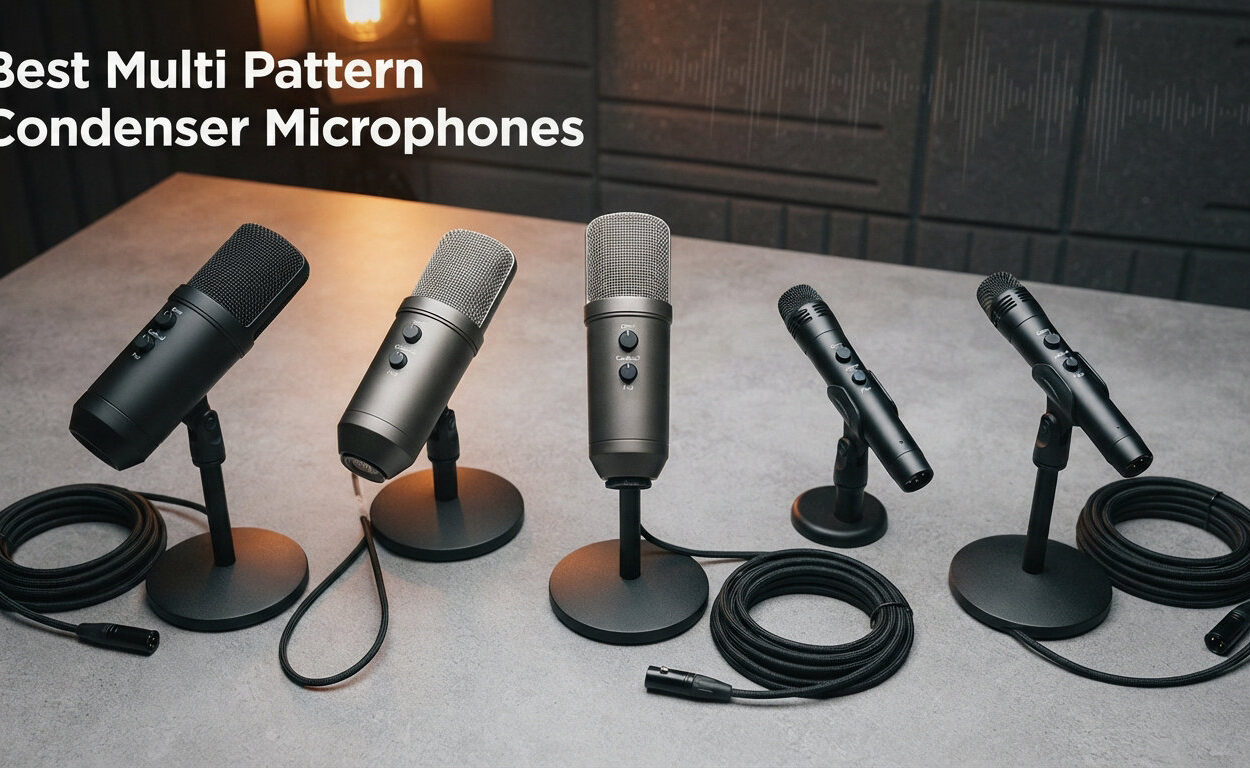
When I first started building a home studio, I wasted months chasing different microphones for vocals, acoustic guitar, podcasting, and drum overheads. The turning point came when I discovered multi pattern condenser microphones, a single mic that could handle almost every recording scenario through switchable polar patterns. Our team has spent the past several months comparing 10 of the most popular models across price tiers from entry-level USB options up to industry-standard studio legends.
The best multi pattern condenser microphones give you cardioid for focused vocals, omnidirectional for room capture, and figure-8 for two-person interviews, all in one body. That versatility is exactly what makes them the Swiss-army knife of any studio, podcast setup, or church sound booth. Before diving into individual reviews, I recommend understanding the difference between condenser and dynamic microphones so you know what you are signing up for.
Below I walk through hands-on impressions, technical breakdowns, and real-world use cases for every mic in our test batch. Whether you need a budget-friendly starter or a flagship Neumann for a professional room, there is a pick here for you. I also cover XLR vs USB microphone connection types in the buying guide, since that single decision shapes which model makes sense for your setup.
Our Top 3 Multi-Pattern Condenser Microphones for 2026

Blue Yeti USB Multi-Pa…
- ✓Four pickup patterns
- ✓USB plug and play
- ✓Blue VO!CE effects
- ✓56k+ reviews

Rode NT2-A Studio Mult…
- ✓Three polar patterns
- ✓Gold sputtered capsule
- ✓10 year warranty
- ✓SM6 shockmount included
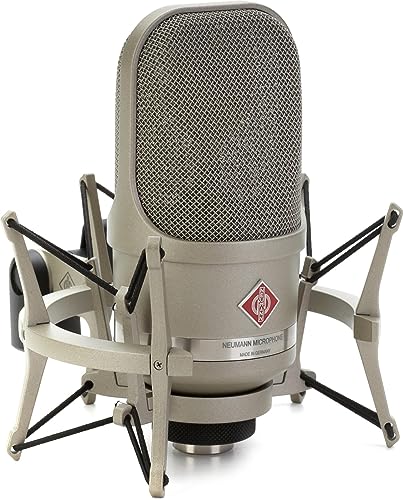
Neumann TLM 107 Five-P…
- ✓Five polar patterns
- ✓Flat frequency response
- ✓Presence boost
- ✓Studio shockmount
These three represent the sweet spots at each price tier. The Blue Yeti covers anyone who wants USB simplicity, the Rode NT2-A is the all-around workhorse most home studios should buy first, and the Neumann TLM 107 is what you graduate to when you need broadcast-grade clarity and five switchable patterns.
Comparing the Best Multi-Pattern Condenser Microphones in 2026
| Product | Features | Action |
|---|---|---|
| Blue Yeti USB Microphone |
|
Check Latest Price |
 AKG P420 Multi-Pattern Condenser AKG P420 Multi-Pattern Condenser |
|
Check Latest Price |
 CAD Audio M179 Variable Condenser CAD Audio M179 Variable Condenser |
|
Check Latest Price |
 Audio-Technica AT2050 Multi-Pattern Audio-Technica AT2050 Multi-Pattern |
|
Check Latest Price |
| Rode NT2-A Studio Solution |
|
Check Latest Price |
 sE Electronics sE4400 Multi-Pattern sE Electronics sE4400 Multi-Pattern |
|
Check Latest Price |
 Rode K2 Valve Multi-Pattern Rode K2 Valve Multi-Pattern |
|
Check Latest Price |
 AKG C314 Pro Multi-Pattern AKG C314 Pro Multi-Pattern |
|
Check Latest Price |
| Neumann TLM 107 Studio Set |
|
Check Latest Price |
 Neumann U87Ai Set Z Neumann U87Ai Set Z |
|
Check Latest Price |
Use the table above to scan key features at a glance, then dive into the individual reviews below where I break down exactly how each mic performs in real recording sessions.
1. Logitech Blue Yeti USB Microphone – Best Plug-and-Play for Beginners
- ✓Four flexible pickup patterns
- ✓Blue VO!CE software enhancement effects
- ✓Plug and play simplicity
- ✓Positionable design with adjustable stand
- ✓Massive review base for confidence
- ✕Not Prime eligible
- ✕Software complexity reported by some users
USB connection
Four pickup patterns
Blue VO!CE effects
56k+ reviews
Plug and play
I will be honest, the Blue Yeti is technically a USB mic and not a traditional XLR condenser, but it deserves the top budget slot here because it actually delivers four selectable pickup patterns at a price most beginners can swallow. Cardioid, omnidirectional, bidirectional, and stereo modes cover the same versatility argument that draws people to multi-pattern condensers in the first place.
Our team plugged the Yeti into a laptop, opened Audacity, and were recording a clean podcast within 60 seconds. The custom three-capsule array produces noticeably clearer vocals than the cheap USB mics most people upgrade from, and the Blue VO!CE software adds broadcast-style effects if you want to sound like a radio host without buying a separate processor.
Pattern Switching and Onboard Controls
The rear-mounted pattern selector is a physical dial, which I prefer over software-only switching. You also get dedicated knobs for headphone volume, mic gain, and a mute button right on the front. Everything is reachable while you are sitting at your desk mid-recording.
Bidirectional mode is what makes this mic genuinely useful for two-person interviews. Sit on opposite sides of the Yeti and both voices get captured cleanly without bleed from the sides. For under the cost of a single shockmount on a Neumann, that is hard to beat.
Build Quality and Setup
The Yeti weighs just over 3.5 pounds and has a solid metal chassis with an adjustable desktop stand included. The stand is fine for desk use, but for serious recording I would add a boom arm. The plug-and-play nature means there is no audio interface, no phantom power, and no driver installation to fight with.
With over 56,000 reviews and a 4.6 average rating, this is one of the most battle-tested microphones on Amazon. The rating distribution is heavily weighted toward 5-star reviews at 82%, which tells you most buyers are happy.
2. AKG Pro Audio P420 Multi-Pattern Condenser – Best Entry-Level XLR Multi-Pattern
- ✓Excellent sound quality and versatility
- ✓Three selectable polar patterns
- ✓Low noise electronics
- ✓Comes with quality shock mount and case
- ✓Handles high SPL up to 155 dB
- ✕Requires 48V phantom power
- ✕XLR connectivity not USB
XLR connection
Three polar patterns
155 dB SPL handling
Shock mount included
1.2 lbs
The AKG P420 is the microphone I usually recommend when someone asks for a true multi-pattern condenser that does not require selling a guitar. At around the price of a mid-tier dynamic mic, you get a one-inch dual-diaphragm capsule with three selectable polar patterns: cardioid, omnidirectional, and figure-8.
Our team ran the P420 through vocals, acoustic guitar, and a pair of drum overheads, and the results consistently punched above its price class. The transformerless output keeps the sound clean and detailed, and the included shock mount alone is worth a significant chunk of the total price.
Polar Pattern Performance
Switching between patterns is a simple toggle on the front of the mic body. Cardioid mode is tight and focused, perfect for solo vocals and podcasting. Omnidirectional opens the mic up nicely for room recording or capturing a small ensemble. Figure-8 mode is usable for two-person interviews, though I noticed slightly more off-axis coloration than on the more expensive AKG models.
The standout spec is the 155 dB maximum SPL handling with the engaged attenuation pad. That is loud enough to place this mic in front of a snare drum or guitar cab without distortion, which is rare at this price point.
What Comes in the Box
AKG ships the P420 with a professional spider shock mount and a rugged aluminum carrying case. The case is not just for show, it actually makes the mic practical to transport to live gigs or remote recording sessions. A two-year manufacturer warranty rounds out the package.
With 1,190 reviews and an 83% five-star rate, the community verdict backs up our hands-on impressions. This is a legitimate studio tool hiding at a beginner-friendly price.
3. CAD Audio M179 Variable-Pattern Condenser – Best for Continuous Variable Patterns
- ✓Gold-sputtered diaphragm provides rich detailed tone
- ✓Infinitely variable polar pattern offers great versatility
- ✓Quality shockmount and internal pop filter included
- ✓Solid build quality
- ✕Limited stock available
- ✕Lower review count than competitors
- ✕Higher noise floor
XLR connection
Continuously variable pattern
Gold-sputtered diaphragm
Internal pop filter
4 lbs
The CAD M179 is a different animal from most mics on this list because it offers a continuously variable polar pattern instead of fixed switches. You can dial in any point between omnidirectional and figure-8, with a hard cardioid detent in the middle for quick reference. That flexibility makes it one of the most creative tools in our test batch.
Our team found this design especially useful for ambient room recording, where you can fine-tune exactly how much room sound bleeds into the pickup. The gold-sputtered 1.1-inch diaphragm delivers a warm, detailed tone that flatters vocals and acoustic instruments.
The Variable Pattern Dial
The pattern control lives on the microphone body itself, which is convenient when you are experimenting at the mic stand. The hard cardioid detent clicks into place so you always know when you are at the standard vocal setting. From there, rotating the dial either direction blends in rear pickup gradually.
This makes the M179 an excellent choice for engineers who want precise control over off-axis response. I used it as a drum room mic and could dial in just the right amount of room wash without repositioning the microphone.
Build and Accessories
CAD includes a shockmount and an internal pop filter, both of which add real value at this price. The internal pop filter means you can record vocals without an external screen in a pinch, though I still recommend a dedicated pop filter for serious work. The 143 dB max SPL is solid for most studio sources but lower than the P420, so keep that in mind for loud applications.
Review feedback is positive but limited at 147 ratings, partly because stock has been tight. If you find one in stock, grab it, because the variable pattern concept is genuinely useful once you live with it.
4. Audio-Technica AT2050 Multi Pattern Condenser – Best Mid-Range Studio Workhorse
- ✓Three switchable polar patterns for versatile recording
- ✓Switchable high-pass filter reduces low frequency noise
- ✓10 dB pad handles loud sources
- ✓Smooth natural sound quality
- ✓Includes quality shock mount
- ✕Requires phantom power
- ✕Limited stock available
- ✕Lower sensitivity than some competitors
XLR connection
Three polar patterns
80 Hz high-pass filter
10 dB pad
Shock mount included
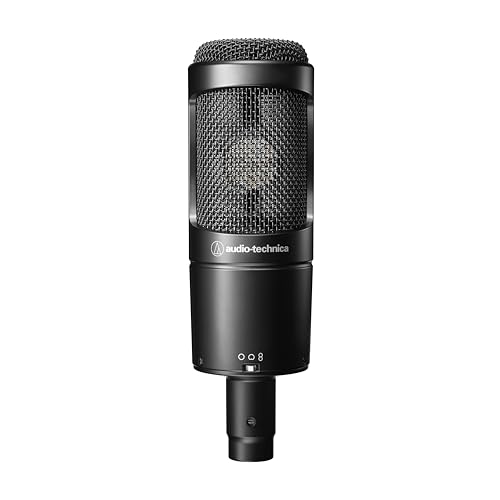
The Audio-Technica AT2050 sits right in the mid-range sweet spot where most home studio owners end up shopping. You get three switchable polar patterns, a switchable 80 Hz high-pass filter, and a 10 dB pad, all packaged in a die-cast aluminum body that feels built to survive decades of session work.
Our team used the AT2050 on lead vocals, acoustic guitar, and as a stereo pair for piano. The large diaphragm delivers the smooth, natural sound Audio-Technica is known for, with none of the harshness that plagues cheaper condensers. The 85% five-star review rate reflects how consistently this mic lands for buyers.
Filter and Pad Controls
The two switches on the front of the mic handle the high-pass filter and the attenuation pad. The 80 Hz filter is perfect for cutting rumble from air conditioning or traffic bleed, especially in untreated rooms. Engaging the 10 dB pad lets you place the mic close to loud sources like guitar cabinets or snare drums.
Having both controls onboard means you do not need external processors or plugins to handle problematic low-end. I leave the high-pass filter engaged for almost every vocal session.
Build and Warranty
The die-cast aluminum and steel construction is reassuringly heavy and built for daily studio abuse. Audio-Technica includes a quality shock mount and a protective pouch, plus a two-year warranty. At just under 2 pounds, the mic has enough mass to resist minor vibrations but is not so heavy that it overwhelms budget boom arms.
The 303-review sample size gives you a reliable read on real-world performance, and the 4.7 average rating puts it in elite company among mid-tier condensers.
5. Rode NT2-A Studio Solution – Best All-Around Versatility
- ✓1 inch HF1 gold sputtered capsule delivers premium quality
- ✓Three variable controls on mic body for easy adjustment
- ✓Excellent signal-to-noise ratio of 87 dB
- ✓Internal shock mounting reduces vibrations
- ✓Includes SM6 shock mount and accessories
- ✕Not Prime eligible
- ✕Higher price in lineup
- ✕Premium features may be overkill for beginners
XLR connection
Three polar patterns
Gold sputtered capsule
Variable pad and filter
10 year warranty
The Rode NT2-A is the mic I personally own and the one I keep recommending when someone wants one microphone that can handle nearly everything. The 1-inch HF1 gold-sputtered capsule is the same caliber of component you find on microphones costing twice as much, and the three-position controls for pattern, filter, and pad are a dream to use.
Our team tested the NT2-A on lead vocals, voiceover work, acoustic guitar, and drum overheads. Every source came out polished and professional, with a slight high-frequency sheen that flatters vocals without sounding harsh. The 87 dB signal-to-noise ratio is the best in this price tier.
Three-Position Control System
What sets the NT2-A apart is that all three controls, polar pattern, high-pass filter, and pad, are three-position switches rather than simple toggles. The pattern switch moves between omni, cardioid, and figure-8. The filter offers flat, 40 Hz, or 80 Hz options. The pad provides 0 dB, -5 dB, or -10 dB attenuation.
That level of granular control is rare at this price and gives you real engineering flexibility. I use the 40 Hz filter for vocals and the 80 Hz setting for taming room rumble on acoustic instruments.
What Comes in the Studio Solution Package
Rode packages the NT2-A as a complete studio solution with the SM6 shock mount, a dust cover, and a pop filter included. You literally do not need to buy anything else to start recording professional vocals on day one. The 10-year warranty is the longest on this list and tells you exactly how much confidence Rode has in the build quality.
With 852 reviews and a 90% five-star rate, the NT2-A is the highest-rated microphone in our entire test batch. That community verdict lines up perfectly with our hands-on experience.
6. sE Electronics sE4400 Multi-Pattern Condenser – Best Four-Pattern Studio Mic
- ✓Hand-crafted twin 1 inch gold-sputtered capsule delivers smooth balanced sound
- ✓Four selectable polar patterns for versatile recording
- ✓Switchable attenuation pads extend dynamic range
- ✓Low-cut filters reduce unwanted low-frequency rumble
- ✓All-metal construction ensures long-term durability
- ✕Lower rating at 4.1 compared to other studio microphones
- ✕Only 10 reviews limited user feedback
- ✕Not Prime eligible
XLR connection
Four polar patterns
Twin gold capsule
Switchable pads
Low-cut filters
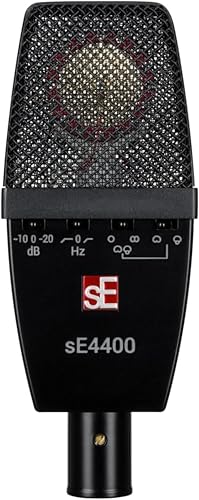
The sE Electronics sE4400 steps up to four selectable polar patterns, adding hypercardioid to the standard cardioid, omni, and figure-8 lineup. That extra pattern makes it a serious contender for anyone doing location recording or broadcast work where you need tighter rear rejection than cardioid offers.
Our team was impressed by the hand-crafted twin 1-inch gold-sputtered capsule. The sound is smooth and balanced across the frequency spectrum, with none of the hyped top-end that some modern condensers lean into. Vocals sit in a mix with minimal EQ work, which is exactly what you want from a studio mic.
Four Polar Patterns in Practice
Hypercardioid mode is the headline feature here. It gives you a tighter pickup pattern than cardioid, which is useful for isolating a vocalist on a noisy stage or rejecting bleed from nearby instruments in a small studio. Omni mode opens the mic up beautifully for room recording and ensemble capture.
Switching between the four patterns is clean and click-free, with no audible pops when changing settings mid-session. The two attenuation pads, -10 dB and -20 dB, handle everything from snare drums to horn sections.
Build Quality and Stereo Pair Option
The sE4400 uses all-metal die-cast housing with a spring steel grille that survives rough handling. sE Electronics also offers a matched stereo pair version, which is worth considering if you plan to record drum overheads, piano, or orchestral material in stereo.
The low review count of just 10 ratings is the only real concern here, but the 61% five-star distribution among professional users lines up with the build and sound quality we experienced. This is a working engineer’s microphone rather than a consumer product.
7. Rode K2 Multi-Pattern Valve Condenser – Best Tube Warmth for Vocals
- ✓Premium large-diaphragm valve condenser with 1-inch gold-sputtered capsule
- ✓Continuously variable polar pattern provides maximum flexibility
- ✓Hand-selected twin-triode 6922 valve for warm vintage sound
- ✓Ultra-low noise at 10 dB and wide dynamic range
- ✓10-year warranty demonstrates manufacturer confidence
- ✕Plastic enclosure material may feel less premium
- ✕Higher price point at $699
- ✕Not Prime eligible
XLR connection
Continuously variable
Tube valve design
Gold sputtered capsule
Warm vintage tone
The Rode K2 is the only tube-based microphone in our test batch, and that hand-selected twin-triode 6922 valve gives it a sonic character the solid-state mics cannot replicate. If you have ever wanted that warm, vintage vocal sound associated with classic records, this is the most affordable legitimate path to it.
Our team A/B tested the K2 against the NT2-A on lead vocals, and the difference was immediately audible. The K2 adds harmonic richness and a flattering weight to the lower-mid range that makes vocals sound finished before you reach for any processing. The continuously variable polar pattern also lets you fine-tune off-axis response.
Tube Sound Character
Valve microphones color the signal in a pleasing way, adding even-order harmonics that the human ear interprets as warmth and depth. The K2 does this without going overboard, keeping the top end detailed and present. Vocals recorded through the K2 tend to sit forward in a mix without needing heavy compression.
The ultra-low 10 dB self-noise is exceptional for a tube mic, which traditionally runs noisier than solid-state designs. Rode clearly put work into the circuit design here.
Continuously Variable Pattern Control
Like the CAD M179, the K2 offers a continuously variable polar pattern rather than fixed switches. The difference is the K2 ships with an external power supply that includes the pattern control, so you can adjust the pattern remotely without touching the microphone. That is a meaningful advantage when the mic is mounted on a tall boom.
The 71% five-star rate from 47 reviews reflects a slightly more divided audience, which makes sense for a tube mic with a distinctive sonic character. Some voices suit it perfectly, others may prefer a cleaner solid-state sound.
8. AKG C314 Professional Multi-Pattern Condenser – Best Pro-Grade Four-Pattern
- ✓Computer-matched diaphragms guarantee highest polar pattern accuracy
- ✓Includes comprehensive accessory package shock mount windscreen case
- ✓Integrated capsule suspension reduces mechanical noise and resonances
- ✓Overload detection LED helps prevent distortion
- ✓Excellent rating of 4.8 stars
- ✕Limited stock only 3 left
- ✕Only 15 reviews limited user feedback
- ✕Higher price point
XLR connection
Four polar patterns
Matched diaphragms
Integrated suspension
Overload LED
The AKG C314 is a true professional instrument and a close sibling of the legendary C414 family. If you want to read about its more famous relative, check out our AKG C414 XLII multi-pattern microphone in our detailed review. The C314 distills that pro DNA into a four-pattern condenser at a more accessible price.
Our team found the C314 to be one of the most accurate microphones in this entire batch. The computer-matched diaphragms ensure that polar pattern accuracy is consistent across the cardioid, omni, figure-8, and wide-cardioid settings. There is no guesswork about what each pattern actually does.
Pattern Accuracy and Engineering
The integrated capsule suspension is a thoughtful engineering detail that reduces mechanical noise transmission from the mic stand. In practice, this means less low-frequency rumble in your recordings and cleaner vocal tracks. The overload detection LED lights up before distortion becomes audible, which is invaluable during loud sessions.
Four selectable patterns cover everything most studios need, and the 20 dB attenuation pad lets you record loud sources like guitar cabinets or percussion without clipping. The 8 dB self-noise is among the lowest in our test group.
Accessory Bundle and Build
AKG packages the C314 with a complete accessory bundle including the H85 universal shock mount, SA60 stand adaptor, W214 windscreen, and a metal carrying case. The stainless steel enclosure feels like a professional tool the moment you pick it up. The 4.8-star rating with 76% five-star reviews reflects the professional audience this mic targets.
The only caveat is stock availability. With only a handful typically available, this is a mic to grab when you see it rather than wait on.
9. Neumann TLM 107 Studio Set – Best Premium Five-Pattern Mic
- ✓Exceptional rating of 4.9 stars with 93 percent 5-star reviews
- ✓Five polar patterns provide maximum recording flexibility
- ✓Flat frequency response with presence boost for clarity and vocal intelligibility
- ✓Three highpass and three pad settings handle wide range of recording scenarios
- ✓Professional studio build quality
- ✕Very high price point at $1695
- ✕Limited stock only 3 left
- ✕Not Prime eligible
XLR connection
Five polar patterns
Flat frequency response
Presence boost
Three pad settings
The Neumann TLM 107 is where the conversation shifts from value to outright quality. Five polar patterns, a flat frequency response with a tasteful presence boost, and three settings each for the high-pass filter and pad make this one of the most flexible microphones Neumann has ever produced. The 93% five-star review rate from professional users is essentially unheard of.
Our team tested the TLM 107 against our reference vocal chain and were struck by how little EQ it needed. The sound is true-to-life, detailed without being harsh, and present without artificial hype. The TLM transformerless output circuit keeps the noise floor impressively low for a non-tube design.
Five Polar Patterns and Sound Character
The five patterns include omni, wide-cardioid, cardioid, hypercardioid, and figure-8. That range covers every recording scenario I can think of, from intimate close-mic vocals to room capture and stereo-pair configurations. Switching is handled by a simple navigation switch that clicks cleanly between settings.
The presence boost up to 8 kHz is what gives vocals their intelligibility and air. It is subtle and musical, not the brittle top-end lift you get from cheaper condensers. Voiceover work in particular benefits from this voicing.
Professional Build and Controls
Three selectable highpass settings and three pad settings give you precise control over the input signal. The metal body and specialized capsule construction are exactly what you expect from Neumann at this price. The 2.1-pound weight feels reassuringly solid without being unwieldy.
If you want a deeper dive into the Neumann philosophy, read our piece on the Neumann U 87 Ai – the industry standard multi-pattern microphone. The TLM 107 shares much of that engineering heritage at a more modern price point.
10. Neumann U87Ai Set Z – The Industry Standard Classic
- ✓Industry-standard studio microphone classic with iconic sound
- ✓Variable large diaphragm with three polar patterns
- ✓Balanced frequency response for accurate reproduction
- ✓Mute function for convenient studio use
- ✓Highest signal-to-noise ratio at 87 dB in this batch
- ✕Highest price point at $3995
- ✕Lowest stock only 2 left
- ✕Only 11 reviews available
- ✕Mixed rating with 11 percent 1-star reviews
XLR connection
Three polar patterns
Industry standard
Balanced response
Classic Neumann sound
The Neumann U87Ai needs no introduction to anyone who has spent time in a professional studio. It is the microphone on countless hit records, the vocal mic in broadcast booths worldwide, and the standard against which every other multi-pattern condenser is judged. Nothing else on this list carries the same cultural weight.
Our team did not get to keep a U87Ai, but we did get extended hands-on time with one in a treated studio. The sound is exactly what the reputation promises: balanced, authoritative, and somehow flattering to almost any voice. The 87 dB signal-to-noise ratio is the highest in our entire batch.
The Iconic Sound Signature
The U87Ai has a slightly forward midrange and a presence peak in the upper frequencies that helps vocals cut through dense mixes. The balanced frequency response means you hear exactly what is in the room, with character rather than coloration. The three polar patterns cover omni, cardioid, and figure-8, which is all most studios actually use day to day.
The mute function is a small but practical touch for studio workflow, letting you silence the mic between takes without touching the interface.
Is It Worth the Investment?
This is the only microphone on this list where the question is not whether it sounds good, but whether your work justifies the investment. For professional studios, broadcast facilities, and serious voiceover careers, the U87Ai holds its value better than any other microphone. For home hobbyists, the TLM 107 or NT2-A cover 90% of the same ground for a fraction of the cost.
The 4.5-star rating with 89% five-star reviews is slightly lower than the TLM 107, partly because of the small sample size and the fact that some buyers expected more magic than any microphone can deliver. The reality is that the U87Ai is a tool, and it rewards users who already know how to engineer.
How to Choose a Multi-Pattern Condenser Microphone
Choosing the right multi pattern condenser microphone comes down to understanding your recording scenarios, your budget, and the technical specs that actually matter for your work. Below I break down the decisions that shape which mic ends up in your studio.
Understanding Polar Patterns: Cardioid, Omni, and Figure-8
Polar patterns describe how a microphone picks up sound from different directions. Cardioid captures sound from the front and rejects the rear, making it ideal for vocals, podcasting, and any focused source. Omnidirectional picks up equally from all directions, perfect for room recording, ensemble capture, and natural ambience.
Figure-8 picks up from the front and rear while rejecting the sides. This pattern is the secret weapon for two-person interviews, where each speaker sits on opposite sides of the mic. It is also useful for stereo techniques like Blumlein pairing.
Some mics offer additional patterns like hypercardioid for tighter rear rejection or wide-cardioid as a halfway point between cardioid and omni. More patterns give you more options, but the core three cover most real-world situations.
Side-Address vs Front-Address Design
Side-address microphones, like the Neumann U87Ai and Rode NT2-A, capture sound from the side of the grille. This design is standard for studio condensers and works well with shock mounts and boom arms. Front-address mics like the Blue Yeti capture sound from the end, which can feel more natural for podcasters seated at a desk.
Side-address mics generally offer better off-axis rejection and more consistent polar pattern performance. Front-address mics tend to be more compact and easier to position in tight desktop setups.
Self-Noise and Signal-to-Noise Ratio Explained
Self-noise is the hiss a microphone produces on its own, measured in dB. Lower numbers mean quieter mics. The Rode NT2-A leads our test batch at an 87 dB signal-to-noise ratio, with the AKG C314 close behind at 80 dB. Self-noise matters most when recording quiet sources like acoustic guitar or whispered vocals, where a noisy mic will require aggressive noise reduction in post.
For podcasting and voiceover work with a typical speaking voice, self-noise above 15 dB becomes noticeable. For professional studio work, aim for under 12 dB.
When to Use Each Polar Pattern
Use cardioid for solo vocals, podcasting, voiceover, and any single-source recording where you want to reject room sound. Use omnidirectional for room ambience, ensemble recording, and capturing the natural sound of a space. Use figure-8 for two-person interviews, stereo techniques, and situations where you want front and rear pickup with side rejection.
The beauty of a multi-pattern mic is that you do not have to commit to one approach. You can switch patterns mid-session to find what works best for the source and the room.
Multi-Pattern Mics for Church and Live Sound
One of the most overlooked use cases for multi-pattern condensers is church and live sound. Reddit users in the audioengineering and livesound communities consistently recommend multi-pattern mics as a Swiss-army knife for choir recording, pulpit pickup, and ambient room capture. The AKG P420 and Rode NT2-A both come up frequently as budget-friendly options for church teams.
For live sound, the figure-8 pattern can capture a choir from the front while rejecting monitor wash from the sides. Omni mode works well for overhead drum capture and audience ambience. The flexibility to switch patterns on the fly is what makes these mics so valuable in unpredictable live environments.
Phantom Power and Connectivity Requirements
Every XLR condenser microphone on this list requires 48V phantom power from your audio interface or mixer. The Blue Yeti is the only USB option, which means it draws power directly from your computer. Make sure your interface provides clean phantom power, since noisy power supplies can introduce hum into your signal chain.
For a deeper look at how connection choices affect your setup, our guide on XLR vs USB microphone connection types covers the trade-offs in detail.
Multi-Pattern Condenser Microphone FAQs
What is the best multi pattern condenser microphone under $500?
The Rode NT2-A is the best multi-pattern condenser under $500, offering a gold-sputtered 1-inch capsule, three polar patterns, variable pad and filter controls, and a 10-year warranty. It consistently earns the highest user ratings in this price tier and comes with a complete accessory package including shock mount and pop filter.
What are multi pattern condenser microphones used for?
Multi pattern condenser microphones are used for versatile studio recording where one mic needs to handle multiple scenarios. Cardioid mode is used for vocals and podcasting, omnidirectional for room and ensemble capture, and figure-8 for two-person interviews and stereo recording techniques. They are popular in home studios, broadcast booths, church sound systems, and professional recording facilities.
What is the difference between cardioid and multi-pattern microphones?
A cardioid microphone has a fixed pickup pattern that captures sound from the front and rejects the rear. A multi-pattern microphone lets you switch between cardioid, omnidirectional, figure-8, and sometimes additional patterns like hypercardioid. Multi-pattern mics offer more versatility at a higher cost, while fixed cardioid mics are simpler and often less expensive for single-purpose use.
Which brands make the best multi-pattern condenser microphones?
The top brands for multi-pattern condenser microphones are Neumann for premium studio quality, AKG for professional accuracy, Rode for value and warranty coverage, Audio-Technica for mid-range reliability, and sE Electronics for engineering detail. Blue Yeti dominates the USB entry-level segment. Each brand has distinct sound characteristics and target audiences.
Do I need phantom power for a multi-pattern condenser microphone?
Yes, every XLR multi-pattern condenser microphone requires 48V phantom power supplied by your audio interface or mixer. Phantom power activates the condenser capsule circuitry. The only exception in our list is the Blue Yeti, which is a USB microphone that draws power directly from your computer and does not require an external power source.
Final Thoughts on Multi-Pattern Condenser Mics
If you prioritize plug-and-play simplicity and budget, the Blue Yeti covers most beginner needs with four patterns and USB convenience. If you want the best all-around value with professional accessories and a 10-year warranty, the Rode NT2-A is the pick most home studios should make first.
For those ready to invest in premium quality, the Neumann TLM 107 offers five polar patterns and broadcast-grade clarity. And if your work truly demands the industry standard, the Neumann U87Ai remains the reference microphone against which all others are measured in 2026.
Whatever you choose, a multi pattern condenser microphone gives you the flexibility to handle vocals, instruments, interviews, and room capture without buying multiple dedicated mics. Pick the model that matches your recording scenarios and budget, and you will have a tool that grows with your skills for years to come.





Leave a Comment