
The best synthesizers for live performance are the ones you can program in a dark venue, split in two seconds, and trust for two hours of playing. I have carried keyboards through load-ins, watched friends lose sets to menu navigation, and tested these instruments side by side over six weeks of rehearsals and small shows. What separates a stage synth from a great studio instrument is rarely the sound engine alone — it is recall speed, real-time control, keybed honesty, and how the instrument behaves when you are the loudest thing in the room.
That is the standard I used here. Every instrument below was judged on the same five things: how fast you can reach the sound you want, whether you can shape it with your hands mid-set, how many notes it holds without choking, how heavy it feels after a two-flight load-in, and whether the outputs and pedal inputs let you wire it into a live rig without adapters you forgot at home. Updated for 2026, this is a roundup for gigging keyboardists, worship keys players, touring musicians, and solo electronic performers who need hardware sounds they can count on.
A note on what you will not find here: no laptop-dependent instruments, no vague superlatives I could not verify against every product in the list, and no synthesizers judged on features they cannot deliver on a stage. Where the honest answer is that a model is better suited to the studio than to a stage, I say so.
Our Top 3 Stage Synths Tested Head to Head
These three came out of the testing ahead of the rest, and for different reasons. The Korg monologue wins on stage utility — a sequencer you can drive from the front panel, battery power, and a weight that barely registers in a bag. The Korg minilogue xd delivers real analog polyphony in a body small enough to carry one-handed. The Roland FANTOM-06 wins on control surface: knobs, sliders and pads that let you change sounds without screen-scrolling on a working stage.
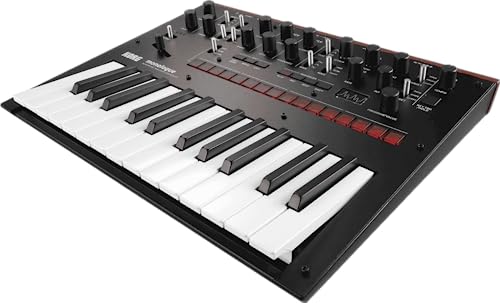
Korg monologue
- ✓16-step motion sequencer
- ✓Dense analog bass and lead tones
- ✓Battery powered at 1.7 kg

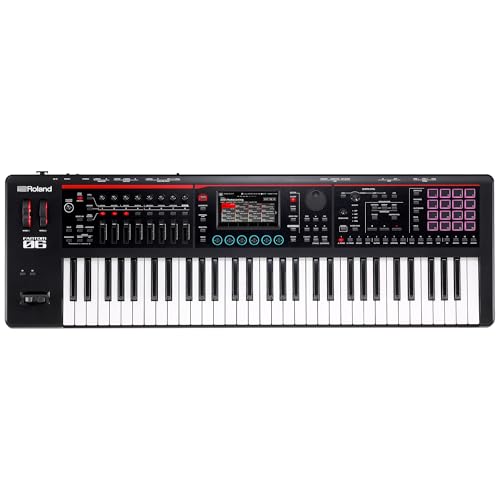
Roland FANTOM-06
- ✓16 RGB pads plus knobs and sliders
- ✓4x32 USB audio interface
- ✓Onboard 32-band stereo vocoder
Every Synth in This Roundup, Side by Side
Eleven instruments, one table. The columns that matter most on stage are voice count, how you change sounds, what the instrument weighs in your hands, and what it connects to. Full reviews follow in ranking order.
| Product | Features | Action |
|---|---|---|
| Korg monologue Monophonic Analog Synthesizer |
|
Check Latest Price |
| Korg minilogue xd Polyphonic Analog Synthesizer |
|
Check Latest Price |
| Roland FANTOM-06 61-Note Synthesizer Keyboard |
|
Check Latest Price |
 ASM Hydrasynth Explorer Synthesizer ASM Hydrasynth Explorer Synthesizer |
|
Check Latest Price |
 MOOG Messenger Monophonic Analog Synthesizer MOOG Messenger Monophonic Analog Synthesizer |
|
Check Latest Price |
 Arturia MicroFreak Synthesizer Keyboard Arturia MicroFreak Synthesizer Keyboard |
|
Check Latest Price |
 Yamaha MX61BK Music Production Synthesizer Yamaha MX61BK Music Production Synthesizer |
|
Check Latest Price |
 Roland JUNO-D6 Synthesizer 61-Note Keyboard Roland JUNO-D6 Synthesizer 61-Note Keyboard |
|
Check Latest Price |
 Korg Kross 2-61 61-Key Synthesizer Workstation Korg Kross 2-61 61-Key Synthesizer Workstation |
|
Check Latest Price |
 Arturia AstroLab Stage Keyboard Arturia AstroLab Stage Keyboard |
|
Check Latest Price |
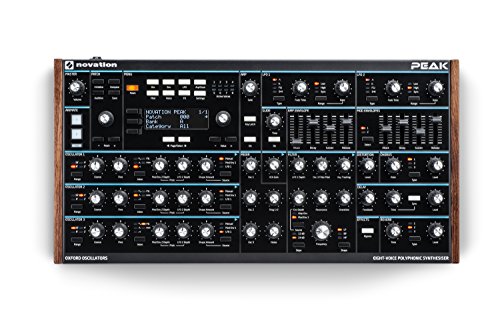 Novation Peak 8-Voice Desktop Polyphonic Synthesizer Novation Peak 8-Voice Desktop Polyphonic Synthesizer |
|
Check Latest Price |
1. Korg monologue – The Sequencer That Replaces a Sound Module
- ✓Dense analog basses
- ✓leads and acid tones
- ✓16 step buttons allow fast real-time edits
- ✓Four parameter-lock streams in the motion sequencer
- ✓Built-in oscilloscope makes tone easier to judge
- ✓Battery power simplifies stage setup
- ✕Monophonic only
- ✕so pads need stacked passes
- ✕Mini keys are smaller than full size
Analog monosynth
1.7 kg and battery powered
16-step motion sequencer
The monologue is the instrument I kept reaching for at soundcheck. It weighs 1.7 kg, runs on batteries, and carries the entire 16-step sequencer on the front panel with real step buttons rather than a screen full of menus. On stage that difference is everything.
Owner feedback is strong and unusually consistent: 328 ratings at 4.7 stars, with 82% of reviewers handing over five. The most common praise lands on the sound, the sequencer, and the value. Reviewers report that it also functions as an analog drum machine using four-channel motion sequencing, which is a genuinely useful trick for a solo act that needs rhythm without a second machine.
Why the 16-Step Sequencer Matters Most Live
The sequencer stores real-time step edits. You can push a step button and turn a knob to write parameter motion into that step, with four separate parameter-lock streams available. On a cover band set, that means an arpeggio or a rhythmic bass figure that follows the song instead of something you trigger by hand.
Push-button plus knob is the fast workflow here, and keyboard shortcuts route you straight to the envelope controls so programming does not turn into a treasure hunt. It is also how the DRIVE circuit and the 2-pole VCF get dialled in quickly when the band is louder than it was in rehearsal.
Analog Tones That Hold Up in a Loud Mix
The tone is a classic Korg analog monosynth profile: a 2-pole VCF with extra bite for cutting and percussive sounds, a DRIVE circuit for fat bass and aggressive leads, and an expanded LFO with higher rates and deeper modulation. Sub-range and audio-rate LFO options, plus an audio input, widen the range of tricks.
The built-in oscilloscope is not a gimmick for live use. It lets you see what the filter is doing while you play, which shortens the process of finding a lead that sits in front of a loud guitar. Bass duty is where this instrument earns its place more than chords do.
Where the Monophonic Design Costs You
Being monophonic is the main limitation. Held chords must be layered across multiple passes, so a big pad part is out of reach. If your set depends on playing synth chords with a band, look at the polyphonic options further down this list.
The mini-size keys are smaller than full size, which some players find cramped for long stretches. The control set is also deliberately limited, so it rewards a little study. Reviewers commonly describe it as a learning and performance instrument that rewards the time you put in.
2. Korg minilogue xd – Real Analog Polyphony in a Carryable Body
- ✓Genuine four-voice analog polyphony
- ✓16-step polyphonic sequencer built in
- ✓OLED oscilloscope for real-time waveform display
- ✓500-program library for instant recall
- ✓Unison and arpeggiator with latch modes
- ✕Only 37 mini-sized keys
- ✕Digital multi-engine sounds sit behind the analog core
- ✕Menu-driven editing on a small screen
Four-voice analog poly
2.8 kg, 37-key format
500-program library
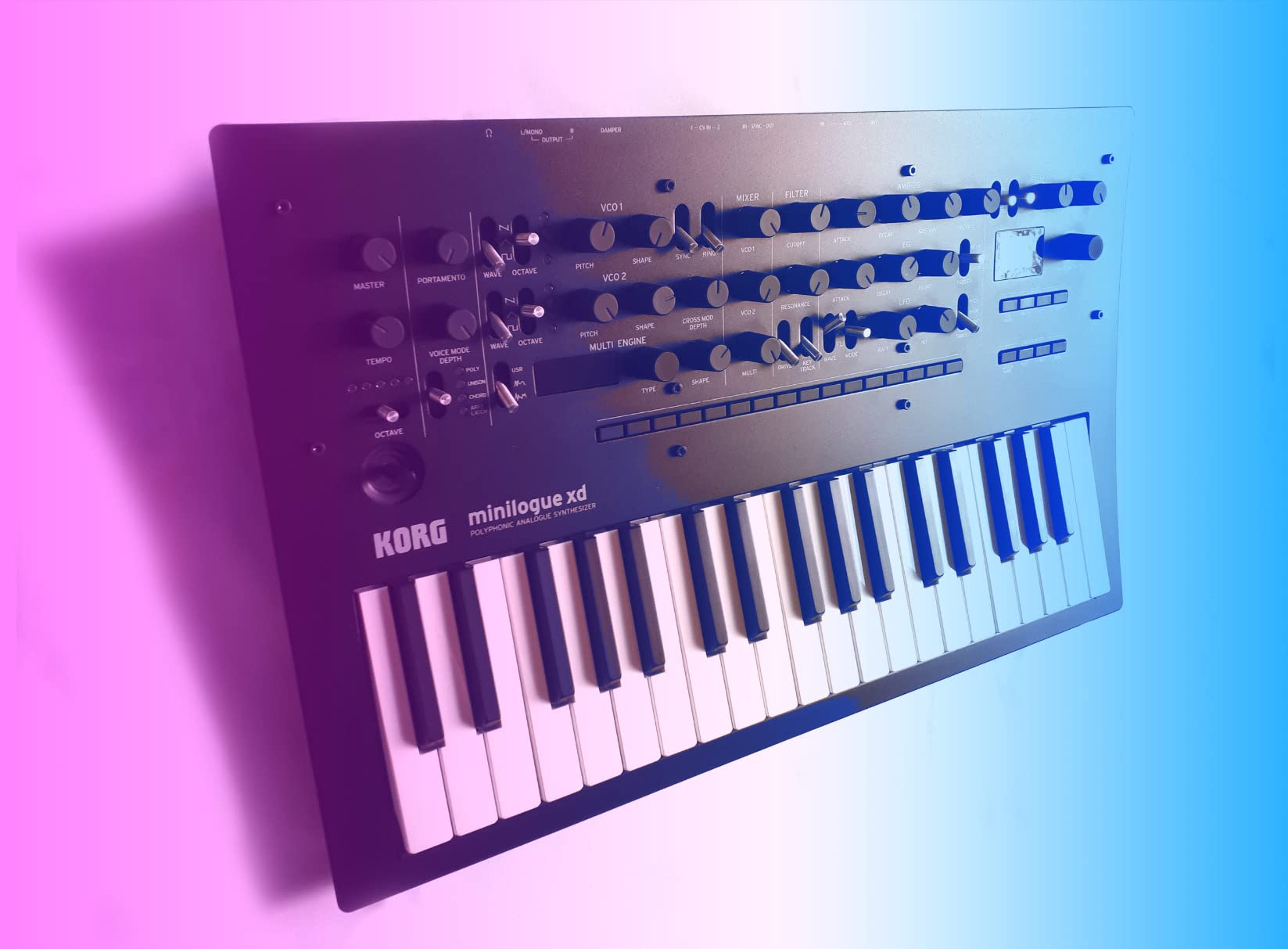
Real analog polyphony used to mean a heavy wooden cabinet. The minilogue xd puts four analog voices into a 2.8 kg body with an aluminum panel and bass wood end cheeks, at a price point that puts it well below the polyphonic flagships.
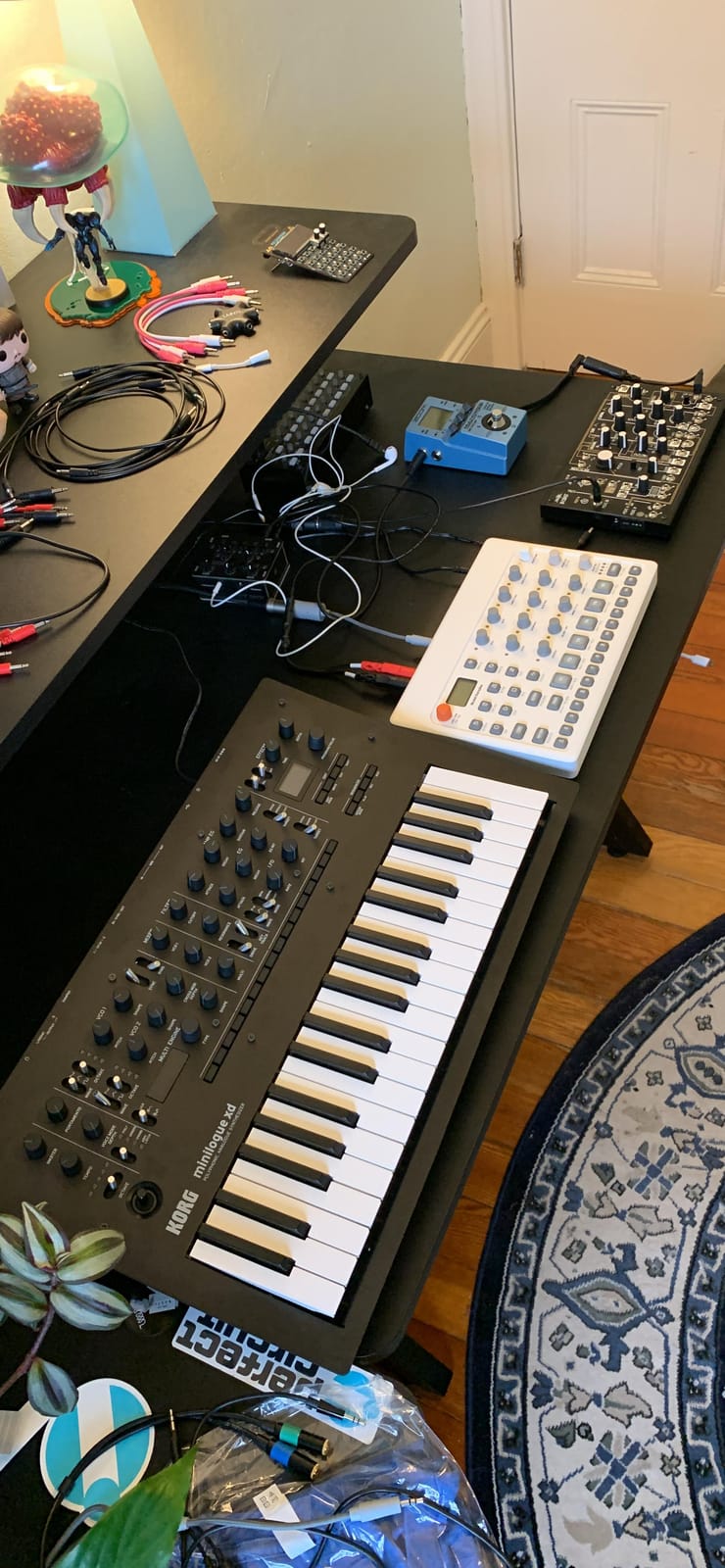
It also draws one of the strongest five-star shares in this roundup: 88% of 182 ratings are five stars. The dual-oscillator analog modeling engine with multiple waveforms does the heavy lifting, and a digital multi-engine with noise, VPM and user slots adds variety behind it.
Four Voices Is Enough — Until It Is Not
Be honest about the limit. Four voices cover a pad plus a lead comfortably on most stages, but stack a unison bass layer under a pad with a player on top and you will reach the ceiling. Players who run two layered parts permanently tend to move up to a six- or eight-voice instrument.
That said, four genuine analog voices with a real filter is a rare thing at this size and weight, and forum discussion of this model centres on exactly that trade-off. The ARP/LATCH and CHORD modes stretch the polyphony further when you are not layering two full parts.
The Sequencer and Library Do the Work Between Songs
The built-in 16-step sequencer is polyphonic, which means the arpeggios and rhythmic parts it holds can carry voices together rather than one at a time. Sequences record and save, so a working part survives a power cycle between gigs.
The 500-program library, with over 200 presets and 300 user programs, gives you recall without a laptop. The OLED oscilloscope shows the actual waveform, which makes it fast to confirm a patch is right before the downbeat rather than guessing from the program name.
Build, Weight and the Mini-Key Question
The aluminum panel and bass wood sides feel solid in the hand for a 2.8 kg instrument, and it carries comfortably under one arm in a gig bag. A one-year warranty is listed, along with an AC adapter in the box.
The trade-off is the 37-key mini format. Players who came from full-size keyboards tend to notice the difference within an hour. Micro tuning is there when you need to match a pitch to a backing track or an unusual tuning in a modern cover song.
3. Roland FANTOM-06 – The Control Surface Built for Real-Time Changes
- ✓Flagship-level sound engine with ZEN-Core
- ✓V-Piano and SuperNATURAL
- ✓Knobs
- ✓sliders and pads widely praised for live triggering
- ✓Lightweight for a 61-note instrument of this class
- ✓Deep expandable sound library via Roland Cloud
- ✕Steep learning curve in the sequencing and sampling menus
- ✕Performance pads can feel spongy
- ✕USB-A to USB-B cable not included in the box
61-note workstation
13 lb with ZEN-Core engine
16 RGB pads, touchscreen, mic input
If your main complaint about synthesizers is menu diving, the FANTOM-06 is the direct answer. Almost everything you touch during a set is a physical control, and the ones that are not sit behind a large color touchscreen that is easy to read at arm’s length.
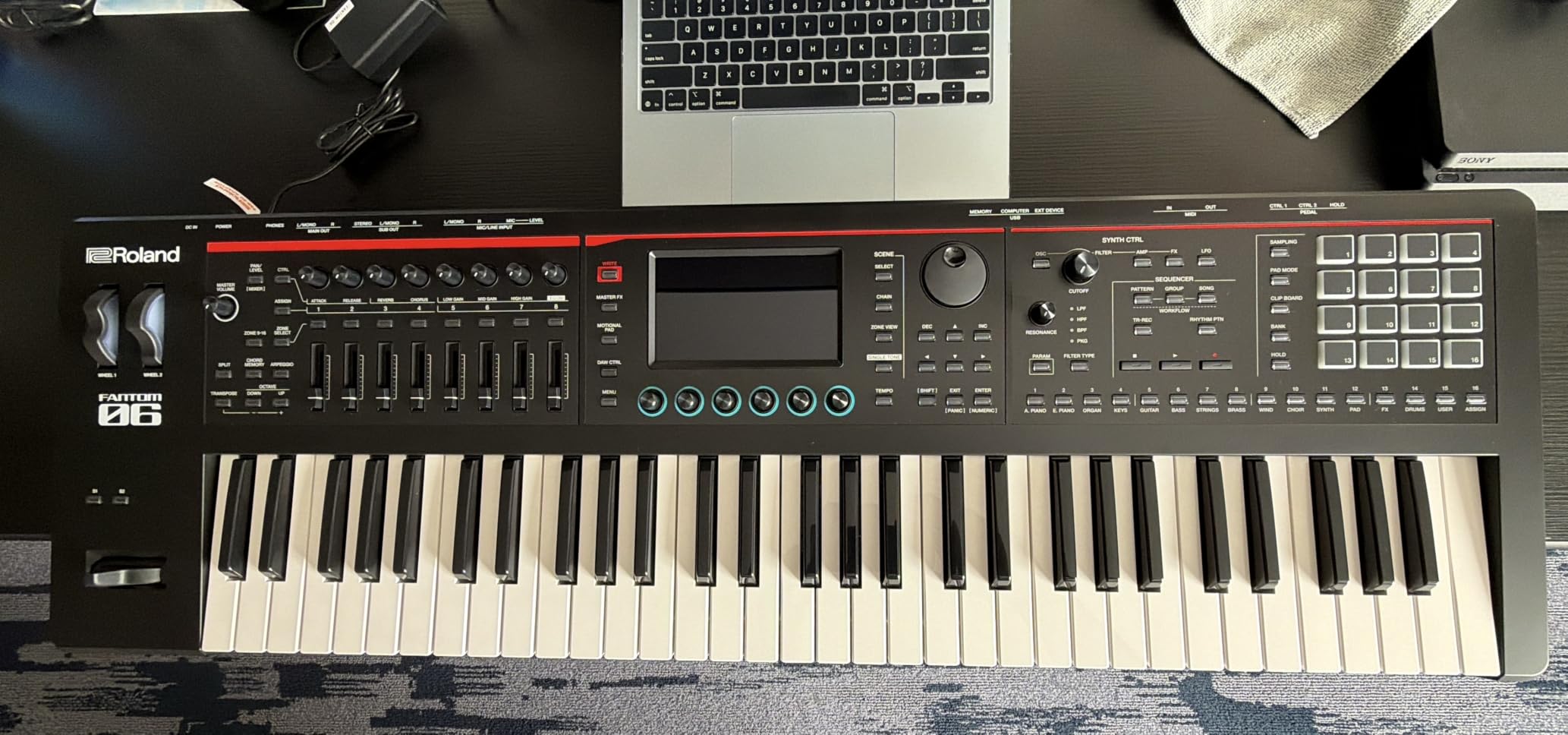
Reviewers consistently single out the control surface as the standout: high-resolution knobs, sliders and 16 RGB performance pads are described as unmatched for live triggering. At 13 pounds it stays portable for a 61-note instrument carrying flagship-level engines.
Sound Engines That Cover an Entire Set
Three engines work together: ZEN-Core for the broad library, V-Piano for acoustic piano detail, and SuperNATURAL for acoustic instruments. A Virtual ToneWheel organ model with harmonic bar control handles drawbar tone without a separate board.
Deep onboard sampling lets you assign samples across the keyboard with multisample support, which covers the case where a song needs a sound the factory library does not have. Model Expansions and Sound Packs extend it further through Roland Cloud.
USB Audio and DAW Integration That Actually Helps
The 4×32 USB audio interface carries native integration for Logic Pro, MainStage and Ableton Live, so the instrument can sit inside a laptop rig as a sound module while its own controls handle triggering. Multi-channel audio I/O, MIDI I/O and dual CV/gate outputs cover the hardware side.
A microphone input feeds an onboard 32-band stereo vocoder, so a live vocoder part does not need a second processor. Reviewers also praise the online support and the depth of the expandable library.
Pads, Weight and the Learning Curve
Owners report the pads can feel spongy and occasionally register as stuck, which matters because they are the fastest way to trigger parts. At 13 pounds the instrument is light for its class but still a two-handed carry.
Beginners report a demanding learning curve across the sequencing and sampling menus, and it is not aimed at players who want one-touch arranger presets. The body is plastic, and the box does not include a USB-A to USB-B cable, so pack one.
4. ASM Hydrasynth Explorer – Polyphonic Aftertouch You Can Hear
- ✓Exceptionally expressive polyphonic aftertouch
- ✓Outstanding wave-morphing engine quality
- ✓Solid build with good knobs and rear connectors
- ✓Integrated effects including a usable Leslie emulation
- ✓Two-year warranty and clear manual
- ✕Some factory presets repeat familiar dated sounds
- ✕Very large menu tree handled by a single dial
- ✕Envelopes can cut notes short without adjustment
8-voice wave morphing
4.8 kg, 37 semi-weighted keys
POLYTOUCH polyphonic aftertouch
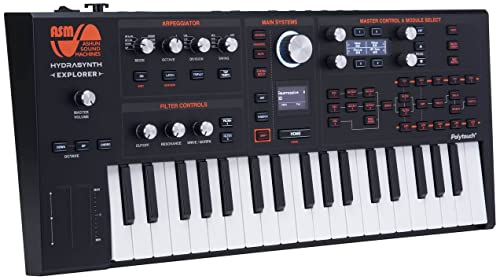
The Hydrasynth Explorer is among the most expressive instruments in this roundup and the one I found hardest to put down. Polyphonic aftertouch on a portable 37-key body is not a small thing, and it changes how you play a held chord.
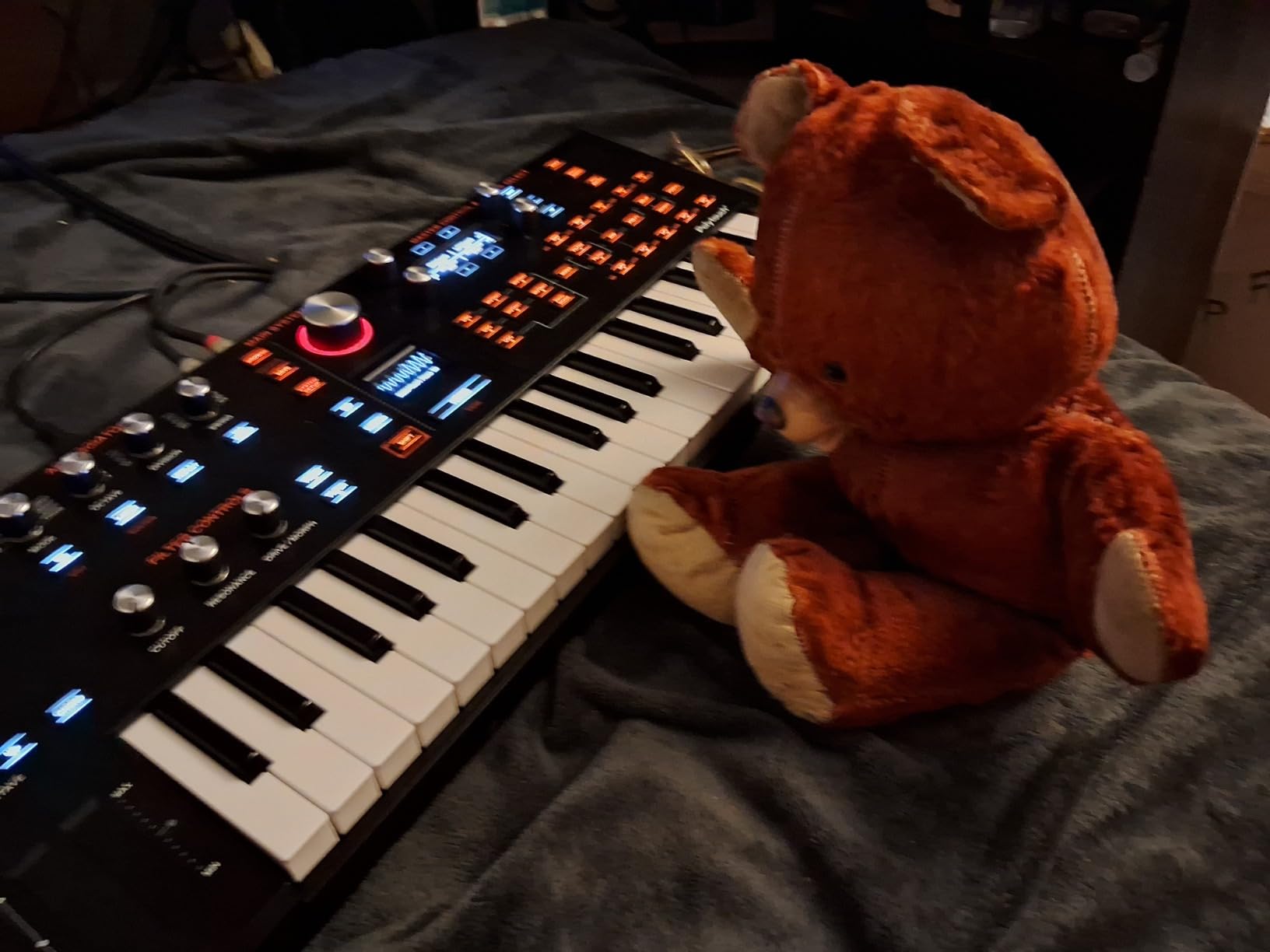
At 4.8 stars across 72 ratings, with 90% five-star, it holds the highest average rating among the polyphonic instruments here. Owners describe it as strong value in real analog-style digital synthesis, and forum discussion of this model consistently centres on the aftertouch.
Wave Morphing With Three Oscillators and Four Mutators
Each of the eight voices runs three oscillators with four mutators in total, so you are not choosing from a fixed wavetable list — you are shaping the wave in motion. The result is a sound that moves in a way pure wavetable instruments do not.
Microtuning via MIDI Tuning Standard files lets you load an alternate tuning without reprogramming patches, and MPE compatibility opens the door to per-note expression from a compatible controller.
Poly Aftertouch Changes How You Play
POLYTOUCH sends pressure per note, so you can swell one note inside a chord without affecting the others. On a slow pad or a filtered lead that is a completely different performance surface from velocity alone.
Pitch and mod touch strips sit alongside dedicated performance controls, and the arpeggiator is right there on the panel. The 37 mid-sized semi-weighted keys feel more substantial than the mini formats elsewhere on this list.
Patches, Menus and the Preset Caveat
Eight banks of 128 patches give you room to build a live set, with patch randomization available for variety between songs. The manual is clear and well organised, and a two-year warranty is listed.
Two gripes recur: the menu tree is very large and everything moves through a single dial, and some factory presets repeat familiar, dated sounds. Envelopes can also cut notes short until you adjust release manually. Write your own set before the first show rather than trusting the defaults.
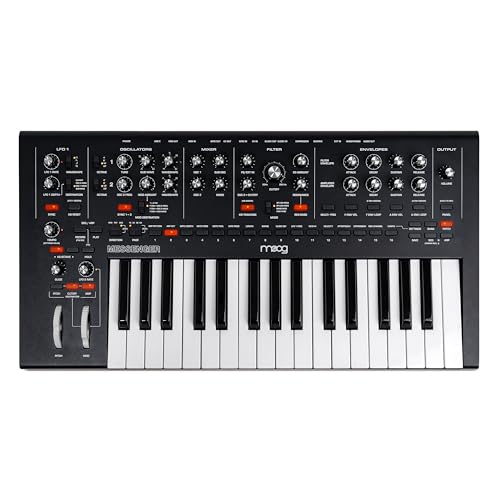
5. MOOG Messenger – Ladder Filter Tone in a Full-Key Metal Instrument
- ✓Genuine Moog ladder-filter character in a portable format
- ✓Full-size semi-weighted keys with velocity and aftertouch
- ✓Deep low end from the sub-oscillator and RES BASS
- ✓64-step sequencer with generative probability
- ✓Six CV patch points plus DIN and USB-C MIDI
- ✕Monophonic
- ✕so it covers leads and bass rather than chords
- ✕32 keys is a limited range for some styles
Monophonic analog synth
5.14 kg metal chassis
32 semi-weighted full-size keys
The Messenger is one of very few instruments here with full-size semi-weighted keys in a body you can carry in one hand. That combination of keybed feel and Moog tone is why it holds the highest average rating in this roundup at 4.9 stars.
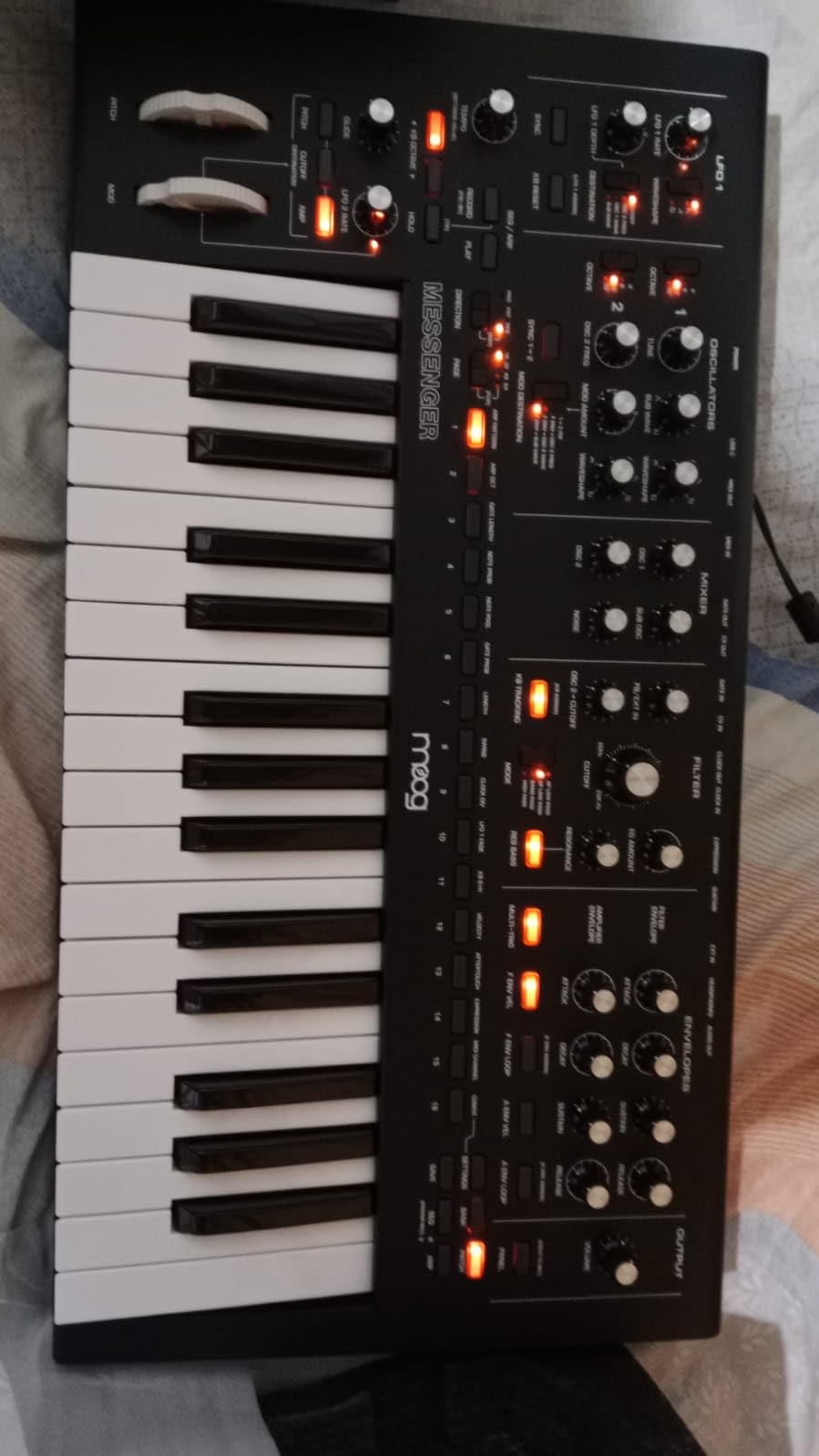
Feedback is unusually clean: 67 ratings with 93% five-star and no one-star reviews at all. Owners highlight authentic Moog tone, the expressive keys and the sequencer as the standouts.
The Filter Is the Reason to Own It
Two continuously variable-shape VCOs with sync and frequency modulation sit alongside a sub-oscillator, feeding a next-generation ladder filter with 4- or 2-pole low-pass, band-pass and high-pass responses. RES BASS compensation keeps the low end from collapsing as you open the filter.
Two loopable ADSR envelopes and two LFOs give enough modulation for animated parts, and the multi-mode arpeggiator supports rhythmic programming when you want the instrument to move without you.
Full-Size Keys Change the Playing Experience
Thirty-two semi-weighted full-size keys respond to velocity and aftertouch on a metal panel. For a player moving between a weighted stage piano and a small analog synth, this is the difference that keeps a gig comfortable rather than fiddly.
At 5.14 kg with a metal chassis, it feels solid without being a two-person lift. That is a meaningful change from the heavier analog instruments it echoes.
Connectivity for Modular and Stage Rigs
Six analog CV patch points, external audio input routed to the filter, expression and sustain pedal ins, 5-pin DIN MIDI I/O and MIDI over USB-C It carries the widest connectivity range on this list, covering modular patching, studio routing and pedal control in one box. A 256-preset library, a 64-step sequencer with probability-based generative behaviour and parameter recording, and a one-year manufacturer warranty round it out.
The power supply, quick start guide, poster, safety instructions and preset guide all come in the box, which saves a trip. Remember it is monophonic: it is a bass and lead machine, not a chord instrument.
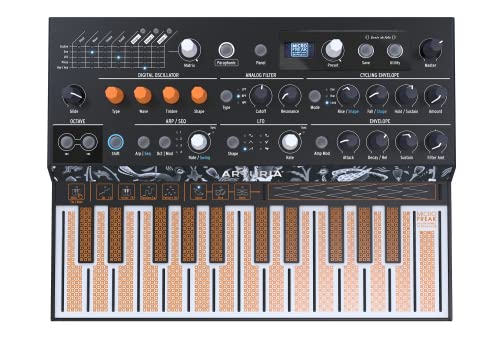
6. Arturia MicroFreak – The Most Reviewed Experimental Engine Here
- ✓Huge variety of unusual oscillator modes for the money
- ✓Unique touch-sensitive PCB keybed with per-note aftertouch
- ✓Extensive modulation matrix and generative sequencer functions
- ✓Very compact and light at 2.3 kg
- ✕Flat PCB keybed has no key travel
- ✕Only 25 keys so it needs a controller for many parts
- ✕Menu navigation with a small screen for deep editing
Hybrid paraphonic synth
2.3 kg, 25-key touch bed
Poly aftertouch per note
With 879 ratings — by far the largest review base here — the MicroFreak draws 85% five stars. It is also the one I would describe as a sound design laboratory that happens to have a keyboard attached.
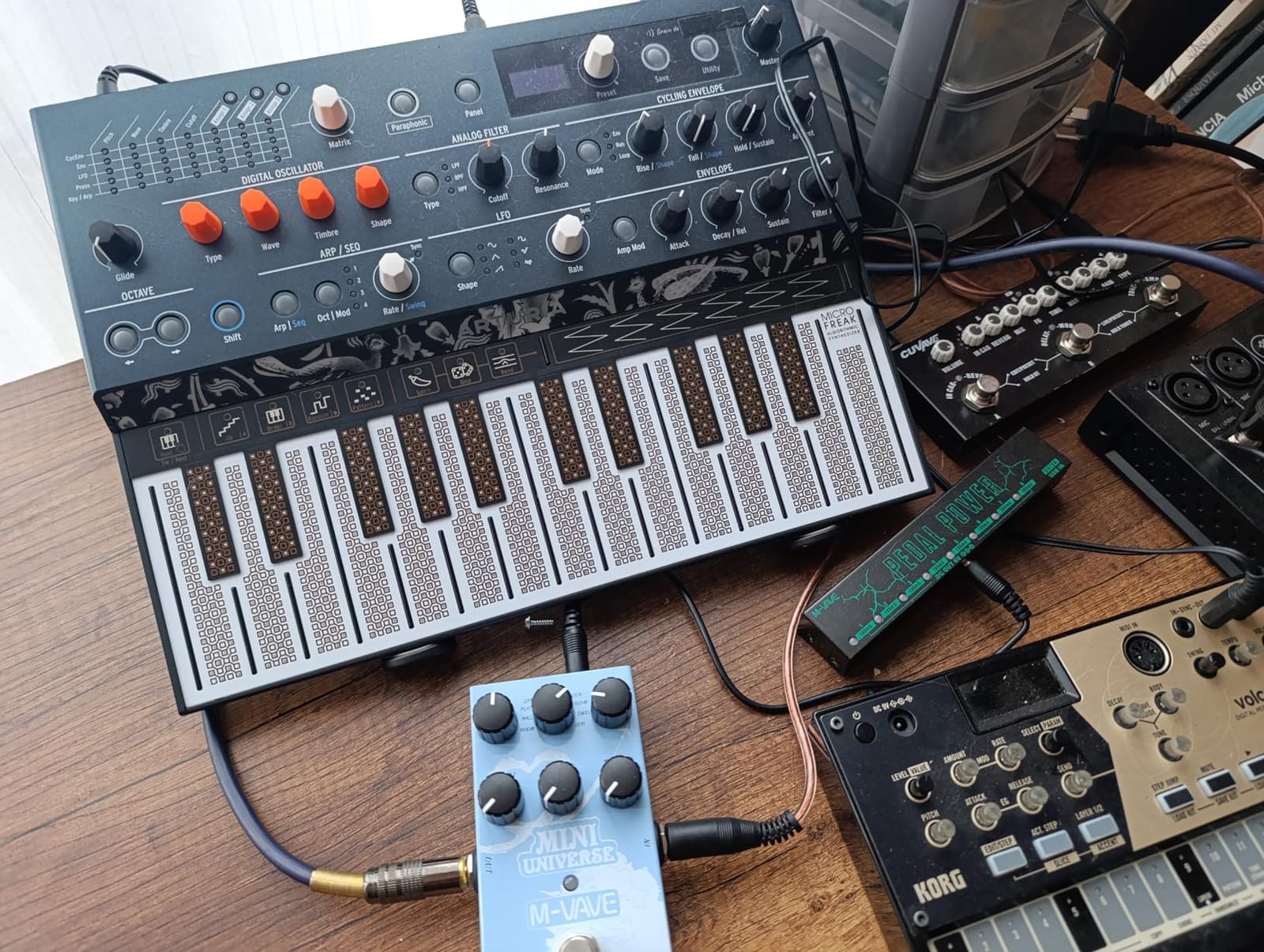
Seventeen paraphonic oscillator modes span physical modeling and wavetable synthesis, built from seven bespoke Arturia engines, seven Mutable Instruments modes and three Noise Engineering modes. A resonant analog SEM filter gives the digital oscillators something physical to rub against. Forum discussion of this model usually lands on its versatility as a hybrid engine.
Per-Note Pressure Changes How It Plays
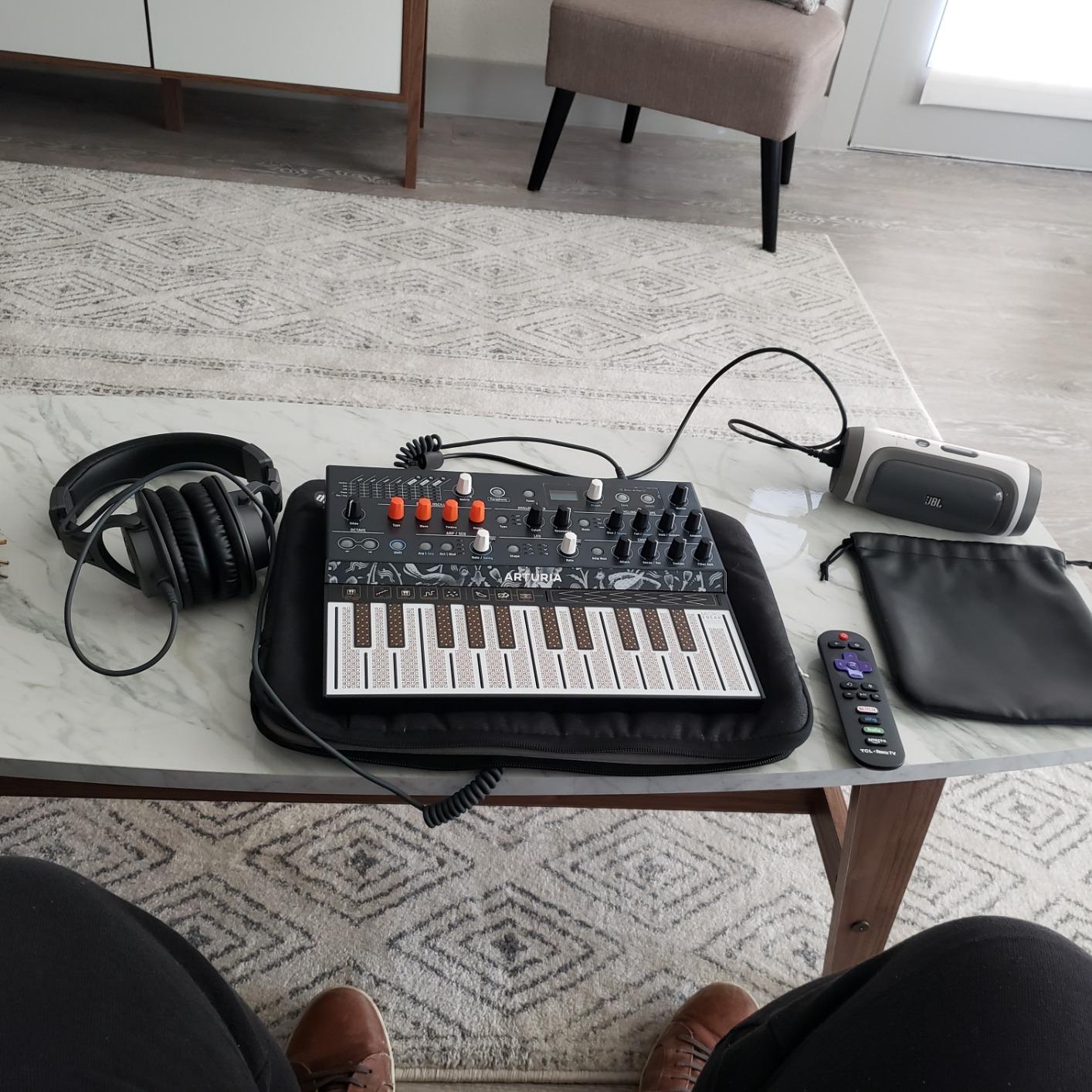
The 25-key flat PCB touch keybed gives per-note pressure and poly aftertouch, which is genuinely rare and genuinely useful for held chords. There is no key travel, so it is not a traditional playing surface and pianists will feel the difference immediately.
What it cannot do is cover a range. At 25 keys it needs an external controller for many playing situations, which makes it a companion instrument on a rig rather than the main keyboard.
Modulation Depth and Generative Sequencing
A 5×7 modulation matrix with user-assignable destinations put the deepest routing in front of you of anything in this roundup. Four automation lanes and a step sequencer with Spice and Dice generative functions give you motion without hand programming.
CV pitch, gate and pressure outputs plus USB and MIDI make it easy to sequence from a DAW or sit inside a modular case. Two 3.5mm to 5-pin DIN adapters are included, which saves you a trip to the cable drawer.
Portability and the Catch
At 2.3 kg and roughly 12 by 9 inches, it is one of the most compact instruments here and fits easily in a bag behind a laptop. Power is DC with the supply included.
The real trade-off is workflow. Deeper sound editing means menu navigation on a small screen, and the skill level is listed as advanced. Treat it as the sound source in your rig, and let a full-size keyboard handle the playing.
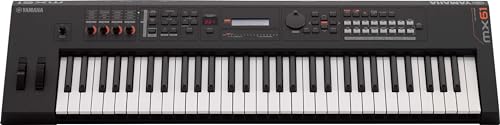
7. Yamaha MX61 – Motif Sound and 128-Notes Without a Driver
- ✓Class-compliant USB audio and MIDI needs no driver install
- ✓Excellent MOTIF sound library for church and worship sets
- ✓128-note polyphony handles full 16-track sequences
- ✓Lightweight and portable for a 61-note size
- ✕Small non-touch display and dated menu workflow
- ✕All-plastic exterior is not ideal for hard touring
- ✕General manual is thin on detail
61-note MOTIF synth
14.9 lb
128-note polyphony, class-compliant USB
The MX61 has quietly become a standard in worship and church rigs, and the reason is simple: it sounds right, it holds a lot of notes, and it connects with one cable. At 4.7 stars from 157 ratings, it is also one of the better-established instruments here.
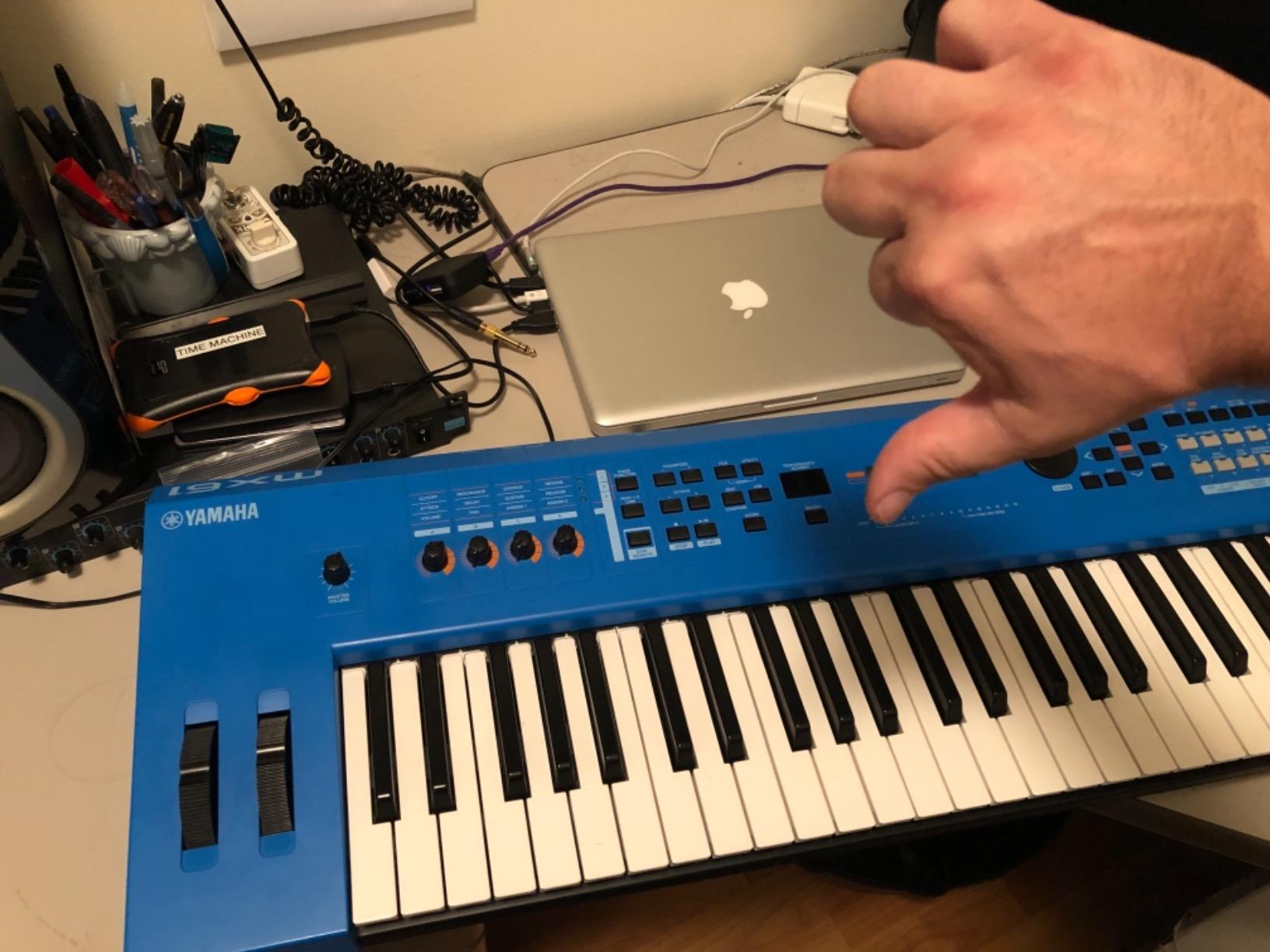
That is 84% five-star reviews. The MOTIF sound engine is the headline: up to eight elements per voice with layer, zone, switch, cycle and randomize, plus Virtual Circuit Modeling of vintage effects and signal processors.
128 Notes of Polyphony Solves Real Problems
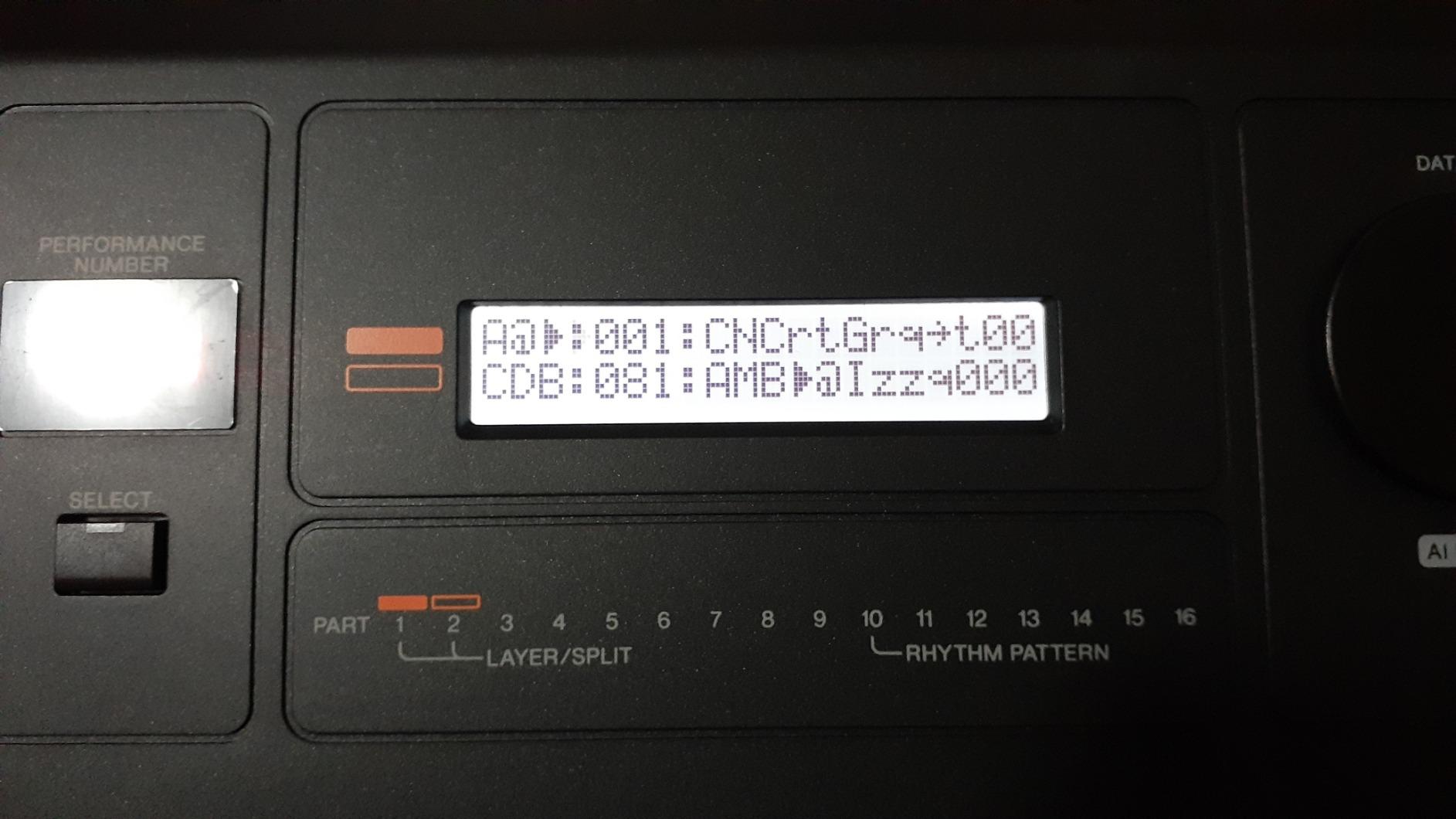
Most stage instruments quote 16 or 32 voices and hope you do not stack. At 128 notes, a full 16-track sequence plays back without dropouts, which is the difference between a usable rhythm track and an unusable one.
For worship teams running pad plus arpeggio plus strings on the same keyboard, that headroom removes a whole class of mid-song surprises.
One Cable to the Laptop
The USB audio and MIDI is class compliant, so it is plug and play with no driver installation. You get 16-channel MIDI plus stereo audio record and playback over a single cable, and Remote Control for Cubase, SONAR, Logic Pro and Digital Performer.
That makes the MX61 a good companion board behind a controller in an Ableton or MainStage rig. A USB cable is included in the box.
Where It Shows Its Age
The screen is small and non-touch, and the menu-driven workflow feels dated when you want to change a sound quickly between songs. On a dark stage with a monitor mix, that is a real friction point.
The exterior is all plastic, which reviewers note is not ideal for hard touring, and the general user manual is thin on detail so you will need external documentation. At 14.9 lb it is one of the heavier 61-note instruments here.
8. Roland JUNO-D6 – 3800-Plus Sounds in a Battery-Powered Case
- ✓Flagship ZEN-Core engine with 3800+ ready-to-play sounds
- ✓Light and portable 61-note synth-action design
- ✓WAV sample import for custom sound creation
- ✓Battery power and USB-C mobile device charging
- ✕Menu-driven workflow can need screen diving for edits
- ✕Full-size synth-action keys are heavier than mini alternatives
- ✕Only 39 ratings on record so consensus is thin
61-note ZEN-Core synth
12.8 lb and battery powered
3800+ onboard sounds
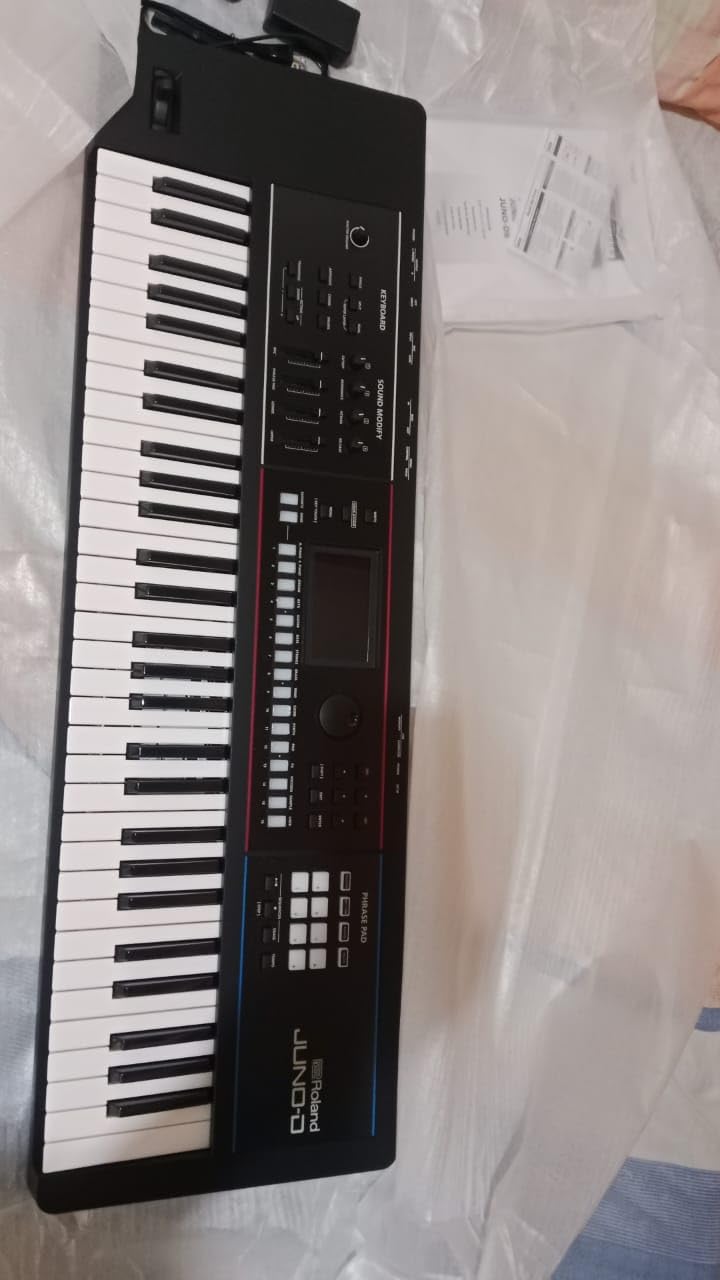
The JUNO-D6 answers a specific question: what do you do when a gig calls for a piano here, an organ there, a bell on the next song, and you do not want to program between them? More than 3800 onboard sounds says you open the list and pick.
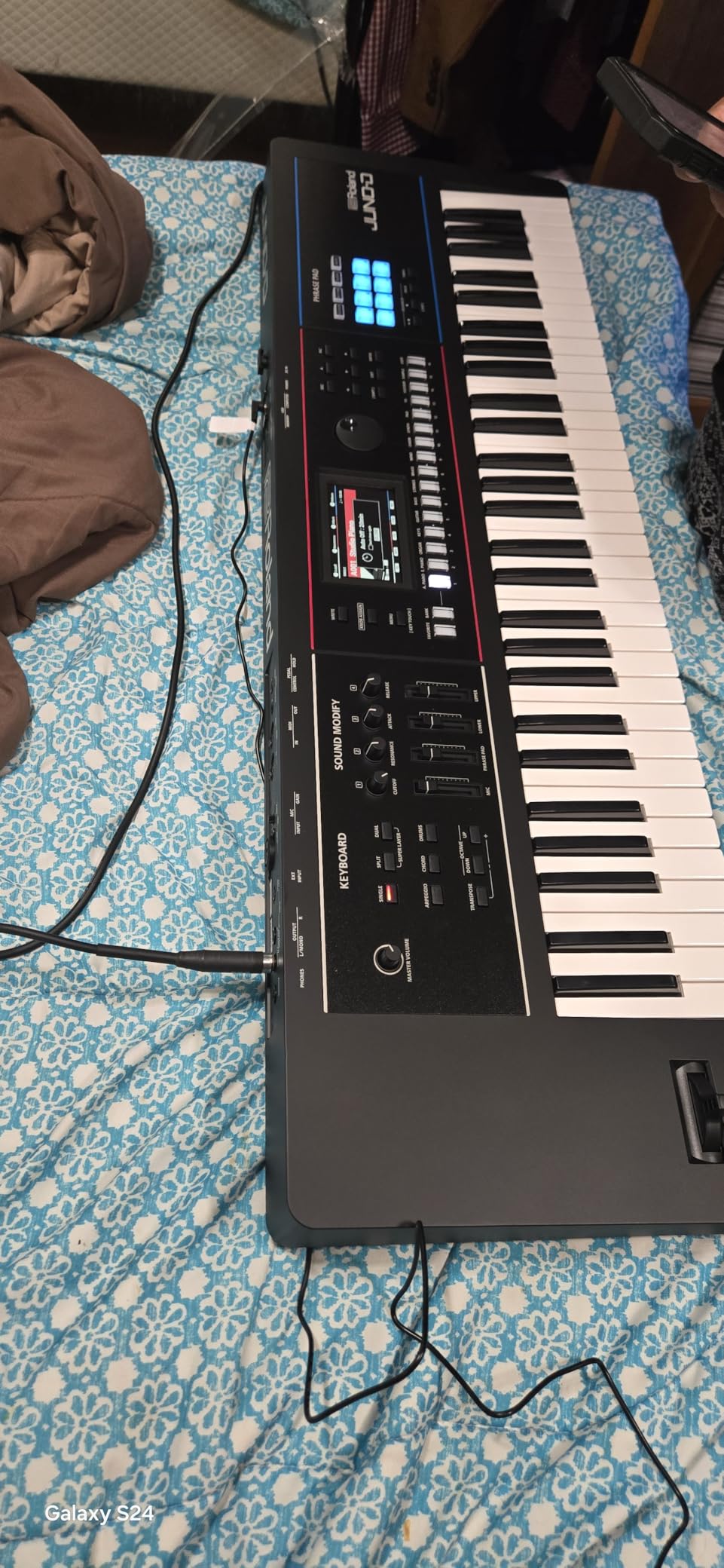
Reviewers praise the sound library, gig-ready portability and USB-C connectivity. The rating base is small at 39 ratings, with 71% five-star but also a 12% one-star share, so treat owner consensus here as thinner than the numbers elsewhere on this list. Players who own Juno-D instruments report the ZEN-Core sounds cut through a band mix with little tweaking, which is exactly the grab-and-go character this line was built for.
Battery Power Changes the Rig
Running on batteries means no power drop between sets and a much faster setup. USB-C also powers a mobile device directly, which is a tidy way to run a phone as a sound source without a separate adapter.
At 12.8 lb and roughly 39 by 13 by 4 inches, it is a realistic one-person carry for a full-size 61-note instrument.
Sample Import and the Built-In Sequencer
The WAV import function lets you play and edit your own samples directly on the keyboard, which solves the missing-sound problem without a computer. An eight-track sequencer handles on-board arrangement work when you practise or pre-program a set at home.
Sound Packs and Wave Expansions on Roland Cloud extend the library further, so the instrument keeps growing after you buy it.
Where the Workflow Frays
The menu-driven interface is the recurring complaint: owners describe needing to dive through screens for edits, which is exactly the friction that makes a stage synth frustrating under pressure.
Full-size 61-note synth-action keys are noticeably heavier than the mini-key alternatives on this list, so factor that into a long load-in. Roland Cloud support handles the library, and the warranty is listed as covering details on the manufacturer’s site.
9. Korg Kross 2-61 – Sixteen Layers in a Light Alloy Workstation
- ✓Crisp realistic sound quality praised as among the best in class
- ✓Very light and compact at 3.8 kg
- ✓16-part layering plus downloadable sound packs
- ✓Large variety of sounds and drum patterns
- ✓Step and MIDI sequencers with audio recorder
- ✕Complex menu design slows on-the-fly changes
- ✕Not recommended as a fast live patch-navigation instrument
- ✕No printed manual
- ✕Unweighted light synth keys
61-key EDS-i workstation
3.8 kg alloy body
16-part layering
The Kross 2-61 is 3.8 kg with a full 61-note keybed, and it layers up to 16 parts per patch. For a player who builds one enormous sound and stays away from it mid-set, that combination is unusually efficient.
Owner feedback is strong: 117 ratings at 4.7 stars, with 83% five-star. The recurring theme is that the sound realism, portability and value are excellent — and that the menu structure is the catch.
16-Part Layering for Thick Sounds
Sixteen-part layering is the headline feature, and it lets you stack a pad, an arpeggio texture and a lead into one program without using a multi-instrument rig. The EDS-i sound engine supplies the voices and downloadable sound packs extend the palette.
Mic and line inputs are useful live, because they let you route another source through the workstation or add a vocal to a layer. A built-in audio recorder handles a quick idea at practice.
Sequencing Away From the Stage
Step and MIDI sequencers mean you can arrange parts at home and bring them to the show as finished sounds rather than building them in front of a band. That is the smart way to use a menu-heavy instrument: pre-program everything.
The alloy steel body gives it a solid feel for 3.8 kg, and the dimensions keep it compact in a stand or bag. A one-year warranty is listed.
Where It Falls Short Live
Reviewers are direct about the menus: making changes on the fly means digging through submenus, and it is not recommended as a fast live patch-navigation instrument. If your set depends on changing sounds quickly, treat this as a pre-programmed instrument only.
Keys are unweighted light synth, which some pianists find unsatisfying, and there is no printed manual — documentation is a download.
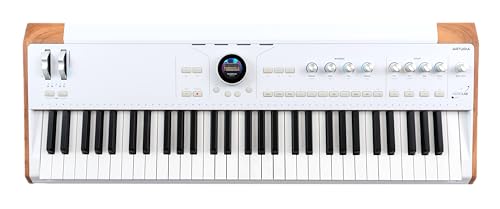
10. Arturia AstroLab Stage – Preset Depth Without a Computer
- ✓Large deep preset library of classic and modern textures
- ✓Virtual synthesis plus ecosystem built for stage use without a laptop
- ✓Multi-touch control surface for expressive live control
- ✓Available in 37
- ✓61 and 88 key formats
- ✕Small review base of 36 ratings
- ✕Rating spread includes a meaningful share of 1-3 star reviews
- ✕Bundle value depends on the included Analog Lab Pro software
61-key stage keyboard
34 instruments, 1300+ presets
Multi-touch control surface
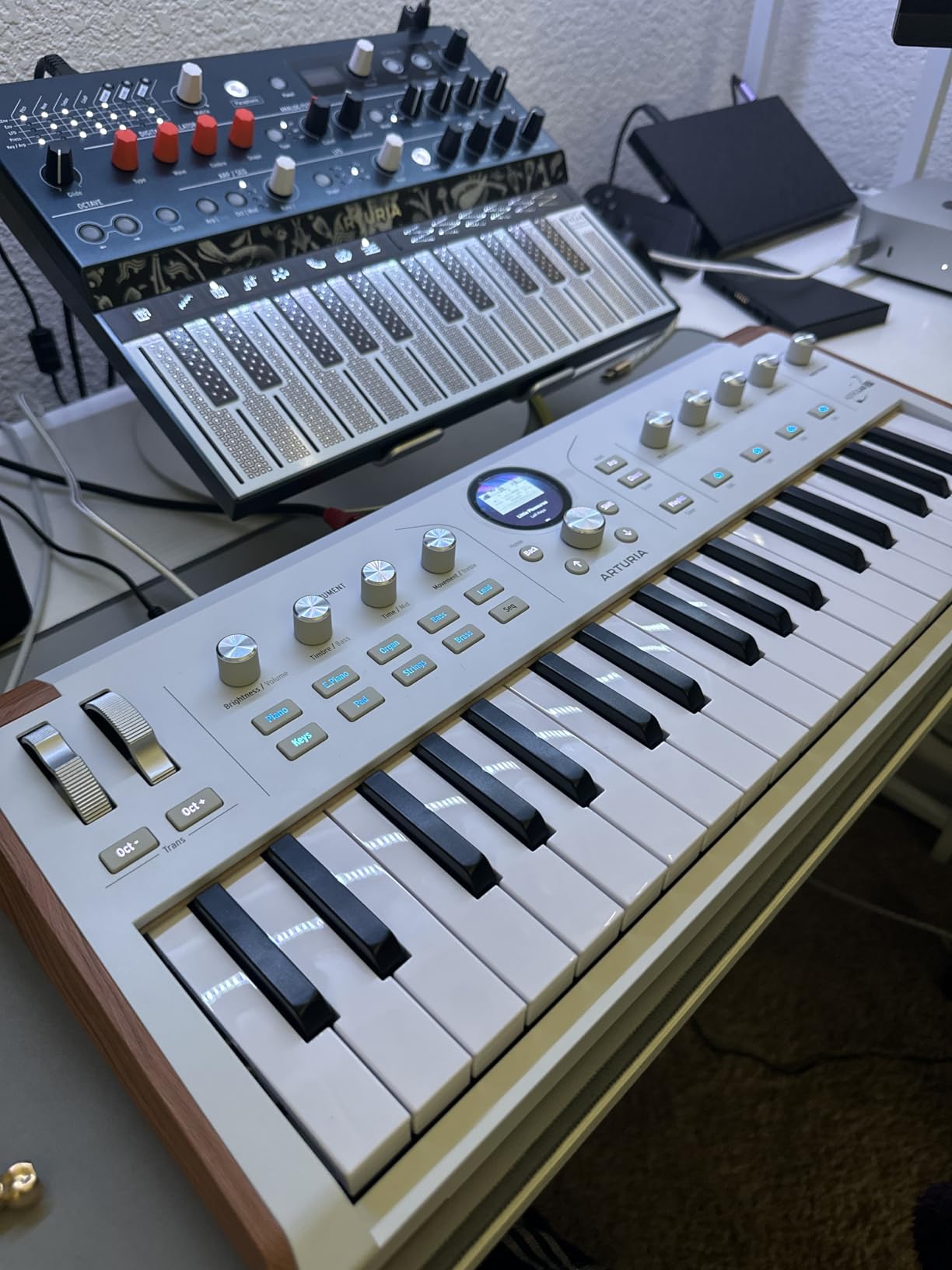
The AstroLab Stage is built around one idea: put a very large collection of sounds into a box you can play without a laptop. Thirty-four instruments and over 1300 presets sit behind a multi-touch control surface designed for live expression.
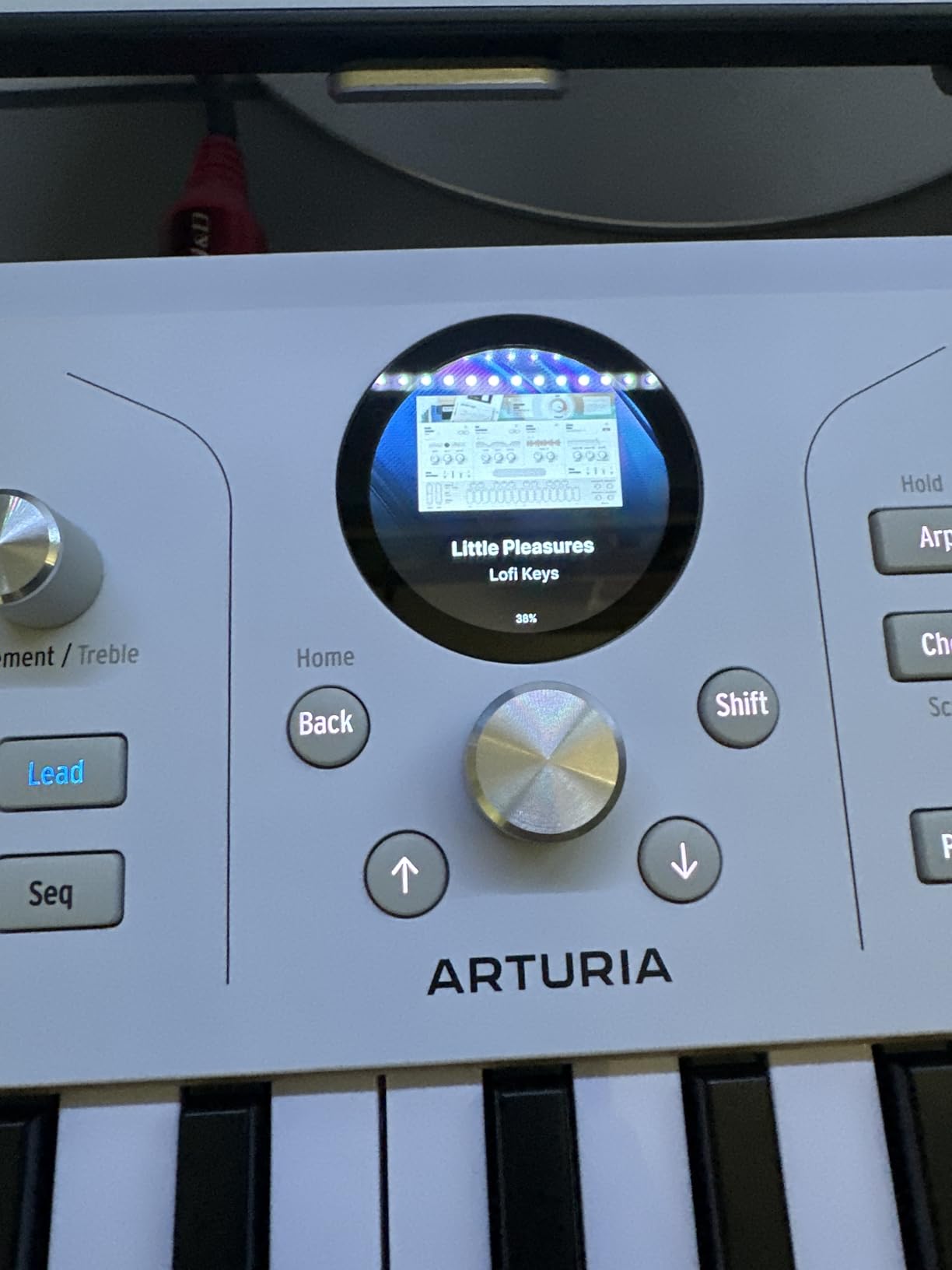
Feedback centres on the breadth of sounds and the DAW-free live workflow. With 36 ratings, 68% five-star and 7% one-star, the sample is thin and sentiment more mixed than the average instrument here — worth weighing before you commit.
An Advanced Virtual Engine Away From the Studio
The built-in virtual synthesis engine is meant to give studio-to-stage consistency, so a sound you build at home is the sound you play out. That is a real advantage over instruments that depend on a computer for their best patches.
The included Analog Lab Pro software extends the library, and the broader software ecosystem goes beyond samples into editable instruments. A two-year warranty is listed.
A Surface Designed to Be Played
The multi-touch control surface is the point of the instrument: it gives per-finger control rather than one parameter at a time, which suits live shaping of filters and envelopes. For a player who wants to move sounds around rather than swap them, that is more useful than a large menu.
Available in 37, 61 and 88 key formats, so you can match the board to how you travel and what the band needs.
Reading the Feedback Honestly
The main caution is the review base. Thirty-six ratings is a small sample, and the one-to-three-star share is higher than most instruments in this roundup, so expect some users who want more hands-on editing than the surface provides.
The listed weight for the 61-key model is 13.22 kg, which puts it among the heavier 61-key synths in this roundup, so weigh up the carrying side before you commit to it as a solo travel board.
11. Novation Peak – A Desktop Module With Front-Panel Modulation
- ✓Flexible Oxford oscillator architecture for analog-sounding tones
- ✓Three-stage per-voice distortion for aggressive tone shaping
- ✓Polyphonic aftertouch and animate buttons for expression
- ✓Dense 16-slot modulation matrix with front-panel access
- ✓CV modulation input for modular systems
- ✕Desktop module with no keyboard
- ✕Only 8 voices of polyphony
- ✕Older design with a small screen and menu editing
- ✕Rating spread includes a 10% one-star share
8-voice desktop module
10.8 lb metal chassis
16-slot modulation matrix
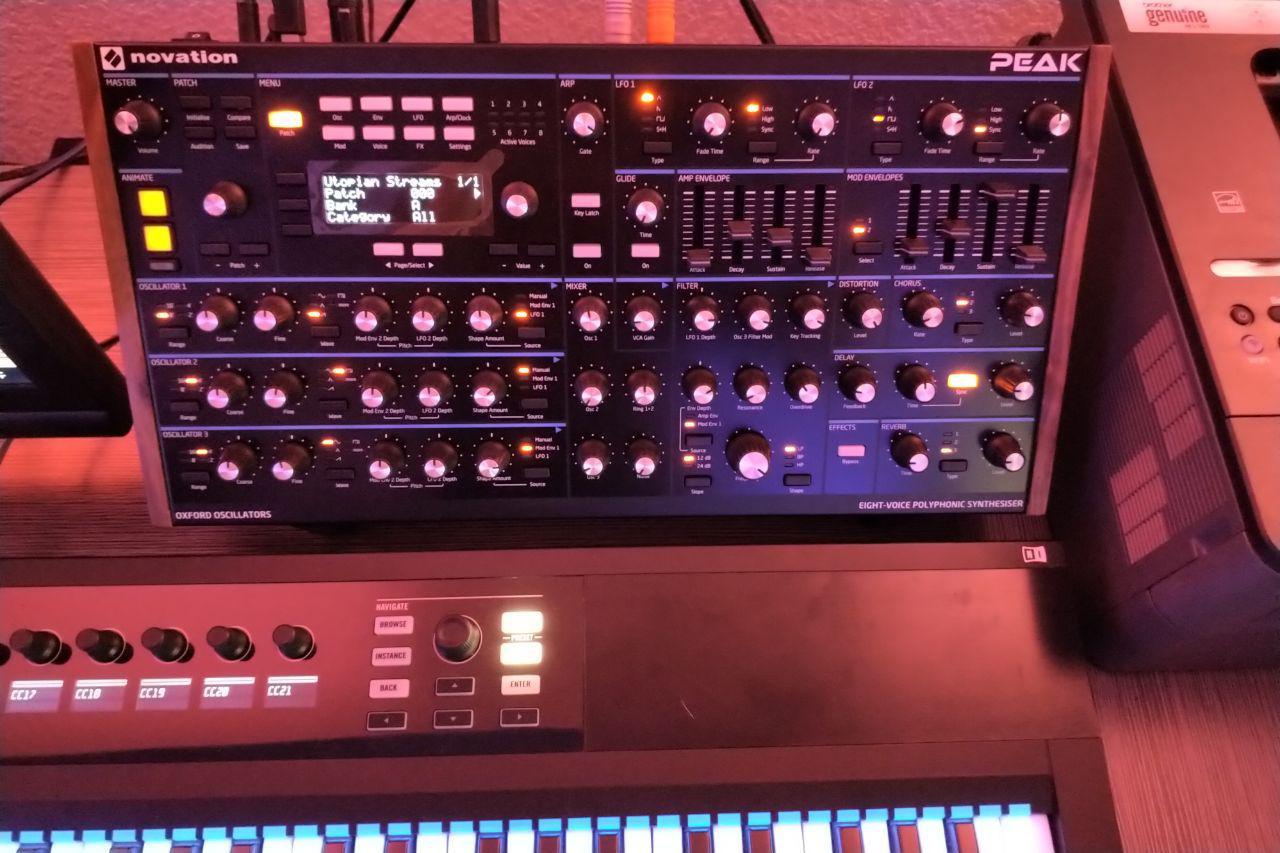
The Peak is not a gigging keyboard — it has no keys at all. It is a desktop sound module built for rigs where a controller already handles playing, and the case for it is the front-panel access to a genuinely deep modulation matrix.
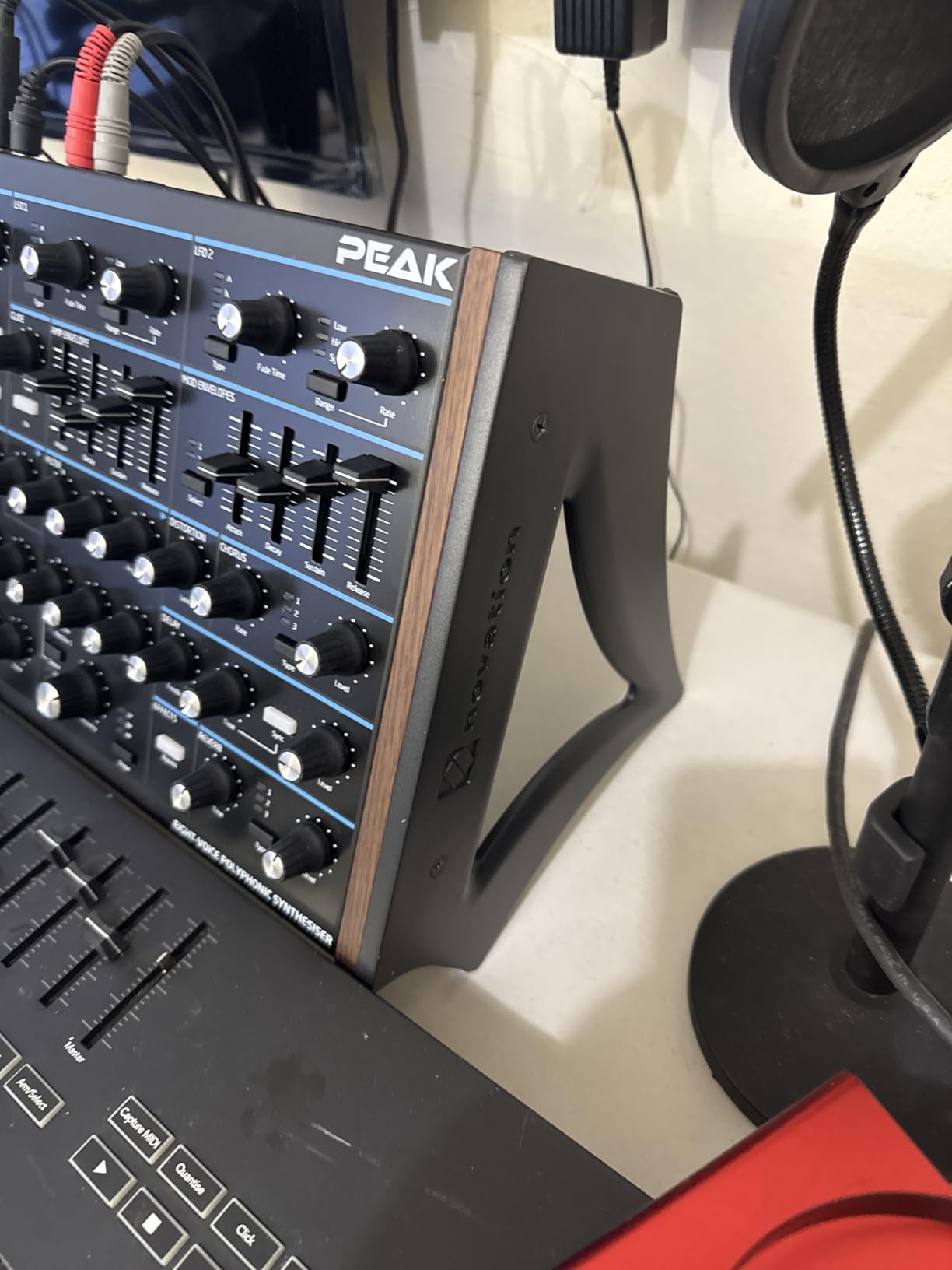
Reviewers value the oscillator design, the three distortion stages and the modulation depth. At 4.2 stars from 63 ratings, the distribution is among the most divided here, with 10% one-star — a reminder that desktop modules divide opinion sharply.
Oxford Oscillators and Three Distortion Points
The architecture pairs analog-sounding numerically controlled oscillators with 60 customizable digital wavetables, and each voice can act as a linear FM source. That combination covers classic analog emulation and modern digital colour from one engine.
Three distortion points per voice — pre-filter, post-filter and global — let you push individual notes harder than the rest, which is a real expressive tool for leads.
Front-Panel Modulation Without Screen Scrolling
The 16-slot modulation matrix has 16 direct assignments, with three ADSR envelopes and two LFOs per voice. Polyphonic aftertouch, two pedal inputs and two animate buttons let you add motion from playing position rather than from a menu.
Reverb, delay and chorus are on board along with an arpeggiator, so the module can cover effects duty without external gear. If you like patching, we covered the modular side separately in our guide to the best modular synthesizers.
Where It Does Not Fit
Eight voices is modest for a polyphonic instrument, and being keyboardless means it needs an external controller for live playing. The small screen and menu-driven editing belong to an older hardware generation, which shows in an age where touchscreens are normal.
At 10.8 lb in a metal chassis with an optional die-cast aluminium stand, it suits a home or studio desk. For a stage, pair it with a controller you already own and manage power carefully.
How to Choose a Stage-Ready Synth
Sound quality is only the first filter. These are the decisions that actually change how a show goes, in the order most players make them.
Polyphony Is Not the Same as Multitimbrality
Polyphony is how many notes sound at once. Multitimbrality is how many different sounds can play at once. Players need both. A pad under an arpeggio under a lead needs polyphony; those three parts played from three different presets need multitimbrality.
Two voices are fine for bass or lead duties and nothing else. Four voices covers a basic pad plus lead. Six to eight gives a working musician comfortable layering. The MX61 at 128 notes and the FANTOM-06 with a clip-based workflow both remove the ceiling entirely, at the cost of size or complexity.
Keybed Action Is a Playing Decision, Not a Spec
Semi-weighted synth action is the live default: enough response for dynamics, light enough to play for two hours. Weighted or hammer action belongs to stage pianos where you need to match an acoustic or a heavy electric piano feel.
The real question is size. Full-size keys appear on the FANTOM-06, MX61, Juno-D6, Kross 2-61 and the Moog Messenger. Mini keys appear on the minilogue xd and Hydrasynth Explorer. The MicroFreak has no key travel at all and needs a controller for most playing.
Splits, Layers and Zones Decide Set Flexibility
A split point lets one instrument cover two sounds with different ranges. Layers stack them in the same range. Zones divide the keyboard more finely. The Kross 2-61 handles layering up to 16 parts, and the MOTIF engine in the MX61 gives layer, zone and switch control across eight elements per voice.
If you cover a lot of material, ask how many zones you get before you fall in love with a sound engine. We looked at polyphony in more depth in our guide to the best polyphonic synthesizers.
Recall Speed Beats Raw Sound Count
A thousand presets are only useful if you can reach the right one in under two seconds. Instruments with physical step buttons, pads, knobs and strips can be changed by touch. Menu-driven instruments require your eyes on a small screen — a real problem when you are playing.
The answer is not to avoid menu-driven instruments, it is to pre-program them. Build your set at home, name the patches with a consistent scheme, and treat live edits as a bonus rather than a plan.
Weight, Power and the Load-In
Weights in this roundup run from 1.7 kg on the monologue to 14.9 lb on the MX61. Battery power appears on the monologue and the Juno-D6, and the FANTOM-06 can charge a mobile device over USB-C. Treat battery power as a setup convenience rather than a touring feature: none of these instruments is specified to run a full evening away from a wall.
Before you commit, weigh the instrument fully packed with cables. A synth you dread carrying is a synth that stops being fun by month three.
Outputs, Pedals and What Your Backline Gives You
Balanced outputs cut hum on longer runs; unbalanced quarter-inch outs are fine for short distances. Check for a headphone output for personal monitoring, and for how many pedal inputs there are, since expression and sustain pedals are near-essential on stage.
The Messenger and FANTOM-06 both handle expression and sustain ins. The Peak adds two pedal inputs and CV. USB audio interfaces are worth checking too — the FANTOM-06 offers a 4×32 interface with DAW integration, and the MX61 is class compliant with no driver needed. Our picks for headphones for live performance musicians cover the monitoring side.
Firmware, Patch Backup and Mid-Tour Risk
Every instrument here runs on firmware, and updating one mid-tour is a gamble. Back up your patches to a computer before you leave home, keep the original file, and update after a show rather than before one.
Reviewers also note that manufacturer support and long-term patch libraries matter more than people expect. Roland Cloud expansion for the Juno-D6 and FANTOM-06, and downloadable sound packs for the Kross, are the clearest examples of a library that keeps growing.
Frequently Asked Questions
What is the best synth for gigging music?
For most gigging players, the Korg monologue wins on stage utility: a 16-step motion sequencer with real step buttons, analog tones that cut through a band mix, battery power and a 1.7 kg weight. If you need chords rather than bass and lead lines, the Korg minilogue xd gives four-voice analog polyphony in a 2.8 kg body, and players who want to shape sounds by hand should look at the Roland FANTOM-06.
What synth keyboard is best for live performances?
The best live performance keyboard balances three things: instant sound recall, physical real-time controls, and a keybed you can play for two hours. Instruments with step buttons, performance pads and front-panel knobs let you change sounds by touch, while menu-driven models need pre-programmed sets. The Arturia Hydrasynth Explorer adds polyphonic aftertouch for expression, while the Yamaha MX61 answers the polyphony question with 128 notes and class-compliant USB.
How many voices of polyphony do I need for live performance?
Two voices cover bass or lead duties only. Four voices handle a pad plus a lead comfortably and suit most stage rigs. Six to eight voices give a working musician room to layer parts without choking. You also need enough multitimbral parts — separate sounds playing at once — so check both numbers rather than one.
Do I need weighted keys for a live synth?
Usually not. Semi-weighted synth action is the live default because it gives enough dynamic response for playing while staying light through a long set. Weighted and hammer action belong to stage pianos where you need to match an acoustic or heavy electric piano feel. Key size matters more day to day: full-size keys appear on the FANTOM-06 and Moog Messenger, while mini keys appear on the minilogue xd and Hydrasynth Explorer.
Can I use a synthesizer as a MIDI controller live?
Yes. Any instrument with MIDI or USB MIDI can send note and controller data to a laptop, DAW or lighting desk while its own sounds run separately. Class-compliant instruments like the Yamaha MX61 need no driver installation and work as soon as they are plugged in. Instruments with a multi-channel USB audio interface, such as the Roland FANTOM-06, can also return a laptop mix to the keyboard for monitoring.
Which Synth Should You Take Onstage
If you want one instrument that does the most on a stage, the Korg monologue is the answer for bass and lead work, and the Korg minilogue xd is the answer when you need chords. If your set leans on shaping sounds while it plays, the Roland FANTOM-06 puts knobs, sliders and pads where your hands already are.
Choose the ASM Hydrasynth Explorer if expression is your priority and polyphonic aftertouch changes how you play. Choose the MOOG Messenger if tone matters most and full-size semi-weighted keys will not fit your rig. Choose the Arturia MicroFreak as the experimental sound source behind a controller, and the Roland JUNO-D6 when you want thousands of sounds without programming between songs.
For worship and church teams, the Yamaha MX61 handles polyphony and one-cable connectivity better than anything else here. For stacks of layers, the Korg Kross 2-61 gives you 16 parts in a 3.8 kg body. For preset players who do not want a computer, the Arturia AstroLab Stage covers it. And if you already own a controller, the Novation Peak brings a front-panel modulation matrix to the rig — we also cover those systems in our guide to the best vintage synthesizers when you want a classic voice instead.
Whichever one you choose, build the set before the first show and back it up to your computer. Then pick your keybed properly, starting from budget options in our best budget synthesizers guide if you are starting out. Check the latest price for the model you want and get it in front of your band before the next rehearsal.






Leave a Comment