
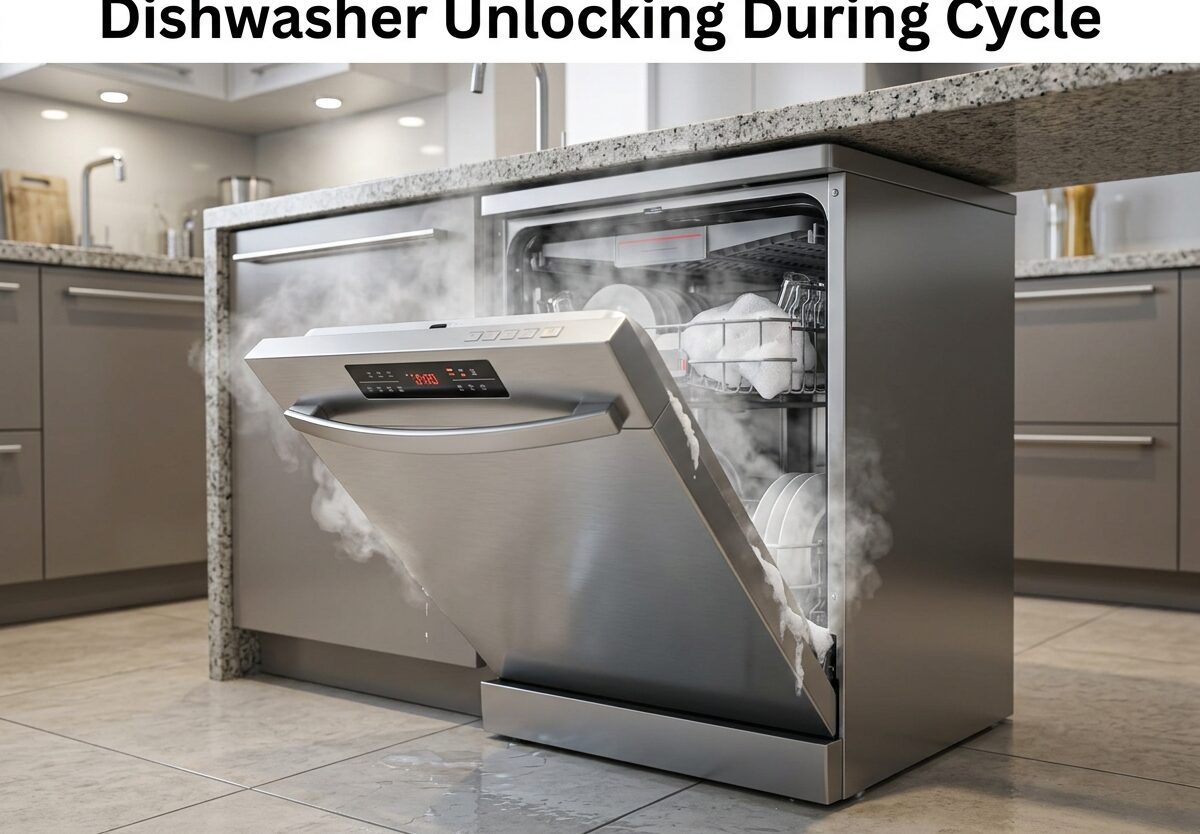
You walk into the kitchen expecting clean dishes, but instead find your dishwasher door slightly ajar with water pooled at the bottom. The cycle stopped hours ago, and your dishes are still dirty. This frustrating experience happens to countless homeowners. A dishwasher door that unlocks during the cycle is more than inconvenient—it can expose you to scalding hot water and leave you with a mess to clean up. I’ve researched this issue extensively and will walk you through everything you need to know about Dishwasher Unlocking During Cycle.
Safety First: Before we dive in, understand that opening a dishwasher mid-cycle exposes you to water temperatures between 120-150°F. The steam release can cause serious burns. If your dishwasher is currently running, wait until the cycle completes or cancel it properly before attempting any inspection.
Dishwasher Unlocking During Cycle: Common Causes
A dishwasher door that pops open during operation usually stems from one of several mechanical issues. I’ve categorized these from most to least common based on user reports and repair forum discussions.
Faulty Door Latch Assembly
The door latch assembly is the most frequent culprit. Over time, the plastic or metal latch mechanism wears down from repeated use. The latch hooks onto a striker plate mounted to the dishwasher frame, keeping the door sealed tight during operation.
When the latch wears, it may not fully engage the striker. The vibration from the wash cycle then causes the door to pop open. I’ve seen this happen particularly in dishwashers over 5-7 years old.
Signs of a worn latch include difficulty closing the door, the door feeling loose when latched, or visible cracks in the plastic housing. Sometimes the latch itself is fine, but the spring mechanism that provides tension has failed.
Misaligned Striker Plate
The striker plate (also called the striker catcher) is the metal piece the latch grabs onto. If this plate shifts even slightly, the latch can’t engage properly. This often happens due to loose mounting screws.
One user reported finding that the TORX screws holding the striker plate had loosened over several years. The constant vibration from cycles gradually worked them loose, causing intermittent door opening issues. Tightening these screws solved the problem immediately.
Striker plates can also become bent if the door is forced shut too aggressively. A slightly bent striker might catch the latch sometimes but not consistently—leading to the frustrating random opening behavior.
Dishwasher Leveling Problems
Improper leveling is a frequently overlooked cause. When a dishwasher isn’t perfectly level, gravity works against the door latch. If the unit tilts forward even slightly, the door puts constant pressure on the latch mechanism.
This is especially common in new installations or after flooring work changes the kitchen floor height. Many homeowners don’t realize their dishwasher needs re-leveling after such projects.
Testing for this issue is straightforward. Place a carpenter’s level on the dishwasher door or floor of the unit. If the bubble isn’t centered, adjust the front leveling legs until it is. Most dishwashers have adjustable front legs that can be turned by hand or with pliers.
Upper Rack Pressure on Door
This cause surprised me when I first encountered it. The upper rack in some dishwasher designs sits very close to the door when fully loaded. If heavy items are placed in the front of the upper rack, they can push against the door during the cycle.
As the spray arm rotates and water moves the rack slightly, this pressure pushes the door outward. Eventually, the latch disengages and the door pops open.
One KitchenAid owner discovered this was their issue after months of frustration. They had been loading large dinner plates in the front of the upper rack, which pushed against the door during the heated dry cycle. Redistributing items to the back of the rack solved the problem completely.
Control Lock Feature Confusion
Some users confuse the control lock feature with a mechanical door problem. The control lock (or child lock) disables the control panel buttons—it doesn’t physically lock the door.
When this feature is activated, pressing any buttons has no effect. Some users mistakenly think their door is “locked” when actually the control panel is simply disabled. The mechanical latch still works normally in this mode.
Confusingly, some brands use different terminology for this feature. GE calls it “Control Lockout,” while other brands use “Control Lock,” “Child Lock,” or “Lock Controls.” Understanding the difference between this electronic feature and the physical door latch is crucial for proper troubleshooting.
Auto-Open Feature (Normal Behavior)
Many modern Bosch dishwashers and some other European models include an auto-open feature that activates at the end of the cycle. This is intentional behavior designed to improve drying by allowing fresh air to circulate.
If your door opens only after the cycle completes and water has drained, this is likely normal operation. The door typically opens just 2-3 inches—not fully—and only after the cleaning phase is done. Consult your owner’s manual to confirm if your model has this feature.
Installation Bracket Failure
A less common but serious issue involves the installation brackets. These metal brackets secure the dishwasher to the countertop or cabinet. If they fail or were never properly installed, the entire unit can shift forward during operation.
When the dishwasher moves forward, the door puts unusual pressure on the latch. This can cause the latch to disengage even when it appears to be working correctly.
This issue often requires pulling the dishwasher out to inspect the mounting brackets. If your unit is not secured to the surrounding cabinetry, the brackets may need to be replaced or properly installed.
Is It Safe to Open Dishwasher During Cycle?
The short answer is no, it’s not safe to open your dishwasher while it’s running. Here’s what you risk:
- Scalding from hot water: Dishwashers use water heated to 120-150°F. Opening the door releases this hot water, which can cause serious burns.
- Steam burns: The steam inside the dishwasher is under pressure and can burn your face, arms, and hands when released suddenly.
- Slip hazards: Water spilling onto the floor creates an immediate slip risk, especially on hard kitchen flooring.
- Cycle interruption: Most dishwashers automatically stop when the door opens, leaving your dishes partially cleaned and covered in detergent residue.
- Electrical safety: Water and electricity don’t mix. Spilled water could reach electrical components or outlets.
If you absolutely must open the dishwasher during a cycle, press the cancel or pause button first and wait at least 30 seconds. This allows the water to cool and the system to depressurize slightly. Stand back when opening the door, and keep children and pets out of the kitchen.
Control Lock vs. Mechanical Door Latch
Understanding the difference between these two features saves significant troubleshooting time. The control lock is an electronic feature that disables the control panel buttons. It prevents accidental cycle changes, useful if you have children who might press buttons.
The mechanical door latch is the physical mechanism that actually holds the door closed. These are completely separate systems. Your control lock could be activated while the mechanical latch fails, or vice versa.
When the control lock is active, you’ll typically see a lock icon on the display. The buttons won’t respond when pressed, but the door will still open and close normally using the handle.
When the mechanical latch fails, the door won’t stay closed regardless of control lock settings. You might see the control panel working fine, but the physical door won’t latch properly.
Control Lock Activation by Brand
Different manufacturers use different methods to activate and deactivate control lock:
- GE: Press and hold the “Lock Controls” button for 3 seconds
- Bosch: Hold the “Start” button for 3-5 seconds until the lock icon appears
- KitchenAid: Press the button with the lock icon for 4 seconds
- LG: Hold the “Rinse” and “Dual Zone” buttons simultaneously for 3 seconds
- Samsung: Press and hold the “Delay Start” button for 3 seconds
Consult your owner’s manual for brand-specific instructions, as these can vary between models and production years.
Step-by-Step Troubleshooting Guide
Follow these steps in order to diagnose and fix your dishwasher door issue. I’ve arranged them from easiest to most complex, starting with simple checks you can do without tools.
Step 1: Check for Control Lock Activation
Look at your dishwasher’s control panel. Do you see a lock icon or indicator light? If yes, your control panel is locked, not the door itself. The door should still open and close normally using the handle. If you want to disable this feature, press and hold the lock button according to your brand’s instructions listed above.
Step 2: Inspect the Door Latch Visually
Open the door and examine the latch mechanism on the door itself. Look for visible cracks, broken pieces, or obvious wear. The latch is typically located at the top center of the door edge. If you see any damage, the latch assembly likely needs replacement.
Also check the striker plate mounted to the dishwasher frame. This should be securely fastened with no wiggle or movement. If it’s loose, tighten the mounting screws.
Step 3: Test Latch Engagement
Close the door slowly and listen for the latch to click into place. You should hear a distinct sound when it engages. Then pull gently on the door handle without pressing the latch release. The door should not budge.
If the door opens without pressing the release, your latch isn’t engaging properly. This could be due to misalignment, a broken latch spring, or debris blocking the mechanism.
Step 4: Check Striker Plate Alignment
The striker plate should align perfectly with the door latch when closed. Misalignment as small as 1/8 inch can prevent proper engagement. If the striker plate seems off-center, loosen its mounting screws slightly, adjust its position, and retighten.
Some striker plates are adjustable with slots that allow movement in multiple directions. Experiment with slight adjustments until the latch engages reliably.
Step 5: Verify Dishwasher Leveling
Place a level on the dishwasher door or on the floor inside the unit. Check front-to-back and side-to-side leveling. The bubble should be centered in both directions.
If the dishwasher isn’t level, adjust the front leveling legs. Most dishwashers have adjustable front legs that can be turned by hand or with pliers. Turn clockwise to raise the unit, counterclockwise to lower it. You may need to pull the dishwasher out slightly to access the rear leveling legs if the front adjustment doesn’t solve the problem.
Step 6: Examine Upper Rack Loading
Open the dishwasher and look at how you’ve loaded the upper rack. Are there heavy items in the front portion of the rack? Large plates, pots, or bowls can push against the door when the rack is fully extended or during operation.
Try redistributing items so heavier pieces are toward the back of the rack. Run a cycle with this new loading arrangement and see if the door stays closed. Many users find this simple change resolves their issue.
Step 7: Check Installation Brackets
This step requires pulling the dishwasher out. Turn off power to the unit at the circuit breaker first. Then remove the kick plate at the bottom front and locate the mounting brackets.
These brackets should be securely fastened to the countertop or side cabinets. If they’re loose, missing, or damaged, the dishwasher can shift forward during operation. Properly secure the brackets or replace them if necessary.
Step 8: Test with Empty Dishwasher
After making adjustments, run a short cycle with the dishwasher empty. This eliminates variables like heavy dishes or improper loading. If the door stays closed during an empty cycle but opens when loaded, the issue is likely rack loading rather than a mechanical problem.
Monitor the entire cycle to see exactly when the door opens. Does it happen during the wash phase, when water pressure is highest? Or does it happen during the heated dry when temperatures peak? This timing can provide additional clues.
When to Call a Professional
Some dishwasher door issues require professional expertise. Consider calling a technician if:
- The door latch assembly needs replacement and you’re uncomfortable with disassembly
- The installation brackets require reinstalling (may need cabinetry modifications)
- Multiple troubleshooting attempts haven’t resolved the issue
- The dishwasher is under warranty and you don’t want to void it
- Electrical components seem to be malfunctioning (control panel not working)
Professional repair typically costs $100-200 for door latch replacement, depending on your location and the dishwasher brand. This investment is often worth it to avoid the frustration of continued malfunctions.
Preventive Maintenance Tips
Once you’ve resolved your dishwasher door issue, these maintenance practices can help prevent recurrence:
- Clean the latch regularly: Food particles and detergent buildup can prevent proper engagement. Wipe down the latch mechanism monthly with a damp cloth.
- Don’t force the door: If the door resists closing, don’t slam it. This can bend the striker plate or damage the latch.
- Check mounting screws annually: Tighten any loose screws on the striker plate and handle to prevent gradual loosening.
- Level the dishwasher after flooring work: Any change to your kitchen floor can affect the dishwasher’s level.
- Avoid overloading the upper rack: Leave space between items and don’t place heavy objects near the door.
- Run hot water before starting: Run the kitchen sink until water is hot before starting the dishwasher. This reduces thermal stress on components.
FAQs
Why does my dishwasher door open during the cycle?
A dishwasher door opening during the cycle is usually caused by a worn or misaligned door latch, a loose striker plate, improper leveling, or an unbalanced upper rack pushing against the door. The vibration from the wash cycle combined with any of these issues can cause the latch to disengage and the door to pop open.
Can I unlock the dishwasher door mid-cycle?
It is not recommended to open a dishwasher door mid-cycle due to safety risks. The water temperature ranges from 120-150°F, which can cause serious scalding burns. Steam released when opening the door can also burn you. If absolutely necessary, press cancel/pause first and wait at least 30 seconds before opening.
How do I get my dishwasher out of lock mode?
To deactivate control lock mode, press and hold the lock button on your control panel for 3-5 seconds. Different brands use different methods: GE requires holding the Lock Controls button for 3 seconds, Bosch needs the Start button held for 3-5 seconds, and KitchenAid uses the lock icon button held for 4 seconds. Consult your owner’s manual for model-specific instructions.
How to reset a dishwasher door latch?
To reset a dishwasher door latch, first turn off power to the unit at the circuit breaker. Wait 5 minutes, then restore power. This resets the electronic control board. If the mechanical latch is stuck, clean it with warm soapy water and a small brush to remove any debris. If the latch is physically broken or worn, it will need replacement rather than resetting.
What happens if I open the dishwasher mid-cycle?
Opening the dishwasher mid-cycle exposes you to scalding hot water and steam that can cause serious burns. The cycle will automatically stop, leaving your dishes partially cleaned with detergent residue. Water may spill onto the floor, creating a slip hazard. The dishwasher may also need to be reset to complete the cycle properly. Always wait for the cycle to complete or properly cancel it before opening.
Why does my Bosch dishwasher door pop open during wash?
Bosch dishwashers have an auto-open feature that activates at the END of the cycle to improve drying. If your door opens during the wash or rinse phase, this indicates a problem. Common causes include a worn door latch, misaligned striker plate, or improper leveling. Some Bosch models also have sensitive door switches that can trigger if the door isn’t closed firmly.
Is it normal for dishwasher door to open at end of cycle?
Yes, many modern dishwashers (especially Bosch and other European brands) have an auto-open feature that automatically opens the door slightly at the end of the cycle. This is intentional behavior designed to improve drying by allowing fresh air circulation. The door typically opens just 2-3 inches after the water has drained. Check your owner’s manual to confirm if your model has this feature.
Conclusion
Dishwasher Unlocking During Cycle is a frustrating problem with several potential causes. Most often, the issue stems from a worn or misaligned door latch, but leveling problems, upper rack loading, or installation issues can also be responsible. The troubleshooting steps outlined above should help you identify and resolve the issue in most cases.
Remember to prioritize safety when dealing with this problem. The hot water and steam inside a running dishwasher pose real burn hazards. Always wait for cycles to complete or properly cancel them before performing inspections.
If you’ve worked through all the troubleshooting steps without success, it may be time to call a professional. A qualified technician can diagnose more complex issues and ensure your dishwasher operates safely and reliably for years to come. Regular maintenance and proper loading habits can help prevent this problem from recurring once resolved.


Leave a Comment