
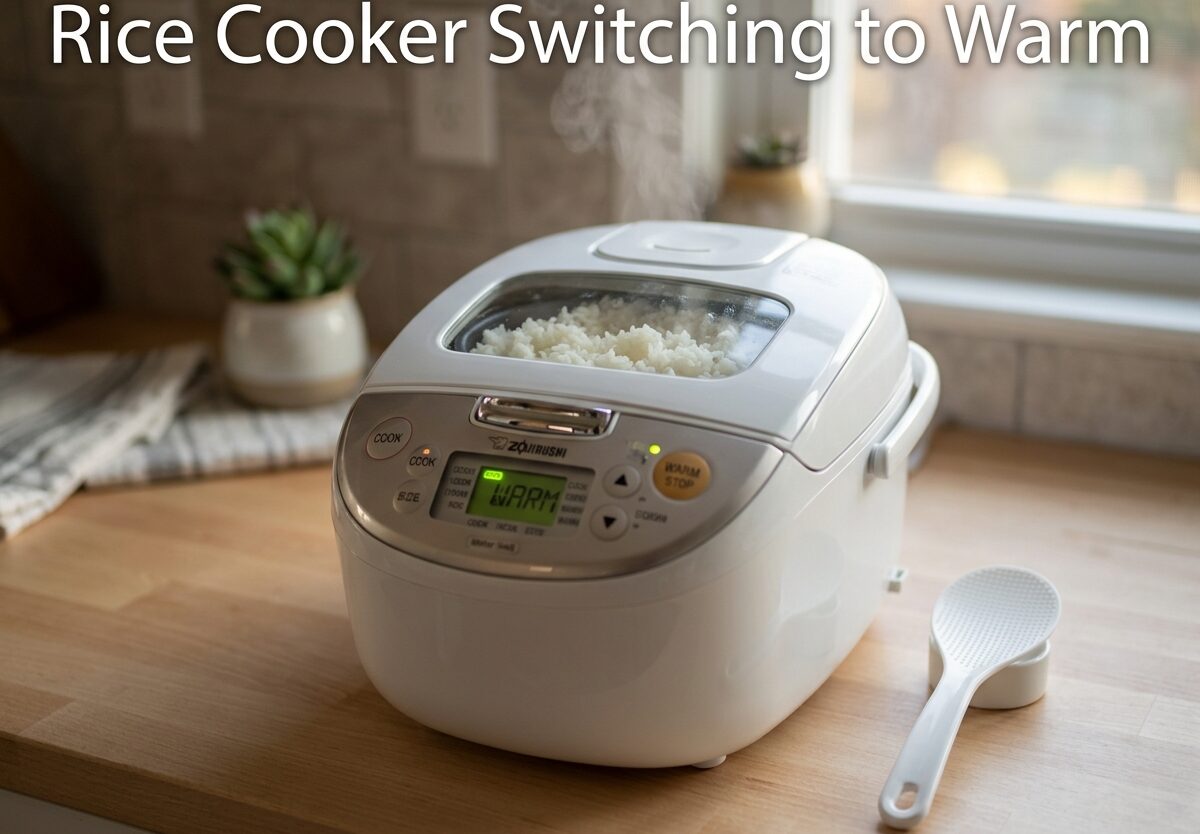
You press the cook button, walk away, and come back 20 minutes later expecting fluffy white rice. Instead, you find a pot of half-cooked grains and the warm light glowing. This rice cooker switching warm problem is frustrating, confusing, and incredibly common.
Understanding why your rice cooker switches to warm too early can save you from burnt bottoms, mushy textures, and potentially wasted food. In this guide, I’ll explain exactly how rice cookers know when to switch modes, what causes premature switching, and step-by-step troubleshooting methods to fix the problem.
How Rice Cookers Know When to Switch to Warm
Rice cookers switch to warm mode automatically using a surprisingly simple mechanism. It’s not magic or computer programming—it’s pure physics and clever engineering.
The Temperature Sensor Mechanism
Inside every basic rice cooker sits a temperature-sensitive switch, either a bimetallic thermostat or a magnetic switch. This sensor constantly monitors the temperature at the bottom of the inner pot where the heating element makes contact.
During cooking, water boils at 212°F (100°C). As long as liquid water remains in the pot, the temperature stays at or below this boiling point. The temperature sensor keeps the main heating element engaged, maintaining a rolling boil that cooks the rice through absorption.
What Happens During the Cook Cycle
Here’s the sequence your rice cooker follows every time you cook rice:
- You add rice and water, then press cook
- The heating element brings the mixture to a boil
- Water absorbs into the rice grains slowly
- The rice cooker maintains boiling temperature until water is gone
- Once water evaporates completely, temperature spikes above 212°F
- The sensor detects this rise and triggers the switch to warm mode
Why Temperature Spikes Trigger Warm Mode
That temperature spike is the key. When all the water has boiled off or absorbed, the dry rice pot can no longer maintain that 212°F ceiling. The temperature climbs rapidly, typically reaching 230-250°F. The thermostat or magnetic switch is calibrated to flip at this specific threshold, cutting power to the main heating element and engaging the lower-wattage warming element instead.
This brilliant design means your rice cooker knows exactly when rice is done without timers, sensors, or computers. It simply waits for the physics of water evaporation to signal completion.
Why Your Rice Cooker Keeps Switching to Warm
Now that you understand how the mechanism works, it’s easier to see why things go wrong. When your rice cooker keeps switching to warm too early, something is interfering with that temperature sensing process.
Cause #1: Dirty Heater Plate or Sensor
The most common cause of rice cooker switching warm problems is simple buildup. Over time, starch residue, mineral deposits, and food debris accumulate on the heating plate and temperature sensor. This layer acts as insulation, preventing efficient heat transfer.
When the heater plate can’t transfer heat properly to the inner pot, the sensor misreads the temperature. It might think the rice has finished cooking when it hasn’t, triggering the warm mode prematurely. I’ve seen rice cookers switch to warm after just 5-10 minutes due to heavily crusted heating elements.
Cause #2: Damaged or Warped Inner Pot
Your rice pot needs perfect contact with the heating plate for accurate temperature sensing. Even small warps, dents, or deformations can create air gaps between pot and plate. These gaps cause uneven heating and fool the temperature sensor.
Aluminum pots warp over time from repeated heating and cooling cycles. Dropping the pot can create deformations. Even a tiny imperfection might cause your rice cooker to switch modes at the wrong time. This is especially common in older rice cookers that have seen years of daily use.
Cause #3: Wrong Water-to-Rice Ratio
Using too little water is a guaranteed way to trigger premature warm mode switching. Remember, the rice cooker waits for all water to boil off or absorb. If you don’t add enough liquid initially, that evaporation happens too quickly.
The standard ratio is 1.5 to 2 cups water for every cup of white rice. Brown rice needs even more—about 2.5 cups water per cup of rice. Skimping on water means the temperature will spike early, signaling completion when the rice is still hard and undercooked.
Cause #4: Faulty Thermostat or Thermal Fuse
The temperature sensing components can fail over time. Thermostats lose calibration, magnetic switches weaken, and thermal fuses blow from power surges. When any of these parts malfunction, your rice cooker might switch to warm randomly, refuse to stay in cook mode, or not switch at all.
A blown thermal fuse is particularly tricky—it sometimes causes the cook and warm functions to swap. Users on DIY repair forums report replacing thermal fuses only to find their cook button now activates warm mode and vice versa.
Cause #5: Cooking Too Much Rice at Once
Every rice cooker has a maximum capacity for a reason. Overfilling the pot prevents proper water circulation and even heat distribution. The rice at the bottom might absorb all the water and trigger the sensor, while rice on top remains partially raw.
Most 3-cup rice cookers can actually only handle 2 cups of dry rice at once. That “6-cup” model? It probably maxes out around 4-5 cups of dry rice. Exceeding these limits almost always results in rice cooker switching to warm before cooking completes.
Troubleshooting: Rice Cooker Switching to Warm Too Early
Ready to fix your rice cooker? Follow these troubleshooting steps in order, from easiest to most complex. Most warm mode problems resolve within the first two steps.
Step 1: Clean the Heater Plate and Sensor
Start with a thorough cleaning. Unplug your rice cooker and let it cool completely. Remove the inner pot and inspect the heating plate at the bottom of the unit.
You’ll likely see brown or white crusty buildup. Use a damp sponge or cloth with mild dish soap to gently scrub away the residue. For stubborn deposits, make a paste from baking soda and water, apply it to the plate, let it sit for 10 minutes, then scrub.
Pay special attention to the temperature sensor, usually a small metal protrusion near the center of the heating plate. This component must be completely clean for accurate readings. Dry everything thoroughly before reassembling.
Step 2: Check Your Rice Pot for Damage
Examine your inner pot closely, both inside and out. Look for warping by placing the pot on a flat surface—if it wobbles or doesn’t sit flush, it’s warped. Check the bottom for dents, deep scratches, or discoloration from overheating.
Test the fit by placing the empty pot in the rice cooker. It should sit snugly against the heating plate with no gaps. If your pot is damaged, you might be able to buy a replacement from the manufacturer. Third-party replacement pots are also available for popular models like Aroma and Zojirushi.
Step 3: Verify Your Water Ratio
Double-check your water-to-rice measurements. Use the actual measuring cup that came with your rice cooker, not a standard measuring cup—rice cooker cups are smaller (about 6 ounces versus 8 ounces).
For white rice: 1 cup rice to 1.5-2 cups water
For brown rice: 1 cup rice to 2-2.5 cups water
For basmati or jasmine: 1 cup rice to 1.25-1.5 cups water
Try increasing the water slightly and see if that resolves the premature switching issue. Just don’t exceed your rice cooker’s maximum fill line.
Step 4: Test with a Smaller Batch
If you typically cook large quantities, try a smaller batch next time. Cook just 1 cup of rice with the appropriate amount of water. This reduces strain on the heating element and gives the temperature sensor a better chance to work correctly.
If smaller batches cook properly but larger ones trigger early warm mode switching, you’ve identified capacity as the issue. Either cook in smaller batches or upgrade to a larger rice cooker.
Step 5: When to Call a Professional
If cleaning, pot replacement, and ratio adjustments don’t solve the problem, you likely have an internal component failure. At this point, assess the repair versus replace equation.
Basic rice cookers cost $20-40. Professional repair might cost $50-80 plus parts. For budget models, replacement usually makes more sense. However, premium rice cookers from brands like Zojirushi or Cuckoo can cost $150-300, making professional repair worthwhile.
Contact the manufacturer’s customer service for warranty information or authorized repair centers. Some brands offer flat-rate repair services that are more economical than third-party repairs.
Safety: How Long Can Rice Stay on Warm?
The warm mode is convenient, but leaving rice on warm too long poses food safety risks. Bacteria multiply rapidly in the “danger zone” between 40°F and 140°F (4°C-60°C). Your rice cooker’s warm setting should maintain temperatures above 140°F to prevent bacterial growth, but not all models do this reliably.
Optimal Warm Mode Duration (1-4 hours)
For best quality and food safety, eat rice within 1-4 hours of it switching to warm mode. During this window, the rice maintains good texture and flavor while staying safely above the danger zone temperature. Most modern rice cookers hold rice at approximately 158°F (70°C) on warm, which is safely above the 140°F threshold.
Maximum Safe Duration (12 hours)
The absolute maximum for leaving rice on warm is about 12 hours. Beyond this point, the rice dries out significantly, texture degrades, and food safety risks increase. Some lower-quality rice cookers may not maintain safe temperatures consistently over long periods.
Never leave rice on warm overnight. While it might still be edible in the morning, the quality will be poor and you’re taking unnecessary risks with food safety.
Food Safety Temperature Requirements (140°F/60°C)
For warm mode to be safe, your rice cooker must maintain the rice above 140°F (60°C). Higher-end models from brands like Zojirushi use fuzzy logic technology to precisely regulate warm mode temperature. Budget models might fluctuate more, potentially dipping into the danger zone.
If your rice cooker is older or unreliable, the safest approach is to transfer cooked rice to the refrigerator within 2 hours of completion.
Signs Rice Has Been on Warm Too Long
Your rice has been on warm too long if you notice:
- Hard, crusty layer forming at the bottom
- Dry, fluffy texture becoming gummy or mushy
- Sour or off smell developing
- Visible discoloration (pink or green indicates bacterial growth)
When in doubt, throw it out. Rice-related food poisoning is unpleasant and potentially serious.
Can You Disable the Keep Warm Function?
Some users prefer to completely disable the keep warm feature. This eliminates the risk of burnt rice at the bottom and forces you to deal with the rice immediately after cooking.
Why You Might Want to Disable Warm Mode
Warm mode often burns the bottom layer of rice, especially in older or cheaper models. The prolonged heat, even at lower temperatures, eventually crisps the rice against the heating element. Some users also dislike the texture changes that occur during extended warming.
Additionally, warm mode consumes electricity. If you’re energy-conscious, you might prefer to unplug the unit immediately after cooking completes.
Methods for Disabling (When Possible)
Unfortunately, most rice cookers don’t have a simple switch to disable warm mode. The automatic switching is built into the core design. However, some workarounds exist:
The simplest solution is to unplug the rice cooker as soon as it switches to warm. This requires timing—you need to be nearby when the cook cycle completes. Some users set timers for the expected cooking duration and listen for the click.
A few advanced rice cookers, particularly digital models, have menu options that allow extended cooking without automatic warm mode switching. Check your manual for “extended cook” or similar settings.
For electronics-savy users, it’s possible to modify some rice cookers by disconnecting the warming element or installing a switch in the circuit. However, this voids warranties, creates fire risks, and isn’t recommended unless you have professional electrical skills.
Alternative Solutions
Rather than disabling warm mode, consider adjusting how you use it. As soon as the rice cooker switches to warm, unplug it and transfer the rice to a serving dish. Fluff the rice with a fork to release steam and prevent continued cooking from residual heat.
For meal prep, immediately portion cooked rice into containers and refrigerate. This stops the cooking process and maintains quality better than leaving rice on warm for hours.
Frequently Asked Questions
Why does my rice cooker keep switching to warm?
Your rice cooker keeps switching to warm because the temperature sensor detects that all water has boiled off. This happens prematurely due to dirty heater plates, warped pots, wrong water ratios, or faulty thermostat components. Clean the heating element, check your inner pot for damage, and verify you’re using the correct water-to-rice ratio.
Do rice cookers automatically switch to warm?
Yes, rice cookers automatically switch to warm mode when the internal temperature sensor detects that all water has evaporated from the pot. This temperature spike (typically above 212°F) triggers the thermostat or magnetic switch to cut power to the main heating element and engage the lower-wattage warming element. This automatic switching is a core feature of how rice cookers work.
How long can rice stay on the warm setting in a rice cooker?
Rice can safely stay on the warm setting for 1-4 hours for optimal quality. The maximum safe duration is approximately 12 hours, provided the rice cooker maintains temperature above 140°F. Never leave rice on warm overnight or longer than 12 hours, as texture degrades significantly and food safety risks increase beyond this timeframe.
Can I leave the rice cooker on warm mode?
Yes, you can leave rice on warm mode for up to 4 hours for best quality or 12 hours maximum for food safety. However, extended warming dries out rice, creates a burnt bottom layer, and may allow bacterial growth if temperature drops below 140°F. For food safety and best results, eat or refrigerate rice within 2 hours of the cook cycle completing.
What is the warm mode on a rice cooker?
Warm mode on a rice cooker is an automatic setting that activates when cooking completes. It maintains the rice at a serving temperature (typically 158°F) using a lower-wattage heating element than the main cook cycle. This function prevents rice from getting cold while you prepare other dishes, but shouldn’t be used indefinitely as it can dry out and burn the rice over time.
Why is my rice cooker not going to cook mode?
If your rice cooker won’t stay in cook mode, the most common causes are a dirty heater plate, warped inner pot preventing proper thermal contact, or a faulty thermostat/thermal switch. Clean the heating plate thoroughly, check your pot for damage, ensure you’re not overfilling beyond capacity, and verify the cook button mechanism isn’t obstructed. If problems persist, internal component failure may require professional repair.
Conclusion
Understanding rice cooker switching warm behavior helps you troubleshoot problems and get perfectly cooked rice every time. Most premature switching issues stem from simple causes: dirty heater plates, warped pots, incorrect water ratios, or overfilling. Start with cleaning and basic troubleshooting before assuming your rice cooker is broken.
Remember that warm mode has limits—use it for 1-4 hours maximum for best quality, and never exceed 12 hours for food safety. If your rice cooker consistently fails to cook properly despite troubleshooting, it may be time for professional repair or replacement.
With the right knowledge and maintenance, your rice cooker should provide years of reliable service. That simple temperature-sensing mechanism, unchanged in decades of design, remains one of the most elegant solutions in kitchen technology.


Leave a Comment