
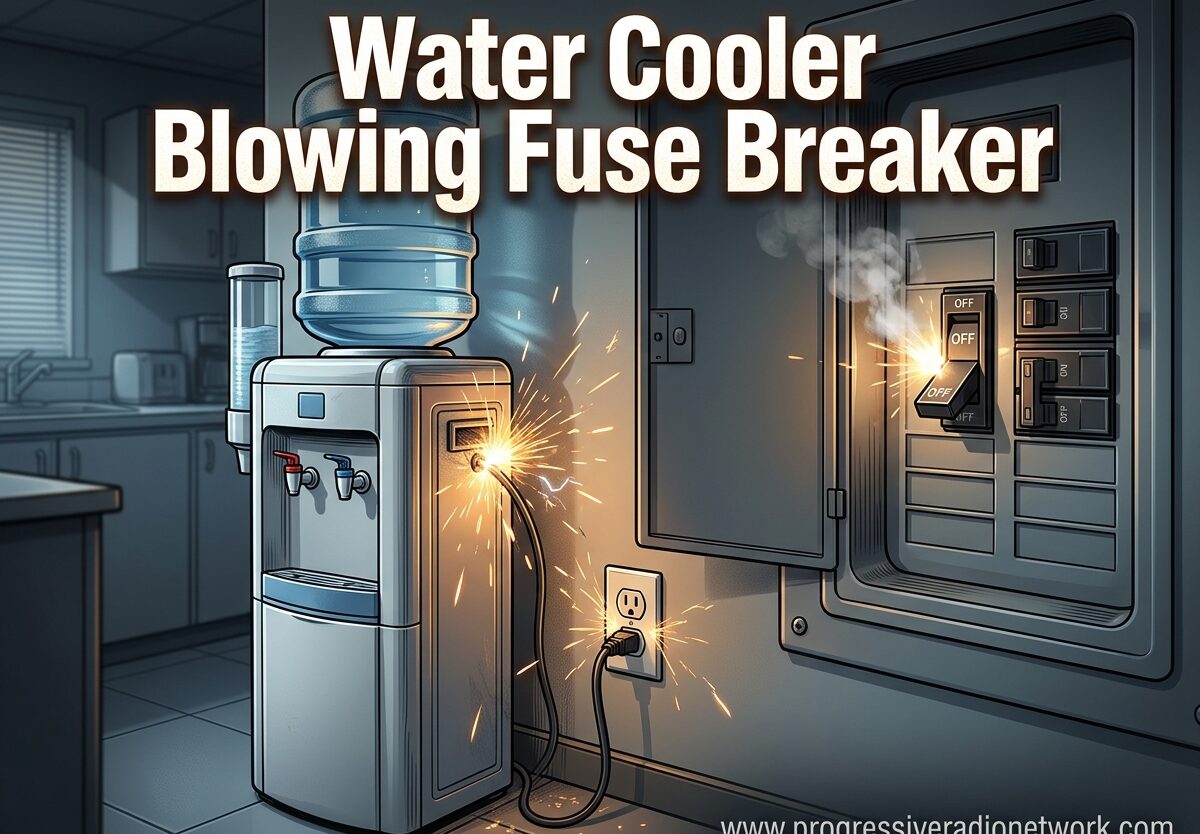
If your water cooler keeps tripping the circuit breaker or blowing fuses, you’re dealing with an electrical problem that needs immediate attention. This issue typically points to one of four causes: an overloaded circuit, short circuit, ground fault, or failing compressor component. I’ve helped diagnose dozens of water cooler electrical issues over the years, and I’ll walk you through exactly how to identify what’s happening and when it’s safe to fix yourself versus calling a professional.
Water Cooler Blowing Fuse Breaker: What’s Really Happening
When your water cooler blows a fuse or trips a breaker, the electrical protection system is doing its job. These safety devices detect abnormal current flow and cut power to prevent electrical fires or damage to your appliance. Understanding the difference between a blown fuse and a tripped breaker helps narrow down the problem.
A tripped breaker can usually be reset by flipping the switch back to the “on” position at your electrical panel. A blown fuse, found in older homes, needs physical replacement. Water coolers contain compressors for cooling and heating elements for hot water dispensing – both components draw significant power. When these systems malfunction or degrade over time, they can cause dangerous electrical conditions that trigger your circuit protection.
GFCI outlets, commonly found in kitchens and break rooms where water coolers are placed, add another layer of protection. These specialized outlets detect ground faults and trip more quickly than standard breakers. Sometimes a GFCI trips while the main breaker stays intact, which helps isolate the problem to the outlet itself rather than the circuit.
4 Common Causes of Water Cooler Tripping Breakers
1. Overloaded Circuit
An overloaded circuit occurs when too many devices draw power from the same electrical line. Water coolers typically require 80-120 watts during normal operation, but compressors can draw 3-5 times that amount during startup. If your water cooler shares a circuit with a refrigerator, microwave, or other major appliances, the combined startup surge can exceed the circuit’s 15 or 20-amp capacity.
I frequently find this issue in office break rooms where multiple appliances were added over time without considering electrical load. The breaker trips randomly because it depends on what else is running when the water cooler’s compressor kicks on. Moving the water cooler to a dedicated circuit or redistributing other appliances usually solves the problem.
2. Short Circuit in Water Cooler Wiring
A short circuit happens when electricity bypasses its intended path, creating an unrestricted flow of current that causes the breaker to trip instantly. In water coolers, this often occurs due to deteriorating insulation on internal wires, moisture damage to electrical components, or loose connections that develop over years of vibration from the compressor.
Signs of a short circuit include immediate tripping when you plug in the unit or when the compressor attempts to start. Unlike an overload that might trip after several minutes, a short circuit is usually instantaneous. I’ve seen this happen most often in water coolers that are 5+ years old, where internal wiring insulation becomes brittle from repeated heating and cooling cycles.
3. Ground Fault
Ground faults occur when electricity escapes the intended circuit and flows to the ground. This is especially dangerous in water coolers because water conducts electricity. Common causes include water leaks onto electrical components, deteriorated seals allowing moisture inside the unit, or frayed wires touching the metal casing.
Your GFCI outlet is specifically designed to detect ground faults and trip quickly to prevent shock. If your water cooler trips a GFCI but not a standard breaker, you likely have a ground fault situation. I’ve found this frequently in units with cracked water reservoirs or damaged inlet fittings that slowly leak onto internal electrical components.
4. Compressor Failure
The compressor is the most expensive and failure-prone component in your water cooler. When compressor bearings seize or internal windings short, the motor can lock up or draw excessive current. A failing compressor often trips the breaker when it attempts to start, as the locked rotor draws 5-10 times the normal operating current.
I’ve diagnosed many cases where the water cooler worked fine for years, then suddenly started tripping the breaker every time the cooling cycle activated. Sometimes you’ll hear a clicking sound as the compressor tries to start but fails. This indicates mechanical failure inside the compressor, which usually requires professional repair or unit replacement.
How to Fix Water Cooler That Keeps Tripping Breaker
Step 1: Isolate the Problem
Before assuming your water cooler is faulty, confirm it’s actually the culprit. Unplug the water cooler and reset the breaker. If it stays reset, plug the water cooler back in. If the breaker trips immediately or when the compressor cycles, you’ve confirmed the water cooler is the source. I recommend this simple test first because I’ve seen many people replace appliances unnecessarily when the real problem was a faulty breaker or overloaded circuit.
Step 2: Try a Different Outlet
Plug your water cooler into an outlet on a different circuit, preferably one without other major appliances. If the unit works fine in the new location, your original circuit is overloaded or has a faulty breaker. This simple test has saved many of my clients from unnecessary water cooler repairs. Just make sure the new outlet is properly grounded and, if in a kitchen or bathroom, GFCI-protected.
Step 3: Check the GFCI Outlet
Water coolers in kitchens and break rooms are typically plugged into GFCI outlets. These outlets can become overly sensitive with age or fail completely. Test the GFCI by pressing the “test” button – it should trip and the “reset” button should pop out. Press “reset” to restore power. If the GFCI won’t reset or trips immediately, try replacing the outlet itself before assuming your water cooler is faulty.
Step 4: Listen for Compressor Sounds
When your water cooler attempts to cool, listen carefully at the back of the unit. A healthy compressor makes a steady humming sound. Clicking, buzzing, or silence followed by breaker tripping indicates compressor problems. I’ve found that clicking sounds often mean the start relay or capacitor is failing, while buzzing can indicate a seized compressor. These issues require professional diagnosis.
Step 5: Check for Water Leaks
Inspect around and underneath your water cooler for any signs of water leakage. Look for damp spots, discoloration, or mold growth. Water inside the electrical compartment can cause ground faults that trip breakers. Even small leaks can cause problems over time. If you find evidence of leaking, identify the source and repair it before addressing electrical issues.
Primo and Other Brand-Specific Water Cooler Issues
While most water cooler electrical problems are universal regardless of brand, some manufacturers have known issues worth noting. Primo water dispensers, for example, have a documented issue with certain models tripping GFCI outlets more frequently than other brands. The company recommends using a dedicated 15-amp circuit and avoiding the use of extension cords or power strips.
Whirlpool and GE water coolers tend to have more reliable compressors but are prone to heating element failures that can trip breakers when the hot water function is activated. If your breaker only trips when dispensing hot water, the heating element or associated thermostat is likely the culprit.
Some newer bottleless water coolers with advanced filtration systems have additional electrical components that can fail. If you have a bottleless unit, check that the water filter housing isn’t leaking onto electrical connections, as this is a common cause of ground faults in these systems.
Water Cooler Electrical Safety: When to Call a Professional
Safety Warning: Water and electricity are a dangerous combination. If you’re not comfortable working with electrical systems, or if you notice any of the following signs, contact a qualified appliance repair technician or licensed electrician immediately:
- Burning smell or visible smoke from the water cooler
- Sparks or arcing when plugging in or unplugging the unit
- Breaker that won’t reset after tripping
- Visible water damage to electrical components
- Any signs of melting or discoloration on the plug or outlet
Continually resetting a tripped breaker without addressing the underlying cause can lead to electrical fires or permanent damage to your home’s electrical system. Breakers can weaken over time and fail to trip when they should, creating a dangerous situation. I’ve seen cases where homeowners repeatedly reset breakers for months until the breaker finally failed in the “on” position, allowing a dangerous situation to develop.
Consider the age and replacement cost of your water cooler when deciding between repair and replacement. Units over 7 years old with major compressor failures are often not worth repairing, as the cost can exceed half the price of a new unit. Basic electrical repairs like replacing a start relay or capacitor typically cost $100-200, while compressor replacement runs $300-600 and may not be cost-effective for older models.
FAQs
Why does my water dispenser keep tripping the breaker?
Your water dispenser keeps tripping the breaker due to an electrical problem – most commonly a failing compressor, short circuit in the wiring, ground fault from water leakage, or an overloaded circuit sharing power with other appliances. The compressor drawing excessive current during startup is the most frequent cause I’ve found in tripping breakers.
What are the two main causes of tripping circuit breakers and blowing fuses?
The two main causes are overloads and short circuits. Overloads happen when too many devices draw power beyond the circuit’s capacity, while short circuits occur when electricity flows through an unintended path due to damaged wiring or component failure. Both cause excessive current flow that triggers the breaker or blows the fuse.
Do water coolers have fuses?
Yes, most water coolers contain internal thermal fuses that protect the compressor and heating elements from overheating. These thermal fuses are different from your home’s electrical panel fuses – they’re temperature-sensitive safety devices designed to cut power if components get too hot. When these fuses blow, the water cooler won’t operate at all rather than tripping your breaker.
How many times can a breaker trip before it goes bad?
Breakers are designed to handle multiple trips over their lifespan, but repeated tripping can weaken the internal mechanism. As a general rule, if a breaker trips more than 3-4 times in a short period due to a persistent fault, it should be replaced. A weakened breaker might fail to trip when it should, creating a fire hazard. I recommend replacing any breaker that shows signs of physical damage or feels loose in the panel.
Can a faulty water cooler cause a fire?
Yes, a faulty water cooler can cause a fire if electrical issues are ignored. Short circuits, ground faults, or overheating components can ignite surrounding materials, especially if the unit is located near curtains, paper products, or other flammable items. Repeatedly resetting a tripped breaker without fixing the underlying problem is particularly dangerous. If your water cooler is causing electrical issues, unplug it immediately and have it professionally inspected before using again.
Conclusion
Dealing with a water cooler blowing fuse breaker issues is frustrating, but identifying the cause is the first step toward a safe resolution. Most problems fall into four categories: overloaded circuits, short circuits, ground faults, or compressor failure. Start with basic troubleshooting by isolating the unit and trying different outlets, but know when to call a professional – especially if you notice burning smells, visible damage, or the breaker won’t reset.
Remember that your circuit breaker and fuses are essential safety devices protecting you from electrical hazards. When they trip, they’re telling you something is wrong. Don’t ignore the warning or repeatedly reset breakers without addressing the root cause. With proper diagnosis and repair, most water cooler electrical issues can be resolved safely, whether through simple fixes like replacing a GFCI outlet or more extensive repairs like compressor replacement.


Leave a Comment