
When temperatures drop and you need supplemental warmth, understanding space heater types becomes essential for making the right choice. I’ve spent years researching heating solutions, and I’ll help you navigate the options with confidence.
Space heaters generally fall into two main categories based on how they transfer heat: convection heaters warm the air, while radiant heaters warm objects and people directly. Within these categories, you’ll find several distinct technologies, each with unique advantages for specific situations.
Choosing the wrong type can mean higher energy bills, inadequate heating, or safety concerns. Let me walk you through everything you need to know about space heater types to make an informed decision.
Understanding How Space Heaters Work
Before diving into specific space heater types, it helps to understand the basic principles behind how they deliver warmth. The two primary heating methods affect everything from comfort levels to energy efficiency.
Convection vs Radiant Heating
Convection heaters warm the air around them, which then circulates throughout the room. As hot air rises, cooler air is drawn in to be heated, creating a continuous cycle. This method works well for heating entire rooms evenly over time.
Radiant heaters emit infrared radiation that directly warms objects and people in their path, similar to how sunlight warms your skin. They provide instant warmth but work best for spot heating rather than whole-room heating.
Understanding BTU and Wattage
British Thermal Units (BTUs) measure heating capacity, with most electric space heaters producing around 5,120 BTUs at maximum output. Wattage determines energy consumption, with standard residential models typically rated at 1,500 watts on high settings.
A simple rule of thumb: you need approximately 10 watts of heating power per square foot for standard ceilings. A 150-square-foot room would require roughly 1,500 watts, while larger spaces might need multiple heaters or higher-capacity models.
Space Heater Types: Complete Comparison
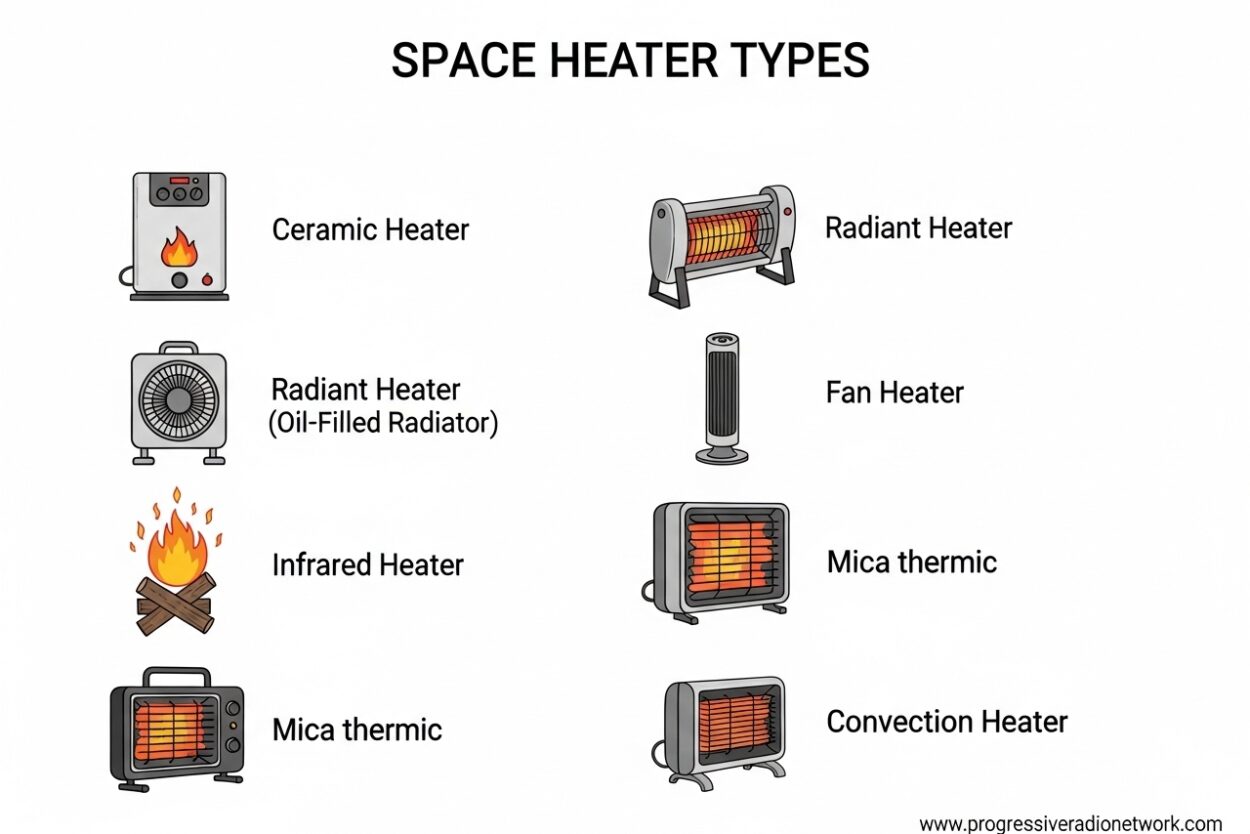
Ceramic Space Heaters
Ceramic space heaters use ceramic heating elements that warm up quickly and are self-regulating, meaning they reduce heat output as they get hotter. This built-in safety feature makes them popular for residential use.
These heaters work by forcing air over heated ceramic plates using a fan, distributing warmth throughout the room. The ceramic elements heat up rapidly, providing quick warmth when you need it most.
Pros: Fast heating, compact size, generally affordable, self-regulating elements for safety
Cons: Fan noise can be disruptive, dry air effect, limited heat range compared to larger heaters
Ceramic heaters excel at quickly warming small to medium rooms and are ideal for bedrooms, home offices, or personal spaces where rapid heating is valued over absolute silence.
Oil-Filled Radiators
Oil-filled radiators use diathermic oil sealed inside their metal columns to generate and retain heat. Heating elements warm the oil, which circulates through the unit’s fins to radiate warmth into the room.
These heaters operate silently without fans, making them perfect for bedrooms and quiet spaces. The oil inside never needs replacing and continues radiating heat even after the unit cycles off, providing consistent warmth.
Pros: Silent operation, excellent heat retention, stable temperatures, no drying effect on air
Cons: Slower initial heating, heavier units, surfaces can become hot to touch
Oil-filled radiators shine in situations where you need sustained, quiet heat over extended periods. They’re particularly effective for maintaining comfortable temperatures in bedrooms throughout the night.
Infrared and Radiant Heaters
Infrared heaters use quartz tubes, metal sheaths, or carbon elements to produce infrared radiation that travels through the air to warm objects directly. Unlike convection heaters, they don’t waste energy heating air that quickly escapes through drafts or poor insulation.
Radiant heaters provide immediate warmth that you can feel as soon as you turn them on, making them ideal for spot heating. Many outdoor patio heaters use this technology because it works well despite wind conditions.
Pros: Instant warmth, energy efficient for spot heating, unaffected by drafts, no fan noise
Cons: Directional heating (must face the user), less effective for whole-room heating
Infrared heaters work best when you need targeted warmth in specific areas, such as at a desk, in a drafty corner, or for quickly warming up when you first enter a cold room.
Fan Heaters
Fan heaters, also called coil heaters or forced-air heaters, use a metal heating element and a fan to blow warm air into the room. They’re among the simplest and most affordable space heater types available.
These units heat up quickly and distribute warmth rapidly through forced air circulation. The fan helps distribute heat more evenly than static radiant heaters but creates noise as a trade-off.
Pros: Very affordable, rapid heating, lightweight and portable, compact design
Cons: Noticeable fan noise, can dry out air, heat dissipates quickly when turned off
Fan heaters work well for temporary heating needs, such as warming up a bathroom in the morning or providing quick heat in a workshop where noise isn’t a concern.
Micathermic Heaters
Micathermic heaters combine convection and radiant heating technologies using mica stone elements. They heat up quickly like ceramic heaters but provide silent operation similar to oil-filled radiators.
The mica stones emit electromagnetic waves that heat objects directly while also warming the surrounding air through convection. This dual approach provides faster heating than pure convection units while maintaining quiet operation.
Pros: Fast heating, silent operation, lightweight, slim profile, dual heating method
Cons: Generally more expensive, fewer models available on market
Micathermic heaters excel in living areas where you want both quick heating and quiet operation. Their slim design makes them easy to place against walls without protruding into room space.
Less Common Space Heater Types
While most residential applications use electric heaters, several other space heater types deserve mention for specific use cases. These options typically require more safety considerations but can serve specialized needs effectively.
Kerosene Heaters
Kerosene heaters burn liquid fuel to produce heat, offering independence from electrical supply. They can provide substantial heat output during power outages or in spaces without electricity.
However, they require proper ventilation to prevent carbon monoxide buildup and pose fire risks if tipped over. Modern models include safety features, but they demand careful operation and regular maintenance.
Propane Heaters
Propane heaters use portable propane tanks for fuel and are popular for outdoor spaces, construction sites, or emergency heating. Like kerosene models, they require ventilation and present combustion risks.
Indoor-safe propane models include oxygen depletion sensors (ODS) that shut off the unit if oxygen levels drop too low. These are commonly used for supplemental heat in well-ventilated areas like garages or workshops.
Important Safety Note
Fuel-burning heaters should never be used in sleeping spaces or tightly sealed rooms. Always follow manufacturer guidelines for ventilation requirements and install carbon monoxide detectors when using combustion heaters indoors.
Energy Efficiency by Space Heater Type
When considering space heater types and efficiency, it’s important to understand that all electric heaters are essentially 100% efficient at converting electricity to heat. The difference lies in how effectively they deliver that warmth to where you need it.
Operating Cost Comparison
A standard 1,500-watt electric heater consumes 1.5 kilowatt-hours (kWh) per hour. At the national average electricity rate of approximately $0.15 per kWh, running a space heater costs about $0.22 per hour on high settings.
Over an 8-hour period, this equals roughly $1.76. Over a typical heating month with 4 hours of daily use, expect costs around $26 per heater. These costs remain consistent across electric space heater types.
Efficiency Factors by Type
While energy consumption is similar, practical efficiency varies by heater type and usage scenario. Infrared heaters prove most efficient for spot heating since they warm people directly rather than wasting energy on empty space.
Oil-filled radiators maintain heat efficiently due to thermal mass, cycling on and off less frequently than other types. This consistent operation can feel more efficient in terms of comfort delivery, though actual energy consumption remains similar.
Energy-Saving Features to Look For
Regardless of space heater type, certain features help optimize energy use. Programmable thermostats maintain consistent temperatures without overheating, while timers ensure heaters don’t run longer than necessary.
Eco modes reduce wattage output once the desired temperature is reached, using less energy while maintaining comfort. Oscillation distributes heat more evenly, preventing hot spots and cold zones that might tempt users to increase settings.
Room Size Guide
Matching space heater types to room size ensures efficient operation:
- Small rooms up to 150 square feet: 750-1,000 watts
- Medium rooms 150-300 square feet: 1,000-1,500 watts
- Large rooms 300-500 square feet: 1,500 watts (consider multiple units)
- Open floor plans: Multiple strategically placed heaters work better than one large unit
Safety Features for All Space Heater Types
Safety considerations vary across space heater types, but certain features should be non-negotiable regardless of technology. Understanding these features can prevent accidents and ensure peace of mind.
Essential Safety Features
Tip-over switches automatically shut off heaters if they fall over, preventing fire hazards. This feature proves especially important for lightweight fan and ceramic heaters that are more easily knocked over.
Overheat protection monitors internal temperatures and disables the heater if components become dangerously hot. This safety mechanism prevents fires caused by malfunctioning thermostats or blocked vents.
Cool-touch exteriors prevent burns when handling heaters during or after operation. Oil-filled radiators typically lack this feature, making them less suitable around children or pets despite their other advantages.
Safety Certifications Explained
Look for independent safety certifications when evaluating space heater types. UL (Underwriters Laboratories), ETL (Intertek), and CSA (Canadian Standards Association) certifications indicate that heaters have been tested for specific safety standards.
These certifications verify electrical safety, fire resistance, and compliance with performance standards. Avoid heaters lacking these certifications, as they may not have undergone adequate independent testing.
Best Safety Practices by Type
Ceramic and fan heaters should be placed on level surfaces away from foot traffic. Keep them at least three feet from flammable materials including curtains, furniture, and bedding.
Oil-filled radiators require careful handling when hot. Their heavy weight provides stability but can cause damage if tipped over. Allow them to cool completely before moving or storing.
Infrared heaters should be positioned to aim directly at the area you want heated without pointing at flammable materials. Never place objects directly in front of the heating element.
Fire Prevention Guidelines
Never leave any space heater type unattended while operating, and always turn them off when leaving the room or sleeping. Plug heaters directly into wall outlets rather than extension cords or power strips that may overheat.
Keep heaters away from water sources to prevent electrical shock. Never use heaters in wet areas unless specifically designed and rated for such use. Install smoke detectors in rooms where space heaters operate regularly.
Choosing the Right Space Heater Type for Your Needs
Selecting from available space heater types requires matching specific features to your situation. Consider these common scenarios to find the best fit.
For Bedrooms
Oil-filled radiators or micathermic heaters work best for bedrooms due to silent operation. Consistent, gentle heat throughout the night promotes better sleep without fan noise disturbances.
For Home Offices
Ceramic heaters provide quick warmth when you start your workday. Compact designs fit easily under desks, and most include adjustable thermostats for maintaining comfort during work hours.
For Large Rooms
Consider multiple smaller heaters rather than one large unit. Strategically placed ceramic or fan heaters can provide more even heating than attempting to warm a large space from a single location.
For Allergy and Asthma Sufferers
Oil-filled radiators and infrared heaters don’t circulate air or dust, making them preferable for those with respiratory sensitivities. Avoid fan-based heaters that stir up allergens while distributing heat.
For Drafty Spaces
Infrared heaters work best in drafty areas because they warm people and objects directly rather than relying on air circulation that drafts can disrupt.
What are the three types of heaters?
What is the most efficient type of space heater?
Which room heater is best for asthma patients?
What are the different types of room heaters?
How much does it cost to run a space heater?
Is it safe to leave a space heater on overnight?
What size space heater do I need for my room?
Are oil-filled heaters more efficient than ceramic heaters?
Conclusion: Selecting the Right Space Heater Type
Understanding space heater types helps you choose the most effective and efficient option for your specific situation. Consider your primary needs—quick heating, silent operation, spot warming, or whole-room comfort—to narrow down the choices.
For most general household use, ceramic heaters offer the best balance of performance and affordability. Bedrooms benefit from the silent comfort of oil-filled radiators or micathermic heaters, while workspaces often perform best with quick-heating ceramic models.
Remember that safety features should never be compromised regardless of space heater type. Always choose models with tip-over protection, overheat shutoff, and recognized safety certifications. Proper usage and maintenance ensure safe, efficient operation throughout the heating season.
By matching the right space heater type to your specific needs and room conditions, you can enjoy comfortable, efficient supplemental heating all winter long.



Leave a Comment