
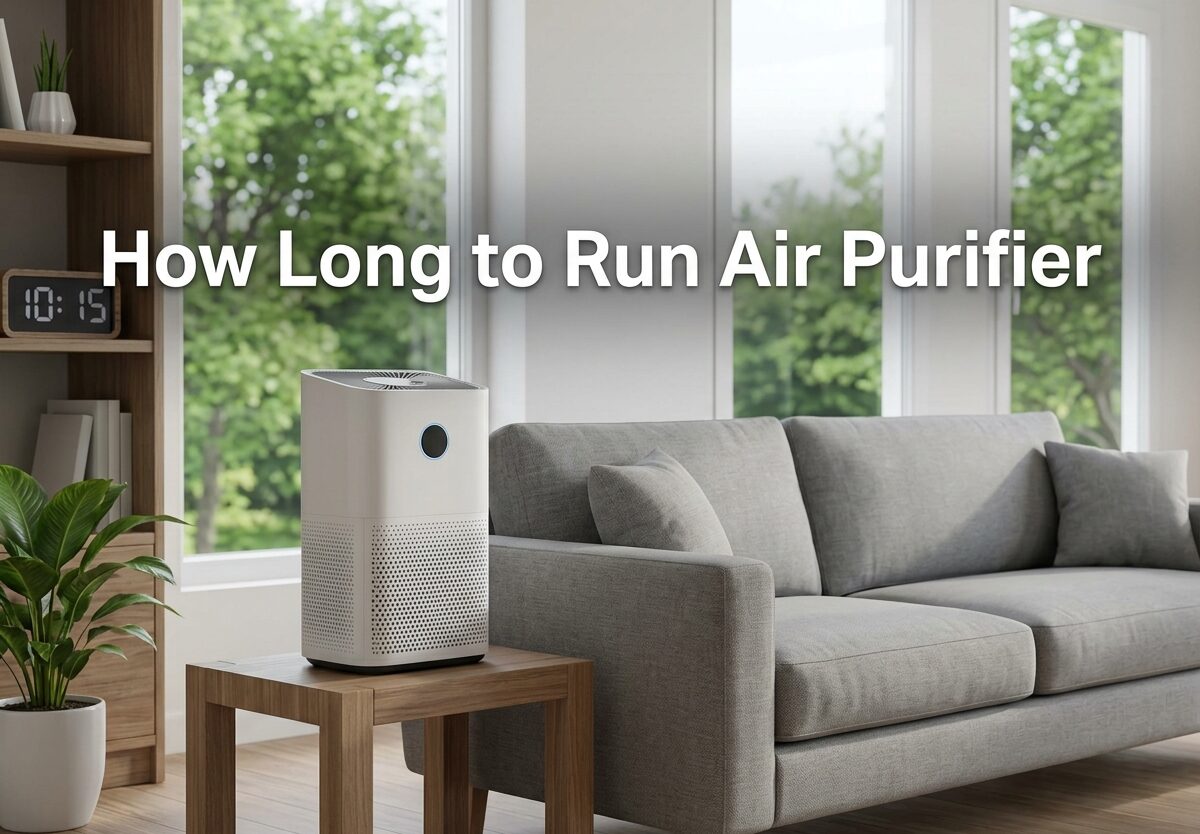
How long to run an air purifier is one of the most common questions new owners ask. The short answer: for the best indoor air quality, run your air purifier 24 hours a day, 7 days a week. Air quality fluctuates constantly throughout the day as new pollutants enter your home from outside, pets shed dander, and everyday activities stir up dust. Continuous operation ensures your air purifier captures these contaminants as they appear, rather than allowing them to accumulate.
Many homeowners pair their air purifier with HEPA vacuums for improved home air quality to create a comprehensive clean air strategy. While vacuums remove larger particles from surfaces, air purifiers work continuously to capture airborne allergens, dust, and pollutants that would otherwise circulate through your breathing space.
Quick Answer: How Long Should You Run Your Air Purifier?
For optimal air quality, run your air purifier continuously. Here are the key considerations:
- 24/7 operation is ideal – Modern air purifiers are designed for continuous use and consume minimal energy on low settings
- Minimum 10-12 hours daily – If you can’t run it continuously, aim for at least 10-12 hours of operation per day to maintain noticeable air quality improvements
- Bedroom use: 8-12 hours at night – Running your air purifier while you sleep provides the most health benefit as you spend extended time in one room breathing filtered air
- High-pollution days: 24/7 on high – During wildfire season, high pollen counts, or when local air quality is poor, run continuously on the highest setting
- Pet owners: continuous operation – Pet dander is constantly generated, so continuous filtration is necessary to keep allergens under control
- Energy efficiency – Most air purifiers cost less than $15-30 per month to run continuously, making 24/7 operation affordable for most households
Why Continuous Air Purifier Operation Matters
Indoor air quality is never static. Every time someone enters or exits your home, opens a window, or walks through a room, they introduce new particles into the air. Cooking releases microscopic particles and VOCs. Pets continuously shed dander and hair. Even dust mites and mold spores become airborne with normal household activity.
When you run your air purifier continuously, it captures these pollutants as they enter your airspace. This prevents accumulation and maintains a consistently clean environment. Think of it like heating or cooling your home – it’s more efficient to maintain a constant temperature than to let the temperature drop and then work hard to bring it back up. The same principle applies to air purification.
HEPA filters work most efficiently with consistent airflow. When you turn your air purifier on after extended downtime, it must work harder to clean the accumulated pollutants from the air. This puts more strain on the motor and filter compared to maintaining clean air continuously.
How Long to Run Air Purifier: Recommended Daily Runtime
The ideal air purifier runtime depends on your specific needs, but continuous operation provides the best results. Here’s what you need to know about different usage patterns:
24/7 Continuous Operation (Recommended)
Running your air purifier 24 hours a day is the gold standard for indoor air quality. Modern units are specifically engineered for continuous operation with energy-efficient motors and durable components designed to run for thousands of hours without issue. On low or medium settings, most air purifiers consume between 30-70 watts of electricity – similar to a standard light bulb.
Continuous operation is especially important if anyone in your household suffers from allergies, asthma, or other respiratory conditions. These conditions benefit from consistent air quality without the fluctuations that occur with intermittent operation.
Minimum 10-12 Hours Daily
If 24/7 operation isn’t feasible for your situation, aim for a minimum of 10-12 hours of daily operation. This runtime threshold is based on the concept of air changes per hour (ACH). Most air purifiers can complete 4-5 full air changes in a typical bedroom during this timeframe, significantly reducing pollutant levels.
The key with intermittent operation is timing. Running your purifier for 12 hours continuously is more effective than running it for 6 hours on, 6 hours off, then 6 hours on again. The continuous 12-hour block allows the unit to establish and maintain clean air levels.
Why Intermittent Use Is Less Effective
Turning your air purifier on and off throughout the day allows pollutants to accumulate during off periods. When you turn it back on, the unit must work harder to clean this accumulated pollution, which takes more energy and puts additional strain on the motor and filter. This start-stop cycling can also reduce filter lifespan as the filter faces higher particle loads during each on-cycle.
Room-by-Room Air Purifier Runtime Guidelines
Different rooms in your home have different air purification needs based on how they’re used and their size. Here’s a room-by-room breakdown of recommended runtime:
Bedroom: 8-12 Hours at Night
The bedroom is arguably the most important room for air purification because you spend approximately one-third of your life there. Running your air purifier while you sleep provides maximum benefit as you breathe the same air for an extended period. Most people run their bedroom purifier for 8-12 hours overnight, ideally on a low or medium setting to minimize noise disruption.
If you suffer from nighttime allergies or congestion, continuous bedroom operation can significantly improve sleep quality. Many users report reduced congestion, fewer allergy symptoms, and better sleep after just a few nights of running their purifier continuously.
Living Room: 12-24 Hours
Living rooms often serve as the central hub of household activity and tend to be larger spaces with more foot traffic. These factors contribute to more pollutants entering the air from various sources. If your living room is open to other areas of the home like the kitchen or dining room, contaminants can easily spread throughout the space.
For households that spend significant time in the living room during the day and evening, 12-24 hours of operation is recommended. This covers the period when family members are typically using the space. If you have pets that spend time in the living room, continuous operation is ideal because pet dander is constantly generated.
Small Spaces: 4-6 Hours
Smaller rooms like home offices, bathrooms, or guest bedrooms require less runtime due to their reduced volume. An air purifier can complete multiple air changes per hour in a small space, so 4-6 hours of operation may be sufficient depending on usage patterns.
However, if these small spaces have specific pollution sources (a home office with equipment that generates VOCs, or a bathroom with mold concerns), you may want to increase runtime accordingly.
Understanding the 2/3 Rule for Air Purifiers
The 2/3 rule is a guideline for properly sizing your air purifier to your room. It states that your air purifier’s CADR (Clean Air Delivery Rate) should be at least two-thirds of your room’s square footage for optimal performance. For example, a 300-square-foot room should have an air purifier with a CADR rating of at least 200.
Proper sizing directly affects how long you need to run your air purifier. An undersized unit in a large room will need to run significantly longer to achieve the same air quality results as a properly sized unit. Conversely, an oversized unit in a small space can clean the air more quickly and potentially run at lower settings while still maintaining excellent air quality.
When your air purifier is properly sized according to the 2/3 rule, it can typically achieve 4-5 air changes per hour on medium settings. This means the entire volume of air in the room passes through the filter 4-5 times every hour, which is the recommended rate for allergy and asthma relief.
Air Purifier Settings: Auto Mode vs Manual Operation
Many modern air purifiers come with an auto mode that adjusts fan speed based on built-in air quality sensors. While this feature sounds convenient in theory, real-world user experiences suggest it may not be the most effective approach.
Based on community feedback from air purifier users, auto mode often runs at ineffective low speeds even when air quality could benefit from higher airflow. The built-in sensors aren’t always sensitive enough to detect all pollutants, and they may not respond quickly enough to sudden changes in air quality like cooking fumes or someone entering with pollen on their clothes.
Many experienced users recommend running your air purifier manually on the highest setting that you find acceptable noise-wise. This provides consistent filtration that doesn’t depend on potentially unreliable sensors. For daytime use, medium or high settings provide thorough cleaning. For nighttime use, low settings usually provide adequate filtration while maintaining a quiet environment for sleep.
Seasonal and Scenario-Specific Runtime Recommendations
Your air purifier needs change based on the season and specific situations. Here’s how to adjust your runtime accordingly:
Pollen Season
During spring and fall allergy seasons, pollen counts can be extremely high. Pollen is microscopic and easily enters your home through open windows, doors, and on clothing and pets. During peak pollen season, 24/7 operation is strongly recommended, especially if anyone in your household suffers from seasonal allergies. Consider running your purifier on a higher setting during the day when pollen counts are typically highest.
Wildfire Smoke
Wildfire smoke contains extremely fine particulate matter that can travel hundreds of miles and penetrate deep into your lungs. When wildfire smoke affects your area, run your air purifier 24/7 on the highest setting. Smoke particles are so small that they require higher airflow to be effectively captured. Keep windows and doors closed during smoke events and consider running multiple purifiers if you have a large home.
Pet Owners
If you have pets, continuous air purifier operation is highly recommended. Pet dander is continuously generated as animals move around your home, and pet hair can circulate in the air long after shedding occurs. Cats and dogs also bring in pollen and other outdoor pollutants on their fur. Running your purifier 24/7 helps keep pet allergens under control and reduces the amount of pet hair that settles on surfaces.
Allergy and Asthma Sufferers
For anyone with allergies or asthma, consistent air quality is crucial. Fluctuations in air quality can trigger symptoms, so maintaining continuous filtration helps prevent these triggers. Run your air purifier 24/7 or at minimum during the hours you’re at home. Pay special attention to the bedroom, as nighttime exposure to allergens can significantly impact sleep quality and next-day symptoms.
Energy Efficiency and Running Costs
A common concern about running an air purifier continuously is electricity consumption. The good news is that modern air purifiers are designed to be energy-efficient, especially on lower settings. Most models consume between 30-70 watts on low or medium settings, which translates to approximately $15-30 per month in electricity costs depending on your local rates.
Several factors affect energy consumption:
- Fan speed – Higher settings consume more electricity but clean air faster
- Room size – Larger rooms may require longer runtime or higher settings
- Unit efficiency – Energy Star certified models are designed to minimize power consumption
- Local electricity rates – Your actual cost depends on what you pay per kilowatt-hour
To minimize energy costs while maintaining air quality, consider running your purifier on medium settings during the day and switching to low at night. Many users pair their air purifier with best vacuum cleaners to pair with your air purifier for a comprehensive home cleaning approach that maximizes air quality while managing energy costs.
Air Purifiers for Specific Health Conditions
While air purifiers benefit everyone, they’re particularly important for individuals with certain health conditions:
COPD Considerations
People with COPD (Chronic Obstructive Pulmonary Disease) have compromised lung function and are more sensitive to air pollutants. For COPD patients, 24/7 air purifier operation is strongly recommended, especially in rooms where they spend the most time. Clean air can help reduce symptom flare-ups and improve overall comfort. Place purifiers in both the bedroom and main living areas for maximum protection.
Asthma Management
Asthma triggers vary by individual but commonly include dust mites, pet dander, pollen, and mold spores – all of which air purifiers can effectively capture. Continuous filtration helps maintain consistent air quality that’s less likely to trigger asthma attacks. Many asthma sufferers report significant improvement in symptoms after implementing continuous air purification, particularly in the bedroom.
Severe Allergies
For individuals with severe allergies, continuous air purification can be life-changing. By constantly removing allergens from the air, purifiers reduce the overall allergen load in your home. This can lead to reduced medication dependence, fewer symptoms, and improved quality of life. Multiple purifiers may be necessary for larger homes or homes with open floor plans.
Frequently Asked Questions
Are you supposed to run air purifiers all the time?
Yes, air purifiers are designed to run continuously. Modern units are engineered for 24/7 operation and work most effectively when running all the time. This prevents pollutants from accumulating and maintains consistent air quality. On low settings, most air purifiers consume minimal electricity similar to a light bulb.
What is the 2/3 rule for air purifiers?
The 2/3 rule states that your air purifier’s CADR (Clean Air Delivery Rate) should be at least two-thirds of your room’s square footage for optimal performance. For example, a 300-square-foot room needs an air purifier with a CADR of at least 200. Proper sizing ensures your purifier can provide adequate air changes per hour.
Would an air purifier help my COPD?
Yes, air purifiers can significantly help people with COPD. By continuously removing airborne irritants, dust, and pollutants, air purifiers create a cleaner breathing environment that may reduce symptom flare-ups. For COPD patients, 24/7 operation in bedrooms and main living areas is recommended for maximum benefit.
How many hours per day should I run my air purifier?
For optimal results, run your air purifier 24 hours a day. If continuous operation isn’t possible, aim for a minimum of 10-12 hours daily. This provides enough air changes to significantly improve air quality. The key is consistency – running it for 12 continuous hours is more effective than shorter periods spread throughout the day.
How long does it take for an air purifier to clean a room?
An air purifier can typically clean the air in a standard room within 30 minutes to 2 hours, depending on room size, purifier power, and fan speed. However, for noticeable improvements in air quality and allergy symptoms, most users report results within 24-48 hours of continuous operation.
Is it safe to run air purifier 24/7?
Yes, it’s completely safe to run your air purifier 24/7. Modern air purifiers are specifically designed for continuous operation with safety features that prevent overheating. The motors and components are built to run for thousands of hours without issues. In fact, continuous operation is recommended by most manufacturers.
Do air purifiers use a lot of electricity?
No, air purifiers are generally energy-efficient. On low or medium settings, most models consume 30-70 watts of electricity, similar to a standard light bulb. This translates to approximately $15-30 per month in electricity costs for continuous operation. Energy Star certified models are even more efficient.
Conclusion
How long to run an air purifier depends on your specific situation, but the evidence is clear that continuous operation provides the best results. For most households, running your air purifier 24/7 on low or medium settings offers the perfect balance of air quality improvement and energy efficiency. At minimum, aim for 10-12 hours of daily operation with consistent timing.
Start by prioritizing the bedroom where you spend extended hours sleeping, then add coverage to other frequently used living spaces. Remember that proper sizing according to the 2/3 rule, appropriate fan speed selection, and seasonal adjustments all play important roles in maximizing your air purifier’s effectiveness.
Whether you’re managing allergies, asthma, COPD, or simply want cleaner air for your family, consistent air purifier operation is one of the most effective steps you can take to improve your home’s indoor air quality in 2026.

Leave a Comment