
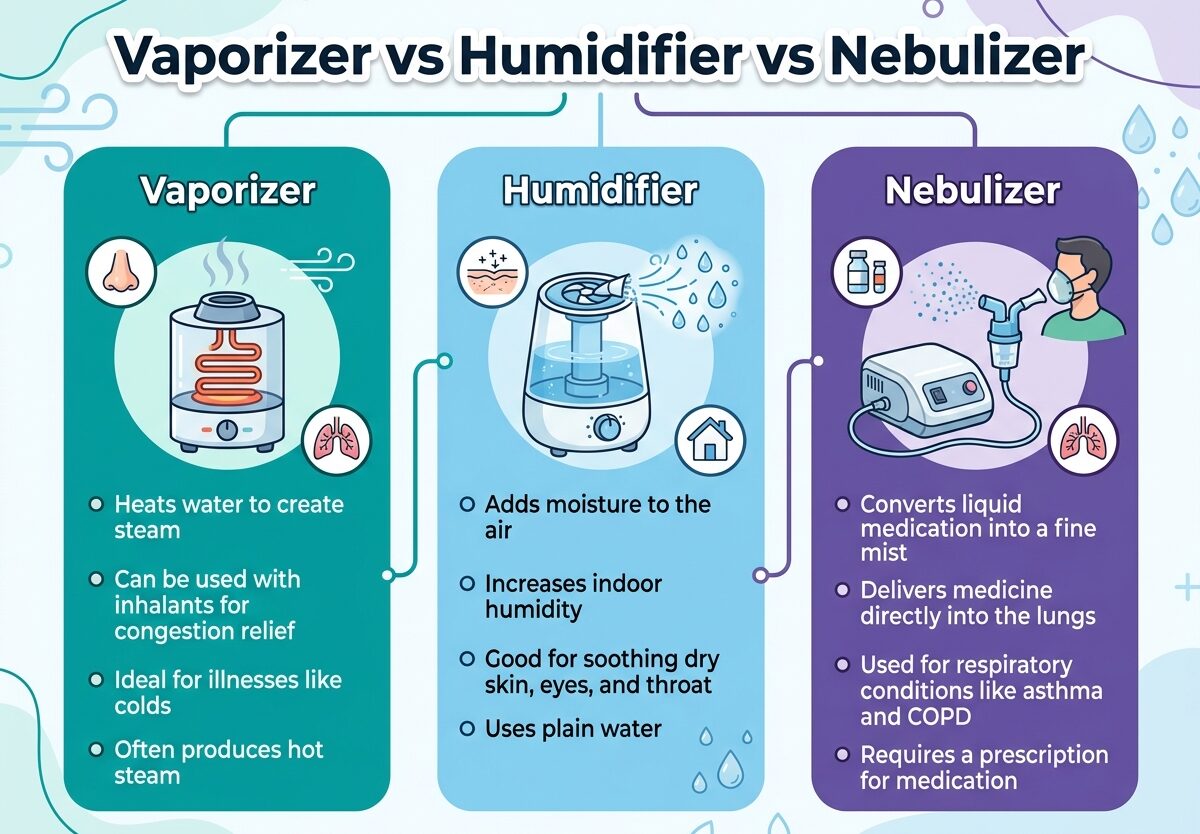
Understanding the difference between a vaporizer, humidifier, and nebulizer can save you from ineffective treatment or potential safety risks. These three devices may look similar, but they serve completely different purposes. A nebulizer delivers prescription medication directly to your lungs as a fine mist. A humidifier adds moisture to room air to ease congestion and dryness. A vaporizer boils water to create warm steam that disperses throughout a room.
Using the wrong device won’t just be ineffective. In some cases, it could be dangerous. I’ve seen parents accidentally try to use humidifiers for asthma medication delivery, which simply doesn’t work. Others have placed hot steam vaporizers in toddler rooms, creating serious burn hazards.
In this guide, I’ll break down exactly how each device works, when to use it, and which one is right for your specific situation. Whether you’re dealing with asthma, a cold, allergies, or just dry air, you’ll know exactly which device to choose.
Vaporizer vs Humidifier vs Nebulizer: Understanding the Key Differences
The fundamental difference comes down to what each device puts into the air. Nebulizers deliver medication directly to your respiratory system. Humidifiers and vaporizers only add moisture. The key distinction is medical treatment versus environmental comfort.
Nebulizers convert liquid medication into an inhalable mist using compressed air, ultrasonic vibrations, or a mesh membrane. This allows the medication to reach deep into your lungs where it’s needed most. They require a prescription and are specifically designed for respiratory conditions like asthma, COPD, and severe bronchitis.
Humidifiers add moisture to dry indoor air using cool mist technology. They don’t boil water, making them safer around children. The American Academy of Pediatrics recommends cool mist humidifiers over warm steam vaporizers for nurseries and children’s rooms due to burn risks.
Vaporizers heat water to boiling and release warm steam into the room. The boiling process actually kills bacteria and mold spores, which some users prefer. However, the hot water and steam pose serious burn risks, especially around children and pets.
Quick Comparison: What Each Device Actually Does
Here’s a side-by-side comparison to help you quickly understand the core differences:
| Device | Primary Function | Delivers Medication | Temperature | Best For | Child Safe |
|---|---|---|---|---|---|
| Nebulizer | Delivers prescription medication to lungs | Yes | Room temperature mist | Asthma, COPD, respiratory infections | Yes (with supervision) |
| Humidifier | Adds moisture to room air | No | Cool mist | Dry air, allergies, congestion | Yes |
| Vaporizer | Adds moisture to room air | No | Warm steam | Sinus congestion, colds | No (burn risk) |
The single most important takeaway: nebulizers deliver medication, while humidifiers and vaporizers only add moisture. If you need to administer respiratory medication, a nebulizer is your only option among these three devices.
What Is a Nebulizer?
A nebulizer is a medical device that transforms liquid medication into a fine mist you can inhale through a mask or mouthpiece. Unlike inhalers, which require coordination and deep breathing technique, nebulizers deliver medication continuously over 10-15 minutes while you breathe normally.
This makes nebulizers especially valuable for infants, young children, elderly patients, or anyone who struggles with inhaler technique. The medication reaches deep into your lungs where it can be most effective.
How Nebulizers Work
All nebulizers operate on the same basic principle: convert liquid medication into an inhalable aerosol mist. However, they achieve this through different mechanisms.
Compressor nebulizers use pressurized air to force medication through a small opening, creating a fine mist. They’re the most common type but tend to be noisier. Think of them like a small air compressor continuously pushing air through the medication cup.
Ultrasonic nebulizers use high-frequency vibrations to atomize the medication into microscopic particles. They’re virtually silent and compact, making them popular for travel. However, they can’t handle all types of medications.
Mesh nebulizers use a vibrating mesh membrane with thousands of microscopic holes to create the mist. They’re the quietest and most portable option, often battery-operated. Many users report mesh nebulizers deliver treatment faster than compressor models.
Types of Nebulizers
Choosing the right nebulizer depends on your specific needs and lifestyle. Here are the main types available:
Tabletop compressor nebulizers are the traditional workhorses. They’re durable, effective with all medications, and typically covered by insurance. The trade-off is noise and lack of portability.
Portable nebulizers include both ultrasonic and mesh models. They’re battery-operated, lightweight, and perfect for travel or school. However, they may not work with all medications, so check compatibility first.
Children’s nebulizers often come in animal shapes or with built-in entertainment to reduce anxiety during treatment. The functionality remains the same, but the design helps kids cooperate with their respiratory therapy.
When to Use a Nebulizer
Nebulizers are prescribed for specific respiratory conditions that require direct medication delivery to the lungs. These include asthma attacks, COPD exacerbations, bronchitis, pneumonia, and other respiratory infections.
Common nebulizer medications include bronchodilators like albuterol to open airways, corticosteroids to reduce inflammation, and antibiotics for certain infections. Your doctor determines which medication is appropriate for your condition.
Many forum users with COPD report that nebulizers provide more relief than inhalers because the continuous mist ensures full medication delivery even when breathing is difficult. For children who can’t master inhaler technique, nebulizers are often the only viable option.
Nebulizer Safety and Maintenance
Always use distilled or sterile water in your nebulizer. Tap water contains minerals that can build up and damage the device, and it may introduce bacteria into your respiratory system.
Clean your nebulizer after every use. Disassemble all parts, wash with warm soapy water, rinse thoroughly, and air dry. Perform a deep clean with vinegar solution weekly to prevent bacterial growth.
Replace nebulizer cups, masks, and tubing according to manufacturer guidelines, typically every 3-6 months. Degraded parts can reduce treatment effectiveness or introduce contaminants.
Many nebulizers and medications are covered by insurance or Medicare. Check with your provider about coverage and prescription requirements before purchasing.
What Is a Humidifier?
A humidifier adds moisture to dry indoor air, creating a more comfortable environment and helping relieve respiratory irritation. Unlike nebulizers, humidifiers don’t deliver any medication. They simply increase humidity levels in your room.
The EPA recommends maintaining indoor humidity between 30-50%. Levels below 30% can cause dry skin, irritated nasal passages, and aggravated allergy symptoms. Levels above 50% can encourage dust mites, mold, and mildew growth.
Humidifiers are particularly useful during winter months when heating systems dry out indoor air. They’re also helpful in arid climates year-round.
How Humidifiers Work
Humidifiers increase room humidity by dispersing water vapor into the air. Different types accomplish this through different mechanisms.
Ultrasonic humidifiers use high-frequency vibrations to break water into tiny droplets that form a cool mist. A small metal diaphragm vibrates at ultrasonic speeds, creating the mist without heat. They’re incredibly quiet, making them ideal for bedrooms.
Evaporative humidifiers use a fan to blow air through a wet wick or filter. The air absorbs moisture as it passes through, carrying it into the room. These models self-regulate. As humidity increases, the fan naturally becomes less effective, preventing over-humidification.
Impeller humidifiers use a rotating disc to fling water at a diffuser, breaking it into droplets that create a cool mist. They’re relatively quiet and don’t require filters, but the discs can develop mineral buildup in hard water areas.
Types of Humidifiers
Choosing the right humidifier depends on room size, climate, and maintenance preferences. Here are the main options:
Cool mist humidifiers are the most common type and the only type recommended for children’s rooms by the American Academy of Pediatrics. They don’t pose burn risks and are generally safer around curious children and pets.
Warm mist humidifiers heat water before dispersing it, similar to vaporizers. The warm mist can be soothing in cold weather, and the heating process kills bacteria. However, they pose burn risks and use more electricity.
Ultrasonic humidifiers have become increasingly popular due to their silent operation. Many models offer both cool and warm mist options. However, they can disperse minerals into the air as white dust if used with tap water.
Whole-house humidifiers connect directly to your HVAC system and humidify your entire home. They’re more expensive upfront but require less maintenance than room units and provide consistent humidity throughout your house.
When to Use a Humidifier
Humidifiers help with conditions caused or worsened by dry air. These include dry, itchy skin, chapped lips, nasal congestion, dry throat, irritated sinuses, and allergy symptoms.
Many users report significant relief from morning sore throat and congestion when running a humidifier overnight. The added moisture keeps mucous membranes hydrated, allowing them to trap and filter irritants more effectively.
For allergy sufferers, proper humidity can reduce symptoms. However, excessive humidity can make allergies worse by encouraging dust mites and mold. The key is maintaining that 30-50% sweet spot.
Forum users consistently recommend humidifiers for singer’s vocal health. Well-hydrated vocal cords function better and are less prone to strain. Many performers run humidifiers in their bedrooms and practice spaces.
Humidifier Safety and Maintenance
Clean your humidifier every 3 days at minimum. Empty, rinse, and dry all parts daily. Deep clean with vinegar or bleach solution weekly to prevent bacterial and mold growth. Dirty humidifiers can actually make respiratory problems worse by dispersing contaminants.
Use distilled or demineralized water to prevent mineral buildup and white dust. Tap water contains minerals that can create deposits inside the unit and disperse into the air as fine particles.
Change filters regularly according to manufacturer instructions. Clogged or dirty filters reduce effectiveness and can harbor bacteria. Some models have permanent filters that need regular cleaning rather than replacement.
Monitor humidity levels with a hygrometer. This inexpensive device ensures you stay in the optimal 30-50% range. Over-humidification can cause condensation on windows, musty odors, and encourage biological growth.
What Is a Vaporizer?
A vaporizer boils water and releases warm steam into the air, adding moisture to your room. In this way, vaporizers are similar to humidifiers. The key difference is the temperature of the mist. Vaporizers produce warm steam, while most humidifiers produce cool mist.
Because vaporizers boil water, the steam they release is essentially sterile. This appeals to many users who are concerned about bacterial growth in cool mist humidifiers. The boiling process kills bacteria, mold, and other microorganisms before they can be dispersed into the air.
Vaporizers often have a smaller reservoir than humidifiers and typically need more frequent refilling. However, they’re often less expensive than comparable humidifier models.
How Vaporizers Work
Vaporizers use a heating element to bring water to boiling point. As the water boils, it produces steam. A small fan or natural convection helps disperse the steam into the room. Some models include a medicine cup designed for vaporizing menthol or other inhalants.
The steam from a vaporizer is warmer and often more visible than the mist from a cool mist humidifier. Many users find this warm steam more comforting, especially during cold weather illness.
Because the water reaches boiling temperature, any bacteria or mold present is destroyed. This is the main advantage vaporizers have over cool mist humidifiers. The steam they release is sterile.
Vaporizer vs Humidifier: The Key Difference
The primary difference is temperature. Vaporizers release warm steam. Humidifiers release cool mist. This difference affects safety, energy use, and appropriate applications.
Vaporizers cost more to run because they continuously heat water. Humidifiers use less electricity, especially evaporative models which only power a small fan.
For children’s rooms, cool mist humidifiers are the clear choice. The American Academy of Pediatrics explicitly warns against warm steam vaporizers in nurseries due to burn risks. A curious toddler could knock over a vaporizer or touch the hot water, causing serious injury.
For adults without children in the home, vaporizers can be an excellent choice. The warm steam can feel particularly soothing during colds and sinus infections. Many users report that warm steam penetrates congestion more effectively than cool mist.
When to Use a Vaporizer
Vaporizers excel at relieving sinus congestion and chest colds. The warm steam helps thin mucus and soothe irritated airways. Many users find vaporizers more effective than cool mist humidifiers during respiratory illnesses.
Some vaporizers include a medicine cup for adding menthol or other vaporizing inhalants. This can provide additional congestion relief. However, these additives are not medication and don’t treat underlying conditions.
Forum users frequently report that vaporizers are their go-to choice during cold and flu season. The warm steam feels comforting when sick, and the boiling process provides peace of mind regarding bacterial dispersion.
Vaporizers are also popular with some singers and performers. The warm steam can help open airways before performances, though personal vocal steaming devices are often more targeted for this purpose.
Vaporizer Safety and Maintenance
Never place a vaporizer in a child’s room without proper supervision. The boiling water and steam pose serious burn risks. The American Academy of Pediatrics strongly recommends cool mist humidifiers for children under 12.
Place vaporizers on stable, elevated surfaces out of reach of children and pets. The steam can damage furniture and finishes if directed too closely. Maintain at least 2-3 feet of distance from walls and furniture.
Clean vaporizers regularly to prevent mineral buildup from hard water. The heating element can become coated with scale, reducing efficiency and potentially creating a fire hazard. Descale monthly with vinegar solution.
Allow vaporizers to cool completely before refilling or cleaning. Never add cold water to a hot unit. This thermal shock can crack the water tank and potentially cause injury.
Check the cord and plug regularly for damage. Vaporizers use substantial electricity and faulty wiring can create fire hazards. Replace units with damaged cords rather than attempting repairs.
Which Device Should You Choose? A Decision Guide
Choosing the right device depends on your specific needs and situation. Here’s a simple decision framework:
If you need to deliver prescription respiratory medication, you need a nebulizer. No other device can perform this function. Your doctor will prescribe one if your condition requires it.
If you’re dealing with dry air, allergies, or general congestion without respiratory infection, a cool mist humidifier is usually your best choice. It’s safe for all ages, energy-efficient, and effective at maintaining comfortable humidity levels.
If you’re an adult with sinus congestion or chest cold and want the comfort of warm steam, a vaporizer may provide more relief than a cool mist humidifier. Just keep it away from children.
For baby nurseries and children’s rooms, always choose a cool mist humidifier. The burn risk from vaporizers simply isn’t worth it. The American Academy of Pediatrics is clear on this recommendation.
Decision Flowchart
Here’s a quick reference guide to help you decide:
Do you need to deliver prescription medication? Yes: Nebulizer. No: Continue to next question.
Will this be used in a child’s room? Yes: Cool mist humidifier only. No: Continue to next question.
Do you prefer warm steam for congestion relief? Yes: Vaporizer. No: Cool mist humidifier.
Are you concerned about bacteria or mold in the air? Yes: Vaporizer (boiling kills bacteria) or ultraviolet humidifier. No: Any humidifier will work.
Special Use Cases: Babies, Singers, and Respiratory Conditions
For Babies and Children
The American Academy of Pediatrics strongly recommends cool mist humidifiers for children’s rooms. Warm steam vaporizers pose burn risks that simply aren’t worth taking. Curious toddlers can knock over vaporizers or touch the hot water, resulting in serious burns.
For babies with congestion, a cool mist humidifier can help thin mucus and make breathing more comfortable. Maintain humidity at 40-50% and clean the unit every 2-3 days to prevent bacterial growth.
Never add medication or essential oils to a baby’s humidifier unless specifically directed by your pediatrician. These can irritate infant lungs and cause more harm than good.
For Singers and Vocal Health
Well-hydrated vocal cords function better and are less prone to strain. Many singers run humidifiers in their bedrooms and practice spaces, especially in dry climates or during winter months.
Some singers prefer personal vocal steamers over room humidifiers. These devices allow you to directly inhale steam, providing targeted hydration to the vocal cords. Forum users in singing communities often report that steamers provide more immediate relief than room humidifiers.
For performances, some singers use nebulizers with saline solution to hydrate their airways. This is different from medication nebulization. Always consult a medical professional before using any nebulizer for vocal health purposes.
For Asthma and COPD
People with asthma and COPD often use multiple devices together. Nebulizers deliver prescribed medication during attacks or for maintenance therapy. Humidifiers maintain optimal air quality in their living spaces.
Many COPD patients report that cool mist humidifiers help ease breathing, especially during winter when indoor air becomes dry. The key is maintaining proper humidity levels. Too much moisture can encourage dust mites, which are common asthma triggers.
Always follow your doctor’s recommendations regarding nebulizer use. Never attempt to use a humidifier or vaporizer to deliver medication. These devices cannot aerosolize medication effectively, and you won’t receive the proper dosage.
For Allergies
Proper humidity can reduce allergy symptoms, but excessive humidity makes allergies worse. The sweet spot is 40-50% humidity. Below this, dry mucous membranes can’t filter allergens effectively. Above this, dust mites and mold thrive.
Many allergy sufferers find relief with cool mist humidifiers, especially during winter months. Use a hygrometer to monitor humidity levels and clean your humidifier regularly to prevent it from becoming an allergen source itself.
Some vaporizers allow adding vaporizing inhalants like menthol. These can provide temporary congestion relief but don’t treat underlying allergies. Use caution with these additives, as some people are sensitive to strong scents.
Frequently Asked Questions
Which is better, a vaporizer or a nebulizer?
These devices serve completely different purposes. A nebulizer delivers prescription medication directly to your lungs and is necessary for conditions like asthma and COPD. A vaporizer only adds moisture to the air and cannot deliver medication. If you need respiratory medication, a nebulizer is your only option. If you simply need to humidify a room, a vaporizer or humidifier will work.
What is the best nebulizer for COPD patients?
The best nebulizer for COPD depends on your specific needs and lifestyle. Compressor nebulizers are most common and work with all medications, but they’re noisy. Mesh nebulizers are portable, silent, and battery-operated, making them ideal for active patients. Ultrasonic models offer a middle ground. Consult your doctor about which type works best with your prescribed medications. Many COPD patients prefer mesh nebulizers for their portability and quiet operation.
Which is healthier, a vaporizer or a humidifier?
Both can be healthy when used properly. Cool mist humidifiers are safer, especially around children, because they pose no burn risk. Vaporizers boil water, which kills bacteria before steam is released, but the hot water poses burn hazards. For general health, cool mist humidifiers are recommended by the American Academy of Pediatrics for children’s rooms. For adults without children, vaporizers can be equally healthy if maintained properly and used safely.
Will nebulizer help a blocked nose?
A nebulizer only helps nasal congestion if it’s filled with prescribed medication. Plain saline in a nebulizer can provide some moisture, but for simple congestion, a humidifier or vaporizer is usually more appropriate. These devices add moisture to the air, which helps thin mucus and relieve nasal stuffiness. If your congestion is due to allergies or a cold rather than a respiratory infection, a humidifier is likely your best option. Consult your doctor if congestion persists beyond 10 days.
Can I use a humidifier instead of a nebulizer?
No. Humidifiers cannot deliver medication. If your doctor has prescribed nebulizer treatments, a humidifier cannot replace this medical treatment. Nebulizers aerosolize medication into particles small enough to reach deep into your lungs. Humidifiers only add moisture to the air. Attempting to put medication in a humidifier won’t work and could damage the device. Always use your nebulizer as prescribed for respiratory medications.
Is cool mist or warm mist better for congestion?
Both can help, but they work differently. Warm mist vaporizers can feel more comforting during colds and may better penetrate thick congestion. Cool mist humidifiers are safer, especially for children, and effectively relieve congestion by hydrating airways. The American Academy of Pediatrics recommends cool mist for children due to burn risks from warm mist devices. Many adults find warm steam more soothing during illness, but both options effectively add needed moisture to dry airways.
Final Thoughts
Understanding the vaporizer vs humidifier vs nebulizer difference is essential for effective respiratory care. Nebulizers deliver life-saving medication directly to your lungs. Humidifiers and vaporizers add moisture to dry air, making breathing more comfortable. The key is choosing the right device for your specific needs.
For medical respiratory conditions, always follow your doctor’s guidance regarding nebulizer use. For dry air and general congestion relief, a cool mist humidifier is usually the safest and most effective choice. Reserve warm steam vaporizers for adult-only spaces where the burn risk can be managed.
When in doubt, consult a healthcare professional. Respiratory health is too important to leave to guesswork. With the right device and proper maintenance, you can breathe easier and enjoy better respiratory health in 2026.



Leave a Comment